Tipping in Spain: When, Where, and How Much
Tipping in Spain often leaves newcomers paralyzed at the table, wondering if they’re being accidentally rude or unnecessarily flashy with their cash. I remember my first month in Madrid, clutching a handful of coins and sweating under the waiter’s gaze because I didn't want to look like a clueless tourist. This guide solves that anxiety by breaking down exactly how tipping works in every Spanish scenario.
Disclosure: This post may contain affiliate links. We may earn a commission at no extra cost to you if you make a purchase through these links. Read full disclosure.
The Cultural Philosophy of Tipping in Spain
To understand tipping in Spain, you first have to unlearn the high-pressure systems common in the United States or the rigid expectations of the UK. In Spain, service staff are generally paid a monthly salary and receive benefits like healthcare and paid vacation. They aren't living off your tips to pay their rent. This creates a more relaxed—though sometimes slower—service environment. When you tip here, it is viewed as a "reward" for exceptional service rather than a mandatory subsidy for a low wage.
Why Tipping in Spain Differs from North America
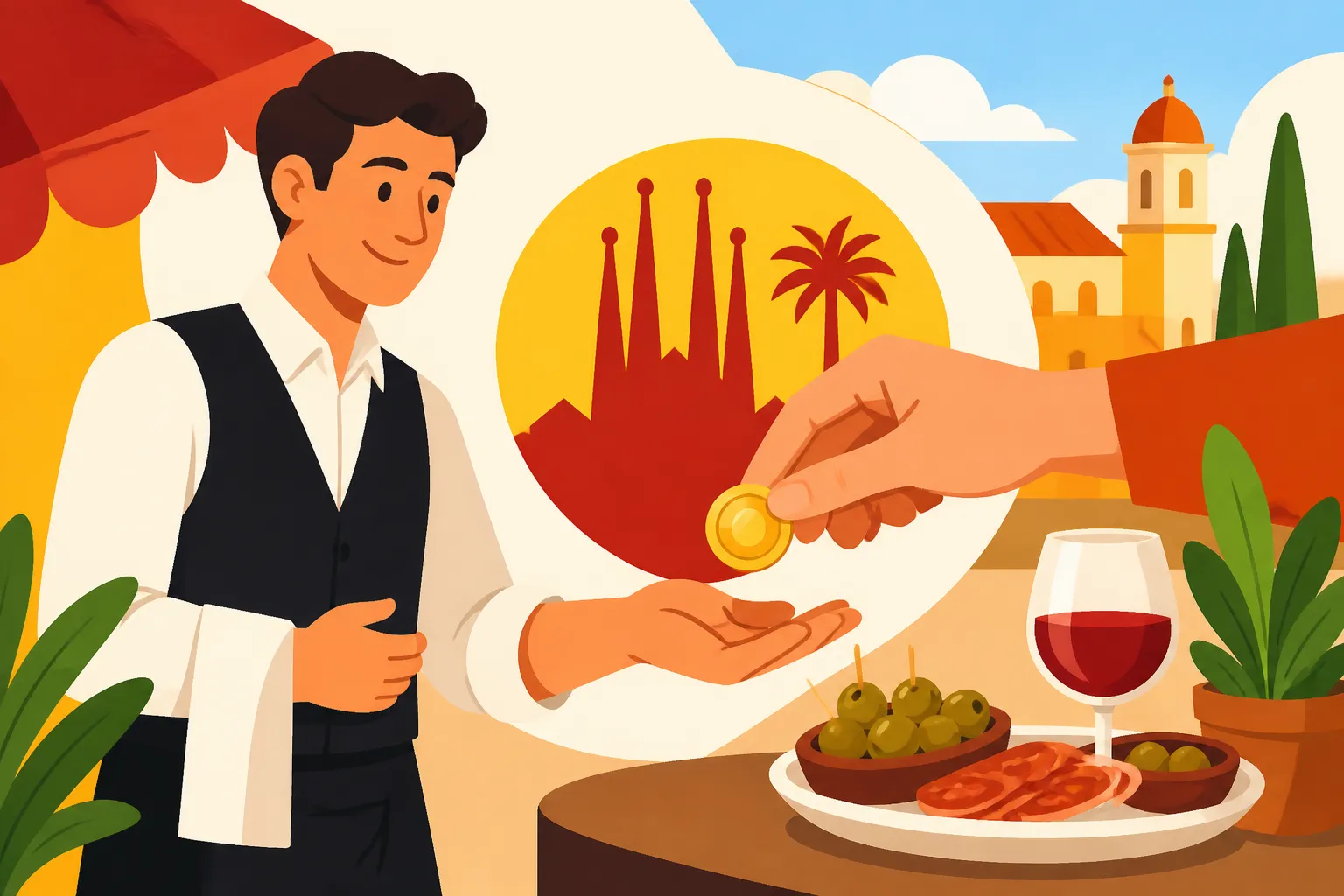
In North America, a 20% tip is often the baseline for decent service. If you try that in a local neighborhood "taberna" in Seville, the waiter might actually chase you down the street thinking you forgot your money. In Spain, the "propina" (tip) is rarely calculated as a strict percentage. Instead, it is usually about the "cambio" (change). If your meal costs 18.50€, leaving the 1.50€ change is a perfectly generous gesture.
This doesn't mean Spaniards are stingy; it means the social contract is different. Service is included in the price you see on the menu. While you might see a note about "IVA incluido" (VAT included), you will almost never see a "service charge" added to the bill unless you are in a highly touristy area of Barcelona or Madrid. For a deeper look at managing your finances here, check out Money in Spain for Expats: Banking, Taxes, and Everyday Payments.
The Concept of La Propina vs Servicio
It is essential to distinguish between the legal service included in your bill and the optional "propina." In Spain, the price on the menu is what you pay. There is no hidden math. When you leave a tip, you are making a personal statement that the waiter made your experience better. This cultural nuance is part of the broader Spanish Social Customs: Greetings, Kisses, and Personal Space that expats need to navigate.
Waiters in Spain are professionals; many stay at the same restaurant for decades. They don’t hover over your table or rush you to finish (which is why you often have to practically do a dance to get the bill). Because they aren't working for tips, they won't "fake" friendliness for an extra Euro. When they are nice, it's usually genuine, and when the service is great, a small tip acknowledges that professional effort.
How Regional Differences Influence Expectations
While the general rules apply nationwide, you will find slight variations between the bustling cities and rural villages. In major hubs like Madrid or Barcelona, where international influence is high, waiters are more accustomed to seeing tips, especially from foreigners. However, in a small village in Extremadura or rural Galicia, tipping might be even less common.
If you've used a service like Booking.com to find a boutique hotel in a remote area, you might find that the local staff are pleasantly surprised by even a 1€ or 2€ tip for help with your bags. They don't expect it, which makes the gesture feel much more meaningful. This local charm is a huge part of the Cost of Living in Spain: Realistic Budgets and Savings Tips—you aren't constantly bleeding small bills for every interaction.
Navigating the Gastronomic Scene: Restaurants and Bars
The most frequent tipping dilemmas happen when the "cuenta" (bill) arrives. Whether you’re grabbing a quick coffee or sitting down for a three-hour feast, the rules shift slightly based on the setting and the time of day.
The "Round Up" Rule for Casual Dining
For a standard lunch or a "Menú del Día," the most common practice among locals is to round up to the nearest Euro or leave a few coins. If your lunch costs 12.80€, leaving the 20 cents is okay, but leaving an extra Euro (making it 13.80€ or just dropping a 1€ coin) is considered very good etiquette.
In a casual setting, no one is checking the percentage. It’s about the convenience of the transaction. If you are sitting on a "terraza" enjoying the sun, you might spend a bit more time, and leaving a Euro is a nice way to thank the waiter for letting you linger. Understanding these small interactions is key to mastering Spanish Bar and Café Etiquette for Newcomers.
Fine Dining and Large Groups: When to Be More Generous
When you move into the territory of upscale dining—think white tablecloths, wine sommeliers, and multiple courses—the expectations climb slightly. In these establishments, a tip of 5% to 10% is appropriate if the service was seamless. However, even in the fanciest spots in Marbella or San Sebastián, going above 10% is seen as very "American" and unnecessary.
For large groups, such as a "comida de empresa" (work lunch) or a big family gathering, the workload for the staff increases significantly. If the bill is 400€ for ten people, leaving 20€ to 30€ (around 5-7%) is a fantastic gesture that will be deeply appreciated. This is particularly true during the holiday season or during Festivals, Fiestas, and Public Holidays in Spain when restaurants are packed to the rafters.
Coffee and Tapas: The Small Change Etiquette
Tipping for a single "café con leche" or a quick "caña" (small beer) is completely optional. Most Spaniards will leave the small copper coins (1, 2, and 5 cent pieces) on the bar, or nothing at all. If you’re standing at the bar eating a few olives and a tapa, leaving 20 or 50 cents is plenty.
The "tapas crawl" is a unique experience where you might visit four different bars in one evening. You don't need to tip at every single stop. If you do choose to leave something, keep it small. For more on how to navigate these delicious evenings, see Spanish Tapas Culture: How to Order and Where to Go. It’s more about the social rhythm than the monetary transaction.
| Service Type | Typical Bill Amount | Suggested Tip | Frequency |
|---|---|---|---|
| Quick Coffee/Drink | 1.50€ – 3.50€ | Change (5-20 cents) | Optional |
| Casual Lunch (Menú del Día) | 12€ – 15€ | 0.50€ – 1.00€ | Common |
| Tapas (Stand-up Bar) | 5€ – 15€ | 0.20€ – 0.50€ | Optional |
| Standard Dinner | 40€ – 80€ | 2.00€ – 5.00€ | Recommended |
| Fine Dining | 150€+ | 5% – 10% | Expected for good service |
| Taxi/Ride Share | 10€ – 20€ | Round up to nearest Euro | Common |
Tipping for Transport and Accommodations
Once you leave the restaurant, the rules of engagement change again. Logistics in Spain are generally efficient, but the human element still warrants a little recognition if you’re getting extra help.
Taxi Drivers and Ride-Sharing Apps
Taxis in Spain are strictly metered, and you should never negotiate a fare inside a city. When it comes to tipping, it is not expected. Most locals will simply round up to the nearest Euro for convenience. If the fare is 8.60€, you give the driver 9€ and tell them "está bien" (it's fine).
If the driver helps you with heavy suitcases or navigates through a nightmare of "obras" (roadworks) to get you to the station on time, leaving an extra 1€ or 2€ is a kind gesture. When booking your travel through platforms like Omio, you'll likely be dealing with pre-paid tickets for trains or buses, but for that final leg in a cab, keep some coins handy.
Hotel Staff: From Porters to Housekeeping
If you’ve booked a stay via Booking.com, you’ll likely find yourself in a range of accommodations, from "pensiones" to five-star resorts. In higher-end hotels, tipping the porter who carries your bags to your room is standard—usually 1€ per bag, with a maximum of 5€.
For housekeeping, it isn't mandatory, but if you're staying for several days and the room is kept spotless, leaving 5€ at the end of your stay on the bedside table is a lovely way to show gratitude. Concierges who go out of their way to book you a difficult restaurant reservation or help with local logistics should also be tipped around 5€ to 10€ depending on the effort involved. This ensures your stay aligns with the Spanish Meal Times and Dining Etiquette Explained if they’re helping you find that perfect late-night spot.
The Complexity of Private Transfers and Shuttles
If you have arranged a private shuttle from the airport, the driver is often an independent contractor or works for a small agency. In these cases, if the service is punctual and the car is clean, a tip of 2€ to 5€ is appropriate. This is slightly different from public transport where tipping is non-existent. Understanding these nuances helps you manage the Cost of Living in Spain: Realistic Budgets and Savings Tips without feeling like you're overspending on basic transitions.
Experience and Lifestyle: Tipping for Tours and Personal Care
Spain is a country built on experiences—from walking tours of the Gothic Quarter to a fresh haircut before a "fiesta." These services have their own unique tipping cultures.
Tour Guides: Free Tours vs. Private Excursions
This is where tipping is most "mandatory." If you join a "Free Walking Tour" (often found on platforms like GetYourGuide), the guide is not paid by the company. They rely entirely on your tips. For a standard two-hour tour, a tip of 10€ per person is considered fair if the guide was knowledgeable. If they were exceptional, 15€ to 20€ is not unheard of.
For private tours that you pay for in advance, the guide is already being compensated. However, if they provide a deep, personalized experience—perhaps showing you hidden spots that aren't in the brochures—a tip of 10€ to 20€ for the group is a nice way to say thank you. For more on planning these trips, see Spain's Regions and Where to Go: A Traveler's Overview.
Beauty Salons, Barbers, and Spas
In a "peluquería" (hair salon) or a barber shop, tipping is not the norm for a basic cut. However, if you are a regular and have a "your" stylist who always fits you in, rounding up the bill or leaving an extra 2€ to 3€ is common practice.
At a high-end spa, if you receive a massage or a specialized treatment, you might leave a small tip of 5€ for the therapist, but check first if there's a jar at the reception or if it’s better to give it to them directly. This is all part of the Staying Healthy in Spain: Preventive Care, Vaccines, and Wellness journey many expats take when they start settling into local life.
Food Delivery and Errand Services
With the rise of apps like Glovo or UberEats, food delivery has become a staple of Spanish city life. These riders often work in tough conditions—cycling through heatwaves or rain. While the app usually allows for a digital tip, many riders prefer a 1€ or 2€ coin in hand. It’s immediate and guarantees they get 100% of it. In a country where Understanding Spain's Daily Rhythm: Siesta and Late Nights means dinner often arrives at 10:00 PM, that delivery person is doing you a massive favor.
The Logistics of Payment: Cash, Card, and Apps
One of the biggest hurdles for expats is the technicality of how to tip, especially as Spain moves rapidly toward a cashless society.
Cash vs. Card: The Digital Tipping Dilemma
In the US, you can usually add a tip to the credit card slip. In Spain, this is rarely an option. The credit card terminals (dataphones) are often programmed only for the exact amount of the bill. If you want to tip, you usually need to have physical coins or small bills.
Some modern "hip" spots in Madrid or Barcelona are starting to include a "propina" option on the screen before you tap your card, but this is still the exception. Always try to carry a few 1€ and 2€ coins specifically for this purpose. If you don't have cash, you can ask the waiter "Can I add a tip to the card?" (¿Puedo añadir la propina en la tarjeta?), but be prepared for them to say no because their accounting system doesn't allow for it. Managing these small cash needs is a key part of Money in Spain for Expats: Banking, Taxes, and Everyday Payments.
Timing Your Tip: Before or After the Bill?
In Spain, you never tip before the service is rendered. The tip is always the final act. When the bill comes, you pay the total, and then you leave the "propina" on the table as you walk away. Unlike in some cultures where you might hand the money directly to the waiter with a wink, in Spain, it's more discreet. Leave it on the little tray the bill came in or directly on the table.
If you are paying by card and have a 1€ coin for the tip, pay the bill first, let the transaction clear, and then place the coin on the table. It feels more organic and follows the local rhythm. This also helps when Making Friends in Spain: Clubs, Meetups, and Language Exchanges—you don't want to be the one person holding up the group with complicated math at the end of the night.
Using Apps to Manage Your Travel Budget
When you’re moving between cities, using tools like Omio to book your transport helps you keep a clear digital record of your major expenses. This leaves you with more mental energy (and spare change) to handle the daily tipping culture.
By the time you reach your hotel—perhaps one you found on Booking.com—you’ll have a better handle on your "petty cash" needs. Remember that while Spain is becoming more digital, the "propina" remains a stubbornly physical tradition. Keeping 10€ in coins in your pocket will save you a lot of awkward "I'm so sorry, I don't have change" moments.
Regional Nuances and Final Advice
If you find yourself in the Basque Country, you might notice that the "pintxos" culture is even more rapid-fire. You often pay at the end based on how many sticks are on your plate. Tipping here is almost non-existent for pintxos unless you've had a full sit-down meal.
In the south, in Andalusia, the hospitality is famous for being warm and boisterous. Here, a small tip is often met with a very vocal "¡Gracias, caballero!" or "¡Muchas gracias, guapa!" It’s part of the theater of Spanish life. Don't let the fear of doing it "wrong" stop you from participating. The worst-case scenario is that you're seen as a slightly over-generous foreigner—and in the world of social blunders, that's a pretty good one to make.
As you settle into your new life or enjoy your holiday, remember that tipping is just one small thread in the rich tapestry of Spanish Customs, Etiquette, and Social Life. Observe the locals, keep your "cambio" handy, and focus more on enjoying the food and the company than the percentage on the bill.
Disclaimer
This guide is intended for informational purposes only. Tipping practices can vary by specific establishment and regional norms. Always use your best judgment based on the service received. The mention of specific brands is for contextual convenience and does not constitute a legal or financial recommendation. For official tax or financial advice regarding business expenses in Spain, please consult a qualified "gestor" or tax professional.