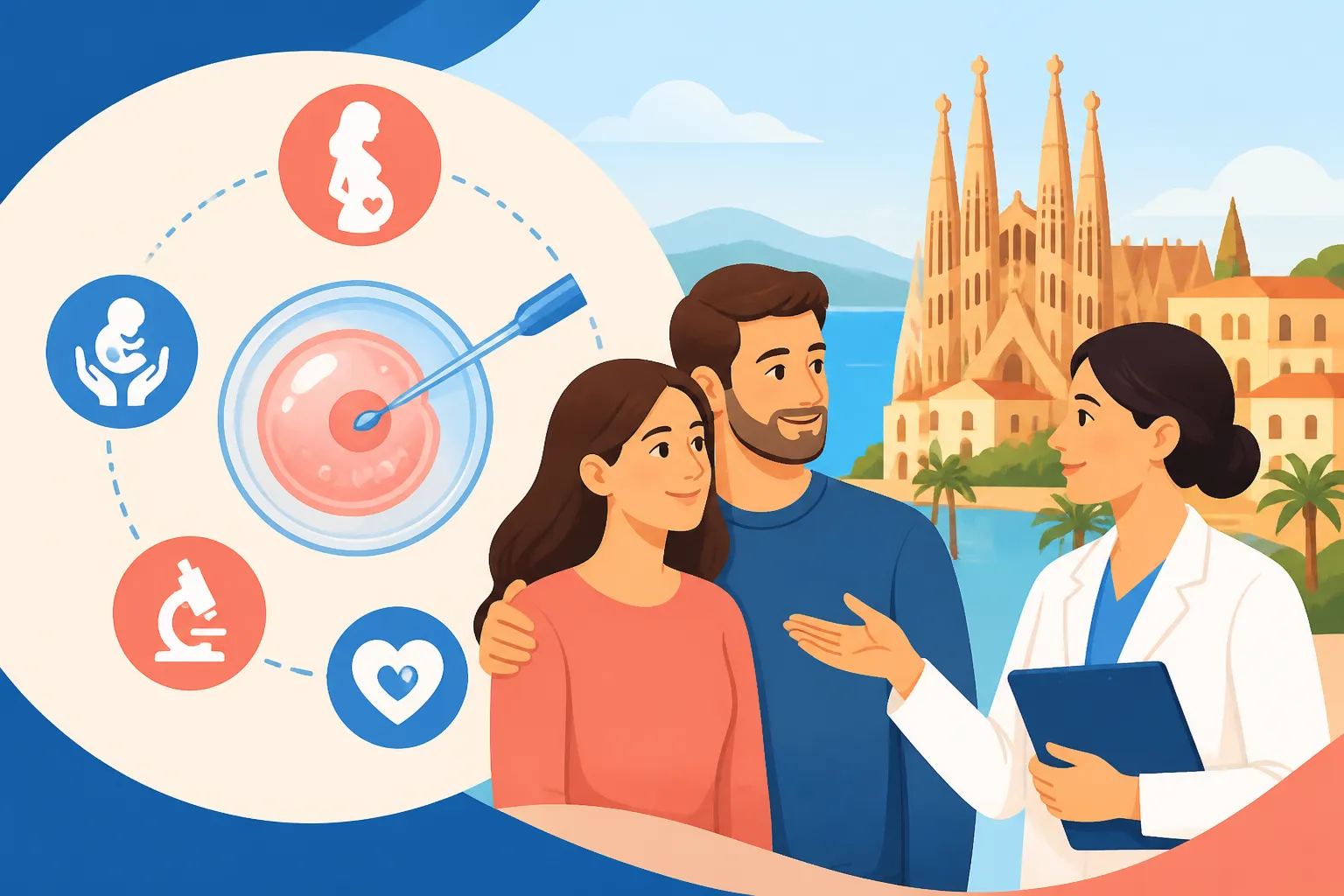
Fertility and IVF Treatment in Spain: What Foreign Patients Should Know
Navigating fertility treatments in a foreign country adds an overwhelming layer of stress to an already emotional journey. I remember sitting in a Madrid waiting room, clutching a folder of translated records and wondering if I’d misunderstood the legal nuances of donor anonymity here. This guide breaks down the Spanish IVF landscape so you can focus on your health instead of the bureaucracy.
Disclosure: This post may contain affiliate links. We may earn a commission at no extra cost to you if you make a purchase through these links. Read full disclosure.
Why Spain is a Global Hub for Assisted Reproduction
Spain has consistently remained at the forefront of reproductive medicine, not just in Europe, but globally. For many expats and "fertility tourists," the draw isn't just the high success rates, but the combination of advanced laboratory technology and a legal framework that is significantly more progressive than in many neighboring countries. When you begin Finding Doctors in Spain: Appointments, Referrals, and Language Tips, you will quickly realize that the specialization in fertility is a massive industry here.
The country’s clinics are known for their rigorous adherence to international standards, often holding multiple ISO certifications. This focus on quality is paired with a culture of deep empathy. Spanish medical professionals tend to treat the fertility journey as a collaborative effort rather than a purely clinical transaction. I have found that while the administrative side of Spanish healthcare can be slow, the actual face-to-face time with specialists is often much more thorough than what I experienced back home.
Furthermore, the volume of cases handled by Spanish clinics means their embryologists have a level of experience that is hard to match. Whether it is handling complex cases of recurrent miscarriage or advanced maternal age, the sheer "mileage" of these doctors translates into refined protocols and better outcomes for patients who have previously struggled elsewhere.
The Legal Framework and Patient Rights
The Spanish Law on Assisted Human Reproduction Techniques is one of the most liberal in the world. It permits treatment for all women over the age of 18, regardless of their marital status or sexual orientation. This means single women and lesbian couples have the same legal rights to access IVF and egg donation as heterosexual couples. For many expats coming from countries where these rights are restricted, this inclusivity is a breath of fresh air.
One of the most critical aspects of Spanish law is the absolute anonymity of gamete donors. In Spain, egg and sperm donation are altruistic and anonymous by law. While this means you cannot "choose" your donor based on a photograph or a detailed biography, the clinics are legally responsible for matching donors to recipients based on physical characteristics (phenotype) and blood type. This anonymity is often a deciding factor for parents who prefer that the donor remains a strictly biological contributor without the possibility of future contact.
Public vs Private Fertility Care
Understanding the Spain Healthcare System for Expats: Public vs Private is essential before you start your fertility journey. The public system (Seguridad Social) does provide fertility treatments, including IVF, but the eligibility criteria are very strict. Usually, there is an age cap (often 40 for women), a limit on the number of cycles, and you must not already have children. Most importantly, the waiting lists in the public system can stretch for two years or more, which is often not a luxury patients have when dealing with declining ovarian reserves.
Because of these hurdles, the vast majority of expats and international patients opt for private clinics. Private care allows for immediate starts, access to the latest technologies like PGT-A (Preimplantation Genetic Testing), and more personalized scheduling. While private care is an out-of-pocket expense, many find that the speed and higher success rates justify the cost. If you are already Choosing a Private Health Insurer in Spain: What to Compare, it is worth checking if they offer "fertility supplements," though most standard policies treat IVF as a specialized service with its own pricing.
Common Fertility Procedures and Specialized Techniques
The range of treatments available in Spain is exhaustive. Most patients start with a consultation to determine if a simple Intrauterine Insemination (IUI) is feasible or if they need to move directly to In Vitro Fertilization (IVF). The diagnostic phase is incredibly thorough, often involving tests that might be considered "add-ons" in other countries as part of the standard initial workup.
In my experience, the Spanish approach is to be proactive. They would rather run a detailed panel early on than have a patient go through multiple failed cycles. This is why it is so important to understand the Spanish Medical Terminology: Common Words Expats Should Know before your first deep dive with a specialist, as the acronyms for these tests come fast and frequent.
IVF and ICSI Protocols
In Vitro Fertilization in Spain almost always utilizes ICSI (Intracytoplasmic Sperm Injection) as a standard part of the protocol, especially if there are any concerns regarding male factor fertility. ICSI involves injecting a single sperm directly into a mature egg, significantly increasing the fertilization rate compared to traditional IVF where sperm and egg are left in a dish to interact naturally.
Spanish clinics also favor blastocyst-stage transfers. Instead of transferring embryos on day three, they wait until day five or six. This allows the embryologists to see which embryos are truly robust and have the best chance of implantation. The laboratory conditions required to keep embryos healthy until the blastocyst stage are demanding, and Spanish labs are among the best-equipped in the world to handle this.
The ROPA Method for Female Couples
Spain is a pioneer in the ROPA method (Reception of Oocytes from Partner). This allows both women in a lesbian couple to participate biologically in the pregnancy. One partner provides the eggs (the genetic mother), and the other partner carries the pregnancy (the gestational mother). Legally, this is treated as a form of non-anonymous donation between the couple, provided they are married or have a registered civil partnership.
The ROPA method is highly popular because it fosters a shared maternal experience. The clinics handle the synchronization of both partners' cycles with precision. If you are navigating this as an expat couple, ensure your Women’s Health Services in Spain: Contraception and Checkups records are up to date, as the clinic will need a full gynecological history for both of you to determine who is the best candidate for egg retrieval versus carrying the pregnancy.
Egg Donation and Donor Selection
Because of the anonymous nature of donation in Spain, the country has a very large pool of young, healthy donors. This means there is almost never a waiting list for egg donation. The clinic’s medical team performs the matching process, ensuring that the donor’s height, hair color, eye color, and skin tone align with the recipient mother.
For patients who have experienced multiple failed IVF cycles with their own eggs, the transition to egg donation in Spain offers a significant jump in success rates, often exceeding 70% per transfer. The donors undergo rigorous genetic screening and psychological evaluation, which provides an extra layer of security for the intended parents.
Navigating Costs and Financial Planning
The cost of IVF in Spain is generally lower than in the United States or the UK, but it is higher than in some Eastern European hubs. However, the "value for money" is often cited as the best in Europe due to the high success-to-cost ratio. You should be prepared for a transparent but multi-layered pricing structure.
When budgeting, it is helpful to refer to Health Costs in Spain: Typical Co‑Pays and Out‑of‑Pocket Fees to get a sense of how general medical costs work, though fertility is a different beast. Most clinics will provide a "base price" for a cycle, but you must ask about what is excluded. Medication, for example, is almost always an additional cost and can range from 800 to 1,500 EUR depending on the dosage required.
| Treatment Type | Estimated Private Cost (EUR) | Includes | Excludes |
|---|---|---|---|
| Basic IVF (Own Eggs) | 4,500 – 5,500 | Scans, Retrieval, Transfer | Meds, Sedation, PGT-A |
| Egg Donation Cycle | 7,500 – 9,500 | Donor Prep, ICSI, Transfer | Recipient Meds, Cryopreservation |
| ROPA Method | 5,000 – 7,000 | Partner Prep, Retrieval, Transfer | Donor Sperm, Meds |
| Embryo Adoption | 2,500 – 3,500 | Embryo Thaw, Transfer | Preparation Meds |
| IUI (Donor Sperm) | 1,200 – 1,800 | Insemination, Sperm Sample | Medication, Monitoring Scans |
Private Insurance and Fertility
It is a common misconception that standard private insurance for expats will cover the full cost of IVF. While brands like Innoinsure are excellent for securing your residency visa with a policy that has no co-pays and covers all basic medical needs, they typically do not cover the actual IVF procedure itself. However, having a solid policy is still vital because it covers the diagnostic tests, blood work, and any complications that might arise, which could otherwise be very expensive.
For those looking for more comprehensive international coverage, Cigna Global often provides modules that include maternity and sometimes basic fertility investigations after a significant waiting period (usually 12-24 months). If you are traveling to Spain specifically for treatment, SafetyWing can offer travel-related medical coverage, but again, the IVF procedure is an elective treatment you will likely pay for out-of-pocket.
Hidden Costs and Logistics
One of the "hidden" costs is often flagged to readers as is the cost of freezing and storing embryos. If your cycle results in more healthy embryos than can be safely transferred, you will want to freeze the rest for future use. The initial freezing often costs around 400-600 EUR, with a yearly storage fee of about 300 EUR thereafter.
Additionally, if you do not live in the same city as the clinic, you need to factor in the cost of local monitoring. Some clinics allow you to do your scans and blood tests locally and only fly in for the retrieval and transfer. However, this requires a local gynecologist who is willing to cooperate with an outside clinic’s protocol. If you are staying in Spain for the duration of the cycle (usually about 2-3 weeks), the cost of accommodation and "living" while you are under the stress of hormones can add up.
Selecting a Clinic and Starting Your Journey
Choosing where to entrust your dreams of a family is a deeply personal decision. In Spain, you are spoiled for choice, with world-renowned centers in Madrid, Barcelona, Valencia, and Alicante. Most of these clinics have dedicated international departments where the staff speaks fluent English, French, German, and Italian.
Don't be afraid to be a "difficult" patient. Ask for their specific success rates for your age group, not just the "overall" clinic average. I found that the best clinics were the ones that were honest about the challenges of my specific case rather than promising a miracle on the first try.
Language Support and International Departments
While most head doctors speak English, the nursing staff and administrative teams might not. This is where the "International Patient Coordinator" becomes your best friend. They act as a bridge, ensuring your questions are answered and your medications are correctly understood. If you are worried about the language barrier, check out our guide on How to Find an English‑Speaking Doctor in Spain (Practical Guide).
Even with a coordinator, it is helpful to have your records organized. Knowing What to Bring to Your First Doctor Visit in Spain (Documents Checklist)—such as previous hormone panels, surgical reports, and any semen analysis—can save you weeks of re-testing. Most Spanish clinics are digital-heavy and will want these uploaded to their portal before your first video consultation.
Evaluating Laboratory Quality
The "magic" of IVF happens in the lab. When touring clinics or doing virtual visits, ask about their "Time-Lapse" technology (like Embryoscope). This allows the embryos to be monitored 24/7 without being removed from the incubator, which maintains a stable environment and improves viability.
Also, ask about their policy on "Single Embryo Transfer" (SET). Modern Spanish medicine strongly leans towards SET to avoid the risks associated with multiple pregnancies. A clinic that pushes for multiple embryos to be transferred without a strong medical reason might be trying to inflate their "per transfer" success rates at the expense of your safety and the health of the potential babies.
Telemedicine and Remote Monitoring
For many expats, the ability to start the process remotely is a lifesaver. Telemedicine in Spain: When It’s Useful and What to Expect is a concept the fertility industry has mastered. You can have your initial consultation via Zoom, get your prescriptions sent digitally, and only arrive in Spain when your follicles are ready for the final stages of the cycle.
This hybrid approach allows you to maintain your work and support system at home for as long as possible. Many clinics now use apps to track your medication schedule, and you can upload scan results from your local doctor for the Spanish specialist to review in real-time. This level of connectivity has made "cross-border" fertility treatment much more manageable than it was even five years ago.
Emotional Support and the Expat Experience
The emotional toll of fertility treatment is significant, and when you are an expat, you are often doing it without your usual support network. The "two-week wait" after a transfer can feel like an eternity when you are navigating a different culture and language.
It is essential to prioritize your mental health during this time. Spain has a growing number of expat-focused support groups and counselors who specialize in "fertility grief" and the unique stresses of treatment abroad. Taking a look at Mental Health Support in Spain: How to Find Help as an Expat can provide you with resources for therapists who work in English and understand the specific nuances of the fertility journey.
Managing Culture Shock During Treatment
Spanish clinics operate on "Spanish time." While they are professional, don't be surprised if an appointment runs 15 minutes late or if the pace of communication feels a bit more relaxed than in London or New York. Embracing this pace—the "no pasa nada" attitude—can actually help lower your cortisol levels if you let it.
However, when it comes to the medical procedures themselves, they are incredibly punctual. You need to be at the clinic exactly when told for your trigger shot or retrieval. Understanding this balance between social "laxness" and medical "precision" is key to keeping your stress levels in check.
Building a Local Support System
If you are a resident in Spain, try to find local "Fertility Meetups" in cities like Barcelona or Madrid. There is a huge community of women and couples going through exactly what you are. Sharing the name of a good pharmacy that actually has your specific progesterone in stock or a cafe near the clinic that has the best decaf can make the daily grind of treatment feel much more human.
The journey to parenthood in a foreign land is a testament to your resilience. Spain offers some of the best medical tools in the world to help you succeed, but your own well-being is the engine that keeps the process moving. Be kind to yourself, stay organized with your paperwork, and don't hesitate to lean on the professional and community resources available to you.
Disclaimer
This guide is for informational purposes only and does not constitute medical or legal advice. Fertility laws and medical protocols in Spain can change, and you should always consult with a qualified medical professional and a legal expert specializing in Spanish reproductive law before beginning any treatment.