Physiotherapy and Rehabilitation in Spain: Public and Private Routes
Dealing with a sports injury or chronic back pain in Spain can feel like a labyrinth of referrals and waiting lists that never seem to end. I remember the frustration of trying to find a specialist who actually understood my biomechanics while staring at a three-month wait for a public appointment. This guide solves the confusion by mapping out exactly how to access physiotherapy and rehabilitation through both public and private systems.
Disclosure: This post may contain affiliate links. We may earn a commission at no extra cost to you if you make a purchase through these links. Read full disclosure.
Understanding the Spanish Public Physiotherapy System
The public healthcare system in Spain, known as Seguridad Social, is world-class for many things, but navigating it for physical therapy requires a significant amount of patience and a clear understanding of the bureaucratic steps involved. Unlike some countries where you might be able to self-refer to a clinic within the public network, Spain follows a strict hierarchical referral chain that starts at your local Centro de Salud.
The Referral Chain From GP to Specialist
To access public physiotherapy, your first stop is always your primary care physician, or médico de cabecera. You cannot simply ask for a physical therapist; you must present your symptoms and allow the doctor to determine the next step. In most regions, the GP will not refer you directly to a physiotherapist. Instead, they will refer you to a rehabilitador, a specialist doctor in physical medicine and rehabilitation.
This middle step is where many expats get caught in the "waiting loop." You might wait several weeks just to see the rehabilitador, who will then perform a more detailed assessment and prescribe a specific number of sessions. This prescription is what eventually gets you into the physiotherapy gym. Understanding What Is a ‘Centro de Salud’ in Spain and How Do You Register? is the vital first step in this process, as you cannot enter this chain without being properly registered in the system.
Waiting Times and Frequency of Sessions
The reality of the public system is that waiting times for non-urgent physiotherapy can be lengthy. Depending on your region—be it Andalusia, Madrid, or Catalonia—you could be looking at a wait of several months for a chronic condition. Fellow expats can struggle with lower back pain for nearly half a year before their first session was scheduled.
Once you are in the system, the sessions are often grouped into blocks, such as ten consecutive days of treatment. These are typically held in large, communal hospital gyms where one therapist may be overseeing multiple patients simultaneously. While the quality of the therapists is excellent, the individualized attention may be less than what you are used to in a private setting. This is one of the key Spain Healthcare System for Expats: Public vs Private distinctions that usually drives people toward the private route.
When the Public System Excels
Despite the wait times, the public system is exceptional for acute rehabilitation, such as recovery after a major car accident or a complex surgery performed within a public hospital. In these cases, the transition to rehab is often much faster and highly integrated with the surgical team. If you are recovering from a significant event, the public system provides a comprehensive safety net that includes high-tech equipment and specialized neurological rehabilitation that might be prohibitively expensive in the private sector.
For those managing Chronic Conditions in Spain: Managing Ongoing Care as an Expat, the public system provides a long-term record that follows you across the country. The stability of the public system is a comfort, provided your condition is not so painful that a three-month wait becomes a secondary health crisis in itself.
Navigating Private Physiotherapy Options for Expats
Because of the wait times in the public sector, the vast majority of expats in Spain choose to utilize private physiotherapy. This can be done either through a private health insurance policy or by paying out-of-pocket at a local clinic. The speed and quality of care in the private sector are generally very high, with most patients being seen within 48 hours of their initial injury.
Direct Access vs Insurance Coverage
If you have a private insurance policy from providers like Cigna Global or Innoinsure, the process is significantly streamlined. Most private policies allow you to choose a clinic from their approved "quadro médico" (medical directory) and book an appointment directly. However, some insurers still require an initial "prescriptive" visit to a traumatologist or a rehabilitation doctor before they will authorize a block of sessions.
When using a provider like SafetyWing for shorter-term needs or nomadic lifestyles, you may need to pay upfront and seek reimbursement. Always check if your specific policy requires a "volante" (authorization slip) before you start treatment. Failing to get this bit of digital paperwork can lead to a frustrating situation where the clinic expects payment because the insurance company hasn't "cleared" the sessions yet. This is a common hurdle when Choosing a Private Health Insurer in Spain: What to Compare.
Choosing the Right Clinic and Language Needs
In major cities like Barcelona, Madrid, or Valencia, finding an English-speaking therapist is relatively easy. However, in smaller towns, you might need a Spanish Medical Terminology: Common Words Expats Should Know guide to help explain your symptoms. When searching for a clinic, look for those that specialize in your specific need, such as fisioterapia deportiva (sports physio) or suelo pélvico (pelvic floor).
The private sector in Spain is highly competitive, meaning clinics often invest in the latest technology, such as Indiba radiofrequency, EPTE (percutaneous electrolysis), or high-power lasers. If you are an athlete, searching for a clinic that mentions readaptación deportiva will ensure you get a therapist who understands how to get you back to your specific sport rather than just managing daily pain.
Out of Pocket Costs and Budgeting
For those without insurance coverage, paying "por sesión" (per session) is quite affordable compared to Northern Europe or North America. On average, a 50-minute private physiotherapy session in Spain costs between €35 and €60. Many clinics offer "bonos"—discounted packs of 5 or 10 sessions—which can bring the price down significantly.
It is often advisable that newcomers budget for at least a few out-of-pocket sessions even if they have insurance, as it allows for immediate treatment while waiting for insurance authorizations to process. This is a practical part of how to Health Costs in Spain: Typical Co‑Pays and Out‑of‑Pocket Fees can vary depending on your urgency.
Specialized Rehabilitation Services in Spain
Rehabilitation in Spain goes far beyond basic massage and stretching. The country has a robust network of specialized centers focusing on different aspects of recovery, from neurological issues to women's health.
Post Surgery Recovery and Hospital Based Rehab
If you have undergone orthopedic surgery, such as an ACL reconstruction or a hip replacement, your rehabilitation will likely start in a specialized hospital setting. Private hospitals often have their own dedicated rehab floors. The focus here is on early mobilization. You will work with a team that includes the surgeon, a fisioterapeuta, and sometimes an auxiliar to ensure your initial recovery milestones are met.
It is important to have your medical records organized during this transition. If you are moving between a private surgeon and a public rehab center, or vice-versa, you will need to know How to Request Medical Records in Spain for a New Doctor Abroad or for your local specialist to ensure the protocol is followed correctly.
Neurological and Occupational Therapy
For patients recovering from a stroke or managing conditions like Multiple Sclerosis or Parkinson’s, Spain offers specialized centros de daño cerebral (brain injury centers). These facilities integrate physiotherapy with occupational therapy (terapia ocupacional) and speech therapy (logopedia).
The public system has excellent centers for this, but the private route offers more intensive, one-on-one "neuro-rehab" that can be critical in the first six months following a neurological event. When looking for these services, check if the facility is accredited by the regional health authority to ensure they meet the rigorous standards for intensive rehabilitation.
Women’s Health and Pelvic Floor Rehabilitation
One area where Spain is particularly advanced is in fisioterapia de suelo pélvico (pelvic floor physio). This is often an integral part of Women’s and Family Health in Spain: Maternity, Pediatrics, and Screening. Whether it’s prenatal preparation or postnatal recovery, specialized physical therapists use ultrasound and biofeedback to help women recover.
In the public system, you may find "preparación al parto" (birth prep) classes that include some of these elements, but for specific issues like diastasis recti, most expats find the specialized attention of a private clinic to be far superior. Many of these therapists also offer home visits, which can be a lifesaver in the first few weeks after giving birth.
Practical Logistics of Your Treatment Plan
Actually attending the sessions involves a few logistical quirks that are unique to the Spanish healthcare landscape. Knowing these ahead of time can save you from an awkward first encounter at the clinic reception.
What to Bring to Your First Session
Unlike a general doctor’s visit, your first physiotherapy session requires you to be prepared for physical assessment immediately.
- Documentation: Always bring your TIE (residency card) or passport, your insurance card, and any "volante" or prescription you have received.
- Imaging: If you have had an X-ray or MRI, bring the report (the informe). In Spain, patients are usually given their imaging results on a CD or via a digital portal; the therapist will need to see the actual images or the specialist’s notes.
- Clothing: Bring shorts or a tank top. While Spanish therapists are professional, they need to see the joint and skin to perform manual therapy or use techniques like punción seca (dry needling).
If you are unsure of what else to pack, especially for a hospital-based stay, refer to our guide on What to Bring to a Hospital in Spain: Practical Packing List.
Understanding Medical Terminology in Spanish
Even if your therapist speaks English, the administrative staff and the written reports will be in Spanish. It is helpful to know the difference between a contractura (muscle knot), an esguince (sprain), and a rotura fibrilar (muscle tear).
If you are dealing with insurance providers like Innoinsure or Cigna Global, you may need to describe your progress in specific terms to maintain your session authorization. Being able to say "Me siento mejor" (I feel better) is a start, but knowing how to describe a "dolor punzante" (stabbing pain) vs. a "dolor sordo" (dull ache) is much more helpful for a clinical assessment.
Maintenance and Long-Term Wellness Habits
Spanish life is conducive to recovery—the Mediterranean diet and the culture of walking are great for low-impact rehab. However, the heat can be a factor. If you are doing exercises at home, you should be aware of Heatwaves in Spain: Health Precautions for Expats to ensure you aren't overexerting yourself in 40-degree weather.
Many physiotherapy clinics also offer Pilates or Yoga classes led by physiotherapists (Pilates Terapéutico). This is a fantastic way to transition from injury treatment to long-term prevention. Joining these classes is also a great way for Staying Healthy in Spain: Preventive Care, Vaccines, and Wellness while meeting other people in your community who are also focused on fitness.
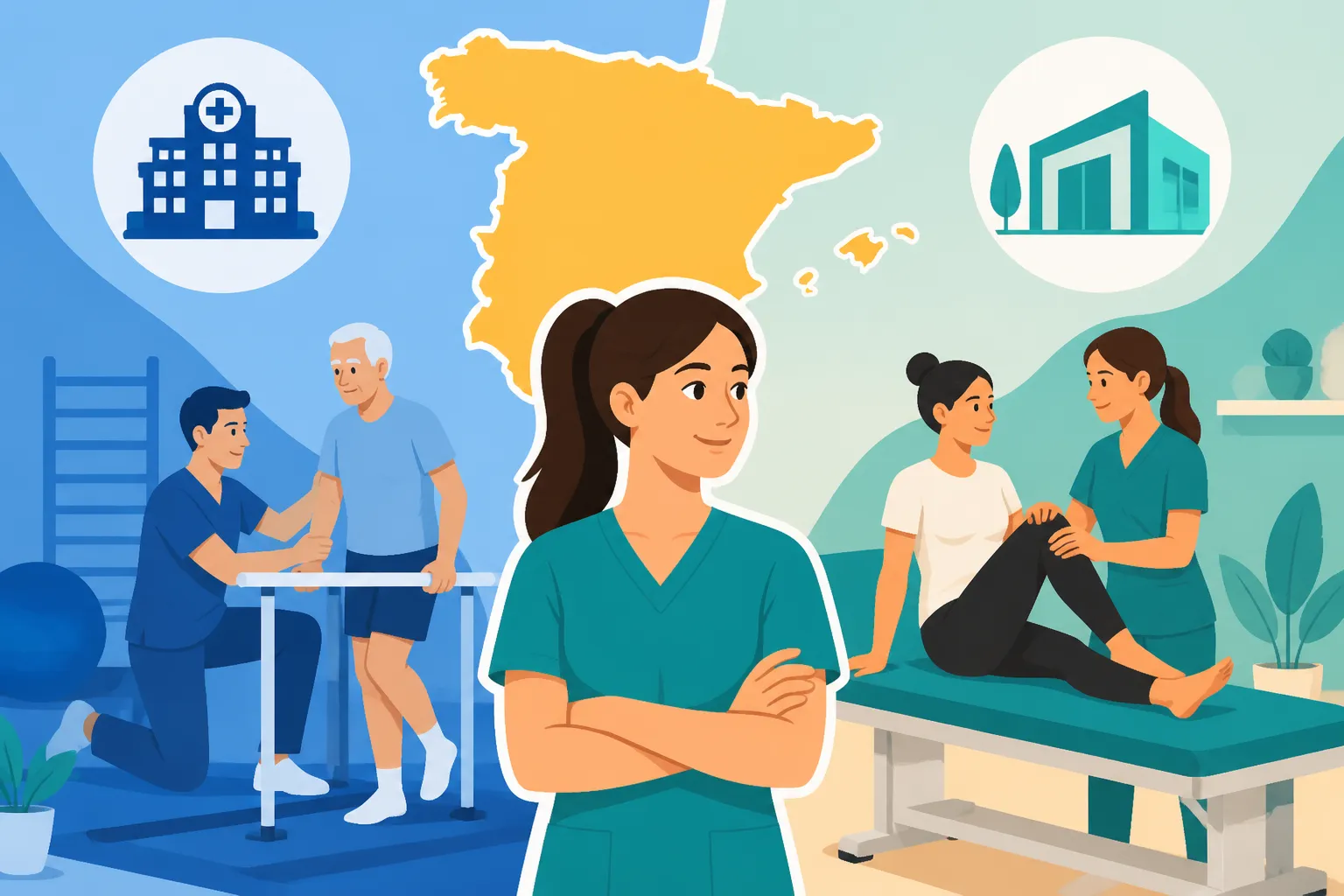
Comparing Public vs Private Care
| Feature | Public Route (Seguridad Social) | Private Route (Insurance/Cash) |
|---|---|---|
| Access | Via GP and Rehabilitador referral | Direct booking (usually) |
| Wait Time | 2 to 6 months (average) | 1 to 3 days |
| Cost | Free for residents | €35–€60 per session / Insurance co-pay |
| Duration | Often fixed blocks (e.g., 10 days) | Flexible, based on progress |
| Attention | Usually group settings | One-on-one |
| Language | Primarily Spanish | English often available in cities |
| Specialization | Excellent for trauma/neuro | High-tech sports & women's health |
Managing Costs and Insurance Claims
If you are using private insurance, the "claim" process in Spain is usually invisible. Most clinics use an electronic card reader; you swipe your card, and the clinic bills the insurer directly. However, if you are using a reimbursement-based plan, such as those often provided by SafetyWing for travelers or digital nomads, you must be meticulous about your paperwork.
You will need a "factura" (official invoice) that includes the clinic's CIF (tax ID number), your full name, and your NIE/Passport number. A simple credit card receipt is not enough for an insurance claim. You should also ensure the invoice clearly states the "concept"—for example, "Sesión de fisioterapia" and the date of service. If you are unsure about the financial side, reading up on How to Handle Medical Bills in Spain: Receipts, Claims, and Disputes can prevent costly mistakes.
Rehabilitation After a Minor Accident
If you have a minor slip and fall or a "golpe" while playing padel, the route you take depends on your coverage. For those without private insurance, the Urgent Care vs Emergency Room in Spain: When to Use Each guide is essential. You might start at Urgencias to rule out a fracture, but the follow-up rehab will still follow the GP referral chain mentioned earlier.
If the injury happened at work, the process changes entirely. You would deal with a Mutua, which is a private entity that manages workplace accidents for the public system. The rehab provided by Mutuas is often very efficient and intensive, as their goal is to get you back to work as quickly as possible. This is a specific nuance of Workplace Health & Safety in Spain: What Employees Should Know.
Final Thoughts on Physical Recovery in Spain
The key to a successful recovery in Spain is being proactive. If you rely solely on the public system for a non-urgent back issue, you may find your condition worsening while you wait. Expats should have a "hybrid" mindset: use the public system for major emergencies and chronic long-term oversight, but keep a private insurance policy or a dedicated "health fund" for physiotherapy.
The quality of therapists in Spain is truly world-class. Whether you are recovering in a high-tech clinic in Marbella or a local Centro de Salud in a mountain village, the professional standards are high. By understanding the referral paths and being prepared with the right documentation, you can navigate the system and get back to enjoying the active Spanish lifestyle you moved here for.
Disclaimer
This guide is for informational purposes only and does not constitute medical or legal advice. Healthcare regulations and insurance policies in Spain are subject to change. Always consult with a qualified medical professional and your insurance provider to verify current procedures and coverage limits relevant to your specific situation.