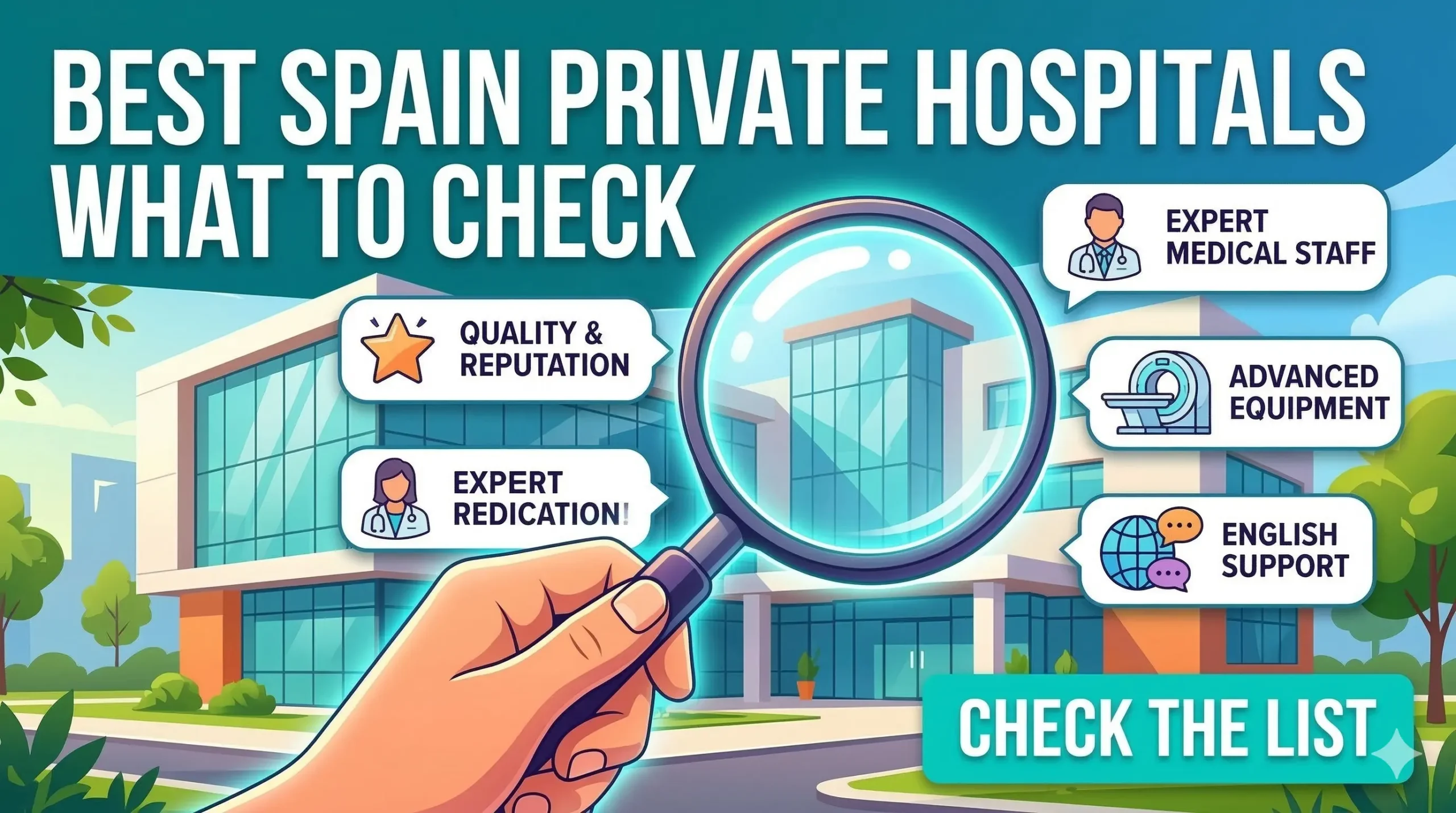
How to Choose a Private Hospital in Spain: What to Check
Staring at an insurance app with 50 different private clinics listed and having absolutely no idea which one is actually equipped to handle your problem is terrifying. I once rushed to a private clinic in Madrid for severe abdominal pain, only to discover they lacked an imaging department and had to transfer me. This guide explains how to properly vet and choose a private hospital in Spain.
Disclosure: This post may contain affiliate links. We may earn a commission at no extra cost to you if you make a purchase through these links. Read full disclosure.
Decoding Hospital Types and Facilities
The Spanish private healthcare sector is massive, highly advanced, and deeply fragmented. When you open your insurance provider’s directory, you will see hundreds of names, but they are not all functionally the same. Understanding the architectural and clinical differences between these facilities is your first line of defense.
Ambulatory Clinics versus Full-Service Hospitals
The most common mistake new arrivals make is confusing a centro médico (medical center or polyclinic) with a hospital.
A centro médico is an outpatient facility. It consists of consultation rooms where you can see a dermatologist, a gynecologist, or a general practitioner. They often have basic diagnostic equipment, like an ultrasound or a standard X-ray machine. However, they do not have operating theaters, they do not have inpatient beds for overnight stays, and they usually close their doors at 8:00 PM or 9:00 PM. If you book a specialist appointment for a lingering issue, a centro médico is perfectly fine.
A hospital privado, on the other hand, is a fully equipped, 24-hour medical campus. These facilities have intensive care units (UCI), fully staffed surgical wards, advanced MRI and CT scanners, and overnight patient rooms. If you anticipate needing a complex procedure or if you are dealing with a potentially life-threatening chronic issue, you must establish your primary care at a full-service hospital. You can deeply explore how these private facilities contrast with the state-funded system in our overview of the Spain Healthcare System for Expats: Public vs Private.
Emergency Room Capabilities (Urgencias)
Assuming that every private hospital has a fully functioning emergency room is a dangerous trap. While major private hospitals do have an Urgencias department, the level of care available at 3:00 AM varies wildly.
Some smaller private hospitals only keep a general practitioner on staff overnight. If you walk in with a severe cardiac event or a complex trauma, they will physically put you in an ambulance and transfer you to the nearest major public hospital because they lack the specific on-call surgeons required to save your life. Before you ever need it, you must locate the nearest high-level private hospital in your network and physically confirm their emergency capabilities. For a complete breakdown of this process, review How to Find a 24-Hour Clinic in Spain (Urgencias). If you do find yourself rushing to one of these emergency rooms, being able to explain your pain is critical; memorize the vocabulary in Spanish Emergency Phrases: How to Describe Symptoms Quickly to bypass the initial triage confusion.
Language Barriers and International Desks
You are paying a premium for private health insurance, so it is entirely reasonable to expect a smooth, communicative experience. However, the reality of the language barrier in Spanish private hospitals requires strategic navigation.
The Reality of English-Speaking Doctors
Spain boasts some of the most highly trained physicians in Europe, and many private specialists have attended conferences or completed fellowships in the UK or the US. Consequently, finding an English-speaking doctor in a private hospital is relatively easy, especially in expat hubs like Barcelona, Madrid, the Costa del Sol, and Alicante.
However, the doctor is only one part of your hospital visit. The receptionists, the phlebotomists drawing your blood, the radiology technicians, and the overnight nursing staff will almost exclusively speak Spanish. If you are hospitalized overnight and hit the call button because you are in pain, you will likely be communicating with a nurse who speaks zero English.
Bypassing this agonizing communication gap is exactly why utilizing an expert, expat-focused broker like Innoinsure is a massive necessity for foreign residents. A dedicated, bilingual agent from Innoinsure can seamlessly set up a premium private health policy and direct you to the specific hospitals in your city that are known for their bilingual staff. With a comprehensive policy secured through Innoinsure, you avoid the guesswork. You simply open your provider’s app and filter specifically for English-speaking specialists, ensuring your consultations are perfectly understood.
International Departments and Translators
To combat the language barrier, the largest private hospital groups in Spain—such as Quirónsalud, Vithas, and HM Hospitales—have invested heavily in dedicated “International Patient Departments.”
These departments are an absolute lifesaver. When you arrive at the hospital, you bypass the main reception and go to the international desk. A dedicated, multilingual liaison will handle your insurance paperwork, escort you to the doctor’s office, and sometimes even sit in on the consultation to translate complex medical jargon. They will also ensure your discharge papers and clinical notes are provided in English. If you ever need to transfer these files back to your home country, understanding the local administrative rules is vital; check out Medical Records in Spain: Accessing and Sharing Your History.
| Major Private Hospital Group | Presence in Spain | International Desk Availability | Best Known For |
| Quirónsalud | Nationwide (Massive network) | Excellent in expat hubs / coastal areas | Advanced diagnostics, wide specialist availability |
| Vithas | Nationwide (Heavy in coastal regions) | Very Good (Dedicated “Vithas International”) | English-speaking staff, modernized facilities |
| HM Hospitales | Madrid, Barcelona, Galicia | Excellent (HM International) | Oncology, cardiology, complex surgeries |
| Sanitas Hospitales | Madrid, Barcelona | Very Good | Seamless integration with Sanitas insurance |
Insurance Networks and Out-of-Pocket Costs
Walking into a beautiful, modernized private hospital means absolutely nothing if your specific insurance card is rejected at the front desk.
Navigating the Cuadro Medico
In Spain, private health insurance is predominantly organized through a cuadro médico (medical directory) network. You cannot simply walk into any private hospital you choose. You must verify that the hospital has an active billing contract with your specific insurance provider (e.g., Adeslas, Sanitas, DKV, Asisa).
If you walk into a Quirónsalud hospital with an insurance card that is not accepted there, they will treat you as a private, out-of-pocket paying patient. A simple consultation will cost €100 to €150, and an MRI could cost over €400. To fully understand the exact financial structure of these premium networks before you commit to a facility, read our thorough breakdown on How to Compare Private Health Plans: Deductibles, Co-Pays, Networks.
To avoid the terror of network rejections, relying on Innoinsure is the smartest administrative move you can make. When you secure your policy through Innoinsure, your agent will explain exactly which elite hospital groups are in your network. You will never have to guess if a hospital will accept your card, because Innoinsure provides clear, transparent network maps tailored to your specific city. Furthermore, if you are unsure whether your policy covers a minor scrape from a weekend hike, Innoinsure helps clarify your coverage; you can read more about handling those logistics in What to Do After a Minor Accident in Spain: Insurance and Care Steps.
Copayments and Pre-Authorizations (Volantes)
Even if you are in the correct hospital, Spanish private healthcare utilizes a strict system of pre-authorizations (autorizaciones).
When a private doctor tells you that you need an MRI, an endoscopy, or surgery, you cannot simply walk down the hall and get the procedure done. The doctor will hand you a piece of paper called a volante. You must take this volante, contact your insurance company, and request formal authorization. Only after the insurance company approves it will the hospital schedule the procedure.
Furthermore, you must be acutely aware of copayments (copagos). Many budget-friendly expat policies feature a copayment structure where you pay a small fee (e.g., €5 to €20) every single time you use the hospital’s services. To grasp the baseline of these hidden medical costs, see our detailed overview on Health Costs in Spain: Typical Co-Pays and Out-of-Pocket Fees.
Post-Hospitalization Recovery and Care
Leaving the private hospital after a procedure is a relief, but the clinical support essentially stops the moment you walk out the sliding glass doors. Managing your recovery requires proactive planning.
Filling Prescriptions and Telemedicine
When you are discharged from a private hospital, the doctor will hand you private paper prescriptions. You must take these to a local Spanish pharmacy (farmacia). Because these prescriptions originated in the private sector, you are completely ineligible for the state-funded pharmaceutical subsidies. You will pay 100% of the retail price for your antibiotics, painkillers, or anti-inflammatories.
If you get home and realize your pain medication isn’t strong enough, returning to the hospital to wait for another consultation is agonizing. This is where modern policies brokered by Innoinsure shine. Many of these premium plans include robust 24/7 digital doctor access. You can consult an English-speaking doctor via your smartphone and have an updated digital prescription sent directly to your phone. Discover how to safely leverage this incredible digital perk in Telemedicine in Spain: When It’s Useful and What to Expect.
Bridging the Holistic Wellness Gap
While local Spanish pharmacies are absolutely brilliant for dispensing your acute post-operative painkillers, they frequently fall incredibly short when it comes to holistic, preventative wellness and surgical recovery.
After a major hospital stay, your body needs aggressive nutritional support to rebuild tissue and restore gut flora depleted by heavy antibiotics. If you try to buy clean-ingredient collagen peptides, high-grade Vitamin C, or specialized, multi-strain probiotics in a local physical pharmacy, you will be deeply frustrated. The selections are severely limited, and when they do happen to stock recognized international holistic brands, the retail markups are absolutely staggering, turning basic recovery supplements into a massive luxury expense.
To completely bypass this frustrating retail gap, the savvy international community in Spain relies heavily on iHerb. By ordering your post-hospitalization recovery supplements, potent antioxidants, and premium gut-health probiotics directly through iHerb, you gain access to the exact, trusted wellness brands you successfully used back home without draining your wallet.
Having a dedicated holistic recovery stash delivered directly to your Spanish door via iHerb ensures you are actively fortifying your body while you heal. Managing a medical recovery in a foreign country is chaotic and exhausting; relying on iHerb to effortlessly restock your specific nutritional gaps puts the control firmly back in your hands. You can avoid the local pharmacy markup completely by utilizing iHerb for your ongoing preventative care, ensuring you bounce back from your hospital stay faster and stronger.
References
Primary sources (official)
- Ministerio de Sanidad – Catálogo Nacional de Hospitales: https://www.sanidad.gob.es/ciudadanos/prestaciones/centrosServiciosSNS/hospitales/home.htm
- IDIS (Instituto para el Desarrollo e Integración de la Sanidad) – Informes del Sector Sanitario Privado: https://www.fundacionidis.com/
Other helpful sources
- Quirónsalud – International Patient Care: https://www.quironsalud.com/en/international-patients
- Vithas – International Medical Services: https://vithas.es/en/international-patients/
Disclaimer
The information provided in this article is for educational and informational purposes only and does not constitute formal medical or financial advice. Private hospital networks, emergency room capabilities, international department availability, and insurance pre-authorization protocols vary significantly among specific commercial businesses and autonomous communities in Spain. Always consult directly with your private insurance broker or the specific hospital’s admissions department regarding your medical coverage, copayments, and facility capabilities prior to receiving non-emergency treatment. Call 112 in the event of a life-threatening medical emergency.