Choosing a Pediatrician in Spain: Questions to Ask
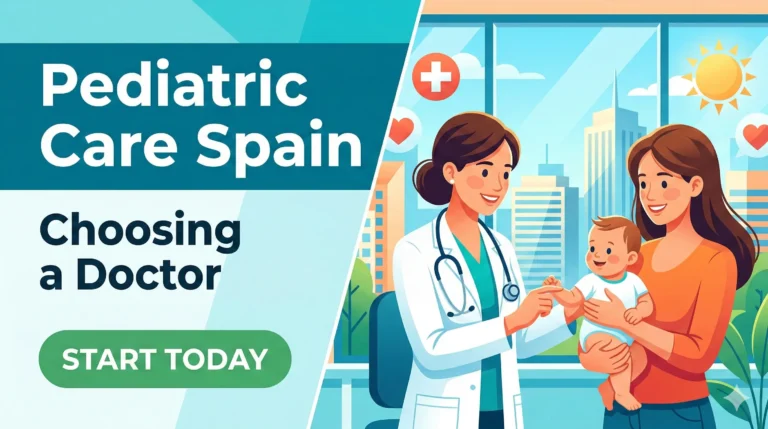
Handing your child’s health over to a doctor you barely know, in a language you are still struggling to master, is utterly terrifying. I remember sitting in a Madrid waiting room with a feverish toddler, panicking because I didn’t know how to ask about their antibiotic policies. This guide breaks down exactly what to look for and which questions to ask when choosing a pediatrician in Spain.
Disclosure: This post may contain affiliate links. We may earn a commission at no extra cost to you if you make a purchase through these links. Read full disclosure.
Understanding the Spanish Pediatric System
Before you can even begin interviewing doctors, you have to understand that the Spanish healthcare system is structurally completely different from what you are used to back home. If you approach this process expecting the exact same administrative workflow you had in London or New York, you are going to hit a wall of immense cultural frustration.
Public Clinics vs Private Practices
Your options for choosing a pediatrician depend entirely on whether you are using the state-funded public system or paying for private healthcare. In the Spanish public system, the concept of “interviewing” a pediatrician simply does not exist. When you register your child at your local municipal clinic, they are assigned a doctor based on your physical home address and the clinic’s current caseload. If you are a new arrival and need to figure out this bureaucratic assignment process, our guide on What Is a ‘Centro de Salud’ in Spain and How Do You Register? explains exactly how to get your family legally integrated into the public database.
If you happen to clash with your assigned public doctor, requesting a transfer is a slow, deeply bureaucratic headache that requires filing formal paperwork and waiting for administrative approval. Because of this rigid assignment system, the vast majority of expats who want the freedom to actively choose and interview their child’s doctor opt for the private healthcare sector. The private route allows you to shop around, book initial consultations with multiple doctors, and find someone whose personality and medical philosophy actually align with your parenting style. You can deeply explore the operational differences between these two avenues in our comprehensive breakdown of the Spain Healthcare System for Expats: Public vs Private.
The Role of the Primary Care Nurse
One major cultural shock for foreign parents in Spain is realizing just how much of your child’s routine care is handled by the pediatric nurse, rather than the actual pediatrician. In both the public and private systems, the nurse is the frontline gatekeeper for routine well-child visits.
When you bring your infant in for a check-up, it is usually the nurse who weighs them, measures their length, tracks their growth percentiles, and administers their scheduled childhood vaccinations. You typically only see the actual pediatrician afterward for a brief physical examination or if the nurse flags a developmental concern. Therefore, when you are choosing a pediatric practice, you must also pay close attention to the bedside manner of the nursing staff, as you will be interacting with them constantly during your baby’s first two years of life.
Essential Questions to Ask a Potential Pediatrician
If you have decided to utilize the private sector to select your child’s doctor, you need to go into the initial consultation prepared. Do not be intimidated. A good private pediatrician in Spain is entirely accustomed to anxious international parents asking highly detailed questions.
Questions About Communication and Culture
The most obvious hurdle is the language barrier. Finding a doctor who speaks conversational English is relatively easy in major expat hubs like Barcelona, Valencia, and the Costa del Sol, but clinical medical English is a completely different skill set.
You must ask directly: “Are you comfortable explaining complex medical diagnoses and treatment plans in English?” Furthermore, ask if they are willing to review past medical records from your home country. If your child has a pre-existing condition, translating hundreds of pages of medical history into Spanish is exhausting and expensive. A doctor who can accurately read your child’s English file is a massive asset. If you need help consolidating these international files safely, read our advice on Medical Records in Spain: Accessing and Sharing Your History.
Questions About Logistics and Emergencies
Kids do not exclusively get sick between 9:00 AM and 5:00 PM on weekdays. When you are interviewing a private pediatrician, you need to know exactly what happens when your child spikes a high fever at midnight on a Sunday.
Ask them: “How do I reach you after hours?” Some premium private pediatricians give their clients a direct WhatsApp number for midnight panics, which is an absolute lifesaver for isolated expats. Others utilize a dedicated answering service or simply tell you to go to the nearest emergency room. You must also ask which specific private hospital they have admission privileges to. If your child needs to be hospitalized, you want to know that your chosen doctor can actively oversee their care on the ward. To understand how these urgent weekend scenarios play out, review our insights on What to Do If You Need Care on a Weekend in Spain.
| Question to Ask | Why It Matters for Expats | Red Flags to Watch For |
| Do you offer direct WhatsApp support? | Bypasses language barriers on phone calls; allows you to send photos of rashes. | “I only communicate during office appointments.” |
| Which hospital do you admit to? | Determines where you go in a severe emergency. | They do not have hospital privileges anywhere. |
| Can you prescribe international equivalents? | Ensures continuity of care for specific maintenance medications. | Unwillingness to research foreign drug names. |
| Do you offer telehealth appointments? | Saves you a trip to the clinic for minor issues like mild pink eye. | Clinic has zero digital infrastructure. |
Questions About Treatment Philosophies
Medical philosophies can vary wildly from country to country. In some Northern European countries, doctors are incredibly conservative with medications, telling you to just offer fluids and wait out a viral fever. In Spain, some older pediatricians can be surprisingly quick to prescribe antibiotics or strong fever reducers.
You should ask: “What is your general approach to prescribing antibiotics for ear infections or prolonged coughs?” This will immediately tell you if their clinical philosophy aligns with your comfort level. You should also ask about their stance on alternative vaccination schedules. Spain has a highly robust, standardized public vaccination calendar that differs slightly from the US or the UK.
Managing Your Child’s Health Setup as an Expat
Finding the perfect doctor is only half the battle. As a foreign parent, you also have to manage the administrative and daily holistic health logistics to ensure your family thrives in their new environment.
Securing the Right Health Insurance
If you want the freedom to choose your pediatrician, access direct WhatsApp support, and bypass the notorious public waiting lists, you absolutely must have a comprehensive private health insurance policy. However, buying a family policy in a foreign language is an absolute minefield.
Different Spanish insurers have vastly different pediatric networks. If you find a pediatrician you love, you must ensure they are actually in your insurance provider’s medical directory. This complex matchmaking is exactly why smart expat parents use a specialized broker like Innoinsure. A dedicated, bilingual agent from Innoinsure can filter the massive Spanish market to find a premium family plan that explicitly covers your chosen pediatrician.
By using Innoinsure, you also ensure that your policy does not feature hidden, astronomical copayments every time your toddler gets a runny nose. If you want to deeply understand how these private financial contracts work before signing, our breakdown on How to Compare Private Health Plans: Deductibles, Co-Pays, Networks is essential reading. Furthermore, to get a realistic picture of what out-of-pocket costs look like when bypassing insurance entirely, check out Health Costs in Spain: Typical Co-Pays and Out-of-Pocket Fees. A great policy secured through Innoinsure will also frequently include 24/7 digital doctor access, a modern perk we cover extensively in Telemedicine in Spain: When It’s Useful and What to Expect.
Bridging the Wellness Gap
Even with the best pediatrician in the world, you will still handle the vast majority of your child’s minor sniffles, scraped knees, and teething fevers at home. In Spain, the local neighborhood pharmacist is brilliant at triaging these minor issues—a process we explain clearly in Can a Pharmacist in Spain Help With Minor Illness? What to Expect. However, local Spanish pharmacies frequently lack the specific, clean-ingredient holistic remedies that many international parents prefer.
When you walk into a Spanish pharmacy, you will likely struggle to find organic, dye-free fever reducers, homeopathic teething gels, or the specific high-grade gummy multivitamins your kids actually like. Even when local pharmacies do stock international holistic brands, the retail markups are usually staggering. To bypass this frustrating retail gap, the international parenting community in Spain relies heavily on iHerb.
By ordering your child’s specific immune-boosting vitamins, gentle saline drops, and familiar organic remedies directly through iHerb, you gain access to the trusted international brands that keep your family healthy without draining your wallet. Having your specific pediatric wellness routine delivered directly to your Spanish door via iHerb ensures that your medicine cabinet is fully stocked for the inevitable winter flu season. It is incredibly empowering to have the exact remedies you trust on hand, allowing you to manage your child’s health confidently while navigating life in a new country. If your child is managing a long-term issue like asthma or eczema, organizing this baseline care is vital; check out Chronic Conditions in Spain: Managing Ongoing Care as an Expat for long-term strategic advice.
References
Primary sources official
- Asociación Española de Pediatría (AEPED): https://www.aeped.es/
- Ministerio de Sanidad (Ministry of Health Spain) – Calendario de Vacunación Infantil: https://www.sanidad.gob.es/areas/promocionPrevencion/vacunaciones/calendario-y-coberturas/home.htm
Other helpful sources
- Expatica – Children’s healthcare in Spain: https://www.expatica.com/es/healthcare/childrens-health/childrens-healthcare-in-spain-106774/
- Citizens Advice Bureau Spain – Healthcare Information: https://www.citizensadvice.org.es/faq/healthcare/
Disclaimer
The information provided in this article is for educational and informational purposes only and does not constitute formal pediatric, medical, or insurance advice. Healthcare regulations, clinic protocols, and private insurance coverage limits vary significantly across Spain and are subject to change. Always consult directly with a licensed Spanish pediatrician, a registered nurse, or a certified insurance broker regarding your child’s specific medical needs, vaccination schedules, and coverage details. In the event of a pediatric emergency, dial 112 immediately.