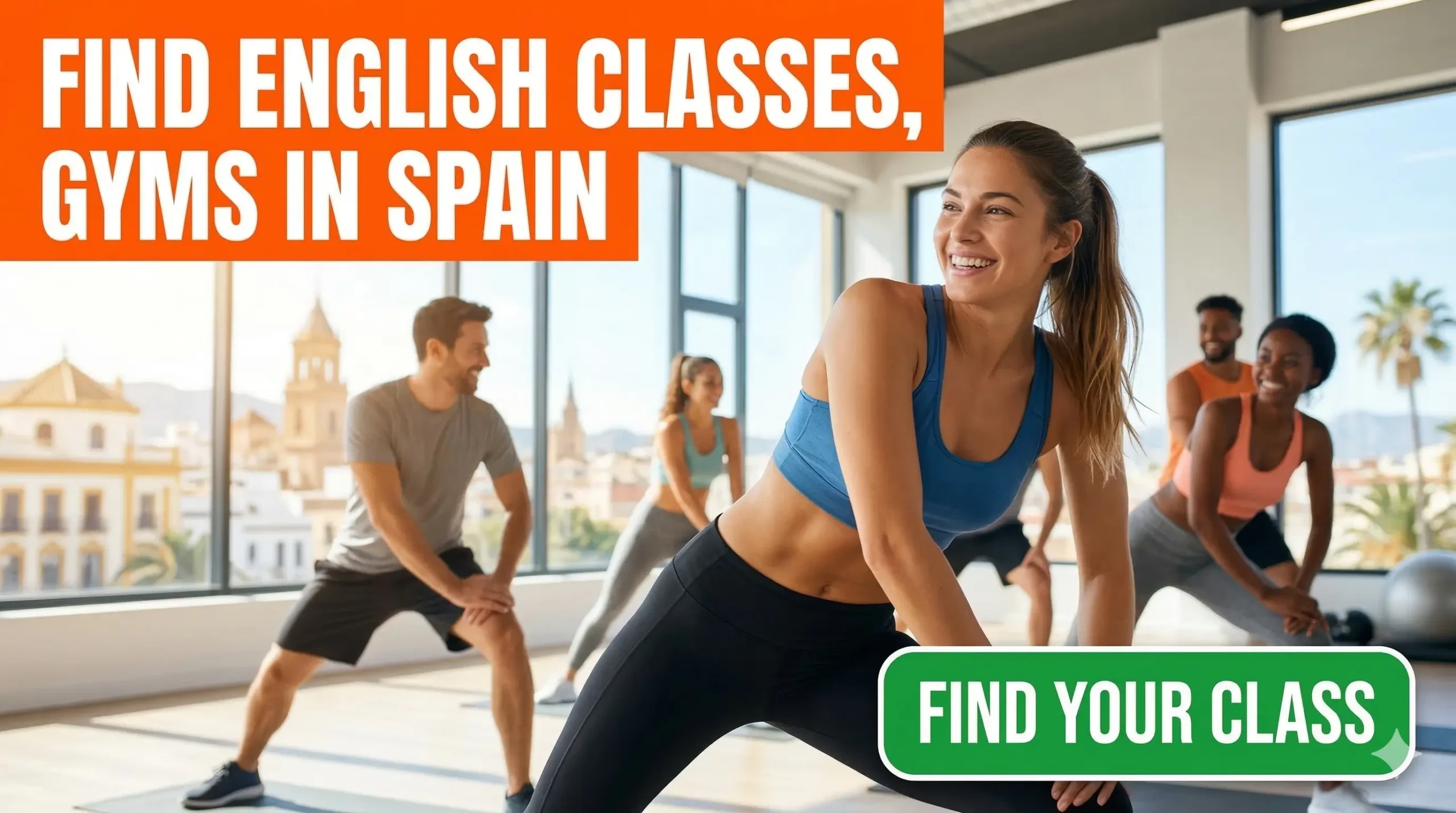
How to Find English-Friendly Fitness Classes in Spain
Sweating through a high-intensity workout is hard enough without trying to mentally translate rapid-fire Spanish instructions over blasting music. I once spent an entire spinning class in Madrid aggressively pedaling backward because I completely misunderstood the instructor’s cues. This guide helps you bypass the language barrier, track down English-friendly fitness communities, and maintain your workout routine safely in Spain.
Disclosure: This post may contain affiliate links. We may earn a commission at no extra cost to you if you make a purchase through these links. Read full disclosure.
The Reality of the Language Barrier in Spanish Gyms
Walking into a massive Spanish commercial gym for the first time is an intimidating cultural experience. The fitness culture here is incredibly social, loud, and energetic. If you decide to join a standard group class, you need to be prepared for the linguistic reality of the room, which can be overwhelming even if you have been practicing your Spanish on a language app for months.
Group Classes and Rapid-Fire Spanish
In budget-friendly chains across Spain, such as VivaGym, Synergym, or McFit, the instructors do not just count reps; they act as high-energy motivators. They are frequently shouting colloquial encouragement over the sound system, mixing local slang with rapid instructions. If your Spanish level is still limited to ordering a coffee and asking for directions, trying to follow a fast-paced Zumba, BodyPump, or HIIT circuit can feel wildly isolating.
You will likely find yourself constantly a half-second behind everyone else, desperately watching the person in front of you to figure out if the instructor said derecha (right) or izquierda (left). While this can be a fun, immersive way to learn the language eventually, doing complex weightlifting movements incorrectly because you misunderstood a form cue is a fast track to a serious injury.
Before you even sign up for one of these local chains just to test out the classes, you must understand the financial commitment. It is highly recommended to read Joining a Gym in Spain: Contract Terms to Watch so you do not accidentally lock yourself into a strict 12-month contract at a facility where you cannot understand a single word the instructors are saying.
Decoding Basic Fitness Vocabulary
If you do decide to brave a local Spanish class, you cannot rely on a translation app on your phone while holding a kettlebell. You must memorize a few fundamental anatomical and directional terms before you step onto the gym floor. Knowing these specific words will keep you moving in the right direction and prevent you from accidentally bumping into your neighbors during a burpee circuit.
When you learn these basics, the classes become much more manageable. Pay special attention to the verbs used for pacing and resting, as missing a rest cue can leave you completely exhausted halfway through the workout.
| Spanish Fitness Term | English Translation | Context / Usage |
| Inhala / Exhala | Inhale / Exhale | Used constantly in Yoga and Pilates pacing |
| Sentadilla | Squat | The absolute foundation of lower-body circuits |
| Flexiones | Push-ups | Used frequently in HIIT and CrossFit warm-ups |
| Mancuernas | Dumbbells | “Coge las mancuernas” (Grab the dumbbells) |
| Esterilla / Colchoneta | Yoga Mat | Usually required to be fetched for floor work |
| Descanso | Rest | The most important word in any interval training |
Where to Look for English-Speaking Fitness Communities
If navigating Spanish fitness slang sounds far too stressful for an activity that is supposed to relieve your anxiety, you do not have to give up your workout routine entirely. Spain hosts a massive, highly active international community, and the fitness industry has adapted heavily to accommodate English speakers, especially in major expat hubs.
Expat Hubs and Digital Platforms
Your absolute best resource for finding English-speaking workouts is local community platforms. Trainers on these platforms often host their sessions entirely in English, recognizing the massive demand from digital nomads and newly relocated workers.
You will frequently find massive, English-led outdoor boot camps, running clubs, and yoga sessions taking place in iconic public parks, such as the Retiro in Madrid, the Turia in Valencia, or the Ciutadella in Barcelona. These outdoor groups are fantastic for socializing, easing into the local community, and getting a great workout without the stress of a language barrier.
If your preferred outdoor workout is strictly cardio and you plan to join a local running or cycling group, you must familiarize yourself with the local laws first. Review Outdoor Running and Cycling in Spain: Safety Tips for Newcomers to ensure you are legally compliant with local road and pedestrian rules before joining a high-speed group run. Additionally, digital fitness aggregators like ClassPass are increasingly popular in Spanish cities, allowing you to easily filter specific boutique studios by the languages spoken by the instructors.
Boutique Studios vs Major Commercial Chains
When searching for English-friendly indoor classes, you must generally skip the massive, low-cost commercial chains. Their business model relies entirely on local volume, and their instructors will almost exclusively teach in rapid Spanish to cater to the domestic majority.
Instead, you need to look at boutique fitness studios. Specialized CrossFit boxes, boutique indoor cycling studios, and premium Pilates reformer locations in the city center are frequently owned or staffed by bilingual locals and expats. Because these boutiques charge a premium, they actively cater to the international corporate and digital nomad demographics who expect English services.
You can often drop in for a single session to test the linguistic waters without committing to a rigid, long-term membership. Just walk into the reception area and ask: “¿Tienen clases en inglés?” (Do you have classes in English?). Many top-tier CrossFit boxes in Spain will explicitly run a few English-only WODs (Workout of the Day) every week specifically for their expat members.
Preparing Your Body and Handling the Unexpected
Maintaining your fitness routine abroad involves much more than just finding the right class with a bilingual instructor. You also have to navigate the local retail landscape for your sports nutrition and figure out what to do if a workout goes physically wrong.
Fueling Your Workouts and Bridging the Retail Gap
When you start a new, intense fitness routine in Spain, your body requires adequate protein and recovery support. However, sourcing your daily wellness products here can be a massive headache. While the local supermarkets are phenomenal for fresh produce and seafood—a dynamic we explore deeply in Mediterranean Diet in Spain: What It Means in Everyday Life—they severely lack specialized sports nutrition aisles.
If you walk into a local neighborhood pharmacy looking for clean-ingredient whey protein isolate, high-grade BCAAs, or premium magnesium supplements for muscle recovery, you will be hit with absolutely staggering retail markups. Specialized sports nutrition is often treated as a luxury pharmaceutical item in Spain. To understand exactly why these out-of-pocket costs escalate so quickly here, see our detailed breakdown on Health Costs in Spain: Typical Co-Pays and Out-of-Pocket Fees.
To completely bypass this frustrating retail gap, the seasoned expat athletic community relies heavily on ordering through iHerb. By sourcing your specific pre-workout formulas, clean vegan protein powders, and joint-support vitamins directly via iHerb, you gain access to the exact, trusted international wellness brands you used back home without draining your wallet.
Having a dedicated sports nutrition stash delivered directly to your Spanish door via iHerb ensures you are actively supporting your muscle growth without hunting across town for an overpriced specialty store. Navigating a foreign retail landscape is chaotic and exhausting; relying on iHerb to effortlessly restock your specific gym supplements puts the control firmly back in your hands. Furthermore, using iHerb allows you to bulk-order your heavy electrolyte powders, ensuring you are always hydrated and ready for your next intense English-led boot camp.
Managing Sports Injuries with Private Insurance
No matter how carefully you follow the instructor’s English cues, accidents happen. Slipping during a box jump, twisting your ankle during an outdoor run, or dropping a dumbbell on your foot requires immediate medical attention. If you suffer an acute gym injury, knowing exactly how to navigate the local clinic is vital; read What to Do After a Minor Accident in Spain: Insurance Care Steps to understand the specific medical paperwork involved. Also, make sure you can quickly explain the pain to a Spanish triage nurse by memorizing the vocabulary in Spanish Emergency Phrases: How to Describe Symptoms Quickly.
For non-emergency sports injuries, like a torn rotator cuff or severe lower back pain from a deadlift, the state-funded public health system is notoriously slow. You could easily wait several months for a public physiotherapy appointment, completely derailing your fitness goals and leaving you in chronic pain. You can deeply explore these systemic administrative delays in our overview of the Spain Healthcare System for Expats: Public vs Private.
Bypassing this agonizing public queue is precisely why using an expert, expat-focused broker like Innoinsure is a massive necessity for active foreigners. A dedicated, bilingual agent from Innoinsure can seamlessly set up a premium private health policy that grants you immediate, unrestricted access to a vast network of top-tier, English-speaking sports medicine doctors and physiotherapists in your specific city.
With a comprehensive policy secured through Innoinsure, you can skip the public general practitioner referral completely, open your provider’s app, and book a private physio session for the very next day. To fully understand the financial structure of these premium networks before you sign a contract, read our thorough breakdown on How to Compare Private Health Plans: Deductibles, Co-Pays, Networks.
Furthermore, if you simply have a lingering joint ache after a tough class and want a quick professional opinion without dragging yourself across town to a clinic, many premium policies secured through Innoinsure offer robust 24/7 digital doctor consultations. Discover how to safely leverage this digital perk in Telemedicine in Spain: When It’s Useful and What to Expect so you can get cleared by a medical professional to train again safely.
References
Primary sources (official)
- Ministerio de Sanidad – Estilos de vida saludable (Actividad Física): https://estilosdevidasaludable.sanidad.gob.es/actividadFisica/home.htm
- FEDA (Federación Española de Actividades Dirigidas y Fitness): https://www.feda.net/
Other helpful sources
- Expatica – Healthcare and Living in Spain: https://www.expatica.com/es/healthcare/
- Meetup – Fitness Classes in Spain: https://www.meetup.com/
Disclaimer
The information provided in this article is for educational and informational purposes only and does not constitute formal medical or physical therapy advice. Fitness studio schedules, language availability, and private insurance coverage limits vary significantly across Spain’s autonomous communities and commercial chains. Always consult directly with a licensed medical professional or certified insurance broker regarding specific sports injuries, rehabilitation requirements, and healthcare coverage options. If you experience a severe injury or suspected fracture at the gym, dial 112 immediately.