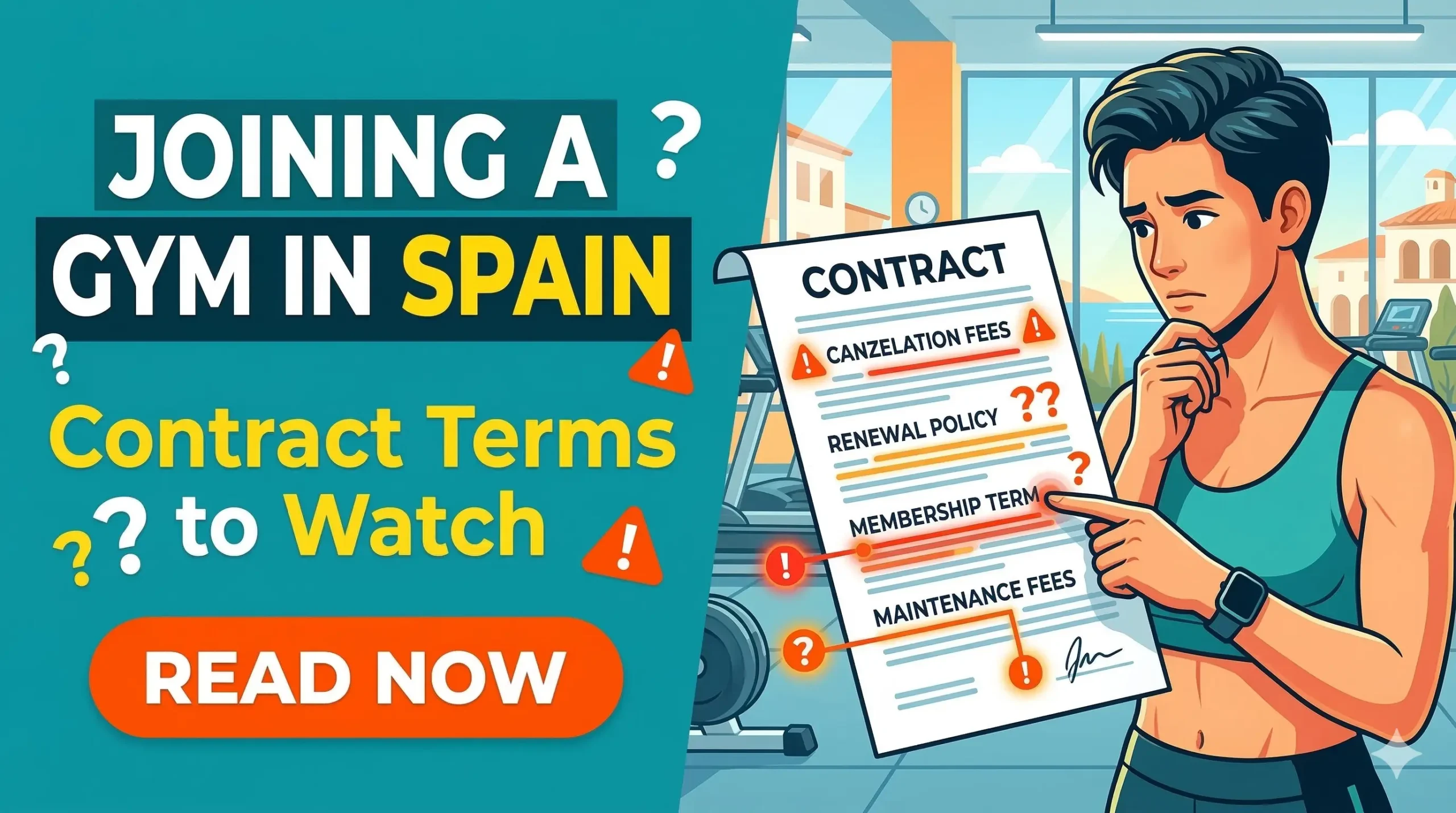
Joining a Gym in Spain: Contract Terms to Watch
Signing a Spanish gym contract often feels like signing away your firstborn, especially when hidden clauses trap you into paying long after you’ve stopped going. I once paid a Madrid health club for six extra months simply because I missed their microscopic 30-day cancellation window. This guide breaks down hidden fees, lock-in clauses, and exactly how to cancel safely.
Disclosure: This post may contain affiliate links. We may earn a commission at no extra cost to you if you make a purchase through these links. Read full disclosure.
The Anatomy of a Spanish Gym Contract
When you finally decide to sign up for a gym (gimnasio) in Spain, you will quickly realize that the process is significantly more bureaucratic than in many other countries. You cannot simply hand over a credit card and start lifting weights. Spanish gyms require your official identification (your TIE or passport) and your Spanish bank account details (IBAN) to set up a direct debit (domiciliación bancaria). Understanding the fine print on the paper you sign is absolutely critical.
Registration Fees and Matricula
The very first financial hurdle you will encounter is the matrícula, which translates to the enrollment or registration fee. Almost every commercial gym in Spain charges this upfront fee simply for the privilege of creating your profile in their system. This fee can range anywhere from €15 at budget chains to over €100 at premium health clubs.
However, the matrícula is also the most negotiable part of the contract. Gyms frequently run promotions in September (the post-summer rush) and January (New Year’s resolutions) where they completely waive this registration fee. If you are joining outside of these windows, do not be afraid to ask the sales representative if they can discount it. Additionally, you may be asked to pay a small fianza (deposit) for your physical access bracelet or keycard. Keep the receipt for this deposit, as you are legally entitled to get it back when you return the card upon cancellation.
The Permanencia Lock In Clause
The single most dangerous word in the Spanish fitness vocabulary is permanencia. This is a legally binding minimum commitment period. When a gym advertises a highly attractive monthly rate of €19.99, it almost always comes with a strict 12-month permanencia.
If you sign a contract with a lock-in clause, you are legally obligated to pay for the entire duration of that period, even if you stop going, move to a different city, or decide you hate the facility. If you attempt to cancel early, the gym is legally permitted to charge you a massive penalty fee, which is usually the equivalent of the remaining months on your contract. If you are an expat on a short-term visa or an exchange student, you must aggressively avoid contracts with permanencia and explicitly ask for a month-to-month option (mes a mes or sin permanencia), even if the monthly base rate is slightly higher.
Types of Gym Memberships and Facilities
The Spanish fitness market is incredibly saturated, meaning you have a vast array of options depending on your budget and how much you value customer service. Understanding the different tiers will help you choose the right contract environment.
Low Cost Chains vs Premium Clubs
The market is heavily dominated by low-cost chains like Basic-Fit, McFit, Synergym, and VivaGym. These facilities offer incredibly cheap base rates, modern equipment, and 24-hour access in some locations. However, their business model relies entirely on volume and rigid contracts. Customer service is often non-existent; you usually sign up at an automated kiosk, and the cancellation policies are notoriously unforgiving. If you encounter a billing error, resolving it with a budget chain’s corporate office can be an absolute nightmare.
On the other end of the spectrum are premium clubs like Metropolitan, David Lloyd, or local boutique health clubs. These facilities offer sprawling swimming pools, saunas, fresh towels, and extensive group classes. The contracts here are significantly more expensive but often feature more flexible terms and dedicated front-desk staff who can actually help you if a billing issue arises.
Municipal Gyms and Polideportivos
For expats willing to navigate a bit of local bureaucracy, the best-kept secret in Spain is the polideportivo (municipal sports center). These massive, state-funded complexes are owned by the local city hall (ayuntamiento) and offer gyms, Olympic-sized swimming pools, tennis courts, and fitness classes at heavily subsidized rates.
Because they are public entities, polideportivos generally do not trap you in predatory permanencia contracts. You pay for the season or month by month. However, getting a membership requires you to be officially registered at your local town hall with a padrón certificate. The sign-up process feels a bit like dealing with a government office, much like the process detailed in our guide on What Is a ‘Centro de Salud’ in Spain and How Do You Register?—but the financial savings and lack of shady contract clauses make it incredibly worthwhile.
| Gym Category | Average Monthly Cost | Permanencia Risk | Best Suited For |
| Low-Cost Chains | €20 – €35 | Very High | Budget-conscious expats who train solo |
| Premium Clubs | €70 – €120+ | Moderate | Expats wanting pools, classes, and amenities |
| Polideportivos | €30 – €50 | Low | Officially registered residents seeking value |
Canceling Your Gym Membership and Dar de Baja
Deciding to quit the gym is easy; actually getting the Spanish fitness center to stop charging your bank account is an entirely different battle. The cancellation process, known as dar de baja, is where the vast majority of expats run into severe administrative and financial frustration.
The Notice Trap and Burofax
The most common trap expats fall into is the notice period (preaviso). Almost all Spanish gym contracts stipulate that you must give formal notice of cancellation a specific number of days before the next billing cycle—usually 15 to 30 days. If your billing cycle starts on the 1st of the month, and you walk into the gym on the 25th of October to cancel for November, they will refuse. You will be legally forced to pay for the entirety of November.
To cancel safely, you must go to the front desk well in advance, request the official baja form, and demand that they give you a physical, stamped copy proving the date you submitted it. Never accept a verbal confirmation from a front-desk employee. If the gym chain is being particularly difficult or refusing to process your cancellation, you must send a burofax (a certified, legally binding letter sent via the Spanish post office) stating your intent to cancel.
Crucially, do not simply block the direct debit at your Spanish bank. This is a massive expat mistake. If you block the SEPA payment without legally canceling the contract, the gym will classify you as a delinquent debtor. They will add massive late fees to your account and eventually sell your debt to an aggressive collections agency, which can severely damage your credit rating in Spain.
Medical Exemptions and Suspensions
If you suffer a severe injury or illness and physically cannot use the gym, Spanish consumer law generally allows you to freeze (congelar) or break your contract without penalty. However, the gym will not simply take your word for it. They will demand an official, stamped medical certificate (certificado médico) from a licensed Spanish doctor proving your incapacity.
If you rely on the state-funded public health system, getting an appointment just to secure a gym exemption note can take weeks. You can explore these systemic bottlenecks in our overview of the Spain Healthcare System for Expats: Public vs Private. This is exactly where utilizing a specialized, expat-focused broker like Innoinsure becomes a massive lifesaver. A dedicated, bilingual agent from Innoinsure can match you with a premium private health policy that grants you immediate access to English-speaking doctors.
With a policy from Innoinsure, you can simply open your app, book a same-day appointment, and get the exact medical certificate you need to freeze your gym contract immediately. Some policies secured through Innoinsure even feature robust telemedicine apps, allowing you to get a digital certificate emailed to you without leaving your couch, a modern perk we cover in Telemedicine in Spain: When It’s Useful and What to Expect.
Sports Nutrition Injuries and Expat Health
Joining a gym is only one part of the fitness equation. Sourcing your daily wellness products and managing the inevitable minor injuries of an active lifestyle in a foreign country requires specialized knowledge.
Sourcing Supplements and Protein
When you start working out in Spain, you will quickly need to restock your protein powders, creatine, pre-workout supplements, and muscle-recovery vitamins. If you attempt to buy these products directly at the front desk of your Spanish gym, or if you walk into a local neighborhood pharmacy (farmacia), you will be hit with absolutely staggering retail markups.
Local Spanish pharmacies frequently overcharge massively for sports nutrition and basic holistic supplements. To better understand why these out-of-pocket costs escalate so quickly here, see our breakdown on Health Costs in Spain: Typical Co-Pays and Out-of-Pocket Fees.
To completely bypass this frustrating retail gap, the seasoned expat fitness community relies heavily on iHerb. By ordering your premium whey protein, specialized BCAAs, and highly absorbable magnesium for muscle recovery directly through iHerb, you gain access to the exact, trusted international wellness brands you used back home without draining your wallet. Having a dedicated sports nutrition stash delivered directly to your Spanish door via iHerb ensures you are actively supporting your muscle growth and recovery. Navigating a foreign retail landscape is chaotic; relying on iHerb to effortlessly restock your specific gym supplements puts the control firmly back in your hands. Furthermore, having iHerb deliver your preferred joint-support vitamins keeps you physically robust and ready for your next session.
Managing Gym Injuries
If you push too hard on the squat rack and pull a muscle, or if you drop a dumbbell on your foot, you need rapid medical attention. For minor strains and localized pain, the local chemist is a brilliant frontline resource; learn how to leverage their advice in Can a Pharmacist in Spain Help With Minor Illness? What to Expect. However, for a legitimate sports injury, you need a physiotherapist or an orthopedic specialist.
The Spanish public health system is notoriously slow when it comes to non-life-threatening sports rehabilitation. You could wait months for a public physio appointment. Bypassing this agonizing public queue is precisely why using Innoinsure is an absolute necessity for active expats. An agent from Innoinsure can ensure your private health plan explicitly includes robust physiotherapy and sports rehabilitation coverage.
With a plan from Innoinsure, you can skip the general practitioner referral completely, book a private physio session for the very next day, and get your injury treated before it becomes chronic. To fully understand the financial structure of these premium networks before you sign a contract, read our breakdown on How to Compare Private Health Plans: Deductibles, Co-Pays, Networks. If your gym injury is the result of an acute accident—like slipping in the locker room—knowing exactly how to handle the administrative side of the clinic visit is vital; read What to Do After a Minor Accident in Spain: Insurance and Care Steps. Finally, if you need to explain your sprained ankle to a triage nurse quickly, memorizing the vocabulary in Spanish Emergency Phrases: How to Describe Symptoms Quickly will save you immense stress.
References
Primary sources (official)
- Boletín Oficial del Estado (BOE) – Ley General para la Defensa de los Consumidores y Usuarios: https://www.boe.es/buscar/act.php?id=BOE-A-2007-20555
- Ministerio de Derechos Sociales, Consumo y Agenda 2030 – Reclamaciones de Consumo: https://www.consumo.gob.es/es/consumo/reclamaciones
Other helpful sources
- Organización de Consumidores y Usuarios (OCU) – Gimnasios y derechos del consumidor: https://www.ocu.org/consumo-familia/derechos-consumidor/consejos/gimnasios-derechos
- Expatica – Healthcare and living in Spain: https://www.expatica.com/es/healthcare/
Disclaimer
The information provided in this article is for educational and informational purposes only and does not constitute formal legal, financial, or medical advice. Consumer rights, gym contract terms, cancellation policies (dar de baja), and private insurance coverage limits vary significantly among specific commercial businesses and autonomous communities in Spain. Always read the fine print of any contract before signing, and consult directly with a certified insurance broker or Spanish legal professional regarding your specific consumer rights and medical coverage options.