What to Do If Your Rental Has Unregistered Meters in Spain
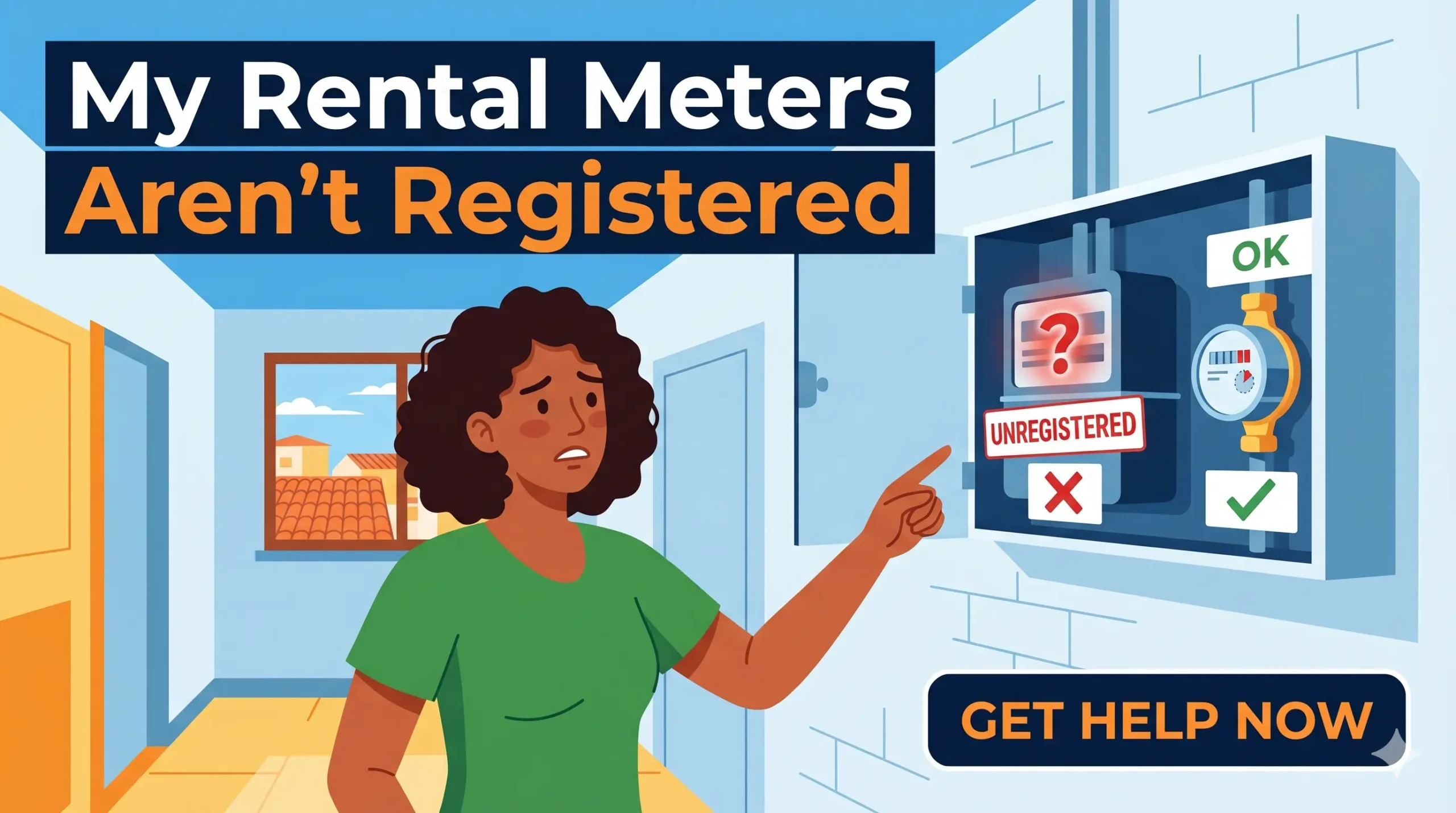
Moving into your new Spanish apartment and discovering you cannot put the electricity in your name because the meter technically does not exist is a horrifying trap. I spent three months paying inflated, handwritten electric bills to a landlord who had secretly split a single flat into four separate studios. This guide explains how to identify unregistered utility meters, avoid illegal sub-metering scams, and handle the legal fallout if you are already trapped.
Disclosure: This post may contain affiliate links. We may earn a commission at no extra cost to you if you make a purchase through these links. Read full disclosure.
The Reality of Unregistered Utility Meters in Spain
Expats moving to major cities like Madrid, Barcelona, or Valencia often face an incredibly competitive and overheated housing market. In a rush to secure a place, they might sign a lease for a charming, newly renovated estudio without asking too many questions about the physical utility infrastructure. The nightmare usually begins a week later when you call the electricity or water company to set up your direct debits, only to be told that your specific apartment number does not exist in their national database.
How Landlords Illegally Subdivide Properties
The root cause of this massive issue is a widespread practice where property owners take a massive, historic apartment (piso) and carve it up into three or four micro-apartments to maximize their rental yield. Legally dividing a property requires submitting complex architectural plans to the local town hall (ayuntamiento), securing a new certificate of habitability (cédula de habitabilidad), and paying thousands of euros to the regional utility distributors to install brand-new, independent meters for each newly created unit.
Because the legal, heavily regulated route is expensive and heavily taxed, many landlords simply skip it entirely. They build drywall partitions, install a few cheap, unofficial electrical counters inside the walls, and rent the units out independently to foreigners who do not know the local laws. From the perspective of the Spanish government and the official utility companies, there is still only one single apartment behind that main street door. If you find yourself holding the keys to one of these shadow apartments, you are navigating one of the most perilous aspects of Renting an Apartment in Spain: A Guide for Expats.
The Hidden Costs of Sub-Metering
When you live in an illegally sub-metered apartment, you are entirely at the mercy of the landlord’s private arithmetic. Because there is only one official smart meter for the entire subdivided property, the utility company sends a single, massive bill directly to the landlord every month.
The landlord then looks at the unofficial, cheap sub-meters they bought at a local hardware store and calculates what they think you owe. They will often text you a random, unsubstantiated sum via WhatsApp and demand you transfer the money immediately or pay them in envelopes of cash. You never get to see the official invoice with its complex breakdown of municipal taxes, infrastructure tolls, and peak-hour rates—a fundamental financial right we discuss deeply in Understanding Utility Bills in Spain. Without seeing the official bill, you have no way of knowing if the landlord is secretly marking up the cost per kilowatt-hour for personal profit, or if you are unknowingly subsidizing the massive daily electricity usage of the tenant living next door.
| Feature | Official Registered Meter | Illegal Sub-Meter |
| CUPS Number | Yes (Unique 22-character code) | None |
| Billing Entity | Endesa, Iberdrola, etc. | Your Landlord |
| Tariff Choice | You choose your own rates | Landlord dictates the price |
| Official Invoices | Yes, legally binding PDFs | WhatsApp messages or hand-written notes |
| Legal Protections | Protected against arbitrary cut-offs | High risk of sudden, retaliatory cut-offs |
How to Spot an Unregistered Meter Before Signing
The absolute best way to handle an unregistered meter is to never sign a lease for an apartment that has one. You must be aggressively proactive during the viewing process and demand specific documentation before handing over your security deposit.
Asking for the CUPS Number
In Spain, every single legal supply point for electricity and natural gas is assigned a 20-to-22 character alphanumeric code called the CUPS (Código Universal de Punto de Suministro). Think of it as the Social Security Number for your physical meter. It almost always begins with the letters “ES”.
When you view an apartment, you must explicitly ask the landlord or the real estate agent (inmobiliaria) for the CUPS number before you sign the lease. If they dodge the question, claim they will give it to you “later,” or state that the utilities must permanently remain in the owner’s name and you simply pay them a flat fee, you should immediately walk away. A legitimate landlord will happily provide the CUPS number so you can handle the bureaucratic setup yourself, a necessary administrative step detailed in Setting Up Electricity and Gas in Spain.
Inspecting the Physical Infrastructure
While viewing the flat, look closely at the entrance architecture. Is there a single main door that opens into a small, strange vestibule with three more locked doors inside? If so, you are likely looking at an illegal residential subdivision.
Furthermore, you should inspect the electrical panel (cuadro eléctrico) located near your front door. If the apartment has an official, legal meter, your panel will have a standard array of heavy-duty safety switches, and the smart meter itself will usually be locked in a communal basement room controlled by the distributor. If you see a cheap, plastic digital counter physically attached to your hallway wall with exposed wires, that is a massive red flag.
If you already moved in and suspect the landlord’s handwritten utility demands are wildly inaccurate, you can order a simple plug-in energy monitor from Amazon Spain. You can plug your heavy appliances—like your refrigerator or space heater—into this smart plug to track your exact daily kilowatt-hour consumption. Presenting this hard, digital data to a landlord who is trying to overcharge you can quickly shut down their arbitrary math.
Immediate Steps if You Discover the Problem Post Move-In
If you have already signed the contract, completed your official ID registrations as mapped out in Getting an NIE for Employment or Study: Practical Overview, and moved your boxes in before realizing the meter is fake, your options for setting up basic infrastructure become incredibly complicated.
Negotiating with the Landlord and Securing Connectivity
Because you do not have a personal CUPS number, you cannot switch your electricity to a cheaper, green-energy provider, a vital money-saving tactic mapped out in How to Switch Electricity Provider in Spain Step-by-Step. You also cannot legally increase the power capacity of the apartment. If the main breaker keeps tripping every time you and your neighbor turn on the oven at the same time, you will be trapped in the dark—a frustrating dynamic explained in How to Understand ‘Potencia’ on Your Spain Power Contract.
Worse still, an unregistered address means you often cannot get a traditional fiber optic internet line installed because the major telecom companies cannot locate your specific sub-unit in their national database. When I discovered my Madrid studio was an illegal subdivision, three different legacy telecom giants refused to run a fiber cable to my door. To solve this without breaking your lease, you must rely on an expat-friendly provider like Tiekom. Because Tiekom does not require complex municipal address verifications or an archaic installation process to set up their wireless services, you can easily secure high-speed internet without fighting the landlord. Many trapped expats simply order a powerful, unlocked 4G/5G mobile router from Amazon Spain, insert a high-capacity data SIM from Tiekom, and instantly bypass the need for a physical, registered fiber installation entirely.
Escalating to Official Consumer Channels
If the landlord becomes aggressive, shuts off your power maliciously, or demands absurd cash payments for utilities without providing official invoices, you have the right to escalate the issue.
Your first stop should be the Oficina Municipal de Información al Consumidor (OMIC), which is the local municipal consumer protection office. You can file a formal complaint (hoja de reclamación) detailing the illegal sub-metering practice. To do this effectively, you must keep meticulous records. Ordering a heavy-duty fireproof document safe from Amazon Spain to securely store your physical lease, your bank transfer receipts, and printed copies of the landlord’s WhatsApp demands ensures you have a bulletproof paper trail when the consumer affairs inspector asks for evidence.
Legal and Financial Repercussions for Tenants
Living off the grid in a major Spanish city is not a sustainable long-term plan, and the financial risks of remaining in a sub-metered property can quickly spiral out of your control.
Can You Be Held Responsible for the Main Bill?
The ultimate fear for expats in these illegal setups is the corte de suministro (supply cut-off). Because the official utility contract is legally held by the landlord for the entire subdivided building, what happens if the landlord stops paying the main bill?
If the landlord defaults, the electricity distributor will digitally cut the power to the entire property at the basement level. Suddenly, you and the other sub-tenants are plunged into darkness, despite the fact that you paid your individual portion of the bill to the landlord perfectly on time. If this happens, you must know how to diagnose the blackout, an emergency scenario we explain in How to Handle a Power Outage in Spain: What to Check First. You cannot call the electricity company to restore the power because you are not the official account holder. You are legally paralyzed. Furthermore, living without heat during a blackout in January is brutal; ordering a portable space heater from Amazon Spain might seem like a good backup plan, but if the main breaker is dead, even that won’t save you. You should immediately buy a high-capacity power bank from Amazon Spain so your smartphone does not die, allowing you to contact a lawyer while the grid is down.
Escaping the Rental Contract Safely
If the landlord is extorting you through fake utility bills or trying to illegally bundle your utilities into inflated communal fees—a deceptive practice you can learn to spot in A Guide to Spanish Community Fees—this constitutes a profound breach of trust. You should immediately consult with a registered Spanish lawyer (abogado) to discuss breaking your lease early without forfeiting your massive security deposit (fianza).
Because resolving these legal disputes requires having all your finances impeccably clean and verifiable to prove you never missed a legitimate rent payment, you must ensure you have set up your local banking correctly, a foundational step we decode in Opening a Bank Account in Spain: Step-by-Step for Foreigners. Furthermore, if you need to quickly search for a new, legally registered apartment while fighting with your current landlord, you can use your reliable Tiekom mobile connection to look up property listings and schedule immediate viewings while on the go. If you are stuck dealing with these stressful landlord disputes, having access to Tiekom’s English-speaking customer service for your telecom needs removes at least one massive headache from your plate. Taking strict control of your housing infrastructure—from verifying the CUPS number on day one to securing independent internet access—is the ultimate key to controlling your Cost of Living in Spain and surviving the predatory elements of the rental market.
References
Primary sources (official)
- Comisión Nacional de los Mercados y la Competencia (CNMC) – Information on CUPS and changing suppliers: https://www.cnmc.es/en/sectores-que-regulamos/energia/cambio-de-comercializador-en-espa%C3%B1a
- Ayuntamiento de Madrid – Consumer Complaints (OMIC): https://www.madrid.es/omic
Other helpful sources
- Generalitat de Catalunya – Consumer Claims and Reporting: https://tramits.gencat.cat/en/tramits/tramits-temes/Queixa-reclamacio-i-denuncia-de-consum
- OCU (Organización de Consumidores y Usuarios) – Rights regarding utility billing and rentals: https://www.ocu.org/vivienda-y-energia/
Disclaimer
The information provided in this guide is exclusively for educational and informational purposes and does not constitute official legal, real estate, or financial advising. The Spanish Ley de Arrendamientos Urbanos (LAU), municipal zoning laws regarding the legal subdivision of residential properties, and the regulations enforced by the CNMC regarding CUPS numbers and supply point legality are subject to complex regional variations and local court interpretations. If you discover your rental property operates on illegal, unregistered utility meters or you are facing extortionate, undocumented utility demands from a landlord, you should immediately contact the Oficina Municipal de Información al Consumidor (OMIC) and consult a registered Spanish lawyer (abogado) to protect your security deposit and legally terminate your lease.