Seasonal Flu Vaccines in Spain: Who Can Get Them and When
Navigating the seasonal flu vaccine campaign in Spain is crucial for expats and locals alike. This comprehensive guide explains when the annual campaign begins, which high-risk groups qualify for free shots, and how anyone can purchase a vaccine at a local pharmacy.
Disclosure: This post may contain affiliate links. We may earn a commission at no extra cost to you if you make a purchase through these links. Read full disclosure.
The Timeline of the Spanish Flu Campaign
The influenza virus typically circulates in Spain from late autumn through early spring, with infections usually peaking between late December and February. Because the immunity provided by the vaccine wanes over time, timing the administration of the shot is critical to ensure optimal protection during the peak viral months.
Unlike some countries where flu shots are aggressively marketed in early August, the Spanish Ministry of Health takes a more delayed, strategic approach.
When Does the Campaign Start?
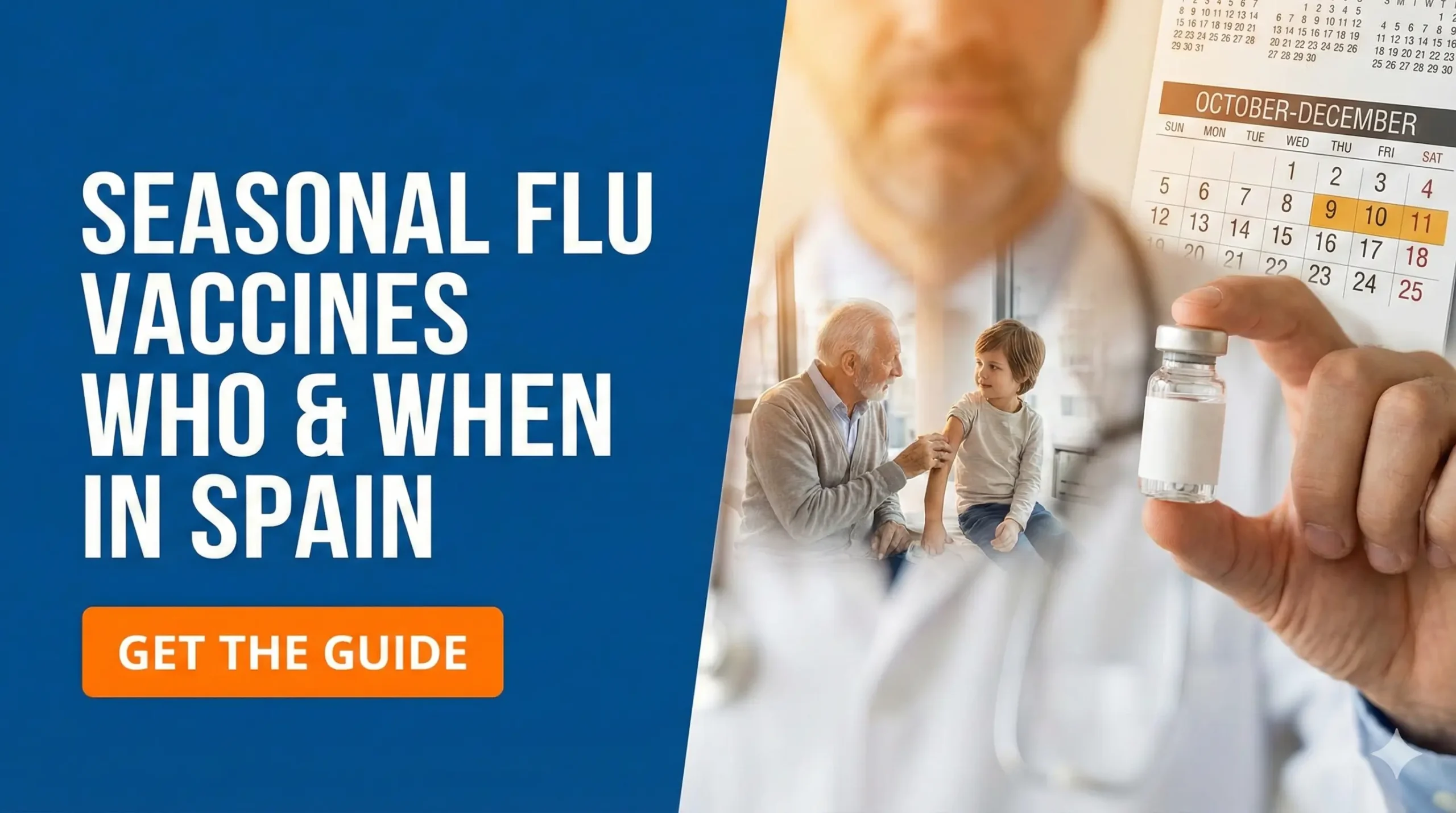
The official seasonal flu vaccination campaign (campaña de vacunación frente a la gripe) universally begins in October.
However, because the Spanish healthcare system is decentralized, the exact launch date varies slightly between the seventeen Autonomous Communities (such as Andalusia, Madrid, or Catalonia). Generally, the rollout is phased:
- Late September / Early October: Vaccination begins for the absolute highest-priority groups, specifically pregnant women and institutionalized elderly populations (those living in nursing homes or residencias).
- Mid-to-Late October: The campaign opens up to the broader high-risk adult population, children, and essential workers.
- November Onwards: The campaign remains open and active throughout the winter, usually concluding in March.
It is highly recommended to monitor your specific regional health portal or local news starting in late September to catch the exact launch date for your demographic.
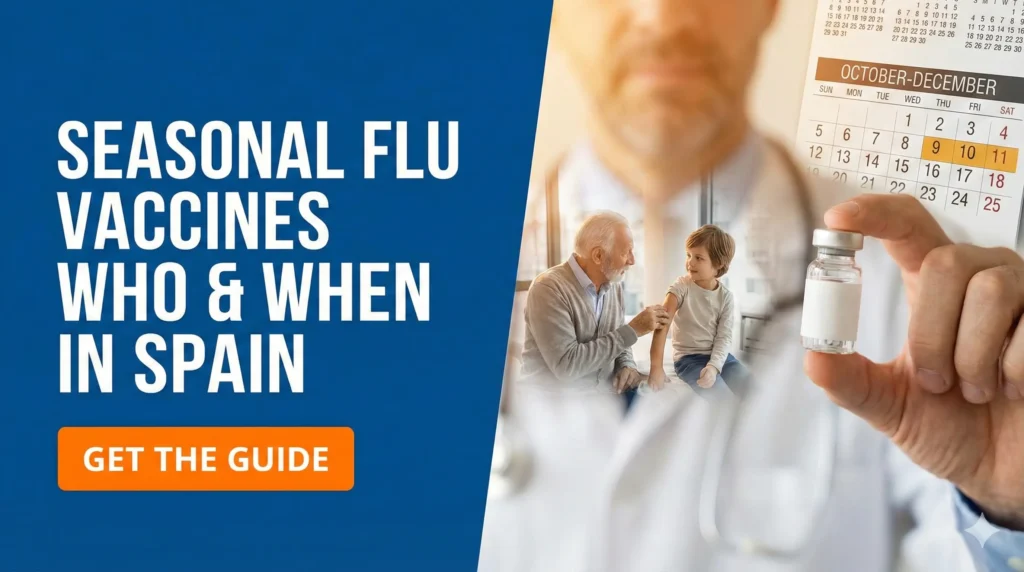
Who is Eligible for a Free Flu Shot in Spain?
The Spanish public healthcare system (Sanidad Pública) provides the flu vaccine completely free of charge to individuals who are at a higher risk of developing severe complications from the virus, as well as to those who are most likely to transmit the virus to vulnerable populations.
If you are officially registered with a local public health center (Centro de Salud) and fall into one of the following categories, you are entitled to a free vaccine. To understand how to formally establish this access, review our step-by-step guide on How to Get a Spanish Health Card (Tarjeta Sanitaria): Step-by-Step.
Recognized High-Risk Groups
The Interterritorial Council of the National Health System defines the target groups for the annual campaign. While minor regional variations exist, the national guidelines universally cover:
- Older Adults: Anyone aged 60 and over (in some regions, the threshold is 65).
- Children aged 6 to 59 months: Spain recently introduced universal flu vaccination for all infants and toddlers in this age bracket, recognizing them as super-spreaders who are also at high risk for hospitalization.
- Pregnant Women: Women at any stage of pregnancy, as well as women who have given birth within the last six months (postpartum).
- Individuals with Chronic Conditions: Anyone over the age of six months suffering from a chronic illness that elevates their risk. This includes diabetes, cardiovascular disease, chronic respiratory diseases (like severe asthma or COPD), celiac disease, morbid obesity, and immunosuppression.
- Essential Workers and Healthcare Staff: Doctors, nurses, pharmacy staff, and eldercare workers. This group also includes police officers, firefighters, and civil protection staff.
- Caregivers and Co-habitants: People who live with or provide home care to high-risk patients.
- Occupational Exposure: Workers directly exposed to domestic poultry, pigs, or wild birds, to prevent the mutation and cross-transmission of avian or swine flu strains.
Table: Public Flu Vaccine Eligibility and Administration Methods
| Target Demographic | Publicly Funded (Free)? | Typical Vaccine Type Administered | Setting for Administration |
| Adults aged 60+ / 65+ | Yes | High-dose or adjuvanted injected vaccine | Centro de Salud (Public Clinic) |
| Children (6 – 23 months) | Yes | Standard injected vaccine (intramuscular) | Pediatric nurse at Centro de Salud |
| Children (24 – 59 months) | Yes | Intranasal spray (live attenuated) | Pediatric nurse or School Program |
| Pregnant Women | Yes | Standard injected vaccine | Midwife or Nurse at Centro de Salud |
| Healthy Adults (18 – 59) | No | Standard injected vaccine | Purchased at Pharmacy, injected at clinic |
Co-Administration: The Flu and COVID-19 Vaccines
In the post-pandemic era, the Spanish public health authority has streamlined its winter viral defense strategy. The autumn vaccination campaign is now a dual effort, targeting both seasonal influenza and COVID-19 simultaneously.
If you are an older adult (typically over 60) or belong to a highly vulnerable clinical risk group, your local health center will invite you to receive both vaccines during the exact same appointment. The standard protocol involves administering the flu shot in one arm and the updated seasonal COVID-19 booster in the other. This co-administration is proven to be safe, highly effective, and significantly reduces the logistical burden on both the patient and the healthcare system.
If you choose to receive only one of the vaccines, you are perfectly entitled to decline the other. However, public health officials strongly urge vulnerable expats to accept both to prevent severe respiratory illness during the winter peak.
How to Get the Flu Shot if You Are Not in a Risk Group
If you are a healthy, 35-year-old expatriate with no underlying medical conditions, you are not considered part of the target demographic for the public vaccination campaign. Consequently, the public health system will not proactively invite you to get a free flu shot.
However, this does not mean you are prohibited from getting vaccinated. Spain makes it incredibly easy and affordable for anyone to protect themselves against the flu. You simply have to manage the process yourself through the private retail sector.
Step 1: Purchasing the Vaccine at the Pharmacy
In Spain, the local pharmacy (farmacia) is the absolute frontline of healthcare. To get a flu shot, you must go to a pharmacy and purchase the physical vaccine vial yourself.
Historically, purchasing a vaccine required a formal prescription (receta) from a doctor. In practice, during the height of the flu season, most Spanish pharmacists will sell you the standard seasonal flu vaccine over the counter without a prescription. The cost is remarkably low compared to American healthcare standards—typically ranging between €15 and €25 out of pocket.
Because the vaccine must remain strictly temperature-controlled to preserve its efficacy, you should not buy it and leave it in your car while you run errands. It is highly advised to maintain the cold chain. If you are unfamiliar with how retail medication operates in Spain, you can explore the system further in our Spanish Pharmacy Guide: Prescriptions and Over-the-Counter Medicine.
Step 2: Having the Vaccine Administered
Once you have purchased the vaccine box from the pharmacy, you cannot legally inject it yourself. You must take it to a qualified medical professional for administration. You have two primary options:
- The Public Route: If you are registered with the public system, you can book an appointment with the nursing staff (enfermería) at your assigned Centro de Salud. You arrive at your appointment, hand the nurse the box you bought at the pharmacy, and they will inject it for free.
- The Private Route: If you rely on private health insurance or simply want to bypass the public booking system, you can take your purchased vaccine to almost any private medical clinic. You will book a quick appointment with a private nurse. Some clinics will administer it for free if you hold an accepted insurance policy, while others may charge a nominal administration fee (usually around €5 to €10).
To seamlessly schedule these administrative appointments, you should familiarize yourself with the regional digital tools outlined in How to Book GP Appointments in Spain: Apps, Phones, and Walk-ins.
Private Health Insurance and Flu Vaccinations
A massive percentage of the expatriate community in Spain utilizes private health insurance to bypass public wait times and guarantee access to English-speaking doctors.
If you hold a comprehensive policy with providers like Sanitas, Adeslas, DKV, or Asisa, your pathway to getting a flu shot is highly streamlined. During the autumn campaign, most major private hospital networks and clinics stock the flu vaccine directly. You do not need to visit a pharmacy first.
You simply open your private insurance app, search for the preventive medicine or nursing department at your preferred clinic, and book a flu vaccination appointment. The cost of the vaccine and the administration is entirely covered by your monthly premium. If you are currently evaluating your coverage options, ensuring that preventive vaccinations are included is a crucial step when Choosing the Right Private Health Insurance in Spain.
Pediatric Flu Vaccines in Spain: A Progressive Approach
Spain is globally recognized for its phenomenal, highly protective pediatric healthcare. Recently, the country made a major progressive shift in how it handles seasonal influenza in children.
Before the 2023/2024 season, the flu vaccine was only offered to children with underlying health conditions. Today, the Spanish Association of Pediatrics and the Ministry of Health highly recommend, and publicly fund, universal flu vaccination for all children aged 6 months to 59 months (under 5 years old).
This policy change recognizes that toddlers and pre-schoolers suffer from the highest rates of flu infection, frequently require hospitalization for respiratory complications, and are the primary vectors for transmitting the virus to elderly grandparents.
The Intranasal Vaccine (Fluenz Tetra)
To maximize uptake and reduce the trauma associated with needles, the Spanish health system has rolled out the live attenuated intranasal vaccine for older toddlers.
- Infants 6 to 23 months: Receive the standard inactivated injectable vaccine (administered in the thigh).
- Children 24 to 59 months: Receive the intranasal spray vaccine. A quick, painless spray is administered into each nostril.
If your child is attending a Spanish public school or nursery (guardería), you may even find that the regional health authority organizes school-located immunization programs, where nurses visit the classrooms to administer the intranasal spray directly to the students, removing the logistical burden from working parents. For a broader look at managing your children’s medical milestones, review Women’s and Family Health in Spain: Maternity, Pediatrics, and Screening.
What to Do If You Catch the Flu in Spain
Even with vaccination, it is still possible to contract a mutated strain of the influenza virus. If you find yourself bedridden with a high fever, severe body aches, chills, and a dry cough, navigating the Spanish system correctly is essential for both your recovery and your professional standing.
Symptom Management and the Pharmacist
For a standard, uncomplicated case of the flu, you do not immediately need to see a doctor. Your first point of contact should be the local pharmacist. Spanish pharmacists are highly trained clinicians who can recommend powerful over-the-counter symptom management medications, such as paracetamol for fever and specialized syrups for chest congestion.
Securing a Sick Leave Note (Baja Médica)
If you are employed by a Spanish company, you cannot simply text your boss to say you have the flu and take three days off. Spanish labor law requires official medical justification.
To secure paid sick leave, you must be evaluated by your primary care physician (médico de cabecera) in the public system, or by a doctor in your private insurance network if your company accepts private notes. The doctor will issue an official document known as a baja médica (medical leave). This document is legally binding and is transmitted to the Social Security system, ensuring you receive your mandated sick pay while you recover at home. To understand exactly how the broader public infrastructure supports you during an illness, read our comprehensive overview on Understanding the Spanish Public Healthcare System.
When to Seek Emergency Care
While most flu cases resolve with rest and hydration, the virus can trigger severe complications like pneumonia. You should bypass the standard clinic appointment and head directly to a hospital emergency room (Urgencias) if you experience:
- Severe difficulty breathing or shortness of breath.
- Persistent pain or pressure in the chest or abdomen.
- Sudden dizziness, confusion, or inability to arouse.
- A severe fever that breaks but then returns with a worsened cough.
Every major public and private hospital in Spain operates a 24/7 emergency department equipped to handle severe respiratory crises.
Conclusion
The seasonal flu is a predictable, recurring challenge, but the Spanish healthcare system is exceptionally well-equipped to manage it. By launching a highly targeted, free vaccination campaign every October for the most vulnerable demographics, Spain successfully prevents tens of thousands of hospitalizations each winter.
For expatriates, integrating into this preventive culture requires a proactive mindset. If you are over sixty, pregnant, or managing a chronic condition, ensure you are registered with your local Centro de Salud to receive your joint flu and COVID-19 boosters. If you are a healthy adult outside the risk categories, embrace the ease and affordability of the Spanish pharmacy system: spend twenty euros, buy the vial, and book a quick appointment with a nurse. By taking these simple steps, you not only protect your own health and minimize disruptions to your Mediterranean lifestyle, but you also contribute to the vital herd immunity that protects the most fragile members of your new community.
References
Primary sources (official)
- Ministerio de Sanidad (Ministry of Health – Seasonal Influenza Campaign): https://www.sanidad.gob.es/en/ciudadanos/enfLesiones/enfTransmisibles/gripe/home.htm
- Asociación Española de Pediatría (Vaccine Advisory Committee): https://vacunasaep.org/
- Centro Europeo para la Prevención y el Control de Enfermedades (ECDC): https://www.ecdc.europa.eu/en/seasonal-influenza
Other helpful sources
- Hospital Clínic Barcelona (Flu Prevention and Vaccination Facts): https://www.clinicbarcelona.org/en/assistance/diseases/flu/prevention
- Sanofi Flunomics Report (Impact of Influenza in Europe): https://www.sanofi.com/
Disclaimer
The information provided in this article is for educational and informational purposes only and does not constitute formal medical advice. Seasonal flu vaccination campaigns, target risk group definitions, and the specific availability of intranasal pediatric vaccines vary slightly across Spain’s Autonomous Communities and are subject to annual updates by the Ministry of Health. We strongly recommend consulting your primary care physician, a registered Spanish pharmacist, or your local Centro de Salud for the most accurate, personalized medical guidance regarding vaccinations.