Remote Work Setup in Spain: Internet, Coworking, and Routine
The dream of working from a sun-drenched balcony in Valencia or a chic café in Madrid often hits a brick wall the moment you try to explain "upload speeds" to a technician who only speaks rapid-fire Spanish. I spent my first two weeks in Barcelona tethered to a flaky mobile hotspot because I didn’t understand the local fiber infrastructure. This guide solves every practical hurdle to ensuring your professional life thrives while you enjoy the Spanish lifestyle.
Disclosure: This post may contain affiliate links. We may earn a commission at no extra cost to you if you make a purchase through these links. Read full disclosure.
Securing a High-Speed Connection in Spain
The backbone of any remote work setup is, unsurprisingly, the internet. Spain actually boasts one of the most extensive fiber-optic networks in Europe, reaching even many rural "pueblos blancos." However, knowing it exists and getting it into your living room are two very different challenges. If you are here on a Spain Digital Nomad Visa: Requirements, Documents, and Timeline, your residency depends on your ability to work, making a stable connection non-negotiable.
Navigating Spanish ISPs and Contracts
When you begin your search, you will encounter the "Big Four": Movistar, Vodafone, Orange, and Yoigo. Movistar is the legacy provider; they own most of the physical infrastructure, which often means they can resolve technical issues faster, though you will pay a premium for that privilege. On the other end of the spectrum are low-cost providers like Digi or Pepephone. These are fantastic for budget-conscious expats because they often offer "sin permanencia" (no-contract) options.
Most major providers will try to lock you into a 12-month or 24-month contract. If you are renting mid-term, this is a massive trap. Always ask specifically for "contratos sin permanencia." Even if the monthly fee is five euros higher, the freedom to cancel when you move is worth its weight in gold. When dealing with these companies, your Spanish level will be tested. Using a resource like SpanishPod101 can help you learn the specific vocabulary for "bandwidth," "router installation," and "billing errors" before you get on the phone with customer service.
Understanding the Installation Process
Once you sign a contract, a "técnico" will be dispatched to your home. In Spain, these appointments are notoriously vague. You might get a window like "between 9:00 and 14:00." My advice? Clear your entire morning. The technician will need access to the "RITI" or the building’s main telecommunications room, which is often locked. You must coordinate with your "Portero" (doorman) or the president of the community to get that key beforehand.
If your apartment has thick stone walls—common in historic centers like Seville or Granada—WiFi signals will struggle. Ask the technician about placing the router in a central location or consider buying a "PLC" (Powerline Communication) adapter from a local store like MediaMarkt. For a deeper dive into what to expect during this week of waiting, see our guide on Getting Internet Installed in Spain: Typical Timelines and Documents.
Mobile Data as a Mandatory Backup
Never rely solely on your home fiber. Spanish infrastructure is good, but "averías" (breakdowns) happen. It is advisable to get having a local SIM card with a generous data plan. Companies like Simyo or Lowi offer massive data bundles for under 20 euros. In the event of a fiber cut, you can tether your laptop to your phone instantly. This is also vital for those days when you decide to work from a park or a beach-side Chiringuito where the public WiFi is essentially decorative.
Choosing the Right Coworking Space
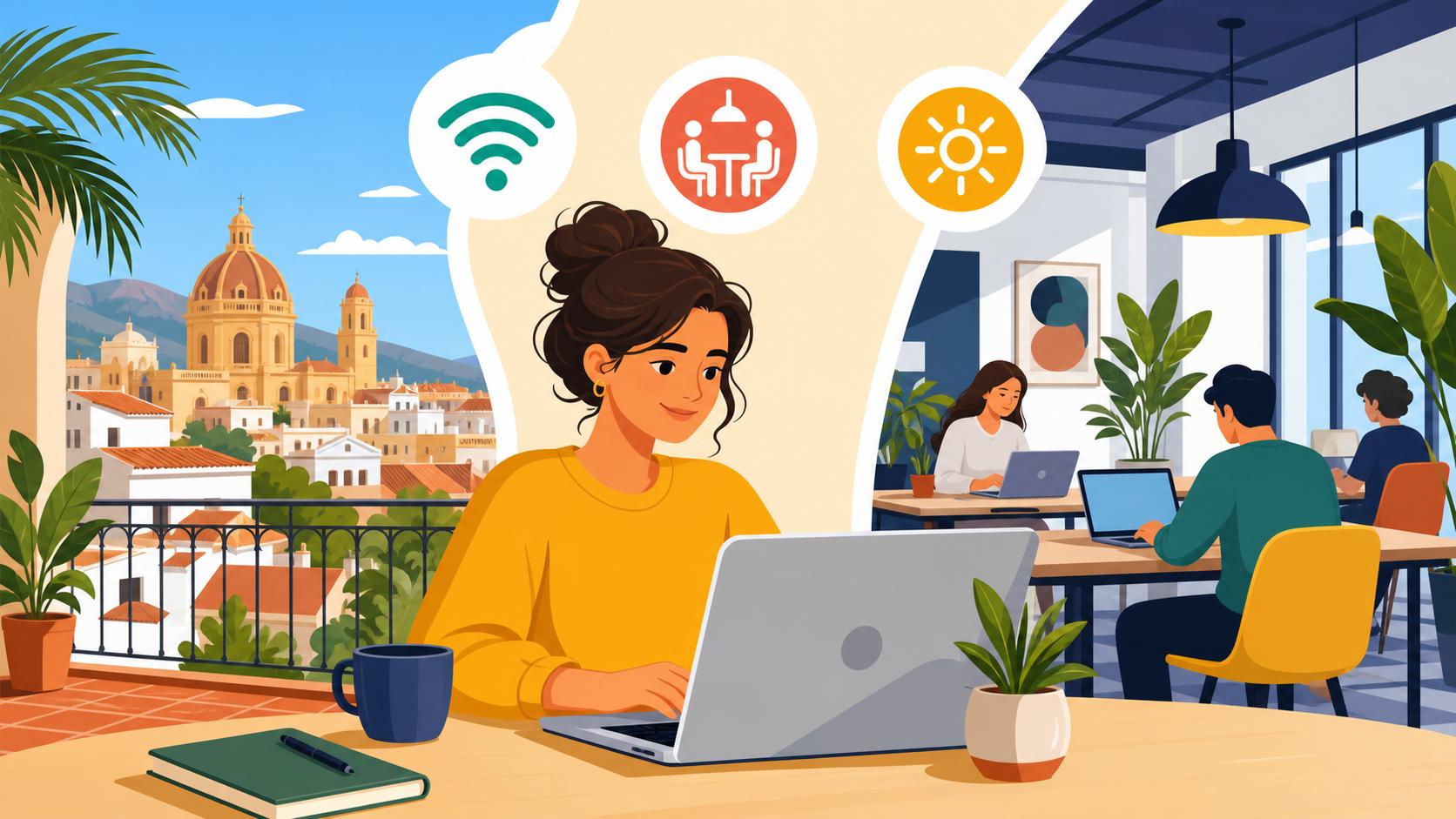
Working from home in Spain can become isolating, especially if your apartment is a "piso interior" (an apartment facing an internal courtyard with little natural light). Coworking spaces are the social heartbeat of the expat professional community. They provide the structure that the Spanish sun tries to melt away.
Networking and Community Benefits
In cities like Barcelona, Madrid, and Malaga, coworking spaces are more than just desks and coffee. They are hubs for networking. Many spaces host "Afterwork" events, which are essential for making friends. In Spain, the line between professional and social life is beautifully blurred. You might start a Tuesday discussing SEO and end it sharing tapas with a lead for your next project.
If you are just starting out, you might want to look into How to Choose a Coworking Space in Spain for Productivity to identify which vibe suits you. Some spaces, like those in the Poblenou district of Barcelona, are tech-heavy and quiet. Others in areas like Malasaña in Madrid are more creative and social. The community aspect is a great way to combat the "expat bubble" by meeting locals who are also freelancers.
Practical Logistics: Location and Amenities
When touring a space, look beyond the aesthetic. Check the "Phone Booths." Many Spanish coworking spaces are housed in old buildings with high ceilings that echo; if you are on Zoom calls all day, you need a soundproof booth. Also, check the air conditioning. From July to September, AC is not a luxury; it is a survival requirement for productivity.
Another tip: check the kitchen. A "comedor" is a staple of Spanish work life. Most coworkers will take a full hour to eat lunch together. This is a prime time to practice your language skills. If you find yourself struggling to keep up with the lunchroom banter, spend 15 minutes a day on SpanishPod101 to sharpen your conversational "small talk" skills.
Membership Structures and Pricing
Pricing varies wildly. A "Hot Desk" (where you pick any open spot) usually costs between 150 and 250 euros per month. A "Fixed Desk" (your own dedicated setup) can go up to 350 euros. Most spaces also offer "Day Passes" for around 20 euros, which is perfect for testing the water.
| Feature | Hot Desk | Fixed Desk | Private Office |
|---|---|---|---|
| Average Cost | €150 – €220 / month | €250 – €350 / month | €600+ / month |
| Flexibility | High (Daily/Weekly) | Monthly | Yearly |
| Storage | None/Locker | Dedicated Desk/Drawers | Full Room |
| Best For | Digital Nomads | Long-term Expats | Small Startups |
Building a Sustainable Daily Routine
The "Mañana" stereotype is a myth when it comes to business, but the "Siesta" timeline is very real. If you work for a company in London or New York, your schedule will clash with the rhythm of Spain. Navigating this is the secret to not burning out.
Adapting to Spanish Time and the Siesta
In Spain, everything happens later. Lunch is at 2:00 PM, and dinner rarely starts before 9:00 PM. Many local shops close between 2:00 PM and 5:00 PM. If your work routine is strictly 9-to-5, you will find yourself working right through the most social part of the day and finishing just as the streets are becoming ghost towns for the afternoon lull.
I found that splitting my day works best. I start early, take a long break from 2:00 PM to 4:30 PM to eat a proper "Menú del Día" and run errands, and then finish my final emails in the evening. This alignment helps you feel like a resident rather than a tourist who happens to have a laptop. Understanding this cultural shift is part of the broader Spanish Work Culture: Hours, Holidays, and Workplace Etiquette that every newcomer should study.
Establishing Work-Life Boundaries
Because Spain is so beautiful and the weather is so inviting, the temptation to "slack off" is immense. Conversely, because you are a remote worker, your Spanish neighbors might assume you are always available for a chat or a coffee. You must be firm.
Set up a dedicated workspace. Even if it’s just a specific corner of your living room, your brain needs that signal that "the office" is open. When you close your laptop, leave the house. Go for a "paseo" (a traditional evening stroll). This physical separation is vital in a country where the "Cost of Living in Spain: Realistic Budgets and Savings Tips" might allow you to live in a smaller, more central apartment where work and sleep happen in the same 20 square meters.
Socializing and Combating Expat Isolation
Remote work is lonely. In Spain, loneliness can feel magnified because everyone outside seems to be part of a loud, laughing group. Don’t wait for people to invite you out. Join a "Padel" club (a sport that is essentially a religion here) or sign up for a language exchange called a "Tercio."
If you are an Autónomo in Spain: Taxes, Invoicing, and Setup Guide, you are essentially your own HR department. You need to schedule your own social "watercooler" moments. Whether it is a weekly coworking lunch or a Friday night meetup, these moments keep you grounded.
Financial and Administrative Considerations for Remote Workers
Setting up your "office" isn't just about routers and desks; it's about how the money flows. Living in Spain while earning in Dollars, Pounds, or even Euros from another country requires a bit of financial gymnastics to avoid losing a fortune in fees.
Managing Currency and Payments
If you are getting paid in a non-Euro currency, do not use a traditional high-street bank to receive your salary. The exchange rates at major Spanish banks like Santander or CaixaBank are often predatory. Instead, use a service like Wise to receive your funds. Wise allows you to hold a "Borderless" account where you can receive your salary in your home currency and convert it to Euros at the mid-market rate when the timing is right.
You will also need a local IBAN for things like your internet contract and rent. Most Spanish utilities require "domiciliación" (direct debit). Opening a local account can be a headache, so follow the steps in Opening a Bank Account in Spain: Step‑by‑Step for Foreigners to ensure you have the right "Empadronamiento" and NIE documents ready. Using Wise in conjunction with a local digital bank like N26 or Revolut is often the smoothest path for most remote workers I know.
Digital Certificates and Paperwork
Everything in Spain is moving toward the "Certificado Digital." This is a file you install in your browser that proves your identity to the government. As a remote worker, you will use this to file taxes, check your residency status, and even sign rental contracts.
Getting your Digital Certificate should be your priority in week one. It saves you from the "Cita Previa" (appointment) nightmare at government offices. Without it, even simple tasks like changing your address or checking your social security contributions become half-day excursions. If you are a freelancer, this is non-negotiable for your quarterly tax filings. For more on the administrative side of things, check out the Learning Spanish for Work and Study: Fast‑Track Strategy to help you navigate the complex government websites that are rarely translated into English.
Handling the Physical Environment
Finally, don't underestimate the Spanish climate. Most apartments in the south are built to keep heat out, which means they are freezing in the winter because they lack central heating. In the north, the humidity can play havoc with your electronics.
Invest in a good ergonomic chair. Most "furnished" apartments in Spain come with stylish but incredibly uncomfortable wooden dining chairs. Your back will thank you for spending 200 euros at an office supply store. Also, consider the "Luz" (light). Spain has incredible natural light, but the glare on a laptop screen during a 4 PM meeting can be blinding. Blackout blinds (persianas) are standard in every Spanish home; learn to use them to regulate both light and temperature like a local.
Disclaimer
The information provided in this guide is for informational purposes only and does not constitute legal, financial, or professional advice. Immigration laws, tax regulations, and service provider terms in Spain change frequently. Always consult with a qualified professional, such as a gestor or legal counsel, regarding your specific residency and tax situation before making significant life changes.