How to Get a Social Security Number (NUSS) Before Your First Day
Your dream employer in Barcelona just sent over a job offer, but there is a catch: they need your Social Security Number by Monday morning to draft the contract. I remember sitting in a humid café in Valencia, sweating over a PDF form I did not understand, terrified I would lose my job before I even started. This guide solves that exact panic, walking you through getting your NUSS independently.
Disclosure: This post may contain affiliate links. We may earn a commission at no extra cost to you if you make a purchase through these links. Read full disclosure.
Why You Need Your NUSS Before Signing a Contract
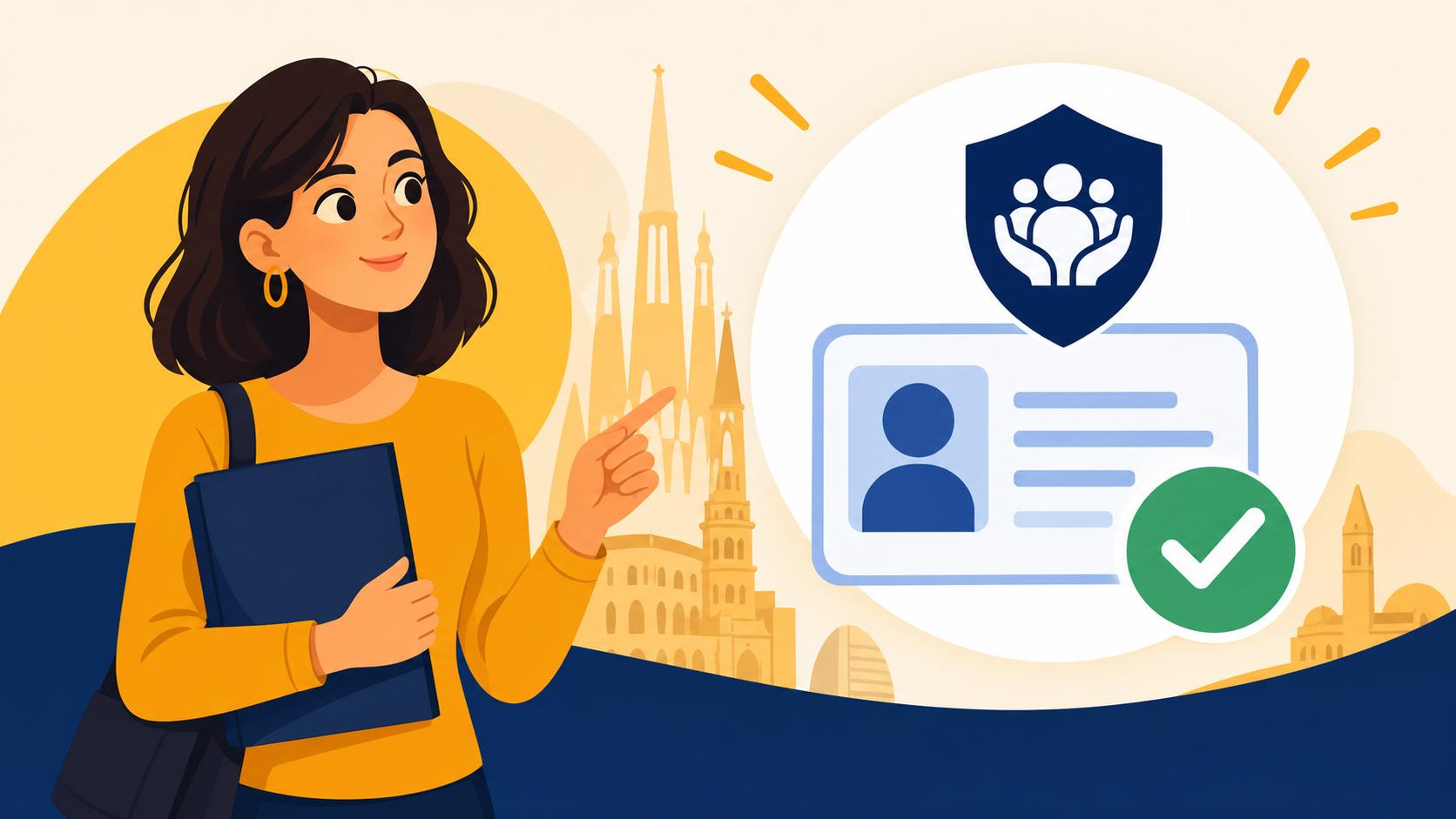
The Spanish Social Security Number, or NUSS (Número de la Seguridad Social), is the backbone of your legal existence in the Spanish workforce. Without it, an employer cannot technically register your contract with the authorities, meaning you cannot start your first day. While some larger companies might offer to handle this for you, most expect you to arrive with this number already in hand. This is particularly true for startups or smaller businesses where the HR department is just one person wearing five different hats.
The Catch-22 of Spanish Hiring
Many newcomers believe they need a job to get a Social Security Number, while employers insist they need the number to give you the job. It feels like a classic bureaucratic trap. However, you are legally allowed to request a NUSS on your own as a "future worker" or even as a student. I found that being proactive and getting this number before I even started my job search gave me a massive competitive advantage. It signaled to recruiters that I was "work-ready" and understood the local system. If you are still in the early stages of your move, checking a Spain Relocation Checklist: First 30 Days for New Residents can help you see where this step fits into the larger puzzle of settling in.
Understanding the NUSS vs. NAF
One point of confusion that often trips up expats is the distinction between the NUSS and the NAF (Número de Afiliación). For all practical purposes, they are the same digits. The NUSS is the number you are assigned when you first enter the system. The moment you start your first legal job and your employer "activates" you in the system, that NUSS becomes your NAF. You do not need to apply for a second number later. This single identifier will follow you throughout your life in Spain, whether you are an employee, a freelancer, or eventually a retiree. Understanding this distinction is part of Spanish Salary Basics: Gross vs Net Pay and Common Deductions because your social security contributions are tied directly to this number.
Impact on Healthcare and Benefits
While the primary reason you are hunting for this number is employment, it is also your gateway to the public healthcare system. In Spain, your right to medical care is tied to your social security contributions. Once you have your NUSS and a valid work contract, you can head to your local health center to get your SIP or health card. If you are curious about how this fits into the broader medical landscape, you might want to read about the Spain Healthcare System for Expats: Public vs Private. Having your NUSS early ensures that there is no gap in your coverage the moment you start working and contributing.
How to Apply for Your NUSS Step by Step
In the "old days," getting your NUSS meant standing in a line at 7:00 AM outside a Tesorería General de la Seguridad Social (TGSS) office. While that is still an option, the system has modernized significantly. However, "modern" in Spain often comes with its own set of digital hurdles that can be just as frustrating as a physical queue.
Option 1: In Person at the TGSS
If you do not have a digital certificate or a Cl@ve (the Spanish digital ID system), the in-person route is the classic choice. You will need to find the TGSS office closest to your home. In some regions, you can walk in, but in major cities like Madrid or Barcelona, a "Cita Previa" (prior appointment) is mandatory. Getting this appointment is often the hardest part of the process. I spent weeks refreshing the booking page at midnight just to snag a slot. For those navigating this for the first time, knowing How to Book a Cita Previa for Extranjería in Spain (Step‑by‑Step) provides a similar blueprint for how these government booking systems operate.
Option 2: Using the Import@ss Portal
The Spanish government recently launched the "Import@ss" portal, which is a much more user-friendly way to handle social security matters. If you have a digital certificate, you can get your NUSS in about five minutes. If you do not have a certificate yet, you can still use the portal by uploading a "selfie" with your passport and filling out your details. This method is a lifesaver for those who cannot find an in-person appointment. To make sure you have the right digital tools for this, look into How to Get a Digital Certificate in Spain Without a Spanish ID.
Filling Out Form TA.1
Regardless of the method you choose, you will have to tackle Form TA.1. This is the official application for the Social Security Number. It is entirely in Spanish, and the boxes can be cryptic. You will need to provide your basic details, your address in Spain, and the reason for your request (usually "Iniciación de actividad" or starting work). Using a resource like SpanishPod101 can be incredibly helpful here to learn the specific vocabulary for "surname," "place of birth," and "legal representative," which are rarely covered in basic language apps.
| Document Category | Required Item | Notes |
|---|---|---|
| Identification | Passport or EU ID Card | Original and a clear photocopy. |
| Residency Proof | NIE or TIE (if available) | Not strictly mandatory for the NUSS itself. |
| Application Form | Form TA.1 | Must be signed and dated. |
| Support Document | Work Offer or Pre-Contract | Not mandatory but helps speed up the process. |
| Address Proof | Empadronamiento | Some offices ask for this to prove jurisdiction. |
Requirements for Non-EU and EU Citizens
The path to your NUSS looks slightly different depending on what passport you carry. While the number itself is the same, the "gatekeepers" at the social security office might ask for different levels of proof regarding your right to be in Spain.
Applying Without a NIE
One of the most common myths is that you cannot get a NUSS without a NIE (Número de Identidad de Extranjero). This is false. You can apply for a NUSS using just your passport. I have helped dozens of expats do this. However, you must remember that once you eventually get your NIE, you have a legal obligation to go back to the Social Security office (or log in online) and update your record so your NUSS is linked to your new ID number. If you are currently waiting on your residency, Getting an NIE for Employment or Study: Practical Overview explains how that identification number works in tandem with your social security.
Document Checklist for Foreigners
For EU citizens, the process is generally smoother. You simply show your passport and your "Certificado de Registro de Ciudadano de la Unión" (the little green card). For non-EU citizens, the clerk will want to see your visa. If you are on a student visa, you are allowed to have a NUSS, but you are restricted to working 30 hours per week. If you are on a Digital Nomad Visa, the requirements are different because you might be remaining in your home country’s social security system. For more on those specifics, check Do You Need Health Insurance for the Spain Digital Nomad Visa.
Language Preparation for the Office
If you are going in person, do not expect the officials to speak English. Bureaucratic Spanish is its own dialect. I found that preparing a "cheat sheet" with phrases like "Quiero solicitar mi número de la seguridad social" (I want to request my social security number) made the experience much less stressful. Again, tools like SpanishPod101 are great for practicing these specific interactions. If you are worried about the conversation, reading How to Ask for an English‑Speaking Doctor Appointment in Spanish (Phrase Guide) can give you a feel for how to navigate formal requests in a similar environment.
Managing Your Financial Life After Getting the NUSS
Once you have that slip of paper with your number, a huge weight will lift off your shoulders. You can finally sign your contract and start earning. But getting the number is only the first step in setting up your financial life in Spain.
Linking Your Social Security to Banking
Your employer will need your NUSS to pay into the system, but they will also need a valid IBAN to pay your salary. Many traditional Spanish banks are hesitant to open accounts for people who do not have their "Vida Laboral" (work history) established yet. This is where services like Wise are essential. You can set up a Euro account with a Belgian or Spanish IBAN almost instantly, allowing you to receive your first paycheck without waiting for a local bank to approve your paperwork. To understand how to bridge this gap, look at Opening a Bank Account in Spain: Step‑by‑Step for Foreigners.
Transitioning to the Workforce
The day you start working, your employer will register you with the Social Security office. This is known as "Alta en la Seguridad Social." It is a good habit to check that this has been done correctly. You can request a report called the "Vida Laboral" which lists every single day you have worked in Spain and which company paid your contributions. If you ever face a dispute regarding your contract or benefits, this document is your best friend. For a deeper dive into your rights as a new hire, see Work in Spain as a Foreigner: Jobs, Contracts, and Rights.
Long-Term Benefits and Compliance
Having your NUSS early also ensures you start accruing "time" toward your Spanish pension and unemployment benefits (paro) from day one. In Spain, every day counts. If you are a freelancer, getting your NUSS is the first step before you can register as an "Autónomo." For those considering the freelance route, the guide on Freelancing (Autónomo) in Spain: Taxes, Invoicing, and Setup Guide will be your next logical step. Remember that keeping your social security records clean and updated is essential for future residency renewals.
Disclaimer
This guide is intended for informational purposes only and does not constitute legal or professional administrative advice. Spanish immigration and social security regulations are subject to frequent changes, and requirements may vary significantly between different Autonomous Communities and local offices. Always verify the latest procedures with the official website of the Seguridad Social (Seguridad Social: Oficina Virtual) or consult with a qualified "gestor" or legal professional before submitting official documentation.