Recycling and Waste in Spain: How the Household System Works
Standing on a Spanish street corner with five different bags of trash and a look of pure confusion is a rite of passage for every newcomer. I remember my first week in Seville, paralyzed by the sight of a row of colorful bins, terrified that my neighbors would judge me for putting a pizza box in the wrong container. This guide will help you master the Spanish recycling system, ensuring your transition to Living in Spain as a Foreigner: Complete Housing & Daily Life Guide is as smooth and eco-friendly as possible.
Disclosure: This post may contain affiliate links. We may earn a commission at no extra cost to you if you make a purchase through these links. Read full disclosure.
Decoding the Color-Coded Containers
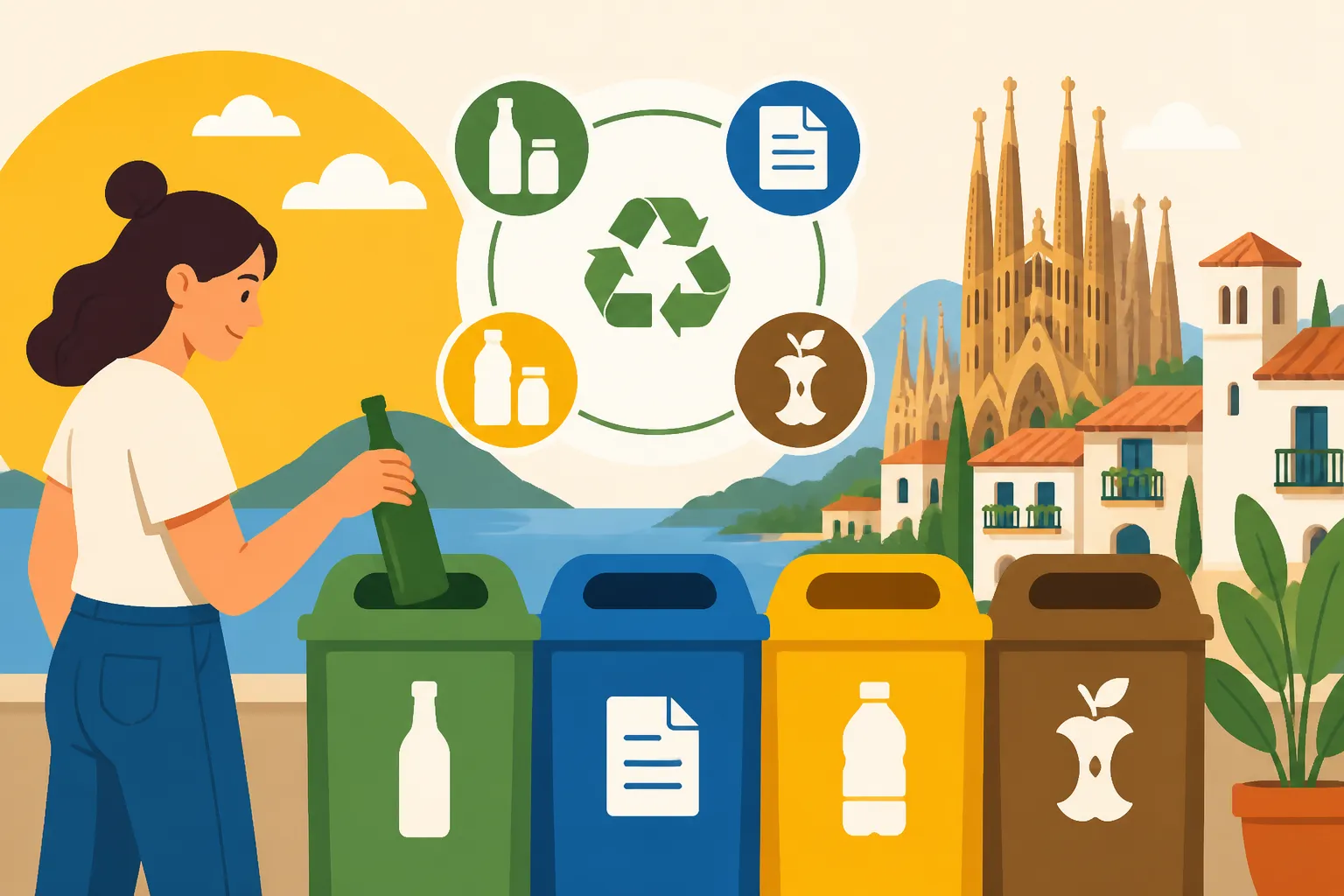
The backbone of the Spanish waste system is its color-coded bin hierarchy. Unlike some countries where everything is tossed into a single "recycling" bin, Spain requires a bit more mental gymnastics at the source. These bins are usually located in clusters on street corners, though in some historic centers, they may only appear during specific evening hours. Mastering this is an essential part of Setting Up Your Life in Spain: Utilities, Internet, and Essentials.
The Yellow Bin: Envases (Packaging)
The yellow bin, or contenedor amarillo, is perhaps the most misunderstood bin in the country. Many expats assume it is for all things plastic, but that is a common mistake that can lead to contamination. The yellow bin is specifically for "packaging." This includes plastic bottles, cleaning product containers, yogurt pots, plastic wrap, and metallic items like soda cans, tinned food cans, and even aluminum foil.
Crucially, "carton" bricks (like those for milk or juice) also belong here because they are made of a mix of cardboard, plastic, and aluminum. One of the biggest "Expat Oopsies" is putting plastic toys, kitchen utensils, or old Tupperware in the yellow bin. Even though they are plastic, they are not "packaging" and should actually go to general waste or a special collection point. When you are browsing for your first apartment on Spotahome, it is worth checking if the neighborhood has these bins nearby, as carrying heavy bags of plastic across town is no fun.
The Blue Bin: Papel y Cartón (Paper and Cardboard)
The blue bin, or contenedor azul, is reserved strictly for paper and cardboard. This means newspapers, magazines, envelopes, and cardboard boxes. A veteran tip: always flatten your boxes. Spanish bins can fill up remarkably quickly, and nothing earns you the ire of your neighbors like a single uncollapsed Amazon box taking up half the container's volume.
Be careful with food-contaminated paper. If you have a pizza box that is soaked in grease and cheese, it does not belong in the blue bin; the grease ruins the recycling process for the rest of the batch. That greasy box should go into the organic or general waste bin instead. If you find yourself ordering frequently from Amazon Spain to furnish your new home, you will become very familiar with the blue bin. Keeping your cardboard management under control is a small but vital part of the Spain Relocation Checklist: First 30 Days for New Residents.
The Green Bin: Vidrio (Glass)
The green igloo-shaped bin, known as the iglú verde, is for glass bottles and jars only. This is where your empty wine, beer, and jam jars go. However, there is a very important distinction to make: glass is not the same as crystal. Drinking glasses, mirrors, light bulbs, and window panes are made of different materials with different melting points. Putting a broken wine glass (the drinking kind) into the green bin can ruin an entire batch of recycled glass.
Also, remember to remove the lids from your jars. Metal lids go in the yellow bin, and corks usually go in the organic bin. Another pro tip for the socially conscious: try not to dump your glass at 11:30 PM. The sound of glass shattering inside a hollow metal or plastic bin echoes loudly in Spain’s narrow streets, and it is a quick way to annoy the people living on the first floor. This kind of local etiquette is just as important as knowing How to Sort and Recycle Rubbish Correctly in Spain.
Organic vs. General Waste: The Gray and Brown Realities
Once you have sorted out your recycling, you are left with the "wet" waste. This is where many regions in Spain are currently undergoing a transition. Understanding the difference between organic and general waste is a key component of managing your Cost of Living in Spain: Monthly Budget Guide for Expats, as some municipalities are beginning to implement "pay-as-you-throw" or incentivized systems.
The Brown Bin: Orgánico (Organic Waste)
The brown bin is a relatively recent addition to many Spanish streets. It is designed for biodegradable waste—basically anything that could eventually become compost. This includes fruit and vegetable scraps, meat and fish remains, eggshells, coffee grounds, and used paper napkins. The goal is to divert this heavy, wet waste away from landfills and into composting facilities.
If your neighborhood has the brown bin, you should ideally use compostable bags rather than standard plastic ones. These are often available at local supermarkets or can be ordered in bulk from Amazon Spain if you prefer to have them delivered to your door. In some cities, like Barcelona or parts of Madrid, you might even need a special electronic card to open the brown bin, a measure designed to ensure people are sorting correctly. Navigating these small hurdles is part of the broader Spanish Bureaucracy for Daily Life: Padrón, IDs, and Local Services.
The Gray or Orange Bin: Resto (General Waste)
The gray bin (sometimes with an orange lid or marking) is for "everything else." This is known as resto. If it can't be recycled in the yellow, blue, or green bins, and it isn't organic, it goes here. This includes items like diapers, feminine hygiene products, cigarette butts, floor sweepings, and broken ceramics.
While it feels like a "catch-all," the goal of the Spanish government is to make this bin as empty as possible. If you are diligent with your sorting, you will find that your general waste bag is the smallest one you take out. When you are Renting in Spain: Contracts, Deposits, and Tenant Rights, it is worth asking the landlord where the specific bins for your building are located, as some older buildings have a "portero" (doorman) who collects general waste from your door at a specific hour, while others require you to walk to the communal street bins.
The Punto Limpio System: Handling "Special" Waste
One of the biggest mistakes expats make is leaving an old microwave or a broken IKEA chair next to the street bins. In most Spanish cities, this is illegal and can result in significant fines. For anything that doesn't fit in the standard five bins, you need the Punto Limpio (Clean Point).
Fixed and Mobile Clean Points
The Punto Limpio is a dedicated recycling center for hazardous or bulky waste. Fixed sites are usually located on the outskirts of town and are large facilities where you can drive in and drop off old mattresses, electronics, paint cans, and furniture. However, because most people in Spanish city centers don't have cars, many municipalities offer a Punto Limpio Móvil. This is a truck that parks at specific locations (like a neighborhood square) on a set schedule.
Using an eSIM from Airalo makes it incredibly easy to use your phone to find the schedule for these mobile points. You can usually find a PDF or an app from the Ayuntamiento (City Hall) that lists exactly when the truck will be in your "barrio." This is where you take your dead batteries, used light bulbs, old clothes, and small appliances. Properly disposing of these items is a mark of a well-integrated resident and helps maintain the neighborhood you chose after following a How to Choose a Neighborhood in Spain: A Practical Decision Checklist.
Disposing of Cooking Oil and Batteries
Never, ever pour used cooking oil down the sink in Spain. The old plumbing in many Spanish apartments is not designed to handle it, and it causes massive problems for the local water treatment plants. Instead, collect your used oil in a plastic bottle. Most neighborhoods have specific orange bins for oil, or you can take it to the Punto Limpio Móvil.
Batteries are another "special" category. You will often see small, transparent cylinders attached to bus stops or inside supermarkets. These are specific collection points for button cells and standard batteries. Keeping a small jar at home to collect these until you pass a collection point is a simple way to stay organized. If you are still in your Spain Relocation Checklist: First 30 Days for New Residents, setting up an "oil and battery" station in your kitchen will save you a headache later.
Local Bylaws and Hidden Rules
Waste management in Spain is not a federal affair; it is managed by the Ayuntamiento. This means that the rules in Valencia might be slightly different from the rules in Bilbao. Failing to follow local bylaws can result in fines that can put a dent in your Cost of Living in Spain: Realistic Budgets and Savings Tips.
Collection Times and Noise Ordinances
In many Spanish cities, you are technically only allowed to put your trash in the bins between 8:00 PM and 11:00 PM. This is to prevent the bins from smelling in the intense Spanish sun during the day. While this is not always strictly enforced for recycling (which doesn't smell), it is often very strictly enforced for organic and general waste.
Furthermore, some cities have "noise siestas" for recycling. In central Madrid, for example, there are signs on glass bins asking you not to use them between 11:00 PM and 8:00 AM to protect the sleep of neighbors. Being mindful of these small cultural nuances is part of Dealing with Landlords in Spain: Communication Tips and Paper Trail, as neighbor complaints often go straight to the property owner.
| Bin Color | Waste Type | Common Items | Tip |
|---|---|---|---|
| Yellow | Packaging (Envases) | Plastic bottles, cans, milk bricks | Flatten cans to save space |
| Blue | Paper/Cardboard | Boxes, newspapers, envelopes | No greasy pizza boxes |
| Green | Glass (Vidrio) | Wine bottles, jam jars | Remove metal lids first |
| Brown | Organic | Food scraps, coffee grounds | Use compostable bags |
| Gray/Orange | Resto (General) | Diapers, ceramics, dust | The "catch-all" bin |
| Special | Punto Limpio | Oil, batteries, electronics | Check for mobile trucks |
Furniture and Bulky Items
If you are moving out or have just finished a renovation, you likely have furniture to discard. Most cities have a free "bulky item" collection service. You call a specific number (often 010 or a local equivalent), tell them what you have, and they will give you a specific night to leave the items on the sidewalk near your building.
Leaving a sofa on the street without an appointment is a quick way to get a €300 fine. The process is usually very efficient, and the operators often speak a little English in major expat hubs. If you found your place via Spotahome, your building might even have a dedicated area for this, so always check with the "Presidente de la Comunidad" (the head of the building's residents' association).
Setting Up Your Home Infrastructure
The biggest challenge to recycling in Spain is often the size of the kitchen. Spanish apartments, especially in historic centers, are notoriously compact. Finding space for five different bins requires some creative thinking and a bit of shopping at Amazon Spain.
Organizing Your Space
Many Spaniards use "stackable" bins that sit in a corner of the kitchen or on the "galería" (the small utility balcony where the washing machine usually lives). Because you have to carry your trash to the street, having bins with handles or a dedicated "recycling trolley" can make the nightly walk much easier.
When I first moved, I tried to have one giant bin for everything, but it was a disaster. I eventually invested in a color-coded system that mirrored the street bins. This not only made sorting automatic but also helped my guests understand the system without me having to give a lecture every time they finished a soda. If you are still navigating How to Register Your Address (Empadronamiento) When You Move House, getting your household systems in order at the same time will make you feel much more at home.
The Importance of the Padrón in Waste Services
Believe it or not, your waste management is tied to your Empadronamiento. The number of people registered in a municipality determines the budget for trash collection and the number of bins provided to a neighborhood. If you are living "off the radar," you are contributing to overcrowded bins in your area.
Registering correctly via Spanish Bureaucracy for Daily Life: Padrón, IDs, and Local Services ensures that your local barrio gets the funding it needs to keep the streets clean. It also gives you access to certain municipal apps that track waste collection and reward citizens for recycling with discounts on local taxes or public transport.
Disclaimer
This guide is intended for informational purposes only. Waste management regulations and recycling categories in Spain are determined at the municipal level and are subject to change. While we strive to provide the most current and accurate information, you should always verify the specific rules, collection times, and disposal requirements with your local Ayuntamiento or city council. Improper disposal of waste can result in fines and penalties according to local Spanish laws.