Dealing with Landlords in Spain: Communication Tips and Paper Trail
Navigating a rental relationship in Spain requires cultural awareness and strict documentation. This comprehensive guide details how to communicate effectively with Spanish landlords, legally document maintenance requests, utilize the Burofax system, and secure your deposit when moving out.
Disclosure: This post may contain affiliate links. We may earn a commission at no extra cost to you if you make a purchase through these links. Read full disclosure.
Understanding the Spanish Landlord Dynamic
Before you sign a lease or send your first maintenance request, it is crucial to understand the mindset of the typical Spanish landlord. The rental market in Spain is heavily dominated by private, individual owners rather than large, institutional property management companies. For many Spanish families, real estate is their primary form of generational wealth and their main source of retirement income.
Because the property is often a deeply personal asset, private landlords can sometimes exhibit a high degree of emotional attachment to the apartment. They may be highly particular about how the property is maintained, or conversely, they may be reluctant to spend money on modern upgrades, viewing the property simply as a static source of passive income.
When communicating with a private landlord, balancing respect with firm boundaries is essential. While you want to maintain a cordial, friendly relationship, you must remember that this is fundamentally a business transaction governed by the national rental law. If you are unfamiliar with your foundational rights as a tenant, reviewing a comprehensive guide on How Spanish Rental Contracts Work: Key Clauses Explained should be your absolute first step.
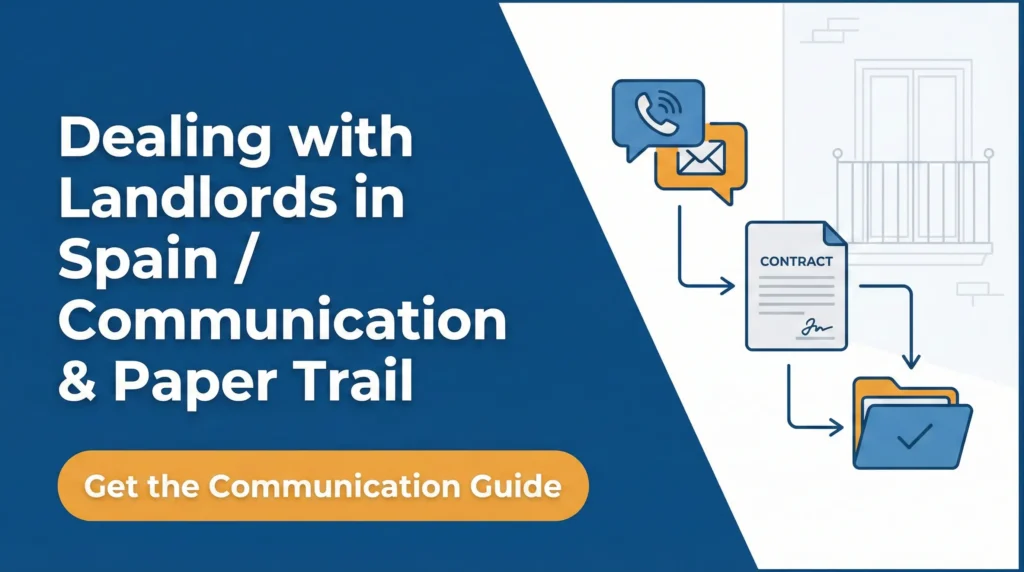
The Role of WhatsApp in Spanish Real Estate
In many Northern European and North American countries, communicating with a landlord is strictly confined to formal emails or specialized property management portals. In Spain, the undisputed king of communication is WhatsApp.
From the moment you first inquire about an apartment to the day you hand back the keys, you will likely communicate with your landlord or real estate agent almost exclusively via this messaging app.
The Pros and Cons of WhatsApp
WhatsApp offers immediate, direct access to your landlord, which is incredibly useful for minor questions or sharing quick video updates of a leaking faucet. However, it completely blurs the line between professional and personal communication. Landlords may message you late at night or on weekends, expecting an immediate reply because they can see the blue “read” receipts.
To maintain your sanity, establish communication boundaries early on. Respond to non-emergency messages only during standard business hours. If you want to understand how this messaging culture permeates other aspects of local life, check out our overview on Spanish Business Etiquette: Gifts, Greetings, and WhatsApp Norms.
Making WhatsApp Legally Binding
While WhatsApp is informal, messages exchanged on the platform can be admitted as evidence in Spanish courts if a dispute arises. However, for a WhatsApp conversation to serve as a reliable paper trail, you must adhere to strict rules:
- Never delete messages: Keep the entire chat history intact from the very first day.
- Keep it clear and professional: Avoid using slang or vague language. State requests clearly.
- Confirm receipt: If a landlord calls you to discuss a repair, immediately send a follow-up WhatsApp message summarizing the phone call. For example: “Hola [Name], just to confirm our phone conversation from five minutes ago, you agreed to send a plumber tomorrow at 10:00 AM to fix the bathroom leak. Gracias.”
Establishing an Ironclad Paper Trail
The golden rule of renting in Spain is simple: document absolutely everything. A friendly landlord today can become highly uncooperative tomorrow if an expensive repair is required or if they decide they want to keep your security deposit (fianza).
The Move-In Inventory
Your paper trail begins the minute you sign the contract and receive the keys. Never move your belongings into a Spanish apartment without conducting a meticulous, documented inventory check.
Walk through every room and test everything. Turn on all the faucets, flush the toilets, open all the blinds (persianas), check the air conditioning units, and inspect the walls for existing scratches or mold. Take high-resolution photos and videos of the entire property, specifically focusing on any pre-existing damage.
Draft an email with all these photos attached, detailing every minor flaw, and send it to the landlord or the agency within 48 hours of receiving the keys. Subject the email clearly: Estado del piso – [Your Address] – [Date]. Ask the landlord to reply confirming they have received the email. This establishes a baseline condition of the property, proving you did not cause those damages when it is time to move out.
Using Email for Formal Requests
While WhatsApp is fine for asking if you can paint a wall, all significant issues must be moved to email. Email provides a searchable, timestamped, and highly professional medium for communication.
Use email for:
- Reporting major maintenance issues (broken boilers, structural leaks).
- Discussing rent payment delays or issues with bank transfers.
- Requesting permission to make significant changes to the property.
- Documenting ongoing issues with neighbors or communal building spaces.
The Burofax The Ultimate Spanish Legal Tool
If communication breaks down completely, or if you need to send a legally binding notification that guarantees proof of receipt, you must use the Spanish Burofax system.
A Burofax is a specialized postal service offered by Correos (the Spanish national postal service). It is not a fax machine transmission. It is a certified, physically delivered letter where the postal worker records the exact date, time, and identity of the person who signs for the delivery. Furthermore, Correos keeps a legally certified copy of the exact contents of the letter.
When to Send a Burofax
Sending a Burofax is considered an aggressive, formal legal escalation. You should not use it for minor disagreements. However, it is absolutely necessary in the following scenarios:
- Giving Notice to Vacate: When you are ending your lease, sending a Burofax exactly 30 days (or whatever period your contract dictates) before your departure guarantees the landlord cannot claim you failed to provide legal notice.
- Demanding Urgent, Legally Mandated Repairs: If your landlord is ignoring requests to fix a broken water heater in the middle of winter, a Burofax formally puts them on notice that they are in breach of the contract.
- Disputing Unlawful Rent Increases: If a landlord attempts to raise your rent above the legally allowed inflation limits, a Burofax allows you to formally reject the increase with legal backing.
You can send a Burofax online via the official Correos website or in person at any local post office. It typically costs between 15 and 30 euros, depending on the length of the document and whether you request the certified copy of the contents (which you always should).
Navigating Repairs and Property Maintenance
Disputes over who pays for what repair are the leading cause of friction between landlords and expats in Spain. The Spanish Urban Tenancy Law (Ley de Arrendamientos Urbanos – LAU) provides specific guidelines, particularly in Article 21, but the interpretation can sometimes be murky.
As a general rule:
- The Landlord (Arrendador) pays for: Major structural repairs and the replacement of essential appliances that break down due to age or normal use. This includes replacing an old, broken washing machine, fixing the central heating boiler, or repairing a leaking roof.
- The Tenant (Arrendatario) pays for: Minor repairs caused by daily wear and tear, and any damage caused by negligence or misuse. This includes changing lightbulbs, replacing a broken window blind strap, or fixing a washing machine that broke because you overloaded it.
To help you manage these boundaries, here is a quick reference table outlining common maintenance scenarios:
| Maintenance Issue | Typically Paid By | Required Action for Tenants |
| Broken Boiler / No Hot Water | Landlord | Notify immediately via email. Do not hire your own plumber without written permission. |
| Clogged Sink Drain | Tenant | Usually considered daily use. Hire a local plumber or use drain cleaner. |
| Washing Machine Dies (Old Age) | Landlord | Document the breakdown. Landlord must repair or replace it with a similar model. |
| Broken Window Glass | Tenant | Unless caused by severe weather, tenants pay for accidental breakage. |
| Mold on Walls (Structural Leak) | Landlord | Take photos immediately. Structural humidity is a landlord issue. |
| Replacing Lightbulbs/Fuses | Tenant | Tenant responsibility. Handled independently. |
If you are responsible for a minor repair and need to hire a professional, finding someone trustworthy is critical to avoid being overcharged. You can learn how to source reliable professionals in our guide to Home Maintenance in Spain: Finding Reliable Tradespeople.
The Danger of Withholding Rent
A critical warning for expatriates: Never withhold your rent payment in Spain. In some countries, if a landlord refuses to fix a broken heater, the tenant has the legal right to withhold rent or deduct the cost of the repair from the monthly payment. In Spain, this is illegal. If you stop paying rent, even if the landlord is entirely in the wrong regarding a repair, you immediately place yourself in breach of contract. The landlord can legally initiate eviction proceedings against you for non-payment.
If a landlord refuses to perform a legally mandated major repair, you must continue paying your rent while simultaneously sending a Burofax demanding the repair, or eventually seeking mediation through local housing authorities.
Rent Increases and Contract Renewals
Spain frequently updates its rental laws to protect tenants from aggressive market inflation. Understanding how rent increases work prevents you from agreeing to unlawful charges.
Historically, rent increases in Spain were directly tied to the IPC (Índice de Precios de Consumo), the Spanish consumer price index. However, due to severe inflation spikes in recent years, the Spanish government implemented strict caps on how much a landlord can increase your rent upon the annual anniversary of your contract.
When your contract anniversary approaches, the landlord must notify you in writing (usually one month in advance) if they intend to apply the annual increase. If they do not notify you in writing, the rent remains exactly the same for the following year. Do not remind them.
If your landlord attempts to raise your rent beyond the legally established government cap for that calendar year, or if they attempt to introduce entirely new community fees or utility transfer charges mid-contract, you must politely but firmly reject the increase in writing, citing the specific limits established by the current LAU regulations. Ensuring your utilities are registered smoothly from day one can prevent future disputes; read more in Setting Up Utilities in Spain: Electricity, Gas, and Water Basics.
The Move Out Process and Deposit Recovery
The conclusion of your tenancy is when your meticulously maintained paper trail proves its true value. Recovering the security deposit (fianza)—which is typically equal to one or two months of rent—is a notorious pain point for expats.
Giving Proper Notice
You must give official notice that you are leaving the property exactly as stipulated in your contract. Usually, this requires 30 days’ notice before the end of the contractual year. Send this notice via Burofax or via a formal email that the landlord replies to and acknowledges. If you are breaking the lease early (which you can legally do after the first six months of the contract), ensure you understand the financial penalties outlined in your specific lease agreement.
The Final Walkthrough and Handover Document
On your final day in the apartment, do not simply leave the keys on the kitchen counter and close the door. You must schedule an in-person walkthrough with the landlord or the agency representative.
Ensure the apartment is spotlessly clean. During the walkthrough, you and the landlord must sign a “Documento de Resolución de Contrato y Entrega de Llaves” (Contract Termination and Key Handover Document). This document legally ends your obligation to pay rent.
Crucially, this document must explicitly state the condition of the apartment. If the landlord agrees the apartment is in good condition, the document must say so. If there are damages, they must be listed explicitly on this paper before you sign it. If the landlord tries to claim damages weeks later that were not listed on this signed handover document, they have no legal standing.
Returning the Fianza
By law, the landlord has exactly 30 days from the day you return the keys to refund your security deposit. They are allowed to deduct unpaid utility bills or the cost of repairing damages documented during the final walkthrough. However, they must provide you with official, itemized invoices from professional repair companies for any deductions they make. They cannot simply invent a number or charge you for standard wear and tear (like repainting a wall that faded naturally over three years).
If the landlord fails to return the deposit within 30 days, it legally begins to accrue interest. If you find yourself in a prolonged battle to recover your funds, you will need to escalate the situation administratively. You can find a detailed, step-by-step escalation protocol in our dedicated guide: Getting Your Deposit Back in Spain: Disputes and Documentation.
What to Do When Communication Breaks Down
Despite your best efforts to maintain a polite, documented relationship, some landlords are simply unresponsive or unreasonable. If you find yourself in a gridlock, you have options outside of hiring expensive legal counsel.
Local Tenant Unions (Sindicatos de Inquilinos)
In major Spanish cities like Barcelona and Madrid, tenant unions are incredibly powerful and active organizations. For a very small annual membership fee, these unions provide access to specialized housing lawyers who will review your contract, advise you on your rights, and even draft formal legal letters to your landlord on your behalf. Simply mentioning to a difficult landlord that you have consulted the Sindicato de Inquilinos is often enough to force them to act within the law.
Municipal Housing Offices
Most local town halls (Ayuntamientos) operate a municipal housing office that offers free mediation services for rental disputes. While they cannot issue binding legal verdicts like a judge, they can summon the landlord to a mediation session to resolve issues like unreturned deposits or neglected maintenance without going through the slow and expensive Spanish court system. Familiarizing yourself with your local town hall’s services is a vital part of integration, which you can explore in Spanish Bureaucracy for Daily Life: Padrón, IDs, and Local Services.
Conclusion
Dealing with a landlord in Spain requires a careful balance of cultural diplomacy and strict administrative discipline. By understanding the informal yet binding nature of WhatsApp, taking the time to meticulously document the condition of your property upon arrival, and utilizing the formidable Burofax system when necessary, you shield yourself from the vast majority of rental disputes.
Remember that a lease agreement is a two-way street. You have a legal obligation to care for the property and pay rent on time, but the landlord has an equally binding obligation to provide a safe, habitable home and respect your rights as a tenant. Maintain your paper trail, communicate clearly and professionally, and do not be afraid to stand firm on the rights granted to you by Spanish law.
References
Primary sources (official)
- Boletín Oficial del Estado (BOE) – Ley de Arrendamientos Urbanos (Urban Tenancy Law): https://www.boe.es/buscar/act.php?id=BOE-A-1994-26003
- Correos (Official Burofax Service Information): https://www.correos.es/es/en/individuals/send/documents/burofax
- Ministerio de Vivienda y Agenda Urbana (Ministry of Housing): https://www.mivau.gob.es/
Other helpful sources
- Sindicato de Inquilinas e Inquilinos de Madrid (Madrid Tenants Union): https://www.inquilinato.org/
- Sindicat de Llogateres (Catalonia Tenants Union): https://sindicatdellogateres.org/
Disclaimer
The information provided in this article is for educational and informational purposes only and does not constitute formal legal advice. Spanish rental laws (LAU), government rent caps, and eviction procedures are subject to frequent legislative updates at both the national and regional levels. For specific contractual disputes, unreturned deposits, or eviction threats, we strongly recommend consulting a registered Spanish housing lawyer (abogado) or your local municipal tenants’ union.