Insurance for Canadians in Spain: Provincial Coverage Cut-Off Dates
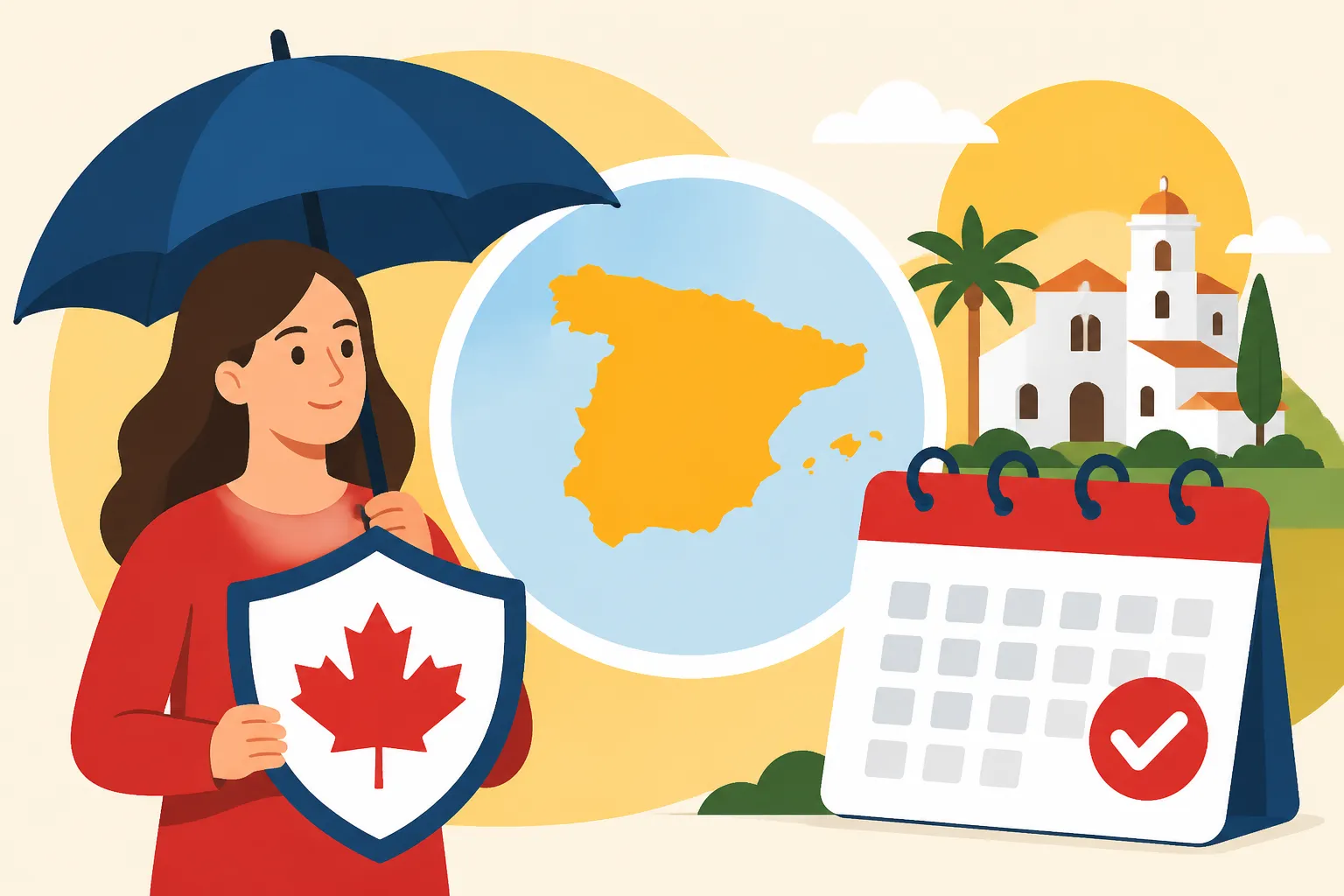
Moving to Spain is an adventure of a lifetime, isn't it? But beneath all the excitement, there's often a knot of anxiety, especially when it comes to something as vital as healthcare. Many of us Canadians arrive thinking our provincial health coverage has us sorted, only to discover there are strict cut-off dates. This guide will walk you through exactly when your Canadian provincial health coverage ends, the risks of being uninsured in Spain, and how to bridge that gap with reliable international health insurance like SafetyWing, ensuring you're protected from day one.
Disclosure: This post may contain affiliate links. We may earn a commission at no extra cost to you if you make a purchase through these links. Read full disclosure.
Understanding Your Provincial Healthcare Cut-Off Dates in Spain
The moment you start planning your move to Spain, one of the most crucial things to figure out – right after sorting out your visa and what tapas bar to hit first – is what happens to your provincial health coverage back home. Trust me, you do not want to find this out the hard way when you're suddenly faced with a Spanish hospital bill.
The 6-Month Rule: What You Need to Know (and Worry About)
For most Canadian provinces, the general rule of thumb is that your provincial health coverage is only valid for a certain period when you're outside of Canada, usually around six months within any 12-month period. It's a tricky one because it's not always a hard cut-off on a specific day; it's about maintaining your residency in Canada. If you spend more than a certain number of days outside the country, your provincial health plan might deem you no longer a "resident" for health benefits.
For instance, if you're from Ontario, you're generally allowed to be outside of Canada for up to 212 days in any 12-month period while still retaining your Ontario Health Insurance Plan (OHIP) coverage. Go over that, and poof! Your coverage can be lost, and getting it back isn't always a quick or simple process. The same goes for many other provinces, like British Columbia's Medical Services Plan (MSP) or Alberta's Health Care Insurance Plan (AHCIP). They have similar guidelines about maintaining residency.
I remember the stress of trying to calculate my days, constantly checking my flight history and worrying if a weekend trip to Portugal would push me over the edge. It's a genuine headache, I know, but it’s absolutely essential to be on top of this. Even if you only intend to be abroad for a short period, unexpected circumstances can arise, extending your stay and suddenly putting your health coverage at risk.
Province-Specific Rules and Exceptions
While the 6-month rule is common, it's not universal, and the devil is always in the details with bureaucracy, isn't it? Each province has its own specific regulations, and it's imperative that you check the official website of your provincial health ministry. Don't rely on what a friend of a friend told you, or even general blog posts (like this one, always verify with official sources!).
For example, Quebec's Régie de l'assurance maladie du Québec (RAMQ) has its own set of rules regarding absences from the province, and they can be quite particular. Some provinces might offer slightly longer grace periods under specific conditions, like studying abroad or working for a Canadian company on assignment. Others might be stricter, especially if they perceive you've established residency elsewhere.
My best advice? Go straight to the source. Search for your province's health ministry website and look for sections on "maintaining coverage while abroad" or "eligibility requirements for residents." If you're unsure, actually call them. Yes, it might mean navigating automated systems and waiting on hold, but getting direct clarification can save you immense stress and potential financial ruin down the line. It's an inconvenient truth of being an expat: you become your own primary research assistant.
Impact of Short Trips vs. Long-Term Residency
It's vital to differentiate between taking a vacation and establishing a new life abroad. Provincial healthcare plans are designed for residents of that province. If your intention is to live in Spain for an extended period, perhaps on a Spain Digital Nomad Visa or a Spain Non-Lucrative Visa, then regardless of the provincial cut-off dates, your Canadian healthcare status is fundamentally changing.
Even if you're just taking several short trips that cumulatively exceed the allowed period, you could lose coverage. Think about it: if you spend three months in Spain, return to Canada for a month, then head back to Spain for another three months, that second stint might push you past the yearly limit, even though each individual trip was short. It's about your total time outside Canada.
This is where the concept of "intent to reside" comes in. If you've sold your home, ended your lease, or cancelled your local services in Canada, it becomes clearer to your provincial health authority that you've chosen to reside elsewhere. This can lead to your coverage being terminated even sooner than the maximum days allowed for temporary absences. The goal is seamless continuity of care, and your provincial plan wasn't designed to provide that when you're setting up a new life on the sunny Iberian Peninsula.
The Gap: Why You Absolutely Need Interim Health Insurance in Spain
So, your Canadian provincial coverage has an expiry date, and the Spanish public healthcare system isn't going to roll out the red carpet for you the second you land. There's a gap, a potentially very dangerous period where you could be completely uninsured. This isn't just a minor inconvenience; it's a significant financial risk.
The Risks of Being Uninsured in Spain
Let's not sugarcoat it: being uninsured in Spain is a terrifying prospect. While Spain has an excellent public healthcare system, it's not free for everyone, especially if you're not yet fully integrated into the system with a job and social security contributions, or if you're on a non-working visa that requires private insurance.
Imagine this: you're enjoying a beautiful day, maybe hiking near Montserrat, and you twist your ankle. Or, worse, you suddenly get a nasty stomach bug that requires an emergency trip to the hospital. Without insurance, even a relatively minor injury or illness can result in a bill that runs into the hundreds, if not thousands, of euros. A serious emergency? We're talking tens of thousands. These aren't just hypothetical scenarios; they happen to expats all the time.
Beyond the financial hit, being uninsured creates immense administrative stress. Without a health card or valid private insurance, navigating the Spanish medical system becomes even more complicated. You'll likely face immediate payment demands, and explaining your situation in a language you might not be fluent in, while in pain or distress, is a nightmare. The fear of getting sick or injured in a foreign country is real, and it's amplified tenfold when you know you're not covered.
Navigating the Waiting Period for Spanish Public Healthcare
Even when you finally get your residency sorted and become eligible for Spain's public healthcare system, there can still be a waiting period. You might have to wait a few weeks or even months for your Tarjeta Sanitaria (Spanish health card) to be processed after you've registered with social security. It’s an administrative maze, and it rarely moves at lightning speed. You'll also need to get registered at your local What Is a ‘Centro de Salud’ in Spain and How Do You Register?, which is another step.
Furthermore, many popular Spanish visas – such as the Digital Nomad Visa, Non-Lucrative Visa, and Student Visas – mandate that you have private health insurance for the entire duration of your stay. This isn't just a suggestion; it's a non-negotiable requirement for your visa application. This private policy must meet specific criteria, often including full coverage without co-payments or deductibles, and repatriation, which is exactly where an international health insurance provider becomes your absolute lifeline.
SafetyWing: Your Go-To for Flexible, Reliable Expat Coverage
This is where SafetyWing steps in as the hero you didn't know you needed. For Canadians moving to Spain, SafetyWing offers flexible, reliable travel medical insurance that is specifically designed for digital nomads and expats. It's built for people like us who are living a more fluid, international life.
What makes SafetyWing such a standout option?
- Tailored for Expats: Unlike typical travel insurance policies that are meant for short trips, SafetyWing understands the unique needs of long-term residents abroad. It covers you outside your home country for extended periods, providing continuous coverage.
- Flexibility is Key: You can purchase SafetyWing online from anywhere in the world and activate it quickly. It works on a subscription model, meaning you pay monthly and can cancel anytime, which is perfect for bridging that gap until your Spanish public healthcare kicks in, or for those who need continuous private coverage for their visa.
- Meets Visa Requirements: Many expat visas in Spain require a comprehensive private health insurance policy. SafetyWing's Nomad Insurance often meets these specific requirements, including coverage without co-payments or deductibles, which is a huge relief when you're trying to gather all your paperwork.
- Affordable and Transparent: Let's be honest, costs add up when you're moving internationally. SafetyWing offers competitive pricing, making quality international health coverage accessible without breaking the bank.
- Global Network: While you're primarily focused on Spain, SafetyWing's global coverage gives you peace of mind if you decide to explore other Schengen countries or even head back to Canada for a brief visit (though it generally won't cover treatment in your home country after a certain period of absence).
Think of SafetyWing as your safety net during this crucial transition. It ensures that from the moment your provincial coverage expires – or even before, for a seamless transition – you are fully covered for medical emergencies, doctor visits, and hospital stays in Spain. It's the sensible, stress-reducing choice for any Canadian embarking on their Spanish adventure. Don't leave your health to chance; get a quote from SafetyWing today and ensure you're covered.
Transitioning to Spanish Healthcare: Public and Private Options
Once you've got your interim coverage sorted with something like SafetyWing, your next big step is to integrate into Spain's own healthcare system. This can feel daunting, but knowing your options and the typical process will make it much smoother.
Accessing Spain's Public Healthcare System
Spain boasts one of the best public healthcare systems in the world, the Sistema Nacional de Salud. Eligibility generally depends on your residency status and whether you are contributing to the Spanish social security system. If you're working in Spain, whether employed or as a freelancer (autónomo), you'll be contributing to social security and will usually be eligible for public healthcare. This is a huge benefit!
The process involves first registering your address (getting your empadronamiento), obtaining your NIE (foreigner identification number), and then registering with the social security system. Once that's done, you'll take your social security number and other documents to your local Centro de Salud (health centre) to register with a GP and apply for your How to Get a Spanish Health Card (Tarjeta Sanitaria): Step‑by‑Step. It sounds like a lot, and it is, but it’s entirely manageable. Expect some paperwork, some waiting, and possibly a few trips back and forth – it's classic Spanish bureaucracy, but it works!
The public system is comprehensive, covering everything from general practitioner visits to specialists, hospital stays, and prescriptions (often at a reduced cost). However, wait times for specialist appointments or non-urgent procedures can sometimes be longer than what you might be used to in Canada, and while many medical professionals speak English, it's not guaranteed.
Choosing Private Health Insurance in Spain (Post-Provincial Cut-Off)
Even once you're eligible for public healthcare, many expats, myself included, choose to maintain private health insurance. Why? For a few key reasons:
- Shorter Wait Times: Private insurance typically means quicker access to specialists and elective procedures. If you want to see a dermatologist next week, not next month, private is often the way to go.
- Choice of Doctors and Hospitals: You often have a wider selection of doctors and clinics, including those who specifically cater to international patients or offer English-speaking services. Finding an How to Find an English‑Speaking Doctor in Spain (Practical Guide) is much easier with private coverage.
- Enhanced Comfort: Private hospitals can sometimes offer more comfortable facilities, private rooms, and more flexibility with visiting hours.
- Visa Requirements: As mentioned, for many visas, private insurance isn't optional; it's mandatory. So, while SafetyWing is fantastic for the interim, you might transition to another private provider once you're fully settled, or you might find that SafetyWing continues to meet your needs perfectly for ongoing long-term private coverage.
There are many excellent private health insurance providers in Spain, like DKV, Adeslas, and Sanitas. When choosing, compare factors like network size, co-payments (what you pay per visit), annual limits, and what's included (e.g., dental or vision care often requires an add-on). Think about what's most important to you – is it speed, language, or breadth of coverage? For more detailed comparisons, check out our guide on Choosing a Private Health Insurer in Spain: What to Compare.
Maintaining Coverage Continuity
The biggest takeaway here is the importance of never having a gap in your health insurance coverage. That period between your provincial health coverage ending and your new Spanish public or private insurance kicking in is a high-risk zone.
That's why a flexible, reliable option like SafetyWing is so critical. You can activate it to start when your Canadian provincial coverage ends, or even before you leave Canada, and keep it active until you're fully covered by the Spanish system or another long-term private plan. It ensures that no matter what bureaucratic delays or unexpected health issues arise, you're always protected. Don't underestimate the peace of mind that comes from knowing you're covered, allowing you to truly enjoy your new life in Spain without constant worry.
Canadian Provincial Health Coverage Overview & Spain Health Insurance Recommendation
| Province (Example) | Max Time Out of Province (Approx.) | Recommendation for Spain |
|---|---|---|
| Ontario (OHIP) | 212 days in any 12-month period | Get SafetyWing for interim |
| British Columbia (MSP) | 212 days in any 12-month period | Get SafetyWing for interim |
| Alberta (AHCIP) | 183 days in any 12-month period | Get SafetyWing for interim |
| Quebec (RAMQ) | Specific rules, often 183 days, check RAMQ site | Get SafetyWing for interim |
| General Rule | Varies, often 6 months | Always obtain robust international private health insurance like SafetyWing upon departure or before provincial coverage expires. |
Remember, this table provides a general overview. Always confirm the exact details with your specific provincial health ministry.
Embrace your new life in Spain, knowing that you've got your bases covered. By understanding your provincial cut-off dates and proactively securing a flexible and comprehensive international health insurance plan like SafetyWing, you're setting yourself up for a worry-free start. Don't wait until it's too late – ensure your health is protected from day one. Get your quote from SafetyWing and secure your peace of mind today!
Disclaimer
Please remember that I am an expat blogger and not a legal or financial advisor. While I strive to provide accurate and up-to-date information based on my personal experience and available resources, regulations regarding immigration, healthcare, and insurance can change rapidly. Always consult with official government sources, legal professionals, and insurance providers for advice tailored to your specific situation. This article is for informational purposes only.