How to Renew Your TIE Card in Spain Before It Expires
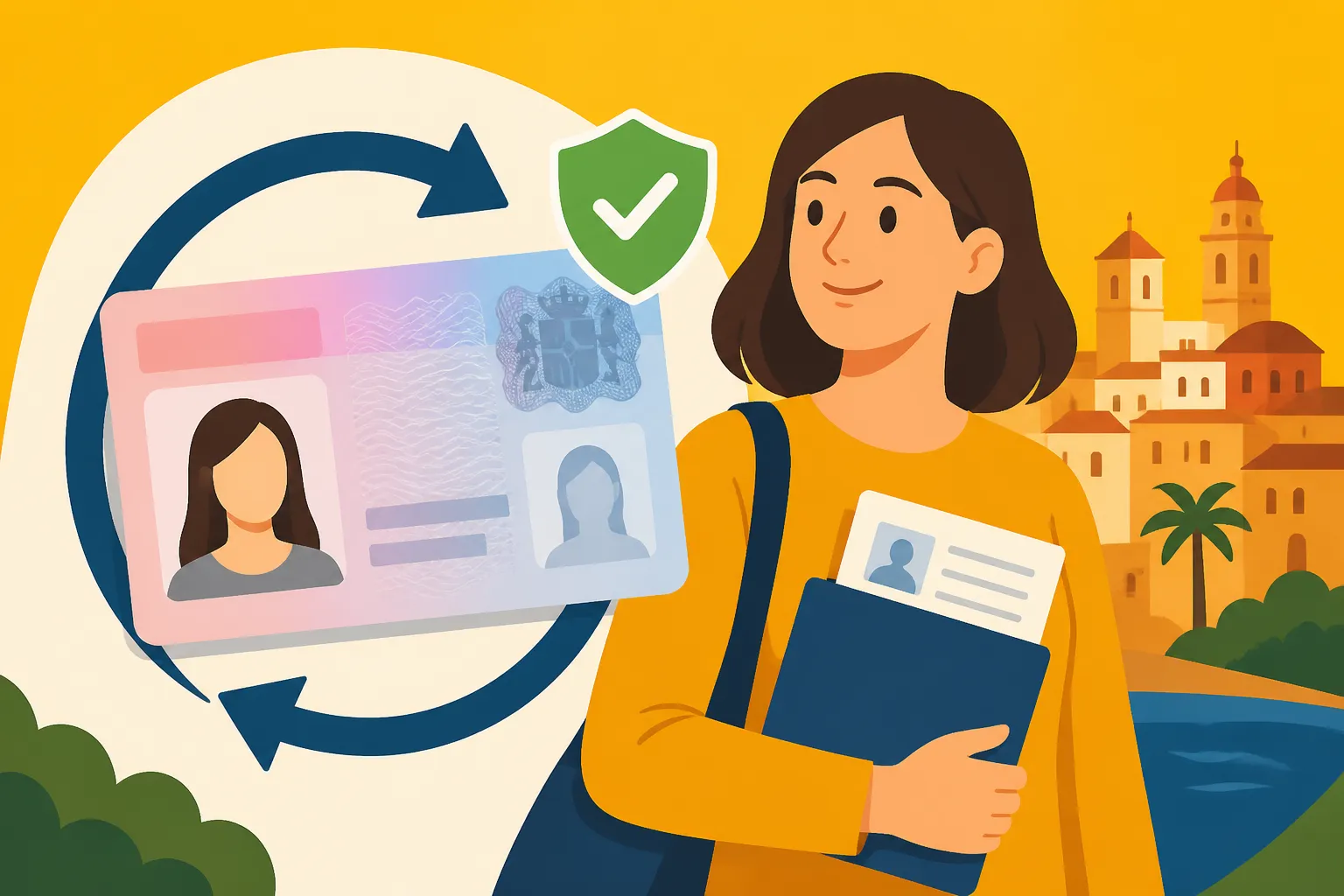
Finding out your TIE is about to expire is a unique kind of Spanish stress that involves frantic Cita Previa refreshing and hunting for elusive paperwork. I still remember the cold sweat I felt when I realized my card was expiring in ten days and I had not even looked at the Tasa forms. This guide simplifies the entire renewal process to keep you legally resident.
Disclosure: This post may contain affiliate links. We may earn a commission at no extra cost to you if you make a purchase through these links. Read full disclosure.
Understanding the Legal Renewal Window
One of the most confusing aspects of living in Spain is the timeline for renewals. The Spanish government provides a specific window during which you can submit your application. Legally, you can begin the residency renewal process 60 days before your card expires. However, you also have a grace period of up to 90 days after the expiration date. While this 90-day buffer exists, I strongly advise against waiting that long. Being in that "post-expiration" window can complicate things like international travel or renewing a rental contract.
If you submit your application within the 60 days prior to expiration, your legal status is automatically extended until a decision is made. This is a crucial safety net. Even if your card physically expires while you are waiting for the "Resolución" (the official approval), you are still legally allowed to be in the country. However, you will find that banks or employers might get nervous if they see an expired TIE, so starting early is the best way to maintain your peace of mind.
It is also worth noting that the date you submit your application is what counts, not the date you get your appointment. In many provinces, getting an in-person appointment at the Extranjería can take weeks. This is why many veteran expats have switched to digital filings. Understanding Spain Residency Renewal Timing: Earliest and Latest Filing Windows is the first step toward a successful renewal.
The Two-Step Renewal Process: Residency vs. Card
A common mistake new expats make is thinking that "renewing the TIE" is a single step. In reality, it is a two-phase operation. First, you must renew your "Autorización de Residencia" (the legal right to live here). Only after that is approved can you move on to phase two: the "Toma de Huellas" (fingerprinting) to get the actual plastic card.
For phase one, you are essentially proving to the government that you still meet the requirements for your specific visa. If you are here on a student visa, you need to show you passed your classes and are enrolled in a new course. If you are on a Non-Lucrative Visa, you need to show you still have the funds and the correct health insurance. This is where a company like Innoinsure can be a lifesaver, as they provide policies that specifically meet the strict requirements of the Spanish immigration offices. Once you submit this paperwork, you wait for the "Resolución Favorable."
Phase two begins only after you have that favorable resolution in hand. You will book an appointment at a police station (Policía Nacional) to give your fingerprints. This is when you bring the EX-17 form and pay the specific card fee. It is important to keep these two stages separate in your mind, or you might find yourself showing up for fingerprints without the legal authorization to actually get the card.
Digital Filing: The Modern Expat’s Best Friend
If you want to avoid the headache of fighting for a "Cita Previa" at the immigration office, you must get a Digital Certificate. This allows you to submit your entire phase-one application online via the MERCURIO platform. I remember the first time I used my certificate to file; it felt like a cheat code for Spanish bureaucracy. No more standing in line at 8:00 AM in the rain.
To use this system, you need to have a Certificado Digital installed on your computer. It is a digital file that verifies your identity to the government. You can learn How to Get a Digital Certificate (Certificado Digital) for Immigration Paperwork through a relatively simple process involving a visit to a local town hall or social security office. Once you have it, you can upload PDFs of your documents directly to the Ministry's website.
Using the digital route also gives you an immediate receipt (Resguardo), which serves as proof that your application is "En Trámite" (in process). This receipt is a legal document that protects you if the police ask for your ID or if your bank questions your expired TIE. It also makes it much easier to How to Track Your Spain Residency Application Status Online because you will have a record number immediately.
Essential Documentation Checklist for Phase One
The documents you need depend heavily on your residency type, but there are several "must-haves" that apply to almost everyone. First, you need a full copy of your passport—every single page, even the blank ones. The officials are looking for entry and exit stamps to ensure you haven't spent too much time outside of Spain, which could invalidate your residency.
If your documents are not in Spanish, they must be translated by a sworn translator (Traductor Jurado). This is a non-negotiable requirement. Using a service like Translayte ensures that your birth certificates, bank statements, or marriage licenses are legally recognized by the Extranjería. Trying to save money with a generic translation is a quick way to get a "Requerimiento" (a formal request for more info), which will delay your renewal by months.
For those whose residency is based on economic means or study, updated bank statements are vital. They usually want to see the last 6 to 12 months of activity, not just a balance snapshot. If you have moved since your last card was issued, you will also need a new "Certificado de Empadronamiento." Keeping your Spain Immigration Forms Explained: EX‑15, EX‑17, EX‑18, EX‑01 organized in a single folder will save you hours of searching when the clock starts ticking.
Common Documents for TIE Renewal
| Document Name | Purpose | When to Prepare |
|---|---|---|
| Form EX-11 or EX-00 | Residency Application | Phase 1 (Residency Approval) |
| Form EX-17 | Card Application | Phase 2 (Fingerprinting) |
| Tasa 790-052 | Residency Fee | Before Phase 1 Submission |
| Tasa 790-012 | Physical Card Fee | Before Phase 2 Appointment |
| Full Passport Copy | Prove Identity/Presence | Phase 1 and Phase 2 |
| Empadronamiento | Proof of Address | If you have moved house |
| Health Insurance | Coverage Proof | Required for NLV and Students |
Handling the Tasa: Government Fees Explained
You cannot get through a TIE renewal without paying the "Tasa." These are administrative taxes that the government levies for processing your paperwork. For the renewal process, you will likely encounter two different forms. The first is usually the Tasa 790-052, which covers the cost of the residency authorization itself. The second is the Tasa 790-012, which is specifically for the police to print your plastic card.
Paying these fees is a bit of an old-school process. You typically fill out the form online, print it, and take it to a bank ATM or a teller to pay in cash or via your account. The bank will stamp the form or provide a receipt. You must keep this receipt! Without it, your application will be rejected. Some banks only allow Tasa payments during specific hours (often 9:00 AM to 11:00 AM on Tuesdays and Thursdays), so plan accordingly.
If you are comfortable with technology, you can also learn How to Pay Spain Immigration Fees (Tasa) Online: Model 790 Explained using your digital certificate. This links the payment directly to your NIE, reducing the risk of the office "losing" your proof of payment. Always double-check that you have selected the correct box on the form; selecting "Renovación de autorización de residencia temporal" instead of "Residencia de larga duración" can lead to annoying bureaucratic loops.
Phase Two: The Fingerprint Appointment (Toma de Huellas)
Once you receive your "Resolución Favorable," you have one month to go to the police station for fingerprints. This is where the infamous struggle for a "Cita Previa" reaches its peak. In cities like Madrid, Barcelona, or Valencia, appointments can disappear in seconds. I have spent many Friday mornings at 9:00 AM refreshing the government website just to see the dreaded "No hay citas disponibles" message.
If you find yourself in this position, don't panic. There are strategies for How to Book a TIE Appointment (Cita Previa) When Slots Are Full. Often, new slots are released at specific times during the week. When you finally secure an appointment, make sure you have your printed "Resolución," your paid Tasa 790-012, your passport, and a recent "carnet" size photo. The photo requirements are strict—it must be high resolution with a plain white background and no glasses or hats.
During this appointment, the officer will take your fingerprints and give you a "Resguardo de Solicitud." This piece of paper is your temporary ID. It will have a "Lote" number on it. After about 30 to 45 days, you can check if your card is ready for pickup by looking for that lote number at the station. Don't forget to bring your old TIE when you go to pick up the new one, as they will take the old card and destroy it.
What to Do If You Are Moving During Renewal
Life doesn't stop just because you are in the middle of a renewal. If you find yourself moving to a new apartment or even a new city while your TIE is being processed, you have some extra steps to take. If you stay within the same province, you simply need to update your Padrón and bring the new certificate to your fingerprint appointment.
However, if you are moving between provinces, things get trickier. You may need to notify the Extranjería of your change of address so they can transfer your file. For those planning a significant move, using a service like Sirelo can help manage the logistics of the move itself, allowing you to focus on the paperwork. It is vital that you know How to Change Address on Your TIE Card After Moving in Spain because if your approval letter is sent to your old address and you don't receive it, you might miss your window to finish the process.
Always ensure your name is on the mailbox at your new place. Spanish official mail is often not delivered if the name on the envelope doesn't match the name on the buzón. Many people have lost their residency status simply because a letter was returned to the sender.
Traveling While Your TIE is Expired
One of the most common questions is: "Can I go home for Christmas if my TIE is expired but my renewal is in progress?" The answer is yes, but you need a specific document called an "Autorización de Regreso." This is a travel permit that allows you to re-enter Spain within 90 days of issuance while your card is being renewed.
You must apply for this at the police station. You will need proof that your renewal is underway (like the MERCURIO receipt) and proof of your travel plans (like flight tickets). Keep in mind that the "Regreso" is only valid for entering Spain directly or through a non-Schengen country. If you have a layover in Germany or France with just a Regreso and an expired TIE, you might run into trouble with border agents who are not familiar with Spanish specific paperwork.
Before booking flights, check the current wait times for these appointments. Sometimes it is harder to get a Regreso appointment than the TIE renewal itself. For more details on the limitations of this document, read up on Do You Need a Return Authorization (Autorización de Regreso) When Traveling?.
Avoiding Common Rejections and Delays
The Spanish immigration system is not known for its flexibility. A small error can lead to a flat rejection. One of the most frequent issues is the "lack of continuity" in health insurance. If your policy lapsed for even a few days between your old card and your renewal, they might reject the application. This is why using a dedicated provider like Innoinsure is so helpful—they understand the need for seamless coverage dates.
Another common pitfall is the passport. If your passport is about to expire, renew it before you start the TIE process. Your residency cannot be granted for a period longer than the validity of your passport. Also, make sure you don't have any outstanding criminal records or unpaid fines. Even a series of unpaid traffic tickets can occasionally trigger a red flag during the "antecedentes" check.
Finally, keep an eye on the "Silencio Administrativo" rules. In Spain, if the government doesn't respond to certain types of residency renewals within three months, the silence is often considered "Positive." This means your application is technically approved by default. However, you still need a certificate confirming this "Positive Silence" to move forward. Being aware of Renewing Spanish Residency: Timing, Requirements, and Common Rejections will help you navigate these nuances.
Practical Tips for Your Fingerprint Visit
When the day of your appointment finally arrives, arrive at least 15 minutes early. The security guards at the police stations are often the gatekeepers of the process, and they have little patience for those who are late or disorganized. Have all your originals and copies separated into two different folders.
When you sit down with the officer, be polite and patient. Even if your Spanish is limited, a "Buenos días" and a smile go a long way. If the officer asks for a document you don't have, ask specifically for the name of the document and if you can "subsanar" (correct) the error by bringing it back later that day or uploading it online.
Make sure you check the data on the screen before they print your temporary receipt. If they have misspelled your name or got your birthdate wrong, it is much easier to fix it while you are sitting there than it is to wait 45 days for a card that has an error on it. Knowing What to Bring to Your Spain Fingerprints Appointment for TIE is the best way to ensure you only have to make this trip once.
Disclaimer
This guide is for informational purposes only and does not constitute official legal advice. Immigration laws and procedures in Spain are subject to frequent change. Always consult with the official website of the Spanish Ministry of Inclusion, Social Security, and Migration (Extranjería) or a qualified immigration lawyer before submitting any applications.