Booking Spanish Hotels From Abroad: Cards, Names, and Passport Matching
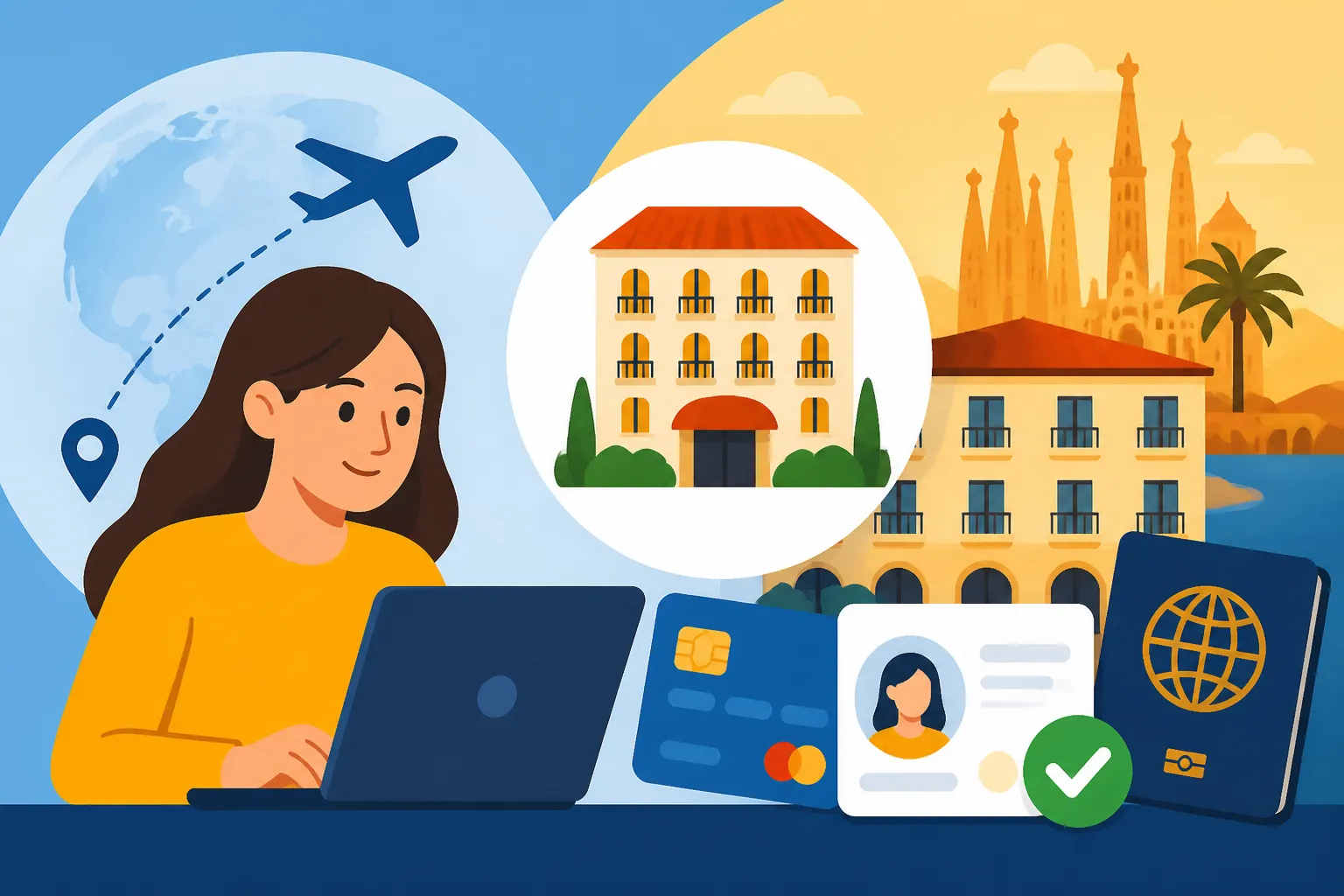
Oh, the sheer joy (and occasional headache) of planning a trip to Spain from afar! You’ve picked your flights, dreamed of tapas, and now you’re staring at that hotel booking page, wondering if your foreign credit card will play nice, or if the name on your passport will actually match what the hotel expects. Trust me, I’ve been there – sweating over booking details, imagining myself stranded at reception because of a missing middle initial. This guide is here to walk you through the nitty-gritty of booking Spanish hotels from abroad, focusing on payment, name matching, and passport requirements, all while making your life easier using platforms like Booking.com.
Disclosure: This post may contain affiliate links. We may earn a commission at no extra cost to you if you make a purchase through these links. Read full disclosure.
Navigating Payment Methods When Booking Spanish Hotels from Afar
One of the first hurdles many of us face when booking anything internationally is the payment. It’s not just about having enough funds; it’s about making sure your card is accepted, won’t be flagged as suspicious, and that you understand the different payment structures hotels might use. Spain is generally very accustomed to international transactions, but a little foresight goes a long way.
The Lowdown on International Credit and Debit Cards
For most major hotel chains and reputable independent establishments in Spain, your standard international credit cards like Visa, Mastercard, and American Express are widely accepted. Debit cards are also often accepted, especially if they carry the Visa or Mastercard logo, but always confirm if you're relying solely on a debit card for a booking that requires a pre-authorization or deposit, as some systems prefer credit. It’s usually best to stick with a credit card for the initial reservation, if possible, as it offers more protection and flexibility.
However, don't forget the potential for foreign transaction fees from your home bank. These are typically a small percentage of the transaction value but can add up, so it's wise to check with your bank before you start booking. More importantly, always inform your bank of your travel plans. A sudden charge from a Spanish hotel, especially if it’s a large pre-payment, can trigger fraud alerts and cause your card to be declined, bringing your booking process to a screeching halt. A quick call or an update via your banking app can prevent this unnecessary stress. Booking.com, the platform many of us expats rely on, generally accepts most major international cards and handles the currency conversion for you, though your bank will do the final conversion based on their rates.
Understanding Pre-Payment, Deposits, and Cancellation Policies
Spanish hotels, much like those in other countries, have varying policies when it comes to how and when you pay. Some hotels might require full pre-payment at the time of booking, especially for non-refundable rates which are often a bit cheaper. Others might only ask for a small deposit, or simply hold your credit card details to guarantee the reservation, with full payment due upon arrival. It's crucial to read these terms carefully before clicking that "book now" button.
Then there's the sticky subject of deposits for incidentals, which are usually handled at check-in. This isn't part of your room rate but a temporary hold on your card for things like mini-bar use, damages, or phone calls. The amount can vary, and it's released after check-out, assuming no issues. Knowing whether your booking requires pre-payment, a deposit, or allows "pay at property" helps you budget and avoid surprises. Booking.com excels at making these policies transparent; on each hotel listing, you'll find clear labels detailing the payment structure and the all-important cancellation deadlines. Take a moment to understand them, because life happens, and sometimes plans change. Consider looking into Travel Insurance for Trips to and Within Spain for added peace of mind, especially with non-refundable bookings.
Ensuring Your Booking Name Matches Your Official Documents
This might seem like a no-brainer, but you'd be surprised how often this trips people up! A seemingly minor difference between the name on your hotel reservation and your official identification document can cause a world of bureaucratic pain at check-in. In Spanish paperwork, "close enough" often isn't.
The Importance of Exact Name Matching
When you arrive at a Spanish hotel, especially if you're a foreign national, they will ask for your passport or national ID card. This isn't just to verify who you are, but for a legal requirement to register guests with the Spanish authorities (either the Guardia Civil or Policía Nacional, depending on the region). The hotel staff will input your details into a system, and those details need to match your booking. If there’s a discrepancy, even something as small as a middle name being missing from the booking or a maiden name vs. married name issue, it can raise a red flag.
Imagine this scenario: Your passport shows "Maria Elena Garcia Rodriguez" but your booking is simply "Maria Garcia." Or perhaps you typically go by a nickname, but your passport is your full legal name. While some hotels might be lenient, others, particularly smaller establishments or those with strict internal policies, might refuse check-in until the name issue is resolved. This is particularly relevant if you're booking for a group, as each person's name might need to be accurately reflected. It’s vital to double-check your name in your Booking.com profile or during the input stage to ensure it’s an exact match to your passport or the ID you plan to present at check-in.
What to Do If There's a Mismatch
If you've already made a booking and realize there's a name discrepancy, don't panic, but act quickly. Your first port of call should be Booking.com’s customer service. They often have direct lines of communication with hotels and can usually facilitate corrections or additions to your reservation details. Be prepared to provide your booking confirmation number and clearly explain the issue. If Booking.com can't amend it directly for some reason, they will often advise you to contact the hotel directly.
When contacting the hotel, be polite, clear, and have your booking details handy. Explain the exact difference between the name on your reservation and your passport. Most hotels are understanding and will make the necessary note on your booking. However, if you wait until you're standing at the reception desk at 11 PM after a long journey, the options become much more limited, and your stress levels will certainly rise. If you are travelling as a couple or family, ensure all names match. Carrying any supporting documents, such as a marriage certificate if your name has recently changed and your passport isn't updated, could also be a wise precaution, although usually a note on the reservation is sufficient if handled proactively.
Passport and ID Requirements at Spanish Hotel Check-in
One of the most common questions from first-time visitors or new expats is about ID requirements. In Spain, it's not just a formality; it's a legal obligation for hotels. Understanding why they ask for your passport and what to expect can save you a moment of confusion or feeling like you’re being overly scrutinized.
Why Hotels Need Your Passport or ID
As mentioned earlier, Spanish law requires all hotels and tourist accommodations to register guests with the national police force (either the Guardia Civil or Policía Nacional). This isn't unique to Spain; many European countries have similar regulations. The purpose is primarily for security and to keep track of who is staying where, especially for non-Spanish nationals. When you hand over your passport, the hotel staff will either scan it, photocopy it, or manually input the relevant data (name, passport number, date of birth, nationality, date of arrival) into their system, which then transmits this information to the authorities.
This process is mandatory for every guest, not just the person who made the booking. So, if you're travelling with family or friends, each individual will need to present their valid identification. For children, their passports are typically required as well. Even if your booking originated from a convenient platform like Booking.com, the hotel’s legal obligation to register guests with the authorities remains unchanged. They are simply complying with the law, so a bit of patience and cooperation from your side will make the process much smoother. It can feel a bit intrusive, especially if you're used to a more casual check-in elsewhere, but it's standard procedure here.
What to Expect During Check-in
When you arrive at your hotel, the first thing they’ll likely ask for, after your booking confirmation, is your passport. Don't be surprised if they take it for a few minutes to copy or scan it. They usually won't hold onto it for the duration of your stay, but they do need to record the details. It's rare for them to accept just a photocopy of your passport upon arrival for the initial registration, as they often need to verify the original document. However, once the initial registration is done, you can safely put your passport away in the room''s safe and carry a photocopy for Staying Safe in Spain: Common-Sense Tips for Travelers when out and about.
If you are an EU citizen, your national ID card is generally sufficient. For non-EU citizens, a passport is almost always required. It’s also worth noting that the hotel might ask you to sign a "parte de viajero" or "traveler's form" which confirms your details. This is simply the paper trail for their submission to the police. Be prepared for this process; have your passport easily accessible when you approach the reception desk.
Best Practices for a Smooth Spanish Hotel Booking Experience
So, you’ve got your payment method sorted and you understand the importance of matching names and presenting your passport. What else can you do to make sure your hotel booking in Spain is as smooth as a glass of Rioja? A bit of proactive planning and smart use of resources can make all the difference.
Leveraging Booking Platforms for Clarity
This is where platforms like Booking.com really shine. They consolidate vast amounts of information – from payment options and cancellation policies to specific check-in requirements and even user reviews that often highlight practical tips (like whether the hotel is particularly strict about ID). By using such a platform, you’re not just booking a room; you're gaining access to a structured system that helps bridge the communication gap between you and a foreign hotel.
We recommend thoroughly reading the "fine print" sections on Booking.com for each specific property. Look for details on children's policies, extra bed availability, and any specific notes about ID or deposits. The platform's filtering options are also incredibly helpful for finding accommodations that align with your payment preferences (e.g., "pay at property" if you prefer not to pre-pay) or specific needs. Booking.com also offers excellent customer support options and often allows for flexible booking terms, which can be invaluable when planning travel abroad. It’s a powerful tool, and one I personally turn to time and again for its reliability when looking for Accommodation in Spain: Hotels, Hostels, and Rentals.
Communication is Key
Even with all the information available on Booking.com, sometimes you just have a specific question. Perhaps you need to confirm if a late check-in is possible, or if the hotel can store your luggage before your room is ready. Don’t hesitate to contact the hotel directly before your arrival. Most Spanish hotels, especially in tourist areas, will have English-speaking staff or at least someone who can understand a basic email in English.
You can often find contact details on the hotel's Booking.com page or their direct website. A polite, concise email outlining your specific query is always a good idea. If language is a concern, use a translation app like Google Translate for your message, but keep it simple and to the point. This proactive communication not only gets you the answers you need but also establishes a connection with the hotel, potentially smoothing over any minor issues that might arise later. Being prepared with some Spanish Medical Terminology: Common Words Expats Should Know can also be useful for any unexpected situations during your stay. Knowing a few key phrases like "Habla inglés?" (Do you speak English?) can also be a lifesaver in other situations, as detailed in Spanish Language and Everyday Communication for Visitors.
Booking Scenarios and Solutions at a Glance
To summarize, here's a quick overview of common booking issues and how to tackle them:
| Scenario | Potential Issue | Recommended Action |
|---|---|---|
| Foreign Card Payment | Card declined due to fraud alert or foreign transaction fees | Notify your bank of travel plans. Check fees. Use major credit cards. Booking.com accepts most. |
| Pre-payment/Deposit | Unclear when payment is due, or unexpected hold | Read Booking.com's clear policy details for each property. Budget for potential incidentals deposit at check-in. |
| Name Mismatch | Booking name doesn't exactly match passport/ID | Double-check Booking.com profile name. Contact Booking.com support or hotel directly before arrival for correction. |
| Passport/ID at Check-in | Unaware of legal requirement to show ID, or only have photocopy | Have original, valid passport (or EU national ID) for all guests readily available at check-in. |
| Specific Questions | Need to confirm late check-in, special requests | Message the hotel directly via Booking.com or email before arrival. Keep communication clear. |
Ultimately, booking your Spanish hotel from abroad doesn't have to be a source of anxiety. By understanding the local requirements, being mindful of payment nuances, and leveraging the clarity offered by platforms like Booking.com, you can ensure your stay starts off on the right foot. Now go enjoy those tapas and sun-drenched plazas, knowing your accommodation is sorted! You might also find it helpful to brush up on Spanish Social Customs: Greetings, Kisses, and Personal Space for your interactions with locals.
Disclaimer
This article is for general informational purposes only and does not constitute professional advice. Laws, prices and regulations vary by location and change over time. Consult a qualified professional for guidance on your specific situation.