Tethering and Hotspot Limits on eSIM Plans in Spain
Picture this: you've just landed in sunny Spain, excited to explore, maybe even get some work done remotely, but you're constantly worried about connecting your laptop or tablet. Relying on patchy public Wi-Fi is a nightmare, and the thought of fumbling with local SIM cards, contracts, and confusing Spanish terms fills you with dread. This guide is here to untangle the often-frustrating world of eSIMs, tethering, and hotspot limits in Spain, specifically focusing on how to stay seamlessly connected on the go, making sure you understand the nuances so you can pick the right solution like Airalo for your adventures or work.
Disclosure: This post may contain affiliate links. We may earn a commission at no extra cost to you if you make a purchase through these links. Read full disclosure.
Understanding eSIMs for Seamless Connectivity in Spain
Moving to or traveling through Spain as an expat or tourist often means navigating a maze of new technologies and systems, and mobile connectivity is no exception. For years, the go-to solution was a physical SIM card bought at a phone shop, a process that could be surprisingly complicated if you didn't speak Spanish or understand the local plans. But then, eSIMs came along, and for many of us, they've been an absolute game-changer.
An eSIM, or embedded SIM, is essentially a digital SIM card built directly into your compatible smartphone or device. Instead of swapping out tiny plastic cards, you simply download a profile from an eSIM provider. This means you can get a local data plan for Spain before you even set foot on Spanish soil, activate it with a QR code, and be connected the moment your plane touches down. It's incredibly convenient, eliminating the need to search for a phone store, stand in line, or deal with language barriers right off the bat. Imagine arriving in Madrid or Barcelona, hopping in a taxi, and already having data to check maps or message loved ones, all thanks to a quick setup you did back home.
For expats, the benefits extend beyond mere convenience. We often juggle maintaining our home country number while needing reliable, affordable local data. An eSIM allows you to do exactly that: keep your primary physical SIM active for calls and texts from home, while your eSIM handles all your data needs in Spain. This dual-SIM functionality is a lifesaver, whether you're trying to figure out how to Set Up a Spanish Bank Account for Rent and Bills (Quick Guide) or simply trying to order some tapas. It offers flexibility, cost savings by avoiding exorbitant roaming charges, and the peace of mind that comes with knowing you’re always connected. Providers like Airalo specialize in these types of travel-friendly eSIMs, making it incredibly straightforward to pick a plan that suits your stay, whether it's for a quick city break or a longer stint.
Why Expats and Travelers Love eSIMs
The enthusiasm for eSIMs among the expat and travel community isn't just hype; it's rooted in very real, practical advantages. One of the biggest wins is the sheer ease of acquisition and activation. Gone are the days of needing a physical address or even a Spanish NIE number just to get a basic data plan. With an eSIM, you can often purchase and activate a plan from anywhere in the world using just your phone. This is particularly beneficial for those arriving on short-term visas or exploring Spain Digital Nomad Visa: Requirements, Documents, and Timeline, who need immediate and flexible connectivity without the commitment of a long-term contract.
Another critical factor is avoiding vendor lock-in. Traditional SIMs often come with contracts or require top-ups at specific stores. eSIMs, especially those from global providers, usually offer prepaid data packages for specific countries or regions with a set validity period. Once it's done, you simply buy another or switch to a different provider if you find a better deal. This flexibility is golden when you're still figuring out your long-term plans in Spain or want to compare different options, maybe you're trying to decide between Mobile Phone Plans in Spain: Prepaid vs Contract for Foreigners but need immediate data first. It empowers you, the user, to choose what works best for your specific needs, rather than being dictated by a local telecom's rigid offerings.
Finally, eSIMs are a godsend for multi-country travel. If you're exploring Europe beyond Spain's borders, many eSIM providers offer regional plans that cover multiple countries. This eliminates the headache of buying a new SIM every time you cross a border, making European adventures truly seamless. For someone Traveling Around Spain: Trains, Buses, Flights, and Car Hire and beyond, this ease of transition is invaluable. You can hop from a bustling market in Valencia to the quiet coast of Portugal, and your data just keeps working. This convenience is precisely what providers like Airalo champion, offering country-specific and regional plans that cater directly to the dynamic lifestyle of expats and frequent travelers.
Tethering and Hotspot: The Basics for Your Spanish Adventures
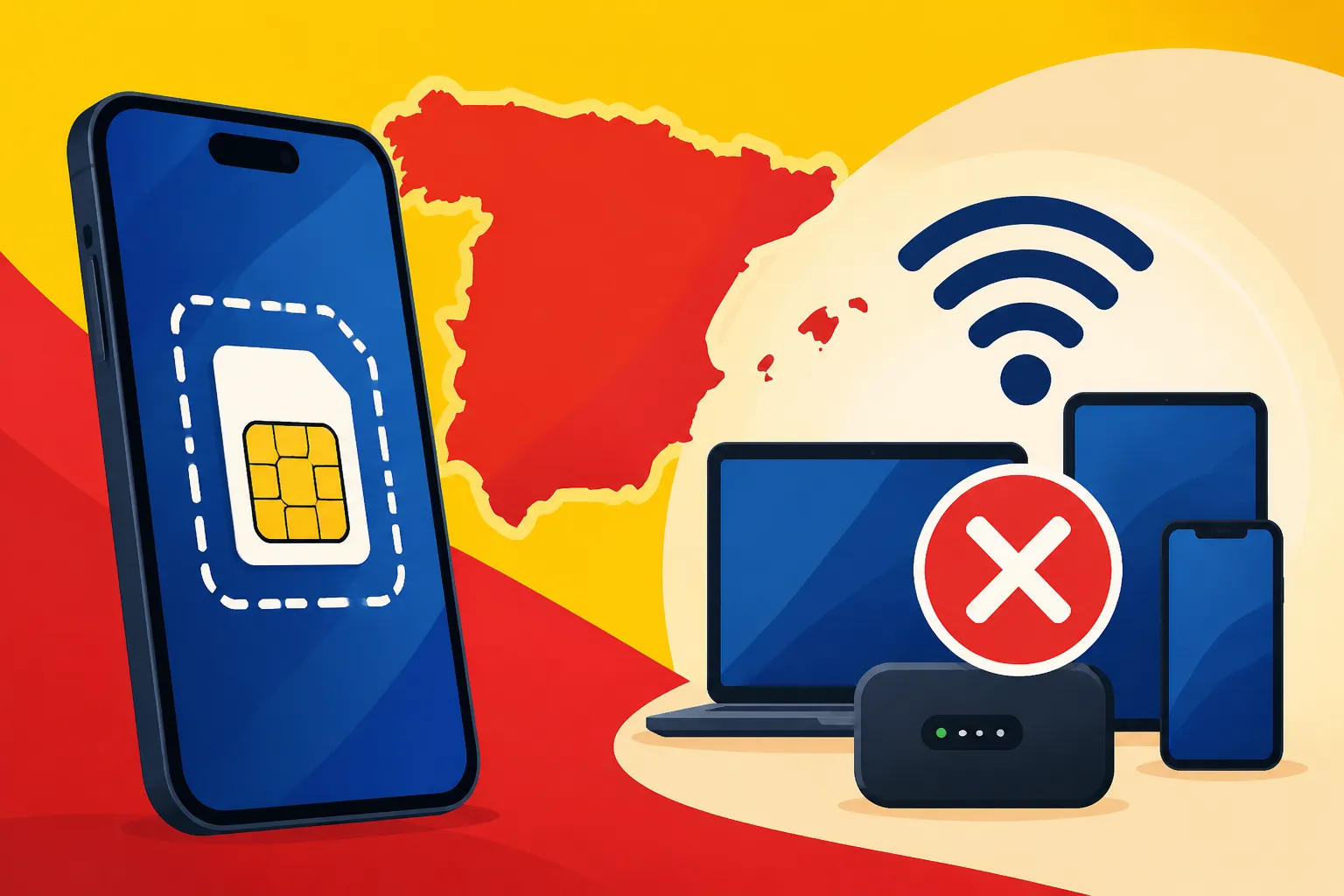
Alright, let's talk about tethering and using your phone as a hotspot. For many of us, especially those who work remotely or travel with multiple devices, this isn't just a nice-to-have; it's essential. Tethering, in simple terms, is when your smartphone acts like a portable Wi-Fi router, sharing its cellular data connection with other devices such as your laptop, tablet, or even another phone. This capability can be an absolute lifesaver when you're caught without Wi-Fi, whether you're trying to join a crucial video call from a café or keeping the kids entertained on a long train journey across Spain.
The convenience of a mobile hotspot cannot be overstated. Imagine you're exploring a small village in Andalusia, far from any hotel Wi-Fi, but you suddenly need to check your email or look up directions to a hidden gem. With a reliable eSIM plan that allows tethering, you can instantly create a personal Wi-Fi network for your laptop and continue your tasks. It transforms your phone into a portable hub, allowing you to maintain productivity or entertainment no matter where your Spanish adventures take you. This flexibility is paramount for digital nomads or anyone who needs consistent connectivity beyond their smartphone screen.
However, the world of tethering isn't always straightforward, and understanding its nuances, particularly with different phone plans and providers, is key. Not all data plans, even those with seemingly generous allowances, automatically permit hotspot usage without restrictions or additional costs. Some providers may impose limits on the amount of data you can tether, cap the speed when tethering, or even explicitly prohibit it in their terms and conditions. This is where many expats and tourists get tripped up, thinking they have unlimited data, only to find their hotspot connection throttled or completely blocked when they need it most. It's a common frustration, and one that requires careful scrutiny of any plan you consider.
The Power of Portable Wi-Fi for Expats
For many of us living or spending extended time in Spain, the ability to generate a personal Wi-Fi hotspot from our phones is more than just a convenience – it’s a vital tool for managing daily life and work. In a country where setting up home internet can sometimes feel like an administrative odyssey, particularly when you're first moving in, a reliable mobile hotspot can bridge critical connectivity gaps. Imagine trying to get your Internet in Spain: Choosing Fiber, Mobile, and Bundles sorted while relying solely on public Wi-Fi; it's a headache most of us would rather avoid.
Beyond the initial setup phase, a portable hotspot remains invaluable. Perhaps you’re frequently on the move, commuting between cities on an AVE train, or working from various coworking spaces or cafes. Your phone's hotspot ensures you have a consistent, secure internet connection that public Wi-Fi simply can't always guarantee. It's particularly useful for those moments when you need to access sensitive information or engage in video calls where a stable connection is paramount. This robust connectivity supports the flexible lifestyle many expats seek in Spain, whether it's for remote work or keeping in touch with family.
Furthermore, consider the family aspect. If you're traveling with children who have their own tablets for entertainment or a partner who also needs to check emails, a single phone acting as a hotspot can keep everyone connected without needing multiple data plans. This simplifies your Travel Logistics in Spain: Money, Safety, and Connectivity immensely. It means one less thing to worry about when you're out and about, allowing you to focus on enjoying the rich culture and vibrant life Spain has to offer. For these reasons, understanding which eSIM providers genuinely support hotspot functionality is a crucial piece of the puzzle.
Are Hotspots Always Available on Spanish eSIM Plans?
This is the million-dollar question for many considering eSIMs in Spain, and the answer, unfortunately, is not a simple "yes" or "no." The availability of hotspot functionality on eSIM plans in Spain varies significantly, not just between different providers but sometimes even between different plans offered by the same provider. It's a landscape fraught with potential misunderstandings and fine print that can quickly dampen your dreams of seamless connectivity. You might assume "unlimited data" means unlimited hotspot, but that's a dangerous assumption to make.
Local Spanish mobile network operators (MNOs) like Movistar, Orange, Vodafone, and Yoigo, while offering robust networks, often have specific policies regarding tethering. Their physical SIM cards might come with contracts or prepaid plans that, while providing ample data, might explicitly restrict hotspot usage or throttle speeds severely once a certain tethering data allowance is reached. When it comes to eSIMs offered by these local giants, the rules can be similarly stringent or, conversely, quite generous depending on the package. The challenge for expats and tourists is that these plans are often designed for long-term residents and may not always be transparent or flexible enough for short-term needs or those who rely heavily on tethering.
Then you have the global eSIM providers. These companies act as Mobile Virtual Network Operators (MVNOs), leveraging the infrastructure of local MNOs to offer their own data plans. Their terms regarding hotspot usage are crucial. Many, like Airalo, understand the needs of international travelers and digital nomads and explicitly allow tethering, often without additional charges or complex restrictions. However, it's never a given. Some other global eSIMs might have regional plans where tethering is allowed in one country but not another, or specific plans that exclude it entirely. This is why thorough research and reading the plan details before purchasing are non-negotiable steps to ensure you're not left without your vital hotspot.
Unpacking Provider Policies and Hidden Restrictions
Delving into the policies of different providers for eSIM plans in Spain can feel like a deep dive into bureaucratic quicksand. It’s not always about outright prohibition, but rather the subtle ways restrictions are implemented. Some providers might have a fair usage policy that, while not explicitly banning hotspots, will severely throttle your internet speed after a certain amount of data has been used for tethering. This "soft" restriction can be just as frustrating as an outright ban, making your hotspot practically unusable for anything but the most basic tasks. Imagine trying to upload a large file for work with dial-up speeds; it's enough to make you pull your hair out!
Another common hidden restriction revolves around the type of data plan. Some "unlimited" plans are designed solely for smartphone usage, optimising data for apps, browsing, and streaming directly on the device. When you try to share that data with a laptop or tablet via tethering, the network can detect this and either block the connection or significantly reduce your speed. This isn't always maliciously intended; sometimes it's to manage network traffic, but for the end-user, it's a huge inconvenience. This is where specific mention of hotspot capabilities in the plan description becomes vital.
It's also worth noting that plans vary regionally. While Spain is generally quite connected, policies can sometimes differ if you're looking at plans specifically targeting the Canary Islands versus mainland Spain, for example. Always double-check that the eSIM plan you're eyeing explicitly states that hotspot functionality is included and for what data allowance and speed. Don't be afraid to reach out to customer support if the information isn't clear, because once you've purchased a plan and found it lacking, it can be tough to get a refund. This vigilance is particularly important for anyone managing Chronic Conditions in Spain: Managing Ongoing Care as an Expat or relying on constant connectivity for health-related apps or emergencies.
Navigating Hotspot Limitations: Practical Tips and the Airalo Advantage
Okay, so you know that hotspot availability can be a bit of a minefield. But don't despair! There are ways to navigate these limitations and ensure you stay connected. The first and most crucial step is always to read the fine print. Before you purchase any eSIM plan, especially if tethering is a must-have for you, dig into the plan details. Look for explicit mentions of "hotspot," "tethering," or "personal hotspot" functionality. If it's not mentioned, assume it's either not allowed or severely restricted. Don't rely on assumptions based on the main data allowance.
Another practical tip is to consider dedicated hotspot devices, though this often means carrying an extra gadget and potentially another data plan. However, for most expats and tourists, finding an eSIM that works with your phone is preferable for convenience. If you are going with a local Spanish provider's SIM card (physical or eSIM), be prepared to ask pointed questions about tethering limits. You might need to use a Spanish Medical Terminology: Common Words Expats Should Know for a doctor's visit, but you'll need specific vocabulary for your phone provider! "Puedo usar mi teléfono como hotspot?" (Can I use my phone as a hotspot?) should be at the top of your list.
This is where providers like Airalo really shine, offering a significant advantage for those who absolutely need to tether. From my experience and observations within the expat community, Airalo consistently makes an effort to be transparent about hotspot availability. When you browse their plans for Spain (or any other country), the product details for each eSIM clearly state whether "Hotspot" is supported. This level of clarity eliminates much of the guesswork and anxiety that often comes with trying to figure out mobile data abroad. They understand that a digital nomad trying to get work done, or a family on holiday, depends on reliable, shareable internet.
Why Airalo Stands Out for Hotspot Needs
In the bustling market of eSIM providers, Airalo has carved out a strong reputation, particularly for its user-friendly approach and its commitment to meeting the varied needs of international users. For anyone whose connectivity requirements include frequent tethering, Airalo often emerges as a top contender, and here’s why. Their platform is designed for clarity, something we expats often crave when dealing with new services in a foreign country. When you select an eSIM package for Spain, you won’t have to hunt through pages of dense terms and conditions to find out if you can use your phone as a hotspot. It’s right there, typically listed under "Additional Information" or "Plan Details," making your decision-making process much smoother.
The reliability of Airalo’s hotspot function is another key factor. Because they partner with major local networks (like Movistar, Orange, or Vodafone in Spain, depending on the specific plan), the underlying network infrastructure is robust. This means that when you enable a hotspot on an Airalo eSIM, you're generally getting the same network quality as if you had a local SIM, provided your location has good coverage. This consistency is crucial, whether you’re uploading photos from a mountain hike in the Picos de Europa or participating in a critical online meeting from a beachside cafe.
Furthermore, Airalo offers a range of data packages with varying validities, from short-term travel plans to longer options for extended stays. This allows you to choose a plan that not only fits your data usage but also explicitly accommodates your hotspot needs without forcing you into an expensive, long-term contract. For those looking for flexibility in Money & Finance in Spain for Expats: Banking, Taxes, and Everyday Payments, this pay-as-you-go, transparent model is highly appealing. It makes Airalo a dependable choice for ensuring all your devices remain connected, wherever your Spanish journey takes you.
Choosing the Right eSIM Plan for Your Tethering Needs in Spain
Selecting the perfect eSIM plan for Spain, especially when tethering is a priority, requires a bit of thoughtful consideration. It's not just about the cheapest option or the biggest data allowance; it's about finding a plan that genuinely supports how you use the internet. First off, assess your actual data needs. If you're only planning occasional hotspot use for checking emails or light browsing on a laptop, a smaller data package with hotspot capability might suffice. However, if you're a digital nomad conducting video calls, uploading large files, or streaming content for multiple devices, you'll need a more substantial plan. Always err on the side of caution with data, as running out mid-task can be incredibly frustrating.
Next, pay close attention to the validity period. Are you in Spain for a weekend city break, a two-week vacation, or a several-month-long expat adventure? eSIM plans come in various durations – 7 days, 15 days, 30 days, or even longer. Make sure the plan's validity aligns with your stay. There's nothing worse than having your data cut off when you still have days left in the country, leaving you scrambling to find a new plan or struggling to access your Medical Records in Spain: Accessing and Sharing Your History if needed. This is where providers offering multiple options, like Airalo, simplify the choice, letting you pick a package that precisely matches your timeline.
Finally, and I can't stress this enough, verify the hotspot allowance. As discussed, some plans might state "hotspot supported" but have a separate, lower data cap specifically for tethering. Always look for any explicit limits on hotspot data or speed throttling related to tethering. If the information isn't clear on the product page, it's wise to assume there might be limitations. Providers that clearly list "Hotspot: Supported" and integrate it within the overall data allowance are generally the most straightforward and reliable choices for those dependent on this feature. Taking these steps will ensure you choose an eSIM that truly meets your expectations and keeps you connected seamlessly.
Comparing eSIM Options: A Closer Look
When it comes to comparing eSIM options specifically for Spain and your tethering needs, you'll want to lay out the key features side-by-side. It's not just about cost per gigabyte, but the entire value proposition. Here's a table to help illustrate what to look for:
| Feature/Provider Aspect | Typical Local Spanish SIM (Prepaid) | Generic Global eSIM (MVNO) | Airalo eSIM for Spain |
|---|---|---|---|
| Hotspot/Tethering | Varies, often restricted/throttled | Varies, must check per plan | Usually Supported (explicitly stated) |
| Data Allowance | Often large, sometimes "unlimited" with fair usage | Wide range, country-specific | Wide range, transparent |
| Validity | 28-30 days standard | 7, 15, 30 days common | 7, 15, 30+ days available |
| Ease of Purchase | In-store, sometimes online (Spanish required) | Online, app-based | Online, app-based (very user-friendly) |
| Activation | In-store, ID required | QR code, instant | QR code, instant |
| Network Coverage | Native MNO (Movistar, Vodafone, Orange) | Varies (depends on partner MNO) | Major MNO partner (e.g., Movistar, Orange) |
| Price Point | Can be cheap for local residents, more for tourists | Competitive | Competitive, transparent upfront |
| Customer Support | Local language focused | Varies, often multi-lingual | Multi-lingual support |
As you can see, while a local SIM might offer seemingly good deals, the administrative hurdles and potential hotspot restrictions can make them less ideal for short-term visitors or those who don't want to navigate Spanish bureaucracy. Generic global eSIMs vary wildly, highlighting the need for careful research. This is where Airalo consistently stands out for its clarity on hotspot support, making it a reliable choice for many. For someone needing to Set Up a Professional Email Signature in Spanish (Templates) for a job application or just stay connected for family calls, this clarity is invaluable.
Ultimately, your choice will depend on your specific itinerary, budget, and how heavily you rely on tethering. For robust and transparent hotspot availability, especially for digital nomads, temporary workers, or families traveling with multiple devices, actively seeking out eSIMs that clearly support and explain their tethering policies, like those offered by Airalo, will save you a lot of headaches and ensure you enjoy uninterrupted connectivity throughout your time in Spain.
Essential Considerations for Reliable Hotspot Performance
Even with an eSIM plan that explicitly allows tethering, a few other factors can impact your hotspot's performance in Spain. Understanding these can help you optimize your experience and troubleshoot any issues that arise. Firstly, the quality of the local network coverage where you are is paramount. Spain has excellent mobile infrastructure, especially in cities and along major travel routes, but venture into remote pueblos or mountainous regions, and even the best eSIM might struggle. Before relying entirely on a hotspot for critical tasks, it's a good idea to check network coverage maps for your specific destinations. Most major Spanish providers (whose networks Airalo typically uses) publish these online.
Secondly, your phone's battery life will take a hit when acting as a hotspot. Sharing data is power-intensive, and your battery will drain much faster than usual. Always carry a portable power bank or have access to a charger if you plan to use your hotspot for extended periods. There's nothing worse than your phone dying in the middle of a crucial video call or navigation, leaving you disconnected. This is particularly relevant if you're using your phone for Outdoor Activities in Spain: Safe Hiking, Swimming, and Sun Care and relying on it for maps and communication.
Lastly, be mindful of the number of devices connected to your hotspot. While most smartphones can handle multiple connections, performance will degrade as more devices join and consume bandwidth. If you're struggling with slow speeds, try disconnecting non-essential devices. Also, ensure your devices are up-to-date with the latest software, as this can sometimes improve connectivity and efficiency. By keeping these tips in mind, you can maximize the reliability and performance of your eSIM hotspot, ensuring a smooth and connected experience throughout your Spanish journey, whether for work or pleasure.
Disclaimer
The information provided in this article is intended for general guidance and informational purposes only. While we strive to keep the content up-to-date and accurate, policies and regulations regarding eSIMs, tethering, and mobile data services in Spain can change rapidly. It is always recommended to verify the most current terms and conditions directly with your chosen eSIM provider or local mobile network operator before making any purchase or decision.