Spanish Shopping: Supermarkets, Markets, and Budget Strategies
Disclosure: This article contains affiliate links. If you buy through them, we may earn a commission at no extra cost to you. Read our full disclosure.
Navigating grocery shopping in Spain is a delightful cultural experience. This guide covers everything from massive hypermarkets and discount chains to vibrant municipal food markets. Learn essential budget strategies, vocabulary, and local tips to eat well without breaking the bank.
The Supermarket Landscape in Spain
Spain’s supermarket sector is fiercely competitive, offering a diverse range of stores designed to suit every budget, dietary need, and lifestyle. To shop effectively and efficiently, you must first understand the hierarchy and unique offerings of the major national chains.
The Undisputed King Mercadona
With a market share consistently exceeding twenty-six percent, Mercadona is the absolute giant of Spanish grocery retail. You will find their brightly lit stores situated in almost every major city center and residential neighborhood across the country. Mercadona is unique because it relies heavily on its own high-quality private label brands, most notably “Hacendado” for food products, “Bosque Verde” for household cleaning supplies, and “Deliplus” for personal care and cosmetics. The quality control is remarkably consistent, and the prices are highly competitive, making it the undisputed go-to destination for the weekly family shop for millions of Spaniards.
Hypermarkets Carrefour and Alcampo
If you own a vehicle and prefer the convenience of buying absolutely everything under one single roof, hypermarkets are your best option. Usually located on the outskirts of cities, in industrial estates, or anchoring large shopping malls, the French giant Carrefour and the Spanish chain Alcampo offer an overwhelming, warehouse-style variety of products. In addition to a massive grocery section, you can purchase consumer electronics, clothing, sporting goods, and large home appliances. They also stock a wide array of imported international brands, which is ideal if you are feeling homesick and missing specific comfort foods from the United States or the United Kingdom.
The Discount Chains Lidl Aldi and Dia
For the budget-conscious shopper, the discount retail sector is thriving in Spain. German discount titans Lidl and Aldi have expanded rapidly across the Iberian Peninsula, offering excellent value on pantry staples, surprisingly good fresh produce, and heavily anticipated rotating weekly specials on international foods and home goods. Dia is the most prominent domestic Spanish discount chain. It is known for its deep, aggressive discounts, a highly rewarding loyalty program, and a massive network of small convenience-sized stores located on almost every other street corner in major cities.
Premium Supermarkets El Corte Ingles and Supercor
If you are searching for premium gourmet ingredients, highly specific imported international foods, an expansive wine cellar, or specialty dietary items, you will need to visit the high-end supermarkets. The sprawling food hall located in the basement of the famous El Corte Inglés department store, along with its standalone neighborhood supermarket offshoot, Supercor, offers unparalleled quality, presentation, and variety. However, this premium shopping experience comes with significantly higher price tags across the board.
Regional Powerhouses Eroski Consum and Bon Preu
Spain’s autonomous communities are fiercely proud of their local businesses and agricultural products. In addition to the national giants, you will encounter massive regional supermarket chains that often stock specific local delicacies and heavily support regional farmers.
- Eroski: Founded in the Basque Country, Eroski operates hundreds of stores across northern Spain. It functions as a unique worker-consumer cooperative and is deeply integrated into the local communities it serves.
- Consum: Primarily located along the Mediterranean coast, Consum is another highly respected cooperative known for its pristine fresh produce sections and a strong corporate commitment to local, sustainable sourcing.
- Gadis: If you are moving to Galicia or Castilla y León, Gadis is the dominant regional player, renowned for its incredible fresh seafood counters that perfectly reflect the maritime culture of northwestern Spain.
- Bon Preu: Operating exclusively in Catalonia, Bon Preu is beloved by locals. They prioritize Catalan products and label all their in-store signage primarily in the Catalan language.
Overview of Spanish Supermarket Chains
To help you decide where to take your shopping cart, here is a quick reference guide to the major players in the Spanish market:
| Supermarket Chain | Store Type | Price Level | Best Known For |
| Mercadona | Standard Supermarket | Affordable | High-quality private label goods, excellent city center locations. |
| Lidl / Aldi | Discounter | Very Affordable | Low-cost staples, rotating international food weeks, bakery items. |
| Carrefour | Hypermarket / Express | Moderate | Massive variety, bulk buying, imported international brands. |
| Dia | Discounter / Convenience | Very Affordable | Budget-friendly pantry staples, aggressive loyalty app coupons. |
| Consum | Regional Supermarket | Moderate | Excellent fresh produce, regional Mediterranean products. |
| El Corte Inglés | Premium Food Hall | Expensive | Gourmet items, imported international luxury foods, premium meats. |
The Magic of Municipal Food Markets
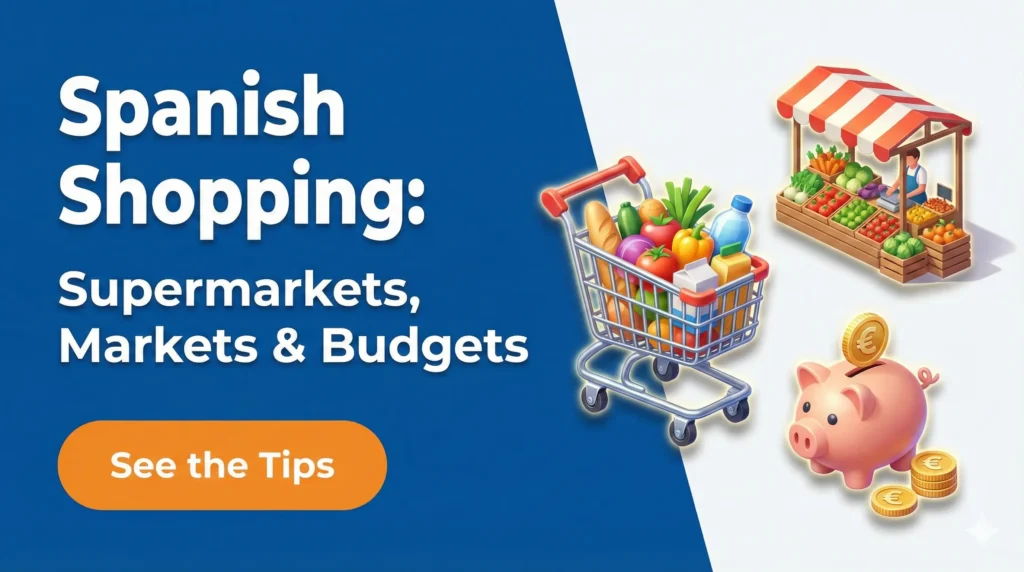
While modern supermarkets offer undeniable convenience, the true, beating soul of Spanish gastronomy resides in the municipal food markets. Almost every city, town, and large neighborhood in Spain has at least one large, indoor market, often housed in magnificent historical, wrought-iron buildings. Famous tourist examples include the Mercado de San Miguel in Madrid and La Boquería in Barcelona, though the smaller, working-class neighborhood markets are where the real, everyday shopping happens.
How to Shop at a Municipal Market
Shopping at a traditional market requires a bit of confidence and some basic Spanish vocabulary. When you approach a stall, you cannot simply start grabbing tomatoes or cuts of meat with your bare hands.
- Take a Number: Many busy stalls use an electronic ticket dispenser. Look for a small red machine, pull a paper ticket, and wait for your number to appear on the digital screen. If there is no machine, simply ask the crowd, “¿Quién da la vez?” (Who is the last in line?) to establish your rightful place.
- Order by Weight: Food is typically sold by the kilogram (kilo) or half-kilogram. For smaller items like sliced Manchego cheese or Iberian ham, you order by the gram (for example, saying “doscientos gramos,” which means 200 grams).
- Ask for Expert Advice: Market vendors are incredibly proud of their products and are masters of their trade. Do not hesitate to ask them which fish is the freshest today, or how a particular cut of local pork should be prepared and cooked.
The Monday Fish Rule
There is a crucial piece of local culinary knowledge that every expat must learn: never buy fish on a Monday. Fishing fleets in Spain traditionally do not work or sail on Sundays. Therefore, the fish sold in markets and supermarkets on a Monday is usually the catch left over from Saturday. To ensure you are buying the highest quality seafood, wait until Tuesday morning, when the fresh catch arrives from the coastal ports, to visit the fishmonger.
Traditional Neighborhood Shops
In addition to the large municipal markets, Spanish city streets are lined with specialized, independent shops. Supporting these small, family-run businesses is a fantastic way to integrate into your neighborhood and practice your conversational language skills with locals.
Carniceria The Butcher
The carnicería is the place to buy fresh chicken, beef, pork, and specialty regional sausages like chorizo or morcilla. The butcher will happily debone, slice, or grind the meat exactly to your specifications right in front of you.
Pescaderia The Fishmonger
Reflecting Spain’s massive, historically significant coastline, the pescadería offers a dazzling, sometimes intimidating array of seafood. Do not be afraid of whole fish staring back at you; the vendor will expertly scale, gut, and fillet the fish so it is completely ready for your frying pan.
Panaderia The Bakery
Spaniards buy fresh bread daily; it is a non-negotiable staple of the Mediterranean diet. Long, thin baguettes are the standard, but you will find dozens of rustic regional varieties baked fresh every single morning.
Fruteria The Greengrocer
Independent fruit and vegetable shops often offer fresher, highly seasonal, and significantly cheaper produce than the large, sterile supermarkets.
If you are currently settling into a new city and trying to figure out the local layout, exploring these small independent shops is one of the absolute best ways to get a genuine feel for the area. You can find more tips on integrating seamlessly into local community life in our guide on Spain Relocation Checklist.
Budget Strategies for Grocery Shopping
With global inflation affecting food prices across Europe, managing your monthly grocery budget in Spain is more important than ever. However, if you shop smartly and adapt to local habits, Spain remains one of the most affordable countries in Western Europe for high-quality food. You can learn how to balance these grocery costs against your rent, utilities, and leisure activities by reviewing our comprehensive Cost of Living in Spain: Monthly Budget Guide for Expats.
Embrace the Marcas Blancas
In many countries, store-brand or generic products are viewed as inferior substitutes for name brands. In Spain, private label brands, known as marcas blancas, are highly respected and widely consumed by everyone. Mercadona’s Hacendado brand, Lidl’s Milbona dairy line, and Carrefour’s own labels are frequently manufactured by the exact same factories and farms that produce the expensive, heavily advertised name brands. Swapping out name brands for marcas blancas can instantly reduce your overall grocery bill by twenty to thirty percent without sacrificing a single ounce of quality.
Eat Seasonal and Local
Spain is famously considered the agricultural powerhouse and “orchard” of Europe. Buying fruits and vegetables that are currently in season locally is drastically cheaper than buying imported, out-of-season produce from greenhouses. In the winter, citrus fruits like oranges and mandarins from Valencia are incredibly cheap and bursting with flavor. In the late summer, stone fruits, melons, and heirloom tomatoes are abundant, highly affordable, and form the base of traditional dishes like gazpacho.
Limit Processed Foods and Red Meat
Heavily processed convenience foods, frozen ready-meals, boxed cereals, and imported international snacks are disproportionately expensive in Spanish supermarkets. Similarly, high-quality red meat carries a premium price tag. To save significant money, adapt to the traditional Mediterranean diet: base your daily meals around cheap, high-quality legumes (lentils, chickpeas, beans), fresh seasonal vegetables, local pork, and poultry.
Shop Across Multiple Stores
Do not fall into the expensive trap of doing all your shopping at one massive hypermarket purely out of convenience. Savvy locals buy their heavy cleaning supplies and dry pantry goods at discount chains like Dia, pick up their fresh fruits and vegetables from the local neighborhood greengrocer, and buy their specialty meats and cheeses from the municipal market. Splitting your weekly shopping takes more time, but it absolutely maximizes your financial savings and food quality.
Loyalty Programs and Apps
If you want to stretch your euros even further, you must download the digital loyalty applications for the supermarkets you frequent. While Mercadona famously refuses to offer a loyalty card or ongoing discounts, almost every other chain does. The Carrefour Club card allows you to accumulate a percentage of your fresh food purchases as a digital cash balance to spend later. The Lidl Plus app offers a weekly spinning wheel for free bakery items and heavy digital discounts on specific packaged goods. Dia’s loyalty club provides highly personalized coupons printed directly on your receipt, offering massive savings on the exact items you regularly purchase.
Online Grocery Shopping and Delivery
In the modern, post-pandemic era, the Spanish grocery landscape has fully embraced digital convenience. If you do not own a car, live in a fifth-floor walk-up apartment without an elevator, or simply hate navigating crowded aisles on a Saturday morning, online shopping is a highly efficient alternative.
Supermarket Delivery Services
Major chains like Carrefour, Alcampo, and Dia offer robust online platforms with delivery slots available throughout the week. Mercadona has recently overhauled its online shopping interface, known as “Mercadona Tech,” making it incredibly user-friendly and reliable, though they typically charge a flat delivery fee of around seven euros regardless of the total order size.
Rapid Delivery Apps
If you are cooking dinner and realize you forgot a crucial ingredient, applications like Glovo and UberEats have partnered with chains like Dia and Carrefour Express. They promise rapid delivery of essential grocery items to your front door in under thirty minutes, though you will pay a noticeable premium on the individual item prices and a delivery surcharge.
Practical Tips for Shopping in Spain
Before you grab a shopping cart and head down the aisles, there are a few practical logistical quirks you need to know about Spanish retail culture.
Bring Your Own Bags
To combat plastic waste and protect the environment, all supermarkets and shops in Spain legally charge a small fee for plastic shopping bags. You will always be asked at the checkout counter, “¿Quieres bolsa?” (Do you want a bag?). To save money and reduce your plastic footprint, always bring your own sturdy, reusable canvas tote bags from home.
Navigating Opening Hours and the Siesta
While massive corporate hypermarkets like Carrefour and Mercadona remain open continuously from 9:00 AM to 9:30 PM, the exact same rules do not apply to municipal markets or small neighborhood shops. These smaller, traditional businesses follow the classic split shift, closing their metal shutters between 2:00 PM and 5:00 PM for the afternoon siesta. Furthermore, almost all supermarkets and shops in Spain are strictly closed on Sundays, except in highly specific designated tourist zones during the peak summer months. You can read a complete, detailed breakdown of this unique cultural schedule in Opening Hours in Spain: What’s Different.
Weighing Your Own Produce
In some specific supermarkets, particularly discount chains and large hypermarkets, you are required to weigh your own fruits and vegetables before you ever reach the checkout counter. You place your selected produce on a digital scale in the middle of the aisle, press the button corresponding to the item’s picture or printed code, and the machine prints a barcode sticker for you to place on the plastic bag. If you forget to do this, the cashier cannot weigh it at the register and will send you all the way back to the produce section, holding up the entire line of impatient shoppers behind you.
Payment Methods
Spain has rapidly adopted contactless digital payments, and you can easily use a debit card, credit card, or smartphone wallet for almost any purchase in a modern supermarket. However, if you are shopping at a traditional municipal market, a tiny neighborhood bakery, or a rural greengrocer, cash is still heavily preferred and sometimes strictly required for small transactions under five euros. Ensuring you have a local, low-fee debit card will make your daily financial life much smoother. Find out exactly how to arrange this vital piece of administration in Setting Up a Spanish Bank Account for Rent and Bills.
Conclusion
Grocery shopping in Spain is far more than a mundane weekly errand; it is an open invitation to engage directly with the rich, diverse, and world-renowned culinary heritage of the country. While the massive, brightly lit aisles of a suburban hypermarket offer undeniable, modern convenience, the true joy of Spanish food is often found in the vibrant, noisy, historical corridors of a municipal market and the friendly, personalized exchanges at your local neighborhood greengrocer.
By taking the time to learn the basic vocabulary, adapting to the highly seasonal agricultural rhythms of the Mediterranean, and utilizing smart budget strategies like embracing high-quality private labels, you can enjoy one of the healthiest, most delicious diets in the world on a very reasonable budget. Grab your reusable tote bags, remember not to buy fish on a Monday, and step out into your neighborhood to experience the unparalleled flavors of Spain. If you want to experience how the local professionals prepare these magnificent ingredients before attempting to cook them yourself, be sure to explore the vibrant restaurant scene by reading our guide to Spanish Dining Etiquette and Tipping Culture.
References
Primary sources (official)
- Ministerio de Agricultura, Pesca y Alimentación (Food Consumption Data): https://www.mapa.gob.es/
- Kantar Worldpanel Spain (Supermarket Market Share Reports): https://www.kantar.com/es
Other helpful sources
- Devour Tours (Spanish Food Markets Guide): https://devourtours.com/
- HousingAnywhere (Grocery Stores in Spain): https://housinganywhere.com/
Disclaimer
The information provided in this article is for educational and informational purposes only. Supermarket prices, specific store opening hours, and market share statistics are subject to frequent change due to economic inflation and regional legislative variations. We strongly recommend checking the official websites of specific supermarket chains or consulting your local municipal town hall (Ayuntamiento) for exact operating hours and Sunday trading regulations in your specific area.