How to Avoid the Crowds in Spain’s Peak Season
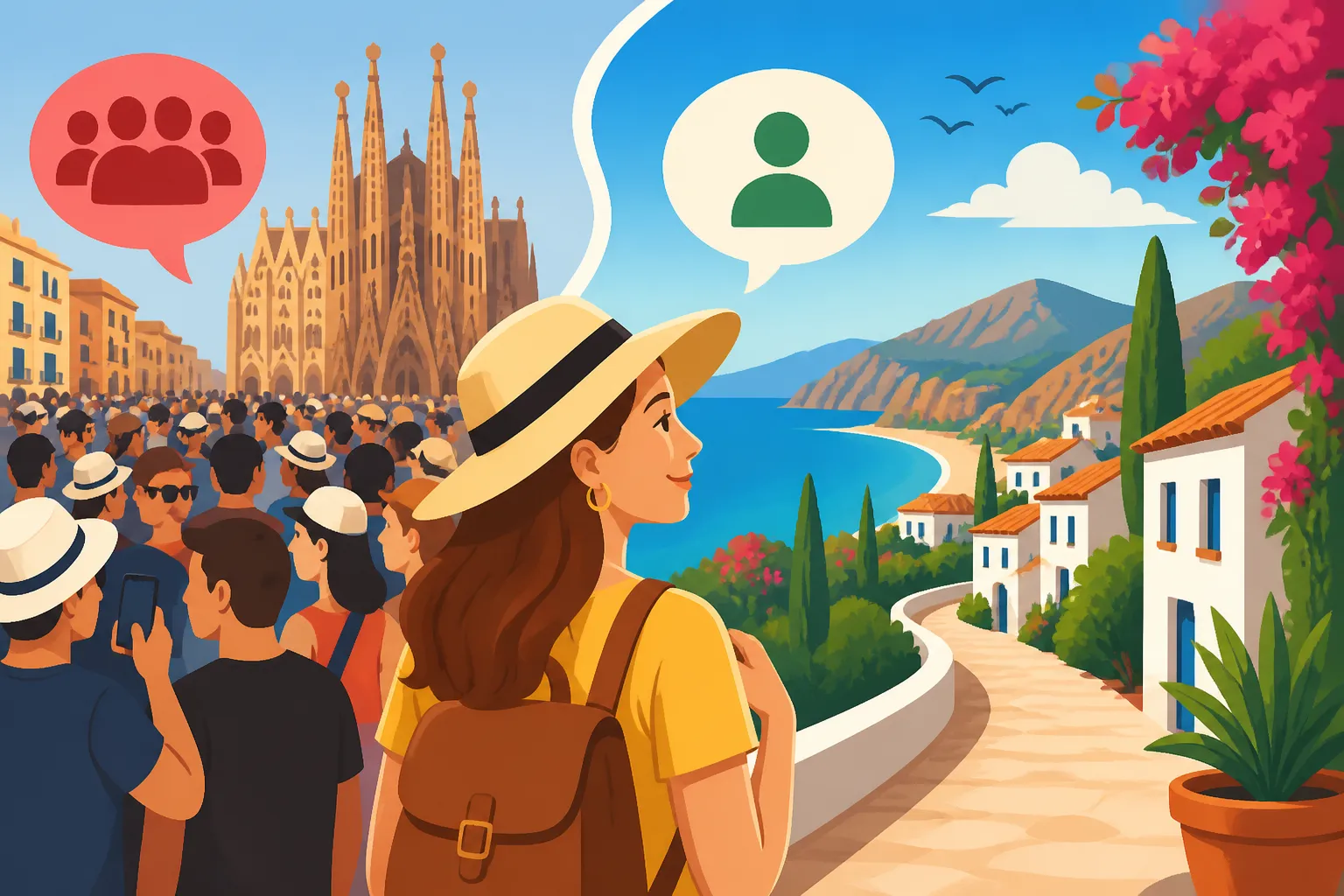
Finding yourself elbow-to-elbow with thousands of other travelers under a punishing 40-degree sun in Seville or Barcelona isn't the Spanish dream you signed up for. Peak season in Spain can feel like a relentless marathon of queues, noise, and overpriced menus. This guide provides insider strategies and hyper-local tips to help you navigate the crowds and discover authentic Spain.
Disclosure: This post may contain affiliate links. We may earn a commission at no extra cost to you if you make a purchase through these links. Read full disclosure.
Timing the Day and Week Like a Veteran Expat
One of the first things you learn living here is that the clock is your most powerful tool. The typical tourist follows a very predictable schedule: breakfast at 9:00 AM, sightseeing from 10:30 AM to 1:30 PM, a late lunch, and then more sightseeing until dinner at 8:00 PM. If you want to avoid the crush, you must systematically break this rhythm.
The Golden Window of Early Morning
The most beautiful moments in Spanish cities happen before the heat and the tour buses arrive. Visitors are often advised to be out the door by 7:30 AM. Between 8:00 AM and 10:00 AM, the plazas are being swept, the scent of fresh coffee and churros fills the air, and the light for photography is unparalleled. You can walk through the Gothic Quarter in Barcelona or the Santa Cruz neighborhood in Seville and feel like the city belongs to you. By the time the first major wave of tourists is finishing their hotel buffet, you should be wrapping up your primary "must-see" monument and heading toward a secondary, less crowded site.
Understanding the Siesta Shift
While the "siesta" is often misunderstood as a country-wide nap, it is actually a vital survival mechanism during the summer months. From 2:00 PM to 5:00 PM, the sun is brutal, and the main streets are packed with people looking for shade. This is the perfect time to retreat. If you aren't staying in a central apartment, find a large public library, a quiet museum with high-quality air conditioning, or a leafy park like El Retiro in Madrid, tucked away from the main statues. While others are fighting for a table at a "tourist trap" restaurant, you should have already finished your meal. It helps to understand What Time Do Spaniards Eat Lunch and Dinner? so you can hit the restaurants just as they open, usually at 1:00 PM for lunch, beating the 2:30 PM rush of locals and the 2:00 PM rush of tourists.
Mid-Week Momentum
If your itinerary allows it, always visit the "big hitters"—the Alhambra, the Sagrada Família, or the Prado Museum—on a Tuesday, Wednesday, or Thursday. Mondays can be surprisingly busy because many smaller museums are closed, funneling everyone into the few that remain open. Weekends are the territory of domestic travelers. Madrileños head to the coast or the mountains, and people from the provinces head into the big cities. By sticking to a mid-week schedule for major landmarks, you significantly reduce the density of the crowds you'll encounter.
Strategic Geographical Divergence
Most visitors to Spain stay within the "Golden Triangle" of Madrid, Barcelona, and Seville. While these cities are iconic for a reason, Spain is a massive, diverse country with plenty of room to breathe if you know where to point your compass.
The Allure of Green Spain
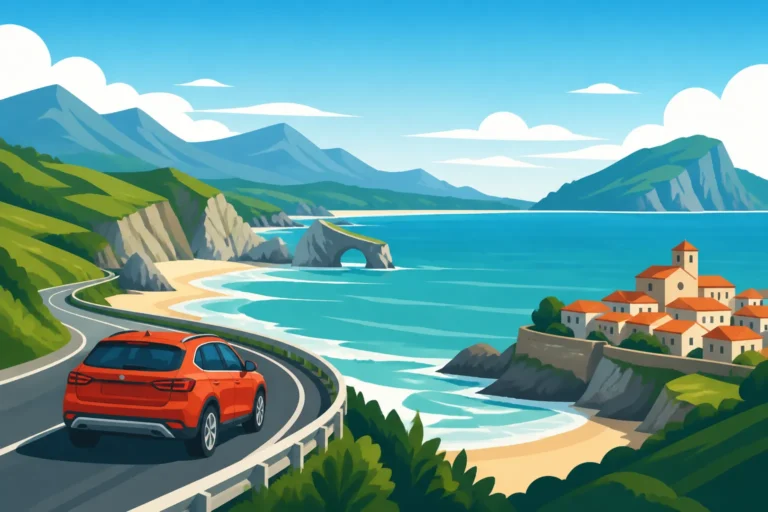
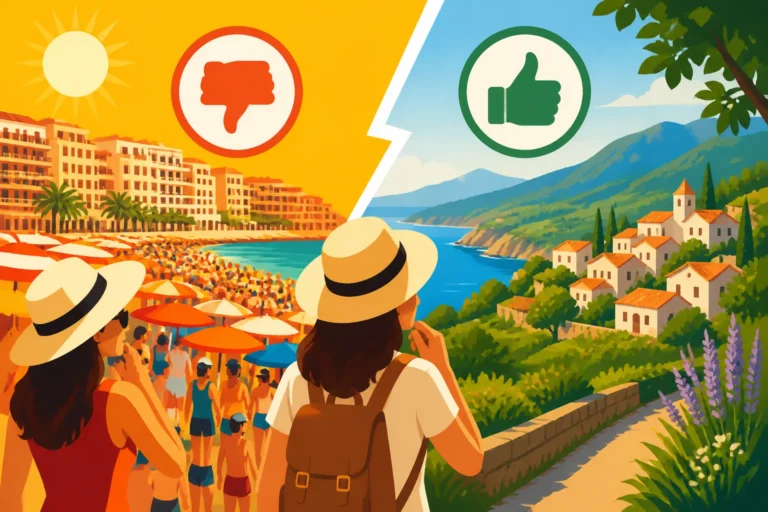
When the south is sweltering and crowded, veterans head north. The regions of Galicia, Asturias, Cantabria, and the Basque Country—collectively known as "España Verde"—offer a completely different experience. Instead of dry plains and crowded Mediterranean beaches, you’ll find misty mountains, cider houses, and rugged Atlantic cliffs. Even in the height of August, towns like Llanes or Cudillero feel manageable compared to the Costa del Sol. You can spend your days hiking in the Picos de Europa or exploring the prehistoric caves of Cantabria without feeling like a sardine in a tin. Before heading south, ask yourself: Is It Too Hot to Visit Southern Spain in August? and consider if the northern cooler climes might suit your temperament better.
Exploring the Spanish Interior
Extremadura and Castilla y León contain some of the most stunning Roman and medieval architecture in Europe, yet they see a fraction of the coastal foot traffic. Cities like Cáceres, Trujillo, and Plasencia offer incredible gastronomy and history. The trick here is to embrace "Slow Travel." Instead of ticking off five cities in a week, pick one province and dig deep. For those with time, Traveling Spain Slowly Over a Month allows you to wait out the busiest days in a quiet village (pueblo) before venturing back into the urban centers.
Swapping Famous Beaches for Hidden Coves
The Mediterranean coast is notoriously packed in July and August. However, even in places like the Costa Brava, there is a hierarchy of crowds. While Lloret de Mar might be overwhelmed, a twenty-minute hike along the "Camí de Ronda" coastal path can lead you to "calas" (coves) that are only accessible by foot or boat. This requires more effort, but the reward is a patch of sand where you aren't touching your neighbor's towel.
| Region | Popular Choice (Crowded) | Strategic Alternative (Quiet) | Why it Works |
|---|---|---|---|
| Catalonia | Barceloneta Beach | Calella de Palafrugell | Rugged coastline limits mass tourism |
| Andalusia | Marbella | Cabo de Gata (Almería) | Protected natural park with limited hotels |
| Madrid Area | Segovia | Sigüenza | Equal history, much lower visitor count |
| Valencia | Malvarrosa Beach | Dénia / Javea Coves | Requires a car or boat to find the best spots |
Leveraging Technology and Pre-Booking
In the modern era of Spanish travel, "winging it" is a recipe for standing in three-hour lines. To avoid crowds, you have to be a digital ninja. You need to secure your spot before you even pack your suitcase.
Mastering the Digital Queue
The days of walking up to a ticket window are over for major monuments. For example, knowing How to Get Tickets for the Alhambra in Granada is essential because they often sell out months in advance. If the official site is sold out, I often recommend using GetYourGuide to find guided tours that include entry, as they sometimes have different ticket allocations. This also applies to the Royal Palace in Madrid and the Alcázar in Seville. By booking the first time slot of the day, you ensure that you are at the front of the pack, rather than entering when the crowds from previous slots have already accumulated.
Smart Transit and Transport Logistics
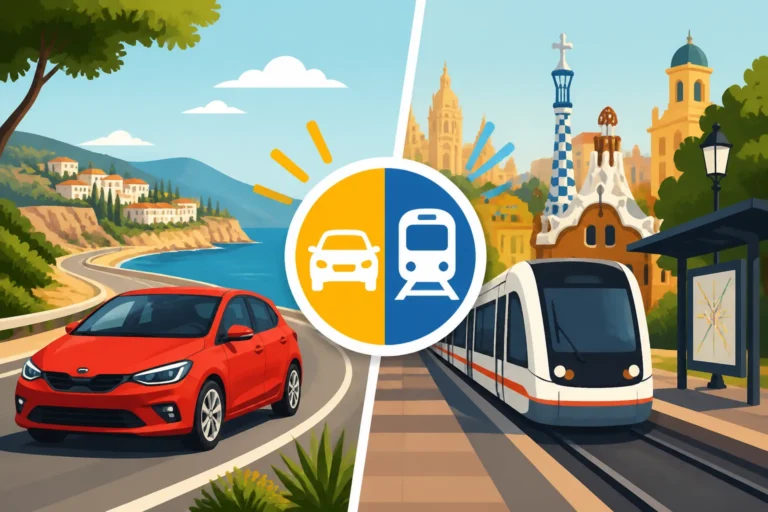
The way you get around Spain can also impact your stress levels. The high-speed AVE train is a marvel, but it can get very busy on Friday afternoons and Sunday evenings. When planning your routes, using a platform like Omio is incredibly helpful because it allows you to compare train, bus, and flight options side-by-side. Sometimes, taking a slightly longer bus route on a luxury Alsa Supra bus is much more relaxing and less crowded than a packed train station. If you do choose the rails, make sure you know How to Buy AVE Train Tickets in Spain and Save Money by booking well in advance, which also guarantees you a seat on your preferred, less-busy departure time.
Accommodation in "Non-Obvious" Neighborhoods
Where you sleep determines your "baseline" stress level. If you book a hotel right on La Rambla in Barcelona or near Puerta del Sol in Madrid, you are stepping out into a crowd the moment you leave the lobby. Instead, I suggest using Booking.com to filter for apartments or boutique hotels in residential neighborhoods. In Madrid, look at Chamberí or Retiro. In Barcelona, consider Gràcia or Poblenou. These areas have all the Spanish charm—the local plazas, the corner bakeries, the old men playing dominoes—but they lack the frantic energy of the tourist centers. You can find out more about these local vibes in our guide on Choosing a Neighborhood in Spain: How to Research Before You Move.
Navigating Social Spaces and Eating
The "crowd" in Spain isn't just at the museums; it's also at the bar. If you try to eat at a restaurant that is featured in every major guidebook at 8:30 PM on a Saturday, you will likely be disappointed.
Finding the Authentic "Bar de Barrio"
To escape the tourist throngs, look for the "Bar de Barrio" (neighborhood bar). These are often unassuming places with stainless steel counters and paper napkins on the floor (a traditional sign of a busy, good bar). These spots don't usually take reservations and aren't on the main tourist maps. Learning How to Find Authentic Restaurants in Spain (Not Tourist Traps) involves walking three or four blocks away from the main monument. If the menu has photos of the food and is translated into five languages on a giant board outside, keep walking.
The Sunday Strategy
Sundays in Spain are a double-edged sword. Most shops are closed, and locals head out for a long, social lunch. This is a great day to avoid commercial districts and instead head to large parks or take a day trip to a very small village. Be aware of Spanish Holidays and Public Closures: Planning Errands in 2026 because a "puente" (bridge holiday) can turn a quiet weekend into a four-day domestic travel surge. If you see a local holiday on the calendar, that is the day to stay put in your local neighborhood or go for a long hike in a national park.
Early Dining as a Strategy
While I mentioned that locals eat lunch late, you can use the "early" side of the Spanish window to your advantage. Most kitchens open for lunch at 1:00 PM and for dinner at 8:00 PM. If you arrive at 1:05 PM or 8:05 PM, you will almost certainly get a table without a wait. By the time the crowd arrives at 2:30 PM or 9:30 PM, you’ll be finishing your "café solo" and heading out just as the noise level peaks.
Practical Advice for Extreme Peak Times
There are certain times of the year, like Semana Santa (Holy Week) or during major festivals like Las Fallas in Valencia, where crowds are simply unavoidable in specific cities. In these cases, your strategy shouldn't be to "avoid" the crowds entirely, but to manage your exposure to them.
- Use Secondary Entrances: Many large sites, like the Retiro Park or even some major cathedrals, have multiple gates. Tourists gravitate toward the one closest to the metro stop. Walk an extra five minutes to a side entrance, and you’ll often find a much shorter queue.
- Go Indoor During "Paseo" Time: Between 7:00 PM and 9:00 PM, Spaniards take part in the "paseo"—a traditional evening stroll. The main pedestrian streets become human rivers. This is a great time to be inside a cinema, a quiet restaurant, or even doing your grocery shopping at a local supermarket, which will be much quieter.
- Embrace the "Intercambio": If you are feeling overwhelmed by the number of people, look for a "Language Exchange" (intercambio) in a local pub. It’s a way to meet locals and expats in a controlled, friendly environment away from the chaotic street life.
Spain is a country that thrives on social energy, but that doesn't mean you have to be part of a mob. By shifting your schedule by just ninety minutes, traveling "against the grain" geographically, and using tools like Booking.com, Omio, and GetYourGuide to plan ahead, you can enjoy the majesty of the Iberian Peninsula with the peace and clarity it deserves.
Disclaimer
The information provided in this guide is for general informational purposes only. While we strive to provide up-to-date and accurate advice, travel conditions, opening hours, and regional regulations in Spain can change frequently. We recommend verifying specific details and booking requirements directly with official service providers before your trip.