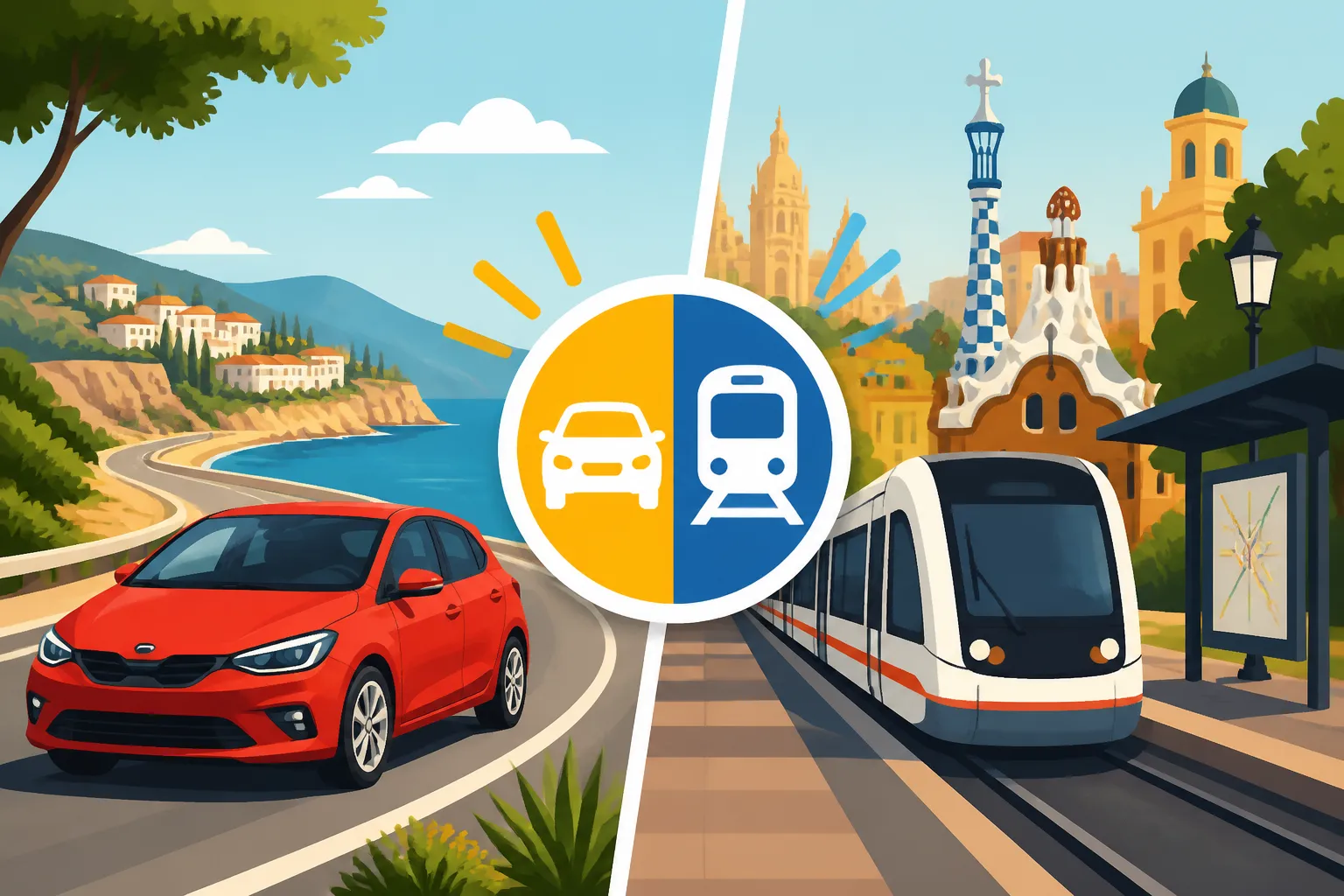
Car Rental vs Public Transport in Spain: Where Each One Wins
Oh, the eternal dilemma, isn't it? You've just arrived in this beautiful, sprawling country, perhaps with dreams of zipping down coastal roads or navigating ancient village streets, and suddenly you're faced with the big question: do I rent a car, or do I surrender to the public transport system? Both have their undeniable charms and their equally undeniable headaches, especially when you're still figuring out the Spanish way of doing things. This guide is here to untangle that knot for you, diving deep into the realities of both car rental and public transport in Spain, and showing you how platforms like Omio can make navigating all your journey options a breeze, helping you compare and book seamlessly.
Disclosure: This post may contain affiliate links. We may earn a commission at no extra cost to you if you make a purchase through these links. Read full disclosure.
The Allure of the Open Road: When Car Rental Shines in Spain
There's a romantic notion that comes with having your own set of wheels in Spain. The freedom, the spontaneity, the ability to pack up and go wherever the wind takes you – it's a powerful draw. For many expats and tourists, renting a car seems like the ultimate way to truly experience the depth and breadth of this diverse country. And in certain scenarios, it absolutely is the winning choice.
Exploring Remote Gems and Uncharted Territories
Let's be honest, Spain is more than just Madrid and Barcelona. It's a country dotted with thousands of tiny, enchanting villages nestled in mountain ranges, tucked away along forgotten coastlines, or hidden amidst sprawling olive groves. Places like the stunning white villages of Andalusia, the secluded coves of the Costa Brava, or the ancient Roman ruins scattered through Extremadura often aren't directly accessible by train or bus. Trying to reach them via public transport usually involves multiple transfers, incredibly long journey times, and schedules that don't quite align, leaving you feeling frustrated and stuck.
This is where a rental car becomes your best friend. Imagine waking up in a small, traditional casa rural in the Picos de Europa, and deciding on a whim to drive to a specific viewpoint you saw on Instagram, or to a hiking trail that begins miles from any bus stop. With a car, you can explore at your own pace, linger longer in places that capture your heart, and stumble upon those unexpected moments of magic that public transport schedules simply won't allow. You can truly immerse yourself in the lesser-known corners, stopping for photos whenever you please, discovering local eateries far from the tourist traps, and experiencing an authentic Spain that remains hidden to those without wheels.
Family Travel and Luggage Logistics
If you're traveling with family, especially young children, or if you're planning an extended stay with a substantial amount of luggage, the idea of hauling everything through Spain's public transport hubs can quickly turn into a nightmare. Picture this: two toddlers, a pram, three suitcases, and a couple of carry-ons, all navigating a crowded metro station during rush hour, then trying to find the correct train platform. The stress alone is enough to make you want to stay home.
A rental car immediately solves this logistical puzzle. You can simply load up the boot with all your gear, strap the kids safely into their car seats, and set off without worrying about luggage limits, awkward transfers, or the mad dash to catch a connection. For families, the sheer convenience of having a private space to store snacks, toys, and travel essentials, along with the flexibility to stop for potty breaks or impromptu picnics, is invaluable. It transforms what could be a stressful journey into a much more relaxed and enjoyable experience for everyone involved, making multi-stop road trips with children a genuinely viable option.
The Public Transport Powerhouse: Efficiency and Ease in Spain
While the car offers freedom, Spain's public transport network is a marvel of efficiency, speed, and often, sheer beauty. For many types of journeys, especially those between major urban centers, it's not just the more sensible option; it's often the superior one. Forget the hassle of driving – just sit back, relax, and let Spain whisk you away.
Conquering Cities and Major Routes
Spain boasts one of Europe's best high-speed rail networks, the AVE (Alta Velocidad Española). These sleek, modern trains connect major cities like Madrid, Barcelona, Seville, Valencia, and Malaga with incredible speed and comfort. A journey that might take 5-6 hours by car, often fraught with traffic and parking woes, can be covered in just 2.5-3 hours by AVE. The trains are punctual, spacious, offer free Wi-Fi on many routes, and usually deposit you right in the city center, saving you the headache of navigating unfamiliar urban traffic and hunting for parking.
For instance, if you're planning to explore the vibrant city life of Madrid and then hop over to the artistic wonders of Barcelona, the train is hands-down the best option. Not only is it faster, but once you arrive, trying to drive and park in these historic, dense cities is an exercise in futility and frustration. Many city centers are now designated as Low Emission Zones (ZBE), restricting access for certain vehicles, and parking is often expensive or simply non-existent. Instead, you can rely on excellent local public transport – metros, buses, and trams – to get around effortlessly within the cities. Booking these tickets, and even comparing different train and bus operators like Renfe or ALSA, is incredibly simple with platforms like Omio, which consolidate options for a stress-free travel plan. Discovering High-Speed Trains in Spain (AVE): Routes, Booking, and Savings can really change your perspective on intercity travel.
Budget-Friendly and Environmentally Conscious Choices
For budget-conscious travelers or those looking to minimize their carbon footprint, public transport in Spain is almost always the more economical and sustainable choice. Train tickets, especially if booked in advance through platforms like Omio, can be surprisingly affordable, and bus tickets are consistently one of the cheapest ways to travel across the country. When you factor in the soaring cost of petrol (gasolina), rental car insurance, potential tolls on motorways (autopistas), and the inevitable parking fees, a car can quickly become a significant drain on your travel budget.
Consider a trip from Seville to Granada. A bus ticket might cost a fraction of what you'd pay for petrol, tolls, and parking in Granada, not to mention the daily rental fee. Beyond the immediate financial savings, choosing public transport contributes to a reduced environmental impact, a consideration that's increasingly important for many travelers. Spain has invested heavily in its public transport infrastructure, making it a viable and attractive option for responsible tourism. Plus, for many routes, especially with Intercity Buses in Spain: Networks, Booking, and Tips, you'll find that companies like ALSA offer comfortable, modern coaches with amenities like Wi-Fi and entertainment.
Hidden Costs and Unexpected Hurdles: Car Rental Realities
While the idea of a car offers appealing flexibility, the reality of driving in Spain can be a rude awakening for many foreigners. It’s not just about the rental fee; there’s a whole host of hidden costs and navigational nightmares that can quickly turn your dream road trip into a stress-fueled ordeal.
Driving in Spain: Rules, Parking, and Fines
Let's talk about actually driving in Spain. While the major highways are generally excellent, venturing into smaller towns or cities can be an entirely different ball game. Streets can be incredibly narrow, sometimes barely wide enough for one car, with blind corners and local drivers who know these labyrinths like the back of their hand. Parking is a constant struggle, especially in popular areas. In many cities, blue zones (zona azul) require paid parking, often with strict time limits, and green zones (zona verde) are usually reserved for residents with permits. Fail to pay, or overstay your welcome, and you'll find a hefty fine under your wiper blade. And don't even get me started on the infamous grúa (tow truck) if you park incorrectly.
Speed limits are strictly enforced, often by hidden cameras, and fines can be steep. You'll also encounter a plethora of road signs that might not be immediately intuitive if you're used to different conventions. Then there's the Spanish driving style – it can be assertive, to put it mildly. Understanding Driving in Spain: Road Rules, Fines, and What Surprises Expats is crucial to avoid unpleasant surprises. Many expats quickly discover that the 'freedom' of a car often translates into hours spent circling for parking, navigating confusing one-way systems, and perpetually worrying about fines.
Fuel, Insurance, and Rental Quirks
The upfront cost of renting a car is just the beginning. Petrol prices in Spain fluctuate, but they are consistently higher than in many other countries, especially the US. A full tank can easily set you back a significant sum, and if you're covering long distances, these costs add up fast. Then there’s the rental car insurance. Basic third-party insurance is usually included, but most rental companies will aggressively push their comprehensive excess waiver insurance. While it provides peace of mind, it can nearly double the daily rental rate. Skipping it, however, leaves you liable for potentially thousands of euros in damages if something goes wrong, and even a tiny scratch can cost a fortune.
Beyond the financial aspects, dealing with rental car agencies can be a unique experience. Hidden fees for picking up outside of regular hours, exorbitant charges for minor dings upon return, and the eternal debate over the "full-to-full" or "full-to-empty" fuel policy are common frustrations. Many tourists report feeling pressured or scammed, making the return process particularly stressful. It's vital to meticulously document the car's condition with photos and videos before you drive off, otherwise, you could be facing an unexpected bill weeks later.
Navigating the Public Transport Maze: A Different Kind of Challenge
While public transport offers undeniable advantages, it's not without its own set of complexities. For someone new to Spain, the sheer variety of options and the occasional lack of English signage can feel a bit overwhelming at first. It's a different kind of challenge, one that requires a bit of pre-planning and a willingness to embrace the local way.
Booking and Understanding the Systems
Spain's public transport system is excellent, but it's fragmented. You have national train operators like Renfe, regional trains, countless intercity bus companies (ALSA being the largest, but there are many local ones), city metros, trams, and urban buses. Knowing which service to use for which journey, and how to book tickets, can be confusing. Do you need a separate ticket for the local bus once you arrive by train? Are there special passes? What about those regional trains that aren't on Renfe's main website?
This is precisely where platforms like Omio shine. Instead of juggling multiple websites and apps for different operators, Omio allows you to search, compare, and book tickets for trains, buses, and even flights across Spain (and Europe) all in one place. It simplifies the process immensely, showing you all available options for your desired route, letting you filter by price, duration, or operator, and crucially, often providing information in English. This means you don't have to navigate a dozen different Spanish-only booking sites, which can be a real game-changer for stress-free travel planning. For getting around within cities, understanding Getting Around Spanish Cities: Metro, Bus, Tram, and Bikes is key, and often, you can pay with contactless cards or purchase multi-day passes easily.
Language Barriers and Local Knowledge
While tourist areas will often have English-speaking staff, venturing off the beaten path on public transport might mean encountering fewer English speakers. Reading signs at bus stations, understanding announcements on trains, or asking for directions at a small-town bus stop can become a challenge if your Spanish isn't up to scratch. This can lead to missed connections, getting on the wrong bus, or simply feeling lost and frustrated.
Even with translation apps, sometimes local knowledge is invaluable. Knowing that cercanías are commuter trains, or understanding the difference between a parada (stop) and an estación (station), can make a big difference. However, with a bit of preparation, these hurdles are easily overcome. Many major stations have information desks, and people are generally very helpful if you try a few basic Spanish phrases. Learning some Survival Spanish for Travelers: Key Phrases to Learn First can go a long way. The beauty of booking through a platform like Omio is that much of this information is presented clearly beforehand, reducing the need for constant on-the-spot translation and allowing you to confidently embark on your journey, knowing your ticket details are easily accessible in your own language.
Making the Smart Choice: When to Opt for What
So, after all that, how do you decide what's best for your trip to Spain? It really boils down to your specific travel style, your itinerary, and who you're traveling with. There's no one-size-fits-all answer, but by asking yourself a few key questions, you can make an informed decision that enhances your Spanish adventure.
Analyzing Your Itinerary and Group Size
The first step is to map out your rough itinerary. Are you sticking to major cities and well-trodden tourist routes? If your plan involves Madrid, Seville, Barcelona, and Valencia, with perhaps a few accessible day trips, then Spain's high-speed trains and efficient intercity buses are likely your best bet. You'll save money, time, and stress. Using a platform like Omio to compare train and bus schedules and prices for these routes will quickly show you the superior efficiency of public transport. It's ideal for solo travelers, couples, or small groups who want to avoid the hassle of driving and parking in busy urban environments.
However, if your heart is set on exploring the hidden gems of rural Spain, spending days in the Picos de Europa, touring the wineries of La Rioja, or visiting the remote beaches of Galicia, then a rental car will almost certainly be necessary. Public transport might get you near these places, but the last mile (or twenty miles) will be a significant challenge. For families with children, or larger groups (3+ people), the per-person cost of a rental car might start to become more competitive, and the convenience of having your own vehicle for luggage and flexibility becomes a huge advantage. Don't forget to factor in the full Car Costs in Spain: Insurance, Taxes, Maintenance, and Fuel when comparing.
The Hybrid Approach: Best of Both Worlds
For many, the optimal solution is a hybrid approach, blending the best of both worlds. Start your trip by taking an AVE train from, say, Madrid to Seville. Explore Seville's charming streets and iconic landmarks using local public transport or on foot. Then, when you're ready to venture into the white villages of Andalusia, rent a car for just a few days, picking it up on the outskirts of Seville and returning it at Malaga airport before flying out, or taking a train back to your departure city. This strategy allows you to experience the speed and comfort of Spain's excellent intercity network while still gaining the flexibility to explore the more remote, picturesque regions that cars are essential for.
This hybrid model often proves to be the most cost-effective and least stressful. You avoid driving in congested city centers and paying for expensive urban parking, relying on efficient public transport for those segments. Then, for the truly scenic drives and off-the-beaten-path explorations, you have the freedom of a car. Again, tools like Omio are invaluable here. You can easily book your train journeys in advance, then focus on finding a car rental for the specific days you need it. Think of it as tailoring your transport to your destination, ensuring you get the most out of every leg of your Spanish adventure.
Planning Your Journey with Ease: Why Omio is Your Best Friend
Navigating the various transport options in Spain can feel like a labyrinth, with different companies, websites, and booking systems. This is where Omio steps in as an indispensable tool for both short-term visitors and long-term expats. It's designed to take the guesswork and hassle out of travel planning, especially when you're dealing with multiple modes of transport.
Instead of spending hours sifting through various train operator sites like Renfe, countless bus company schedules, and dozens of different routing apps, Omio centralizes everything. You simply input your departure and arrival points, and the platform instantly shows you all available train, bus, and flight options, along with their prices and journey times. This comprehensive overview allows you to quickly compare the efficiency, cost, and convenience of different routes and modes of transport side-by-side. For example, you might discover that a bus journey is only slightly longer than a train but significantly cheaper, or vice-versa.
The user-friendly interface is a huge plus, especially for non-Spanish speakers. All the information you need, from ticket classes to luggage allowances, is presented clearly in English (or your chosen language), eliminating the stress of translating complex booking forms. Once you've made your choice, booking is straightforward and secure, and your tickets are conveniently stored within the Omio app, accessible right on your phone. This means no fumbling with paper tickets, no language barriers at the ticket counter, and a smooth, modern experience from start to finish. For comparing options and simplifying the entire booking process for your public transport legs, Omio is truly a game-changer for travel in Spain.
Final Considerations for Your Spanish Travels
Choosing between car rental and public transport in Spain isn't just a logistical decision; it's a lifestyle choice for your trip. Are you seeking maximum spontaneity and access to the most remote corners, or do you prioritize efficiency, budget, and a stress-free urban experience?
Think about your comfort level with Spanish driving, the intricacies of parking, and the potential for fines. Contrast that with the joy of speeding across the country on an AVE train, watching the landscapes blur by, or settling into a comfortable bus for a scenic regional journey, perhaps booking through Omio to make it all effortless. Consider a multi-modal approach; it’s often the sweet spot that provides both convenience and adventure. For a deeper dive into moving around the country, our guide on Traveling Around Spain: Trains, Buses, Flights, and Car Hire offers even more insights. Spain’s transport network is robust, and with a little planning, you can navigate it like a pro, making the most of every moment of your journey.
Disclaimer
The information provided in this article is intended for general guidance only and may not apply to every individual's specific circumstances. While we strive to provide accurate and up-to-date information, regulations and services in Spain can change frequently. Always verify current requirements and details with official sources, relevant transport providers, and legal or financial professionals before making any decisions.