How to Ask for the Bill in a Spanish Restaurant
One of the quintessential, albeit slightly anxiety-inducing, moments for any expat or tourist navigating the vibrant culinary scene in Spain is figuring out how to politely ask for the bill. You’ve just enjoyed a fantastic meal, perhaps lingered over a café con leche, and now you're ready to move on, but the bill simply doesn't appear. This guide is here to walk you through the cultural nuances and practical phrases you'll need to effortlessly signal to your server that it's time to settle up, without feeling awkward or impatient.
Disclosure: This post may contain affiliate links. We may earn a commission at no extra cost to you if you make a purchase through these links. Read full disclosure.
The Spanish Way: No Rush, No Bill on the Table
If you're accustomed to dining cultures where the bill arrives almost immediately after your last bite, or even before, Spain's approach can feel like a test of patience. It’s not just a minor difference; it's a deeply ingrained cultural practice that reflects a relaxed pace of life and dining. Understanding this is your first, and perhaps most important, step to fitting in.
Understanding the Cultural Norms
In Spain, meals, particularly lunch (comida) and dinner (cena), are considered social events meant to be savored. There's no inherent rush. Servers generally won't bring the bill until you explicitly ask for it because to do so would imply they're trying to hurry you along, which is considered rude. Think of it as a sign of hospitality; they want you to feel welcome to stay as long as you like. This applies whether you're at a bustling tapas bar or a more formal restaurant. You could sit for another hour, chatting and enjoying the ambiance after your meal, and no one would bat an eye.
This cultural norm extends to many aspects of Spanish life. Public services might seem slower, and personal interactions often involve more conversation and less directness than you might be used to. It's all part of the charm, once you get used to it. Expect to allocate more time for meals than you would in other countries, and embrace the opportunity to slow down.
Why the Bill Isn't Brought Automatically
The core reason the bill doesn't appear unprompted is simply respect for your dining experience. The server's role is to facilitate your enjoyment, not to push you out the door. Imagine you're deep in conversation with friends, laughing, recounting stories. Having a bill unceremoniously dropped on your table could instantly break that spell, making you feel pressured. Spanish culture prioritizes social connection and leisure, and dining is a central pillar of that.
Furthermore, many establishments, especially smaller, family-run ones, operate with fewer staff and a more casual rhythm. They might be juggling multiple tables, taking orders, serving food, and preparing drinks, all while maintaining a friendly, unhurried demeanor. Adding "bring the bill automatically" to their mental checklist for every table could detract from the quality of service they aim to provide. It’s less about efficiency and more about ensuring a pleasant, relaxed atmosphere for everyone. This relaxed pace is also something you'll encounter when dealing with other administrative tasks, like understanding how to get a Spanish health card (Tarjeta Sanitaria) or even when trying to book GP appointments in Spain.
The Art of Waiting (and Not Being Impatient)
Mastering the art of waiting is crucial. Once you've finished your meal, resist the urge to immediately flag someone down. Take a moment. Perhaps order one last drink – a digestivo, a café solo, or another copa of wine. Observe the locals; they often sit and chat for a good while before making any move to leave. When you are genuinely ready, that's your cue.
An important part of this is understanding that hovering or making obvious "I'm ready to leave" gestures (like stacking plates, if you're tempted!) won't necessarily speed things up and might even be seen as a bit strange. A calm, polite request is always best. Remember that the Spanish work-life balance is often different from what many expats are used to, prioritizing personal time and relationships, and this is reflected in the rhythm of restaurants.
Essential Spanish Phrases to Get the Bill
Once you've embraced the relaxed pace and are truly ready to depart, it's time to politely make your request. Don't worry if your Spanish isn't perfect; a little effort goes a long way, and servers are generally very understanding.
Direct and Polite Requests
The most common and universally understood way to ask for the bill is with one of these phrases:
- "La cuenta, por favor." (lah KWEHN-tah, por fah-VOR) – This is your go-to phrase, meaning "The bill, please." It's direct, polite, and works in virtually any setting.
- "¿Me trae la cuenta, por favor?" (meh TRAH-eh lah KWEHN-tah, por fah-VOR) – This is a slightly more formal and complete way to say, "Could you bring me the bill, please?" It's also very common and highly recommended.
- "¿Nos trae la cuenta, por favor?" (nohs TRAH-eh lah KWEHN-tah, por fah-VOR) – If you're dining with others, use "nos" (us) instead of "me" (me). "Could you bring us the bill, please?"
When you use these phrases, try to make eye contact with your server and give a small, polite nod or smile. It helps to convey your intention clearly and respectfully. Don't shout across the room; wait for a moment when they are within a reasonable distance or passing by your table.
Casual and Informal Options
While "la cuenta, por favor" is always appropriate, there are slightly more casual ways you might hear locals or seasoned expats use, especially in a more relaxed bar or a favorite local spot where you're a regular.
- "¿La cuenta?" (lah KWEHN-tah?) – Simply "The bill?" with an upward intonation, implying a question. This is very informal and best used when you've already established some rapport with the server, or in a very casual tapas bar.
- "¿Cobramos?" (koh-BRAH-mos?) – Literally "Shall we pay?" or "Are we paying?". This implies you're ready to settle up. Again, it's quite informal and usually said to a server you know or in a very casual environment.
Using these more casual phrases often depends on your comfort level with Spanish and the specific establishment. If in doubt, stick with the more formal "La cuenta, por favor" to avoid any misunderstandings.
Handling Group Bills and Splitting
Ah, the group bill – a universal challenge, but one that Spain handles with its own particular flair. It's less common for restaurants to automatically split bills, especially if you haven't requested it upfront.
- "¿Podemos pagar por separado?" (poh-DEH-mos pah-GAR por seh-pah-RAH-doh?) – "Can we pay separately?" This is the phrase to use if you want to split the bill evenly or have everyone pay their share individually. It's best to ask this when you request the bill, or even before if it's a large group.
- "¿Uno para cada uno?" (OO-noh PAH-rah KAH-dah OO-noh?) – "One for each?" This is a very common, slightly more colloquial way of asking if everyone can pay individually.
- "A escote." (ah es-KOH-teh) – This term means "to split the cost" or "go Dutch." You might hear it used, but it's more about how friends decide to pay rather than a direct request to the server.
If you're paying with multiple cards, it's wise to make this clear. Sometimes, the server will bring a card machine to the table and you can each tap/insert your card. Other times, one person might pay and then use an app like Bizum, which is incredibly popular in Spain, to collect money from others. Keep in mind that some smaller establishments might still prefer cash, especially for smaller amounts, so it's always good to have some euros on hand.
Here’s a quick summary of key phrases:
| Scenario | Spanish Phrase | Pronunciation (approx.) | Notes |
|---|---|---|---|
| Requesting the bill | La cuenta, por favor. |
lah KWEHN-tah, por fah-VOR | Most common, polite, universally understood. |
| "Bring me the bill" | ¿Me trae la cuenta, por favor? |
meh TRAH-eh lah KWEHN-tah… | Slightly more formal and complete. |
| "Bring us the bill" | ¿Nos trae la cuenta, por favor? |
nohs TRAH-eh lah KWEHN-tah… | For groups, using "us." |
| Informal "The bill?" | ¿La cuenta? |
lah KWEHN-tah? | Very casual, use with rapport. |
| Informal "Shall we pay?" | ¿Cobramos? |
koh-BRAH-mos? | Casual, implies readiness to pay. |
| Asking to split the bill | ¿Podemos pagar por separado? |
poh-DEH-mos pah-GAR por sep-ah-RAH-doh? | Best to ask when requesting the bill. |
| Asking for individual payment | ¿Uno para cada uno? |
OO-noh PAH-rah KAH-dah OO-noh? | Common, colloquial way to ask for individual payments. |
| To pay with card | ¿Puedo pagar con tarjeta? |
PWEH-doh pah-GAR kon tar-HEH-tah? | "Can I pay with card?" |
| To pay with cash | ¿Puedo pagar en efectivo? |
PWEH-doh pah-GAR en ef-ek-TEE-voh? | "Can I pay in cash?" (Less common to ask, usually implied). |
Practical Tips for a Smooth Transaction
Even with the right phrases, a little savoir-faire can make all the difference when dealing with the payment process in a Spanish restaurant.
Catching Your Server's Eye
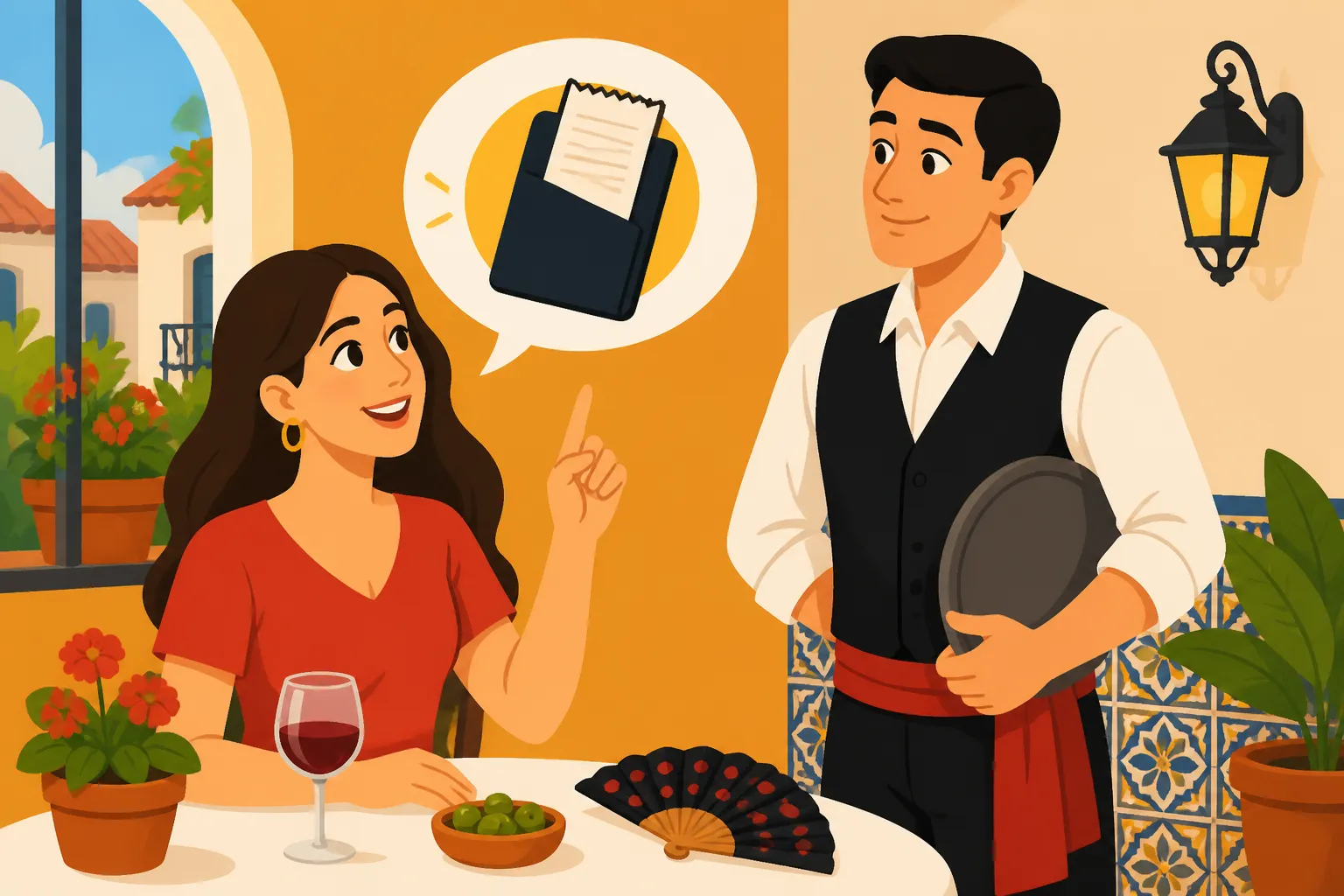
This is perhaps where much of the perceived difficulty lies. Spanish servers are often incredibly busy, darting between tables, but they also have a knack for looking busy even when they might not be making direct eye contact. It’s not intentional avoidance; it’s just the rhythm. Instead of frantically waving, try to make subtle but clear eye contact. A raised hand, with fingers joined (as if signaling "come here"), is generally understood as a polite gesture to get their attention. Another subtle approach is to slightly shift your body language, looking towards where they might pass, signaling your readiness without being overly aggressive.
If you're in a large, busy establishment, it might take a couple of attempts. Patience is your friend here. If a server makes eye contact and nods, they’ve registered your request and will come over when they can. You'll find similar gestures work when you're trying to communicate in other settings, like asking for an English-speaking doctor appointment in Spanish.
Payment Methods: Cash, Card, and Bizum
Once the bill arrives, it's time to pay. Spain is generally very card-friendly, but having some cash on hand, especially for smaller bills (under €20-30) or in more traditional, rural establishments, is always a good idea.
- Tarjeta (Card): Most places accept credit and debit cards. The server will usually bring a portable card machine to your table, or you might be directed to the bar or a counter to pay. Contactless payment (tapping your card or phone) is widely available.
- Efectivo (Cash): Always accepted. If you're paying with cash, just place the money (or the bill) in the tray or folder the server brings. They will then take it to the till and bring back your change.
- Bizum: This is a mobile payment system incredibly popular in Spain, allowing instant transfers between Spanish bank accounts using just a phone number. If you have a Spanish bank account, you’ll likely use Bizum frequently for splitting bills with friends or paying small amounts. However, it's less commonly used for paying the restaurant itself unless it's a very small, tech-savvy establishment. Always ask first if they accept Bizum for direct payment to the business.
When paying, especially with cash, be mindful of tipping. Tipping in Spain is not as mandatory or as high as in some other countries. A few euros for good service is appreciated, but a percentage tip is not generally expected unless it's a very upscale restaurant or exceptional service.
What to Do If There's a Delay (or a Mistake)
Sometimes, despite your best efforts, the bill might take a while to arrive, or there might be an error.
- Persistent Delays: If you've asked once, waited a reasonable amount of time (5-10 minutes in a busy place), and still no bill, it's perfectly acceptable to politely ask again. A simple, "Disculpe, la cuenta, por favor" (Excuse me, the bill, please) with a friendly smile should do the trick. Avoid showing frustration; remain calm and polite.
- Mistakes on the Bill: It happens! Don't be shy about pointing out an error. Gently say, "Disculpe, creo que hay un error en la cuenta. Nosotros pedimos…" (Excuse me, I think there's a mistake on the bill. We ordered…). Point to the item or amount you're questioning. They are usually very understanding and will correct it without issue. If there's a language barrier, pointing and using simple numbers or gestures can help clarify. This is a common situation you might face, much like how you might need to dispute a card charge in Spain for other services.
- Feeling Uncomfortable: If you genuinely feel ignored or the service is exceptionally slow, try to discreetly flag down another server if possible. In very rare cases, if all else fails and you've waited an unreasonable amount of time, going up to the bar or a main counter to ask for the bill can be an option, but it's generally best to avoid this unless absolutely necessary, as it can disrupt the flow for the staff.
Remember, the goal is to have a pleasant dining experience from start to finish. By understanding the local customs and having a few key phrases in your pocket, you'll navigate asking for the bill like a seasoned local in no time. And don't forget, whether you're planning your next meal or your next adventure, services like Omio can help you find transport, while GetYourGuide offers tours and experiences, and Booking.com is great for finding accommodation across Spain!
Disclaimer
The information provided in this guide is for general informational purposes only and does not constitute professional advice. While we strive to keep the content accurate and up-to-date, cultural norms and specific restaurant policies can vary. Always exercise politeness and discretion when interacting with service staff.