Staying Safe in Spain: Common-Sense Tips for Travelers
One minute you are admiring the intricate carvings of a cathedral in Seville, and the next, your heart sinks as you realize your backpack feels suspiciously light. I remember my first month in Madrid, standing in the middle of a crowded plaza, realizing my wallet had vanished while I was distracted by a street performer. This guide solves the anxiety of being a target, offering a deep dive into the common-sense tactics and local knowledge you need to navigate Spain with total confidence.
Disclosure: This post may contain affiliate links. We may earn a commission at no extra cost to you if you make a purchase through these links. Read full disclosure.
Understanding the Reality of Safety in Spain
Before we dive into the nitty-gritty of street-smarts, it is essential to ground ourselves in reality. Spain is, by and large, one of the safest countries in the world for travelers. Violent crime is remarkably rare, and you are far more likely to be killed by a stray sunstroke than a mugging. However, the sheer volume of tourists in hubs like Barcelona and Madrid creates a fertile hunting ground for opportunistic petty thieves. Newcomers commonly report that the frustration usually stems from the "low stakes" nature of these crimes—the police often cannot do much about a stolen phone, which leaves you feeling vulnerable and unheard.
Petty Theft vs Violent Crime
When we talk about Staying Safe in Spain: Practical Safety Tips for New Residents, we are primarily discussing the prevention of non-violent theft. Pickpocketing is an art form in Spain, refined to a level of professional coordination that would be impressive if it weren't so infuriating. These groups don’t want a confrontation; they want your iPhone 15 and your credit cards without you ever knowing they were there. Violent crime, such as armed robbery or assault, is statistically very low. You can generally walk through most city centers at 3:00 AM without fear for your physical safety, provided you aren't visibly intoxicated or wandering into known "trouble" pockets that locals avoid.
The Psychology of the Tourist Bubble
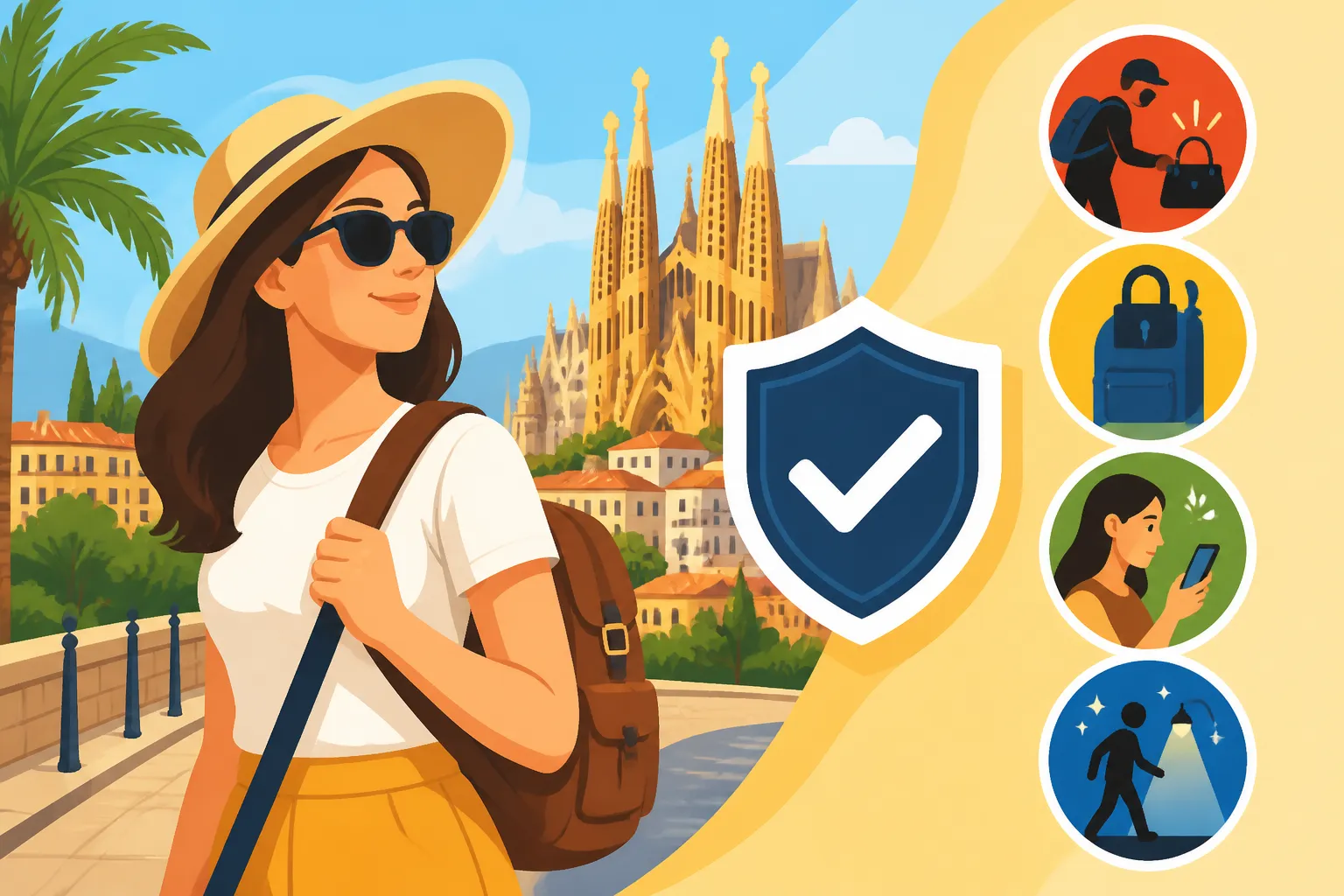
The "Tourist Bubble" is a psychological state where travelers, dazzled by the beauty of their surroundings, lower their guard. Criminals look for the "starry-eyed" look—the person with their mouth open, looking up at the Sagrada Família, while their purse hangs loosely behind them. This situation comes up often. To stay safe, you have to burst that bubble. It doesn’t mean being paranoid; it means being present. When you are booking your transfers via Omio, do it while sitting with your back to a wall, not while standing in the middle of a chaotic train station platform where your attention is divided.
Mastering Urban Safety in Major Cities
Barcelona, Madrid, and Seville are the crown jewels of Spanish tourism, but they are also the primary theaters for petty crime. Each city has its own flavor of risk. In Barcelona, the Gothic Quarter’s narrow alleys provide perfect escape routes for "snatch-and-run" thieves. In Madrid, the Puerta del Sol is a hotspot for distraction techniques. Understanding the local geography of risk is your first line of defense.
Avoiding Pickpockets in Barcelona and Madrid
Barcelona’s Las Ramblas is world-famous, but for those of us living here, it is a place where you keep your hand on your pocket at all times. The thieves often work in teams of three or four. One person might "accidentally" spill a drink on you, while the second offers to help clean it up, and the third lifts your wallet. If anyone approaches you with an unexpected "problem" or a sudden request for directions that seems overly intrusive, step away immediately.
I always recommend that travelers check Avoiding Pickpockets in Spain's Tourist Areas to understand the specific "zones" of each city. For example, in Madrid, the Metro Line 8 (connecting to the airport) and Line 1 (the central artery) are the main workspaces for these professional crews. When you are using Booking.com to find your accommodation, look specifically at reviews that mention "safe neighborhood" or "secure building access." A hotel might look beautiful, but if it’s located in a dark corner of El Raval in Barcelona, you might find your evening walks more stressful than relaxing.
Safety on Public Transport and Transit Hubs
Transit hubs are naturally chaotic, and chaos is the thief's best friend. Whether you are at Atocha in Madrid or Sants in Barcelona, the moment of transition—getting off a train, looking for your platform, or trying to understand a ticket machine—is when you are most vulnerable. If you have booked your tickets through Omio, keep your phone tucked away until you actually need to scan the QR code.
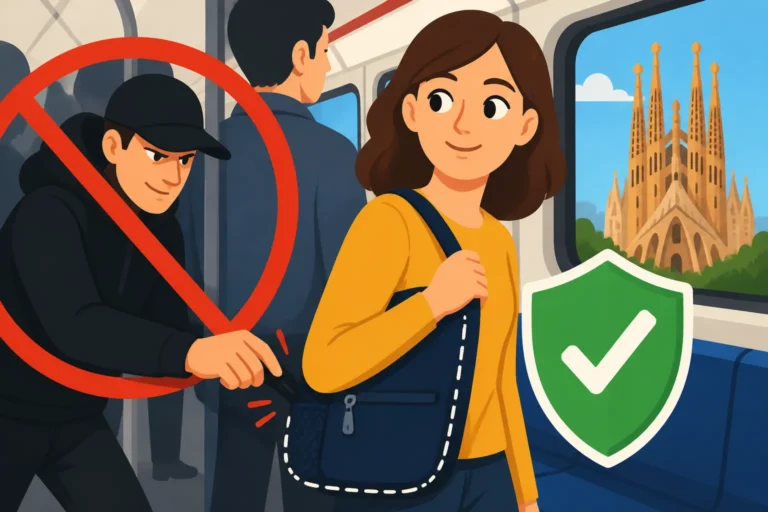
I’ve witnessed the "sandwich" move multiple times on the Metro: one person stops abruptly at the top of an escalator or in a doorway, causing a pile-up behind them. In the resulting confusion and physical bumping, accomplices behind you reach into your pockets. Always wear your backpack on your front in the Metro, and if you have a purse, keep the strap across your body with the zipper facing your skin. It sounds extreme, but it becomes second nature after a week of living like a local.
Navigating Nightlife and Social Situations Safely
Spanish nightlife is legendary. The cities don't truly wake up until midnight, and the "marcha" (the party) can last until dawn. While the atmosphere is generally festive and inclusive, the combination of alcohol, late hours, and unfamiliar surroundings can lead to complications. The late-night culture is a real draw for many expats, but it can also leave people dealing with the messy aftermath of a night gone wrong.
Solo Travel and Nighttime Etiquette
For solo travelers, especially women, Spain is generally very welcoming. However, Spanish Etiquette for Expats: Greetings, Invitations, and Daily Life still plays a role in how you are perceived. In the early hours of the morning, try to stay in well-lit areas with high foot traffic. If you are heading back to your hotel after 2:00 AM, it is often worth the 10 euros for a licensed taxi or a ride-share app like Cabify rather than walking alone through unfamiliar residential streets.
One thing that surprises many newcomers is the "empty street" phenomenon during siesta or very late at night. A street that was bustling at 7:00 PM can feel eerily deserted at 4:00 PM in the summer or 4:00 AM in the winter. If you find yourself on a street that makes your "Spidey-sense" tingle, don’t hesitate to walk into the nearest open bar or pharmacy (farmacia de guardia) to wait for a taxi.
Drink Spiking and Bar Safety
While not an everyday occurrence, drink spiking does happen in high-traffic tourist bars and clubs. Never leave your drink unattended, and if a stranger offers to buy you a drink, ensure you see it being poured by the bartender and handed directly to you. If you start to feel unusually intoxicated or dizzy after only one or two drinks, immediately tell the bar staff or a friend. If you are traveling alone, this is a great time to lean on the community; many expats use Mental Health Support in Spain: How to Find Help as an Expat resources to find trusted social groups where they can go out in numbers.
Scams and Deceptions Targeting Travelers
Spanish scams are rarely high-tech; they rely on psychological pressure and the "kindness of strangers." Being aware of these setups is enough to dismantle them. If you know what is coming, you can simply say a firm "No, gracias" and keep walking.
The Infamous Bird Dropping and Friendship Bracelet Scams
The "Bird Dropping" scam is a classic. An elderly person or a seemingly helpful local will tap you on the shoulder and point out a white substance (usually mustard or liquid soap) on your jacket, claiming a bird has pooped on you. They will then offer to help you wipe it off. As you focus on the mess, their partner is busy cleaning out your pockets.
Then there are the "Friendship Bracelet" or "Rosemary" sellers, particularly common in Seville and Granada. A woman might try to thrust a sprig of rosemary into your hand or start tying a string around your wrist, claiming it is for luck or a "gift." The moment you accept it, they will demand payment aggressively. If you refuse, they may cause a scene to embarrass you into paying. The best response is to keep your hands in your pockets or close to your body and maintain a steady pace. If you are taking a tour booked via GetYourGuide, your local guide will often warn you about these spots, which is one of the many benefits of having a professional lead the way.
Digital and ATM Security
In our digital age, safety isn't just about physical bags. When using ATMs, always look for those located inside a bank branch rather than those on the street. Street-side ATMs are more susceptible to "skimming" devices that record your card info. Additionally, be wary of "helpful" locals who offer to assist you with the machine if your card seems stuck—this is almost always a ploy to see your PIN.
| Risk Category | Common Location | Prevention Strategy |
|---|---|---|
| Pickpocketing | Metro, Plazas, Markets | Wear bag on front, no phones in back pockets |
| Distraction Scams | Tourist Landmarks | Ignore unsolicited "help" or "gifts" |
| ATM Skimming | High-street ATMs | Use machines inside bank lobbies |
| Overcharging | Unlicensed Taxis | Only use official white taxis or apps |
| Bag Snatching | Outdoor Terraces | Loop bag strap around your leg or chair |
Physical Environment and Health Safety
Sometimes the biggest threat to your safety isn't a person, but the Spanish environment itself. The climate and geography of the Iberian Peninsula can be punishing if you aren't prepared.
Coping with the Spanish Heat and Sun
If you are visiting between June and September, the heat is a genuine safety concern. In cities like Seville or Córdoba, temperatures regularly exceed 40°C (104°F). Many tourists have fainted on the pavement because they tried to do a walking tour at 2:00 PM. Follow the local lead: stay indoors during the peak heat.
Heatwaves in Spain: Health Precautions for Expats are not just for those living here; they are vital for anyone on vacation. Drink twice as much water as you think you need, and don't rely on sangria for hydration—alcohol will only accelerate dehydration. If you begin to feel a throbbing headache or nausea, seek shade and a cool drink immediately. If the situation worsens, you need to know How to Call 112 in Spain: What to Say and What Happens Next to get medical assistance quickly.
Beach Safety and Water Precautions
Spain’s coastlines are beautiful, but the Mediterranean and the Atlantic have very different temperaments. On the Atlantic coast (Galicia, Asturias, Basque Country), the currents are incredibly strong. Always swim at beaches with a green flag. A yellow flag means "caution" (usually due to jellyfish or moderate waves), and a red flag means "do not enter the water." Even if the water looks calm, the undercurrents can be deadly.
Additionally, keep a close eye on your belongings at the beach. "Beach rats" are thieves who wait for a group to all go into the water together, leaving their bags on the sand. If you are solo, consider a waterproof pouch for your phone and keys so you can take them into the water with you, or ask a neighboring family to keep an eye on your towel. It’s a common request in Spain, and most locals are happy to help a fellow "playista."
Practical Resources and Emergency Steps
Despite all your best efforts, things can still go sideways. Knowing exactly what to do in the first hour after a theft or injury can prevent a bad situation from becoming a disaster.
What to Do If You Lose Your Passport or Wallet
If your passport is stolen, your first stop is the local police station (Comisaría) to file a "denuncia" (police report). You will need this document for your insurance claim and to get an emergency travel document from your embassy. If your wallet is gone, use a banking app to freeze your cards immediately. I recommend having a "digital backup" of all your important documents stored in a secure cloud drive.
What to Do If You Lose Your Passport in Spain is a nightmare scenario, but it is manageable. Most major cities have a specific "SATE" office (Foreign Tourist Assistance Service) where they have translators to help you file your report in English. This is much faster and less stressful than going to a regular neighborhood police station where the officers may not speak English.
Accessing Emergency Services in English
In any true emergency—whether medical, fire, or criminal—the number to dial is 112. This is the pan-European emergency number, and in Spain, they have operators who speak English, French, and German. If you are dealing with a non-life-threatening health issue, such as a sprained ankle or a bad case of food poisoning, you can look for the nearest "Urgencias" at a public hospital or a private clinic if you have travel insurance.
Knowing Emergency Healthcare in Spain: 112, Urgent Care, and What to Expect can save you hours of wandering around. If you are using a private insurance plan, check their app or website first—many have partnerships with specific hospitals like Quirónsalud, where you are more likely to find English-speaking staff. For minor issues, How to Handle Minor Injuries in Spain: First Steps and Where to Go provides a great overview of how the local "Centro de Salud" system works.
Staying Vigilant Without Losing the Joy
Safety in Spain is about a balance of awareness and relaxation. If you spend your whole trip clutching your bag and scowling at everyone who says "Hola," you will miss the very magic that makes this country so special. The goal of these tips is to move these precautions into your subconscious. Once you know how to spot a scam and where to keep your wallet, you can stop worrying and start enjoying the sunset over the Alhambra or the taste of a perfectly chilled glass of Albariño.
Remember that Staying Healthy in Spain: Preventive Care, Vaccines, and Wellness also includes your mental well-being. Travel is stressful, and being on high alert can lead to burnout. Take breaks, stay in reputable places you found on Booking.com, and trust your intuition. If a situation feels wrong, it probably is. Spain is a country of "mañana"—there is always another train, another tapas bar, and another opportunity to enjoy yourself safely.
Disclaimer
The information provided in this guide is for general informational purposes only and does not constitute legal, medical, or professional safety advice. While we strive to keep the information up to date and correct, travel conditions and safety risks can change rapidly. Always consult official government travel advisories and local authorities for the most current information regarding safety in Spain.