Spanish Souvenirs Worth Buying (and What to Skip)
Finding yourself standing in a crowded plaza in Madrid or Barcelona, surrounded by shops selling neon-colored flamenco aprons and plastic bullfighting figurines, is a quintessential part of the newcomer's journey. I remember my first month in Spain, excitedly buying a "traditional" fan for five euros, only to have the wood snap the moment I actually tried to use it in the July heat. This guide solves the dilemma of the "tourist trap" by identifying authentic, high-quality Spanish treasures that are actually worth the suitcase space and your hard-earned money.
Disclosure: This post may contain affiliate links. We may earn a commission at no extra cost to you if you make a purchase through these links. Read full disclosure.
The Edible Gold: Gourmet Souvenirs to Pack
Spain is a culinary powerhouse, but what you see on the supermarket shelves isn't always what you should be bringing home. When I think of the most appreciated gifts I’ve sent back to family, it’s always the items that represent the terroir of the different regions. Understanding the nuance of these products is the difference between a generic gift and a piece of Spanish heritage.
Olive Oil and the "Liquid Gold" Reality
You might think you can just grab any bottle of olive oil from the local grocery store, but if you’re looking for a souvenir, you want the "Extra Virgin" (AOVE) designation from specific Protected Designations of Origin (D.O.P.). I highly recommend looking for oils from the province of Jaén or the Baena region in Córdoba. If you use Omio to book a train down to Andalusia, you’ll see the endless "sea of olives" from your window—that's where the real magic happens.
Look for specific varieties like Picual, which has a peppery, robust finish, or Arbequina, which is much fruitier and smoother. The best way to buy these is in specialty shops or directly from "almazaras" (mills). Avoid plastic bottles; high-quality oil should always be in dark glass or tin to protect it from light. If you are exploring the north, you can find incredible oils from Catalonia as well. To better understand how these ingredients fit into the local lifestyle, check out our guide on Spanish Food and Drink: A Practical Culture Guide.
Saffron and Spices: Small Packages, Big Flavor
Spanish Saffron (Azafrán) is often called "Red Gold," and for good reason. It is the most expensive spice in the world, and Spain is one of its primary producers, specifically in the Castilla-La Mancha region. When you’re at one of the Spanish Markets and Food Halls: Where to Eat and Shop, you will see small transparent boxes of these crimson threads.
The trick is to never buy ground saffron. Ground versions are often "cut" with turmeric or food coloring. Look for whole, deep-red threads with very little yellow. A tiny 1-gram container is an incredible gift because it’s light, easy to pack, and represents the soul of Regional Spanish Dishes Every Visitor Should Try. Beyond saffron, look for "Pimentón de la Vera"—a smoked paprika from Extremadura that gives Spanish chorizo its distinctive flavor. It comes in sweet (dulce), bittersweet (agridulce), and spicy (picante) varieties, usually in beautiful vintage-style tins.
Canned Seafood (Conservas) and Why They Are Luxury
In many countries, canned food is seen as a cheap fallback. In Spain, "conservas" are a delicacy. Tins of cockles (berberechos) or razor clams (navajas) sell for upwards of 30 euros in high-end boutiques in Madrid. The process of canning in Galicia is an art form, where the best of the Atlantic harvest is preserved at its peak.
If you want to bring home something truly special, look for "Ventresca de Atún" (tuna belly) or "Pulpo a la Gallega" (Galician-style octopus). These tins are sturdy, have a long shelf life, and are a staple of the Spanish Tapas Culture: How to Order and Where to Go. They are perfect for recreating a Spanish "aperitivo" back home.
Wearable Art: Fashion and Textiles
Spanish fashion isn't just about Zara and Mango. There is a deep-rooted tradition of craftsmanship that produces items that last for decades rather than seasons. These are the pieces that will actually garner compliments back home while reminding you of your time in the sun.
Espadrilles (Alpargatas): The Ultimate Summer Footwear
I cannot stress this enough: do not buy the cheap espadrilles you see in souvenir shops for 10 euros. They will fall apart in a week. Instead, seek out traditional workshops like Casa Hernanz in Madrid or various boutiques in Barcelona. These shops have been making hand-stitched "alpargatas" for over a century.
Authentic espadrilles are made with jute soles and high-quality canvas or leather. They are breathable, incredibly comfortable once broken in, and represent a craft that is still very much alive. If you're staying in a central area found through Booking.com, you’re likely within walking distance of one of these historic "alpargaterías." You can choose from the classic flat style or the more modern wedge versions that Spanish women wear to summer weddings.
Leather Goods: From Ubrique to the Streets of Madrid
Spain has a legendary reputation for leather. While many people think of Italy, Spanish leather—specifically from the town of Ubrique in Cádiz—is used by some of the world’s top luxury brands. When you are Shopping in Spain: Markets, Boutiques, and Department Stores, look for butter-soft leather gloves, handmade belts, or structured handbags.
In cities like Seville or Madrid, you can find "guarnicionerías" (saddlery shops) that sell high-quality leather bags that smell like a dream and will last a lifetime. Look for the "Made in Spain" stamp, but also check the stitching. A real Spanish leather bag won't have frayed edges or plastic-feeling linings. It’s an investment, but compared to luxury brand prices elsewhere, you are getting incredible value.
The Manila Shawl and Fans: Functional History
While a full flamenco dress is a bit much for a suitcase, a "Mantón de Manila" (Manila Shawl) is a stunning piece of wearable art. These silk shawls, heavily embroidered with floral motifs and finished with long fringes, have a fascinating history involving trade routes between the Philippines and Spain. An authentic, hand-embroidered silk shawl is an heirloom piece.
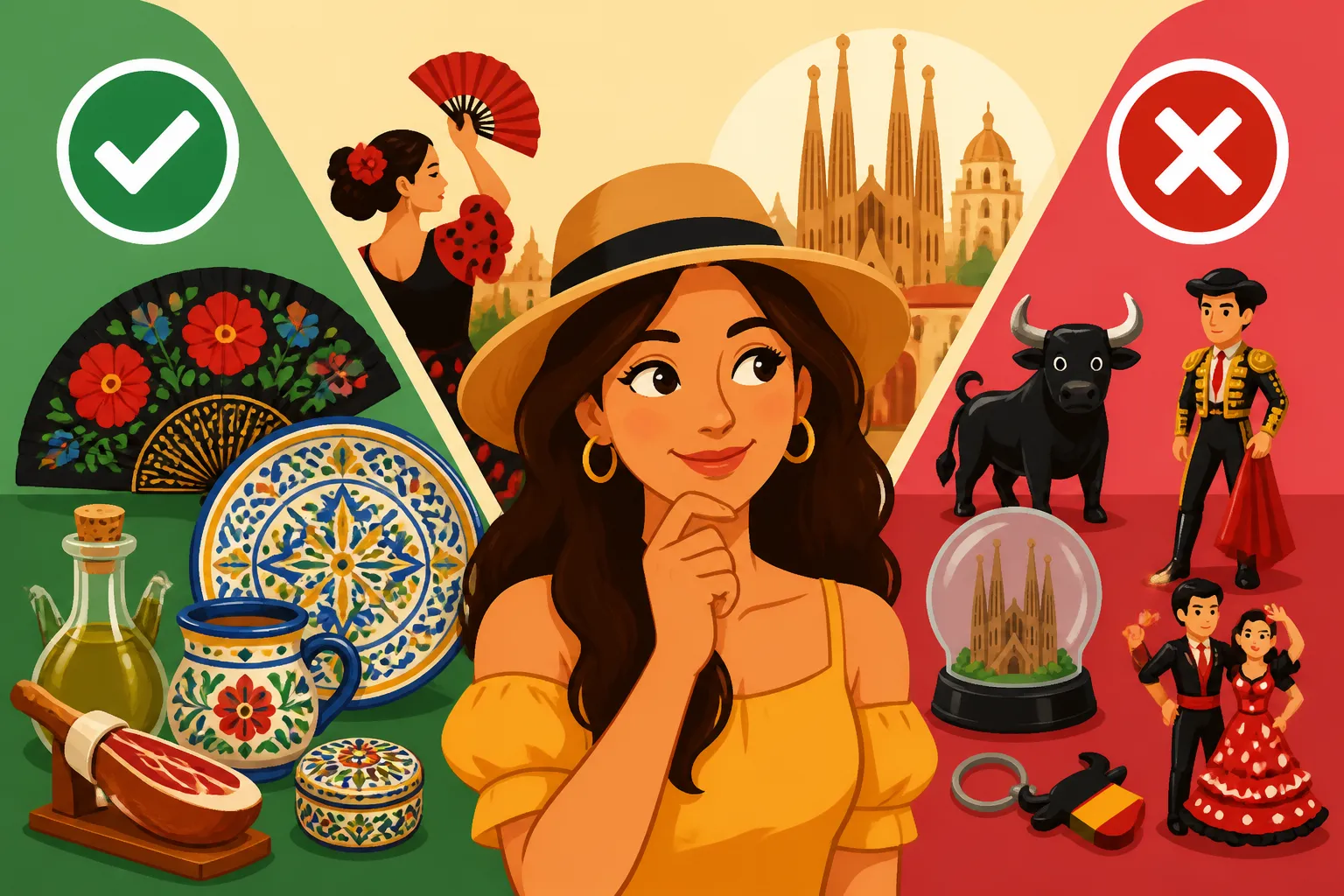
Similarly, a high-quality "Abanico" (fan) is a must. Forget the plastic ones with "Spain" printed in block letters. A real Spanish fan is made of wood (often pear or sandalwood) and fine lace or hand-painted silk. There is even a "secret language of the fan" that Spanish women used to use to communicate with suitors. To find workshops where you can see these being made, you can often book specialized craft tours through GetYourGuide.
Home and Ceramics: Bringing the Spanish Vibe Back
If you want your home to feel like a Mediterranean villa, Spanish ceramics and home goods are the way to go. Each region has a distinct aesthetic, reflecting the complex History, Art, and Architecture in Spain.
Hand-Painted Ceramics: Regional Styles Explained
Ceramics are perhaps the most popular souvenir, but they are also the most regional. It is best to wait until you find the style that matches your personal taste.
| Region | Style Description | Best Use |
|---|---|---|
| Talavera de la Reina | White background with blue and yellow patterns. Very traditional. | Decorative plates and vases. |
| Seville (Triana) | Vibrant, multicolored geometric and floral designs. | Tiles (azulejos) and bowls. |
| Granada (Fajalauza) | Distinctive blue and green bird and pomegranate motifs. | Dinnerware and serving platters. |
| Manises (Valencia) | Famous for lusterware and metallic reflections. | High-end decorative pieces. |
When buying ceramics, look for the artist's signature on the bottom. If you see a "Hand Painted in Spain" (Pintado a mano) sticker, you’re on the right track. If you’re worried about breaking them, many artisans are experts at "export wrapping," or you can find How to Find Local Artisan Products in Spain for advice on shipping larger pieces.
Spanish Glassware and Botijos
In the Balearic Islands, specifically Mallorca, glassblowing is a tradition that dates back centuries. The "Gordiola" glassworks is world-renowned. Bringing back a set of hand-blown wine glasses or a decorative oil cruet is a way to own a piece of island history.
For something more rustic, look for a "Botijo." This is a traditional porous clay water jug designed to keep water cool through evaporation. It’s a staple of rural Spanish life and makes for a fantastic conversation piece in a kitchen. It’s humble, functional, and deeply Spanish.
What to Skip: The Tourist Traps and Dust-Collectors
Expats often see many tourists buy things they inevitably regret three months later. Some items are just mass-produced junk, while others are culturally "off." Here is my "do not buy" list if you want to avoid the kitsch.
The Flamenco Doll and Bullfighting Kitsch
We’ve all seen them: the dolls with the stiff lace dresses and the posters where you can have your name printed as if you were a famous matador. While they might seem fun in the moment, they are rarely made in Spain and almost always end up in a donation bin. They don't represent the actual beauty of flamenco or the complexity of Spanish culture. Instead of a doll, buy a CD from a local flamenco artist or a book of photography from a show you attended.
Cheap Paella Pans from Souvenir Shops
If you see a "paella pan" in a shop that also sells postcards and sunglasses, walk away. These are often made of thin, low-grade metal that will warp the first time it touches heat. A real paella pan (paella) should be made of polished steel or enameled cast iron. If you’re serious about cooking, go to a "ferretería" (local hardware store) or a high-end kitchenware shop. Better yet, attend a cooking class through GetYourGuide and ask the chef where they buy their equipment.
"Spanish" Sangria in Plastic Bottles
This is a classic trap. Sangria is something Spaniards usually make at home for parties; it’s rarely bought pre-made in a bottle, and certainly not in a plastic one shaped like a bull. It tastes like sugary syrup and bears no resemblance to the fresh, wine-based drink you’ll enjoy at a chiringuito. If you want to bring back alcohol, explore the Spanish Wine Regions: A Beginner's Guide and buy a bottle of Rioja, Ribera del Duero, or a crisp Albariño.
Where to Shop for Authenticity
Finding the good stuff requires stepping off the main tourist drags (like Las Ramblas in Barcelona or Puerta del Sol in Madrid). You have to go where the locals shop or where the artisans actually work.
Local Markets vs. High Street Chains
While "El Corte Inglés" (Spain's massive department store) actually has a very good gourmet section (Club del Gourmet) for high-quality food gifts, the best experience is always at the local markets. Every neighborhood has a "Mercado de Abastos." This is where you’ll find the best cheese (try Manchego or Idiazábal), cured meats, and honey. Just remember the rules for Staying Safe in Spain: Common-Sense Tips for Travelers when navigating crowded market areas.
Museum Gift Shops: A Hidden Treasure Trove
Don't overlook the shops at the Prado, the Reina Sofía, or the Alhambra. Unlike generic souvenir shops, museum stores often commission local artisans to create exclusive items inspired by their collections. I’ve found stunning jewelry based on Velázquez paintings and high-quality silk scarves that are far superior to anything found on the street.
Small Artisan Workshops (Talleres)
In cities like Granada, Seville, and Toledo, you can still find streets dedicated to specific crafts. In Toledo, look for "Damascene" work—the art of inlaying gold or silver into steel. In Granada, look for "Taracea"—intricate wooden inlay work used to make boxes and furniture. Buying directly from a "taller" ensures your money goes to the artist and that you’re getting a genuine product. If you’re traveling between these historic cities, using Omio for bus or train travel is the most efficient way to see these diverse regional crafts.
Practical Logistics for Bringing Souvenirs Home
You’ve found the perfect olive oil, a beautiful ceramic platter, and a leather jacket. Now, how do you get it all home without a disaster at customs or a suitcase full of broken glass?
Customs, Liquids, and Fragile Items
Remember that liquids like olive oil and wine must be in your checked luggage. I always travel with a few "wine skins" (bubble-wrap bags specifically for bottles) or a roll of heavy-duty bubble wrap. For food items, especially meat and cheese, you must check the customs regulations of your home country. Many countries (like the US or Australia) have very strict rules about bringing in "jamón" or unpasteurized cheeses. Often, vacuum-sealed hard cheeses are acceptable, but always declare them.
Shipping vs. Luggage Space
If you fall in love with a large set of ceramics or a piece of furniture, don't try to carry it. Most high-end shops in Spain are very used to shipping internationally. They will handle the VAT (IVA) refund for you, which can often cover a significant portion of the shipping cost. For more on this, read Tax-Free Shopping in Spain for Non-EU Visitors.
| Souvenir Type | Portability | Durability | Value |
|---|---|---|---|
| Saffron/Spices | Excellent (Tiny) | High | High |
| Leather Goods | Good | High | Very High |
| Ceramics | Poor (Heavy/Fragile) | Low | Medium |
| Canned Seafood | Good | Very High | High |
| Espadrilles | Excellent | Medium | High |
Ultimately, the best souvenir is the one that brings back a specific memory of a plaza, a meal, or a conversation. By skipping the mass-produced plastic and seeking out the "España profunda" (deep Spain) through its crafts, you're not just buying an object; you're supporting the traditions that make this country so vibrant.
Disclaimer
This guide is intended for informational purposes for travelers visiting Spain. While we strive to provide accurate and up-to-date information regarding products and customs, regulations can change frequently. Always verify current import/export laws for your specific home country before purchasing food or animal products. We are not responsible for items confiscated by customs or damage incurred during travel.