The Camino de Santiago: A Practical Introduction
Planning a pilgrimage across Northern Spain sounds deeply romantic until you are staring at a blister the size of a grape and realize the next village is six miles away. Trust me, I’ve been there—hobbling into a tiny Galician hamlet with nothing but a soggy map and a desperate need for a café con leche. This guide solves the logistical chaos of the Camino so you can focus on the journey, not just the blisters.
Disclosure: This post may contain affiliate links. We may earn a commission at no extra cost to you if you make a purchase through these links. Read full disclosure.
Choosing Your Route: More Than Just the French Way
One of the first hurdles any prospective pilgrim faces is the sheer variety of paths available. While Hollywood movies and most guidebooks focus almost exclusively on the Camino Francés, the reality is that the "Camino" is a vast network of ancient trade and pilgrimage routes stretching across the Iberian Peninsula. Choosing the right one is less about tradition and more about matching the terrain to your physical capability and the time of year you plan to travel.
The Camino Francés (The Classic Path)
The Camino Francés is the most famous route for a reason. Starting in Saint-Jean-Pied-de-Port and crossing the Pyrenees into Spain, it offers the most robust infrastructure of any trail. Because it is so well-traveled, you are never more than a few kilometers from a water fountain, a café, or an albergue (pilgrim hostel). This makes it the safest and most socially vibrant option for solo travelers. You will meet people from every corner of the globe, and the "Camino spirit" is most palpable here.
However, the popularity of the French Way is its greatest drawback. During peak months like July and August, the "bed race" becomes a very real source of stress. Pilgrims often feel forced to wake up at 5:00 AM just to ensure they reach the next hostel before it fills up. If you value solitude and quiet contemplation, the Francés might feel more like a crowded hiking highway than a spiritual journey. To plan your arrival at the starting points, many travelers use Omio to compare train and bus schedules from major hubs like Madrid or Pamplona.
The Camino del Norte (The Coastal Beauty)
If you have a bit more experience with hiking and don't mind a challenge, the Camino del Norte is spectacular. It follows the northern coastline through the Basque Country, Cantabria, and Asturias before turning inland toward Galicia. The scenery is unbeatable—you’ll have the Cantabrian Sea on your right and emerald-green mountains on your left. It is significantly cooler than the French Way, which is a massive relief during the scorching Spanish summers.
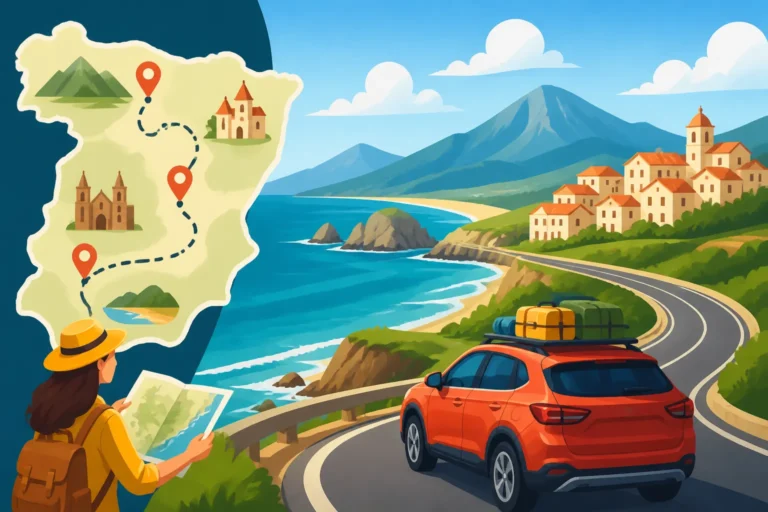
The trade-off is the terrain. The Norte is notoriously "leg-breaking" because of its constant elevation changes. You are frequently climbing up from sea-level coves only to descend again a mile later. Furthermore, because it is less populated by pilgrims, the distance between services can be much greater. You need to be more diligent about carrying extra snacks and water. It’s also worth checking How to Plan a Road Trip Through Northern Spain if you decide to explore the region further after your walk, as the coastal towns are gems often missed by those stuck on the inland paths.
The Portuguese Way (The Emerging Favorite)
The Camino Portugués has seen a massive surge in popularity recently, particularly the "Coastal Route" starting from Porto. It is generally flatter than the French or Northern routes, making it an excellent choice for those who might be worried about their knees or overall fitness. Walking through the vineyards of northern Portugal and the Rías Baixas of Galicia provides a unique cultural experience, blending two distinct versions of Atlantic lifestyle.
What makes the Portuguese route so appealing is the flexibility. You can choose the inland "Central" route for more historic architecture and woods, or the "Coastal" route for sea breezes. Crossing the international bridge from Valença to Tui on foot is a milestone most pilgrims never forget. If you’re coming from afar, you can easily find accommodation in Porto or Tui using Booking.com to ensure a soft bed before you begin the more rustic albergue lifestyle.
Essential Gear and Packing: The Less is More Philosophy
The biggest mistake I see newcomers make—and one I certainly made on my first attempt—is overpacking. In Spain, there is a saying: "The Camino provides." This doesn't just mean spiritual intervention; it means there is a pharmacy (farmacia) in almost every town and a supermarket (supermercado) every few hours. Carrying a 15kg pack is a recipe for tendinitis and an early trip home. Your goal should be to keep your pack weight under 10% of your body weight.
Footwear: Your Most Important Decision
Your shoes will be your best friends or your worst enemies. There is a long-standing debate between traditional heavy-duty hiking boots and modern trail running shoes. In my experience, unless you are walking in the dead of winter or tackling the most rugged parts of the Primitive Way, trail runners are superior. They are lighter, more breathable, and dry much faster when you inevitably hit a Galician rainstorm.
Regardless of the style you choose, buy them at least two months in advance and "break them in" thoroughly. Your feet will swell significantly after 20km of walking in the heat, so many veterans suggest buying shoes one size larger than your usual fit. Do not forget to pair them with high-quality merino wool socks. The "liner sock" trick—wearing a thin silk sock under a wool one—is a lifesaver for preventing friction. If you do run into trouble, check Pharmacies in Spain: Prescriptions, Over‑the‑Counter Meds, and Practical Tips to know exactly what to ask for to treat blisters.
The 10% Rule for Your Backpack
When you are choosing a backpack, look for something in the 30L to 40L range. Anything larger will tempt you to fill it with "just in case" items that you will never use. Focus on multi-purpose clothing. You only need three of everything: one set to wear, one set to wash, and one set to dry. This cycle repeats daily. Synthetic, moisture-wicking fabrics are non-negotiable; denim and heavy cotton will stay damp for days in the humid Galician air.
A common oversight is the "sleep system." Even if you plan on staying in hostels, you need a lightweight sleeping bag or a silk liner. Most albergues provide a mattress and a disposable cover, but not blankets. A travel towel (microfiber) is another essential, as albergues do not provide towels. If the thought of carrying everything yourself is daunting, there are "mochila" transport services that will move your bag from one hostel to the next for about €5-€7 per day. This allows you to walk with just a small daypack containing water and a first-aid kit.
Clothing for the Spanish Microclimates
Spain’s weather is incredibly diverse. On the Meseta (the high central plateau), you might face 35°C (95°F) heat with zero shade. Two days later, as you climb toward O Cebreiro, you could be shrouded in mist and freezing rain. Layering is the only way to survive comfortably. A lightweight, high-quality rain poncho that covers both you and your backpack is much more effective than a traditional rain jacket on the Camino.
| Item Category | Essential Selection | Why It Matters |
|---|---|---|
| Footwear | Trail Runners or Lightweight Boots | Prevents fatigue and allows feet to breathe. |
| Socks | Merino Wool (2-3 pairs) | Wicks moisture; stays warm even when wet. |
| Backpack | 30L-40L with Hip Belt | Transfers weight from shoulders to hips. |
| Outerwear | Breathable Rain Poncho | Keeps you and your gear dry in Galician rain. |
| Essentials | Earplugs and Eye Mask | Crucial for sleeping in 20-person dormitories. |
| Electronics | Universal Power Strip | Plugs are scarce in old albergue buildings. |
Accommodation and Logistics: Where to Sleep and How to Move
Navigating the accommodation system in Spain is a culture shock for many. The network of albergues is unique to the Camino. These range from "Municipal" (run by the local town hall) to "Parochial" (run by the church) and "Private" (run as a business). Each offers a different vibe and price point, and understanding the "rules of the road" is vital to avoiding a cold night on a stone bench.
Albergues vs. Pensions: Finding Your Comfort Level
Municipal albergues are the cheapest, usually costing between €7 and €12 per night. They operate on a first-come, first-served basis and generally cannot be booked in advance. These are the heart of the Camino experience but be warned: they often involve large dormitories with dozens of bunk beds and shared bathrooms. If you are a light sleeper, the symphony of snoring and rustling plastic bags at 4:00 AM can be soul-crushing.
Private albergues and "pensiones" (guest houses) offer a bit more luxury, often for €15 to €30. Many of these can be booked ahead through Booking.com or via WhatsApp. This is a great strategy for your first few nights or for those particularly long stages where you know you’ll arrive late and exhausted. If you prefer a more curated experience, you can find guided walks or specialized luggage services through GetYourGuide to take the edge off the planning. For more on the general housing landscape, see Renting in Spain: Contracts, Deposits, and Tenant Rights if you’re considering staying in a city longer after your trek.
The Credencial and the Compostela
You cannot stay in pilgrim-only accommodation without a "Credencial" or Pilgrim’s Passport. You can pick these up at the start of your journey (at the pilgrim office or local cathedral) for a few euros. As you walk, you collect stamps (sellos) from hostels, churches, bars, and even some town halls. These stamps are not just souvenirs; they are proof that you have walked the distance.
To receive the "Compostela"—the official certificate of completion in Santiago de Compostela—you must prove you have walked at least the last 100km (or cycled 200km). For the French Way, this usually means starting in the town of Sarria. Be aware that the Sarria to Santiago stretch is incredibly crowded because it’s the minimum requirement. If you want a more authentic experience, try to start further back. Understanding Spanish Bureaucracy for Daily Life: Padrón, IDs, and Local Services might give you a chuckle about how much the Spanish love their official stamps and paperwork.
Luggage Transfer and Transport
As mentioned, you don't have to carry your world on your back. Companies like Correos (the Spanish postal service) and various private local operators offer "Paq Mochila" services. You simply leave your bag at the reception of your hostel by 8:00 AM, and it waiting for you at your destination by 2:00 PM. This is a game-changer for older pilgrims or those with back issues.
When it comes to getting to your starting point or returning from Santiago, Spain’s transport network is excellent but can be confusing. The AVE high-speed train is the "gold standard" for comfort. You can check High-Speed Trains in Spain (AVE): Routes, Booking, and Savings for tips on how to snag the cheapest tickets. For cross-regional travel, Omio is often the easiest way to see if a bus (Alsa) or a train (Renfe) is the faster and cheaper option for your specific route.
Culture, Food, and Etiquette on the Trail
The Camino is as much a culinary journey as it is a physical one. Each region—Navarra, La Rioja, Castilla y León, and Galicia—has its own distinct flavors. However, the rhythm of Spanish life, with its late meals and afternoon closures, can be frustrating for a hungry hiker who has been burning 3,000 calories a day.
The Pilgrim's Menu and Gastronomy
Almost every restaurant along the route offers a "Menú del Peregrino" (Pilgrim’s Menu). For €12 to €15, you typically get a three-course meal: a first course (pasta, salad, or soup), a second course (meat or fish with fries), and a dessert (fruit, yogurt, or the famous Tarta de Santiago), plus bread and a generous amount of wine or water. It is the most cost-effective way to refuel, but the quality can vary wildly.
In Galicia, you must try the "Pulpo a la Gallega" (octopus with paprika and potatoes) and the "Pimientos de Padrón" (small green peppers, most of which are sweet, but some are surprisingly spicy). For a deeper dive into what to expect at the table, check out Spanish Food and Drink: A Practical Culture Guide. Remember that in Spain, "lunch" is the main meal and usually happens between 2:00 PM and 4:00 PM. Many kitchens close after that and don't reopen for dinner until 8:30 PM or 9:00 PM, which can be a struggle if you’re used to eating at 6:00 PM.
Language and the Buen Camino Spirit
While you can survive the Camino with only English, knowing a few phrases in Spanish will open doors—literally and figuratively. The universal greeting is "¡Buen Camino!" You say it to everyone you pass, and everyone says it back. It’s a small verbal acknowledgment of the shared struggle and joy of the road.
When you enter a bar or albergue, a simple "Hola, ¿tienes una cama?" (Hi, do you have a bed?) or "Una caña, por favor" (A small beer, please) goes a long way. If you find yourself struggling with communication, our guide on Spanish Language and Everyday Communication for Visitors is a great primer. Don't worry about being perfect; the locals along the route are incredibly patient and have heard every possible variation of "broken Spanish" over the centuries.
Navigating the Siesta and Local Customs
The "siesta" is not just a myth; it is a fundamental part of Spanish life, especially in smaller villages. Between 2:00 PM and 5:00 PM, most shops (including grocery stores) will close. This is exactly when many pilgrims arrive at their destination for the day. It can be incredibly frustrating to find yourself in a tiny village with a growling stomach and a locked supermarket door.
Plan your snacks ahead of time. Always have a "reserve" of nuts, fruit, or a tortilla española sandwich in your pack. Also, be mindful of the silence in villages. These are living communities, not theme parks. Keeping your voice down when walking through a village at 6:00 AM is a basic courtesy that locals deeply appreciate. For more on the social nuances, Spanish Customs, Etiquette, and Social Life offers excellent advice for not sticking out like a sore thumb.
Physical and Mental Preparation
Walking for 20 to 30 kilometers a day, day after day, is a feat of endurance that most of our modern lives don't prepare us for. It isn't just about your muscles; it's about your joints, your skin, and your mental fortitude. The "honeymoon phase" of the Camino usually ends around day four, when the initial excitement wears off and the reality of the physical toll sets in.
Training for the Terrain
You don't need to be an Olympic athlete, but you do need to walk. Start training at least three months before your trip. The key is consistency, not intensity. Start with 5km walks on flat ground and gradually increase the distance and the incline. Most importantly, do your final month of training while wearing your full backpack and the shoes you plan to use on the trail.
This "weighted training" helps your body adjust to the different center of gravity and toughens the skin on your feet. If you live in a flat area, find stairs—lots of them. The descents on the Camino can be harder on your knees than the climbs, so learning how to use trekking poles effectively can save you from a lot of pain. If you do get injured, knowing How to Find an English‑Speaking Doctor in Spain (Practical Guide) can provide peace of mind before you even leave home.
Dealing with the Wall and Solo Travel
There will be a day—likely somewhere in the flat, monotonous plains of the Meseta—where you will ask yourself why you are doing this. The mental "wall" is a standard part of the experience. The Camino is a rare opportunity for "slow travel," where your only responsibility is to put one foot in front of the other. Embracing the boredom and the silence is part of the "practical" mental preparation.
If you are traveling solo, you might worry about safety or loneliness. Spain is one of the safest countries in the world for solo travelers, and the Camino community is incredibly protective of its own. You are never truly alone unless you want to be. You will find that "Camino families" form organically—groups of strangers who end up walking together for days or weeks. For tips on managing the emotional ups and downs, Stress and Culture Shock: Self‑Care Tips for New Expats in Spain has some surprisingly relevant advice for long-term travelers too.
Travel Logistics from Santiago
Once you reach the Cathedral in Santiago, the journey doesn't necessarily end. Many pilgrims continue for another three days to Muxía or Finisterre—the "End of the World"—to burn their walking clothes or watch the sunset over the Atlantic. It’s a beautiful way to decompress before heading back to "real life."
When it’s finally time to go home, Santiago de Compostela has a well-connected airport (SCQ) with flights to major European hubs. Alternatively, you can take a high-speed train back to Madrid or Barcelona. Booking these through Omio or the Renfe app is usually the most efficient method. If you decide to spend a few days treating yourself to a "real" hotel after weeks of bunk beds, check Booking.com for some of the gorgeous boutique hotels in Santiago’s old town. You’ve earned it.
Healthcare and Emergencies on the Path
While the Camino is safe, minor injuries are common. Beyond blisters, heatstroke and dehydration are the most frequent issues, especially during the summer months. Always carry more water than you think you need, and don't be afraid to take a "rest day" in a larger city like Burgos or León if your body is screaming for a break.
If you have a more serious issue, Spain’s public healthcare system is excellent. Most towns along the Camino have a "Centro de Salud" (Health Center). As a visitor, you should have travel insurance that covers medical emergencies. For a breakdown of what to expect if you need to visit a clinic, see Emergency Healthcare in Spain: 112, Urgent Care, and What to Expect. Carrying a small first-aid kit with Ibuprofen, antiseptic cream, and high-quality bandages is essential for everyday maintenance.
Disclaimer
The information provided in this guide is for informational purposes only. While every effort has been made to ensure accuracy, the rules regarding visas, transport schedules, and local regulations in Spain can change frequently. Always verify specific requirements with official government sources or professional advisors before making travel arrangements. The author and publisher are not responsible for any issues arising from the use of this information.