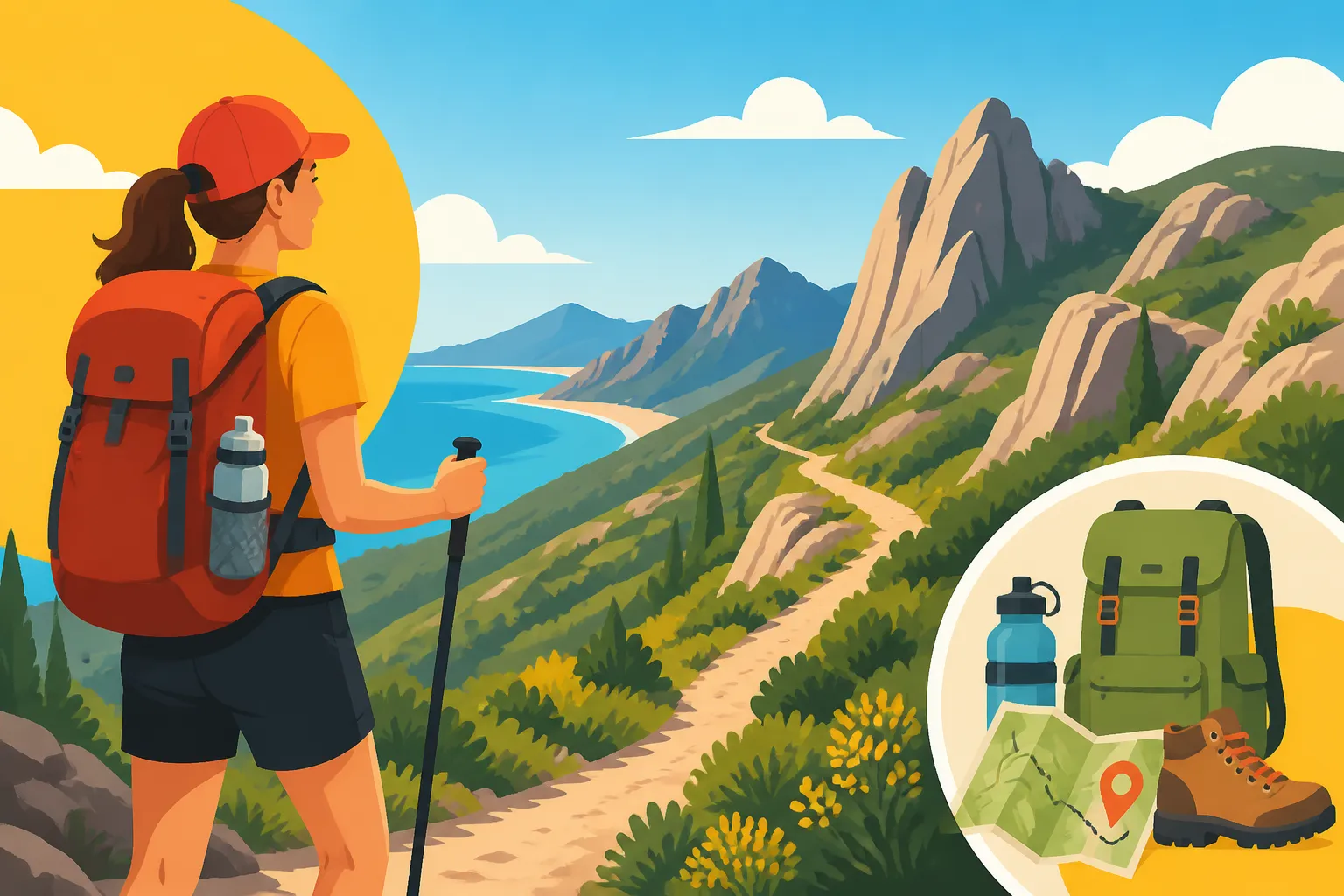
Hiking in Spain: Popular Trails and How to Prepare
Trying to tackle a major Spanish trail without understanding the local microclimates or the permit system is a recipe for a very long, very thirsty day of frustration. I’ll never forget the time I attempted a peak in the Picos de Europa with only two liters of water, assuming I’d find a fountain that had actually been dry for decades. This guide solves the logistical headaches of hiking in Spain, from choosing the right mountain range to navigating the bureaucracy of protected parks.
Disclosure: This post may contain affiliate links. We may earn a commission at no extra cost to you if you make a purchase through these links. Read full disclosure.
Understanding the Diversity of Spanish Terrain and Climate
Most newcomers arrive in Spain thinking it is a monolith of sun-drenched beaches and dusty olive groves, but the reality for a hiker is far more complex. The country is the second most mountainous in Europe, and the terrain varies wildly between the Atlantic north and the Mediterranean south. If you are coming from the UK or the US, you might be used to well-marked trails with consistent weather patterns; in Spain, you can start a hike in a humid forest and end it on a jagged limestone ridge that feels like the surface of the moon.
The Green North vs the Arid South
Northern Spain—specifically Galicia, Asturias, and Cantabria—is often referred to as "España Verde." If you are planning a trip here, you need to prepare for rain even in the height of August. The trails are lush, often muddy, and incredibly steep. In contrast, hiking in Andalusia or Murcia requires a completely different mindset. In the south, the challenge isn't the elevation gain as much as the exposure. There is very little shade, and the "siesta" hours are not just a cultural quirk; they are a survival mechanism. Attempting to hike at midday in the south during July is something many tourists have been known to do, only to end up needing medical assistance for heatstroke.
High Altitude Challenges in the Pyrenees and Sierra Nevada
The Pyrenees and the Sierra Nevada are Spain’s two great alpine playgrounds, but they demand respect. The Pyrenees offer classic alpine scenery with glacial lakes and granite peaks, but the weather can turn in minutes. Summer hailstorms in the Pyrenees can be severe enough to make a winter day in London look mild. On the other end of the country, the Sierra Nevada near Granada holds the highest peak in mainland Spain, Mulhacén. Because these mountains are so far south, hikers often underestimate the altitude. Even if it is 30 degrees Celsius in the city of Granada, it can be freezing at the summit. You must check the snow levels well into June before planning a high-altitude trek.
Seasonal Timing When to Lace Up Your Boots
Timing is everything when Staying Healthy in Spain: Preventive Care, Vaccines, and Wellness is your priority while being active. The best hiking windows for the majority of the country are spring (April to June) and autumn (September to November). During these months, the wildflowers are blooming in the meadows, and the temperatures are manageable. If you must hike in the summer, head to the Picos de Europa or the Pyrenees. If you are looking for winter hiking, the Canary Islands or the coastal trails of the Costa Blanca are your best bets. Never assume that a trail is accessible just because the sun is shining at sea level; the "winter" season in the mountains usually lasts until May.
Iconic Long Distance Routes and Pilgrimages
Spain is world-famous for its "Grandes Recorridos" or GR routes, which are long-distance paths marked with red and white blazes. These are not just paths; they are historical corridors that have been used by shepherds, traders, and pilgrims for centuries. Walking these routes gives you a sense of the scale of the country that you simply cannot get from a car or a train.
The Camino de Santiago The Legend
The most famous of all is, of course, the Camino de Santiago. While many treat it as a spiritual journey, it is also one of the best ways to experience Slow Travel in Spain: Staying Longer in One Place. The Camino isn't just one path; the "Camino Francés" is the most popular, but the "Camino del Norte" offers some of the most spectacular coastal hiking in Europe. It is often said that the hardest part of the Camino isn't the walking—it's the logistical dance of finding a bed in a crowded albergue. If you prefer a bit more comfort, you can use Booking.com to secure private guesthouses along the route, which I highly recommend if you value a good night's sleep over the communal "pilgrim experience."
GR Routes and Local Networks
Beyond the Camino, Spain is crisscrossed by thousands of kilometers of GR (long-distance), PR (short-distance), and SL (local) trails. The GR7, for example, is a monster of a trail that runs from the Peloponnese in Greece all the way to Tarifa in Spain. Walking the Andalusian section of the GR7 takes you through "pueblos blancos" where time seems to have stopped. The markings are generally good, but in more remote areas, they can disappear or be obscured by overgrowth. This is where a veteran expat’s advice comes in: never rely solely on the painted rocks. Always have a digital backup and a physical map.
Trans Pyrenean Adventure GR11
For the truly hardcore hiker, the GR11 is the ultimate Spanish challenge. It traverses the entire Pyrenees range from the Atlantic to the Mediterranean. It is a grueling, beautiful, and deeply rewarding trek that takes about 45 days to complete. Most people tackle it in sections over several years. If you are planning to do even a small part of this, you need to be proficient in mountain navigation and prepared for significant vertical gain every single day. The "refugios" (mountain huts) along this route are fantastic, but they must be booked months in advance during the peak summer season.
Essential Preparation Permits and Logistics
Spanish bureaucracy doesn't stop at the city limits; it extends right into the wilderness. One of the biggest shocks for foreign hikers is finding out that they can't actually enter a specific gorge or climb a certain peak because they didn't apply for a permit weeks in advance. Spain is very protective of its natural spaces, and "cupos" (limits) are strictly enforced.
Navigating the Permit System for National Parks
National Parks like Ordesa y Monte Perdido or the Teide National Park in Tenerife have strict entry requirements for certain zones. For example, if you want to stand on the very summit of Mount Teide, you need a specific permit from the National Parks office that often books out two months ahead. Similarly, the famous Caminito del Rey in Malaga requires a ticket that is notoriously hard to get. I usually suggest checking GetYourGuide for organized tours that include these permits, as they often have access when the general public slots are sold out. It saves you the headache of refreshing a Spanish government website at 3:00 AM.
Transport to the Trailhead
Getting to the start of a trail can be a hike in itself. While major cities are well-connected, the best hiking often starts in tiny villages with one bus a day—or none at all on Sundays. To save your sanity, I recommend using Omio to compare bus and train schedules. It’s particularly useful for seeing if a "Cercanías" (regional train) can get you close to the mountains. For more remote areas like the Alpujarras or the Cazorla Natural Park, renting a car is almost mandatory. Just be prepared for narrow, winding roads that will test your nerves as much as the hike tests your legs.
Where to Stay Refugios and Wild Camping
Accommodation in the Spanish mountains ranges from high-altitude stone huts to luxury paradores. Wild camping is a legal gray area in Spain; generally, it is prohibited, but "vivac" (bivouacking) is often allowed above certain altitudes (usually 1,500m or 2,000m) as long as you set up at sunset and pack up at sunrise. Each "Comunidad Autónoma" has its own rules, so you must check local regulations. For a more reliable experience, the network of mountain refuges provides a bunk and a hot meal. You can find many of the lower-altitude trail hotels on Booking.com, which is my go-to for ensuring I have a hot shower waiting for me after a long day on the trail.
| Hiking Region | Best Season | Difficulty Level | Top Feature |
|---|---|---|---|
| Pyrenees | July – Sept | High | Glacial lakes and high peaks |
| Picos de Europa | June – Sept | Moderate/High | Dramatic limestone spires |
| Sierra Nevada | May – Oct | High | Highest peak in mainland Spain |
| Canary Islands | Year-round | Moderate | Volcanic landscapes and pine forests |
| Costa Blanca | Oct – April | Easy/Moderate | Coastal views and limestone ridges |
| Galicia | May – Oct | Moderate | Lush forests and Celtic history |
Gear and Safety for the Spanish Wilderness
I cannot stress this enough: the Spanish sun is a different beast. Experienced hikers from the Rockies and the Alps get absolutely leveled by the combination of heat and UV intensity in Spain. Your gear list for a Spanish hike needs to prioritize sun protection and hydration above almost everything else.
Sun Protection and Hydration Strategies
A standard baseball cap isn't enough; you need a wide-brimmed hat or a "Sahara" style cap with a neck flap. Use a high-SPF sunscreen and reapply it every two hours, as the sweat will wash it off. More importantly, carry more water than you think you need. Natural springs ("fuentes") are common in the north but rare and unreliable in the south. I always carry a minimum of three liters for a day hike, often with electrolyte tablets. Understanding Heatstroke vs Dehydration: Prevention Tips for Spain Summers is vital knowledge before you head out.
Navigation Apps and Offline Maps
While many trails are marked, the markings can be inconsistent. I always use a combination of a dedicated GPS app (like Wikiloc, which is huge in Spain) and offline Google Maps. Make sure your phone is fully charged and bring a power bank. In deep limestone gorges, GPS signals can bounce, making your position appear shifted. If you get lost, look for the "hitos" (small piles of stones left by other hikers). They are often more reliable than official paint marks that may have faded. If you find yourself needing to describe your location to emergency services, having Spanish Medical Terminology: Common Words Expats Should Know can be a lifesaver.
Emergency Protocols and Local Numbers
If things go wrong, the number to call is 112. This is the universal emergency number in Spain and they can coordinate mountain rescue (GREIM). It is important to know that in some regions, if you require a rescue due to negligence (like hiking in flip-flops or ignoring weather warnings), you might be sent the bill. Before you go, let someone know your route and your expected return time. Check the AEMET (Spanish Weather Agency) website specifically for "montaña" forecasts, as the general city forecast will not account for the temperature drops and wind speeds on the ridges. Knowing How to Call 112 in Spain: What to Say and What Happens Next is a basic requirement for any serious hiker.
Top Regional Day Hikes for Every Level
If you aren't ready for a month-long trek, Spain offers incredible day hikes that can be easily integrated into a standard holiday. These routes provide a "best of" experience without the need for heavy packs or complex logistics.
Andalusia’s Caminito del Rey and Grazalema
The Caminito del Rey was once known as the world's most dangerous walkway, but after a total renovation, it is now a perfectly safe (though dizzying) boardwalk pinned to the side of a massive limestone gorge. It is an unforgettable experience, but as mentioned, tickets are a nightmare. I recommend checking GetYourGuide for guided walks that explain the history of the dam and the workers who built the path. Further west, the Sierra de Grazalema offers the Pinsapar trail, which takes you through an ancient forest of Spanish fir trees that survived the last ice age. It’s like stepping into a different world.
Madrid’s Sierra de Guadarrama The Urban Escape
Many expats living in the capital don't realize that world-class hiking is just an hour away by train. The Sierra de Guadarrama National Park offers everything from easy forest strolls in the Fuenfría Valley to the rocky labyrinth of La Pedriza. The latter is a climber's paradise with bizarrely shaped granite boulders. For a classic Madrid hike, take the "Tren de la Naturaleza" to Cotos and hike up to Peñalara, the highest point in the province. It's a great way to see how the locals spend their weekends—just be prepared for crowds on Saturdays. For travel logistics, Omio can help you find the best train times from Atocha or Chamartín.
The Volcanic Beauty of the Canary Islands
Hiking in the Canary Islands is unlike anything else in Europe. On Tenerife, the hike through the Masca Gorge takes you from a mountain village down to a secluded beach where you can catch a boat back to the cliffs of Los Gigantes. On La Palma, the Caldera de Taburiente offers a trek into one of the largest erosion craters in the world. The terrain here is volcanic—sharp, abrasive, and stunningly colorful. It's a great place to practice Sun Safety in Spain: UV Index Basics and Habits because the proximity to the equator makes the sun exceptionally strong, even when the breeze feels cool.
Hiking Etiquette and Cultural Norms
Finally, there is a certain "code" to hiking in Spain that will help you blend in and stay on the good side of the locals. Spanish hikers are generally very social. When you pass someone on the trail, it is customary to say "¡Hola!" or "¡Buenas!" In more rural areas, you might hear "¡Adiós!" used as a greeting when passing by.
Respecting the Environment and Livestock
You will frequently share the trail with cows, goats, and sheep. These are not wild animals; they belong to local farmers. Give them a wide berth, especially if they have calves or kids. If a trail passes through a gate, always leave it exactly as you found it—either open or closed. "Leave No Trace" is just as important here as anywhere else. Plastic pollution is a major issue in some popular areas, so please pack out everything you pack in.
The Post Hike Ritual The Gastronomy
The best part of hiking in Spain is undoubtedly the "recompensa" (reward). In every mountain village, there is a bar serving a Menú del Día that is designed for hungry workers and hikers. For about 12 to 15 euros, you’ll get three courses and wine. In the north, look for "Fabada" (bean stew); in the south, a "Plato Alpujarreño" (potatoes, eggs, ham, and sausage). It is the perfect end to a day on the trails. If you are staying overnight, use Booking.com to find a local "Casa Rural" where you can enjoy a home-cooked meal by a fireplace.
Health and Safety Disclaimer
This guide is intended for informational purposes only. Hiking involves inherent risks, particularly in mountainous and remote areas. Always consult official local weather forecasts, wear appropriate gear, and ensure you are in the correct physical condition for your chosen route. Regulations regarding permits and land use can change; always verify requirements with the local "Ayuntamiento" or National Park office before setting out.