Gardens, Terraces, and Outdoor Space in Spanish Homes
Finding a home in Spain often feels like a quest for the holy grail of sunlight, but many expats realize too late that a window isn't enough. I remember my first month in a windowless interior flat in Seville where I felt like a mushroom in a dark cellar. This guide breaks down everything you need to know about securing and enjoying gardens, terraces, and outdoor spaces.
Disclosure: This post may contain affiliate links. We may earn a commission at no extra cost to you if you make a purchase through these links. Read full disclosure.
The Cultural Importance of Outdoor Space in Spanish Life
In Spain, the outdoor space of a home is rarely considered an optional luxury; it is a vital extension of the living room. Because of the Mediterranean climate, life is lived outdoors for a significant portion of the year. Whether it is a tiny balcony overlooking a bustling street or a sprawling garden in the suburbs, these spaces serve as the primary location for morning coffees, late-night dinners, and the cherished Sunday afternoon siesta. When you begin Choosing a Neighborhood in Spain: How to Research Before You Move, you will notice that the price of a property often fluctuates wildly based on the quality and orientation of its outdoor area.
The concept of the exterior vs. interior flat is the first thing any newcomer must understand. An exterior flat has windows or balconies facing the street, while an interior flat faces a central light well or courtyard (patio de luces). While interior flats are quieter, they often lack the "life" that a street-facing balcony provides. Spaniards have a unique relationship with their balconies; they are stages for social interaction. It is perfectly normal to see neighbors chatting from one terrace to another or elderly residents spending hours watching the world go by from a folding chair on their tiny ledge.
Furthermore, the psychological impact of outdoor space in Spain cannot be overstated. After the strict lockdowns of recent years, the demand for terraces and gardens has skyrocketed. People have realized that having a place to breathe fresh air without leaving their property is essential for mental well-being. This shift has changed the real estate landscape, making even small balconies a high-priority feature for anyone Renting in Spain: Contracts, Deposits, and Tenant Rights. If you are moving from a country where gardens are standard, you might find the Spanish urban alternative small at first, but you will soon learn that a well-utilized five-square-meter terrace can provide more joy than a neglected acre of lawn.
Why the Balcony is More Than Just a Ledge
The Spanish balcón is a cultural icon. In cities like Madrid, Barcelona, or Valencia, these spaces are often narrow—sometimes just wide enough for a couple of flower pots and a person standing—but they are the lungs of the home. During local festivals, balconies are draped with flags or flowers, and during daily life, they are where laundry is hung to dry in the fierce sun. Understanding how to use this space is key to integrating into the local lifestyle.
For an expat, the balcony is often the first place you’ll experience the sensory overload of Spain. You will hear the distant clinking of glasses from a nearby tapas bar, the smell of fried calamari, and the rhythmic sound of Spanish conversation. It is a front-row seat to the local culture. However, it also requires a certain level of etiquette. You must be mindful of how you decorate and use your balcony, as it is a highly visible part of the building’s facade.
Managing a balcony also involves practical considerations. Because space is at a premium, many residents use vertical gardening techniques or compact, foldable furniture. When searching for a place, especially if using a platform like Spotahome to view verified properties remotely, pay close attention to the balcony's depth. A balcón corrido (a long, narrow balcony connecting multiple rooms) offers different possibilities than a small Juliet balcony which only allows you to open the doors for air.
The Concept of the Ático and the Solarium
If you want the pinnacle of Spanish outdoor living, you look for an ático. This is the penthouse level, and it almost always comes with a large, private terrace. In Spanish culture, the ático is the most prestigious type of apartment because it offers the rare combination of privacy, views, and significant outdoor square footage. These terraces are often large enough to host full dinner parties, set up an outdoor gym, or even install a small inflatable pool (though you must check the building's weight limits first).
A solarium, on the other hand, is typically a flat rooftop area designated for sunbathing. In many modern developments or coastal villas, the solarium is a dedicated space on the top of the house. It is designed to catch the maximum amount of sun throughout the year. For those who work from home, a solarium can be a dream office, provided you have a good umbrella and a reliable data connection. I’ve often used an Airalo eSIM to ensure I have backup data while working on a rooftop where the home Wi-Fi signal might struggle to penetrate the thick concrete walls typical of Spanish construction.
Living in an ático or a home with a solarium does come with specific responsibilities. These spaces are highly exposed to the elements. The sun in Spain can be brutal, and the wind on a top-floor terrace can be surprisingly strong. You will need to invest in heavy-duty furniture and secure your belongings. Furthermore, áticos are often more expensive to cool in the summer and heat in the winter because they lack the insulation provided by a floor above them.
Types of Outdoor Spaces You Will Encounter
Navigating the Spanish property market requires learning a new vocabulary for outdoor spaces. Unlike some countries where a "yard" is a "yard," Spain differentiates between various types of patios, terraces, and gardens, each with its own legal and social implications. When you are looking for Gardens, Terraces, and Outdoor Space in Spanish Homes, you need to know exactly what the listing agent means when they use certain terms.
The distinction between private and communal space is particularly important. In many apartment blocks, there may be a beautiful interior courtyard or a rooftop terrace that looks private in photos but is actually shared among all residents. This can be a great way to meet people, but it doesn't offer the same freedom as a private terrace. Always clarify the access rights before signing anything, and include this in your Checklist: What to Inspect Before Signing a Lease in Spain.
| Space Type | Primary Use | Privacy Level | Maintenance |
|---|---|---|---|
| Balcón | Air, laundry, people-watching | Low (Visible to street) | Low |
| Terraza | Dining, lounging, gardening | Medium | Moderate |
| Patio de Luces | Ventilation, light, utilities | Low (Shared view) | Low |
| Patio Andaluz | Socializing, cooling the home | Medium/High | Moderate (Plants) |
| Jardín Privado | Family activities, pets | High | High |
| Solarium | Sunbathing, panoramic views | High | Moderate (Weathering) |
Terrazas vs. Balcones: Knowing the Difference
The word terraza generally implies a space where you can actually sit down at a table and eat. If a listing says terraza, it should be at least 1.5 to 2 meters deep. A balcón, conversely, is usually shallower. This distinction is crucial for your quality of life. If you envision hosting "al fresco" dinners, a balcony will likely frustrate you.
In many older buildings, especially in historic centers, you will find "closed terraces" (terrazas acristaladas). This is where a previous owner has installed glass windows to enclose the outdoor space, effectively turning it into a sunroom or an extra indoor gallery. While this is great for winter or for reducing street noise, it can feel stifling in the summer. Some people prefer them because they keep the dust out, but if you want that authentic Mediterranean breeze, you’ll want an open space.
When evaluating a terrace, consider its orientation. A south-facing (sur) terrace will be bathed in sun all day, which is wonderful in February but can be an oven in August. North-facing (norte) terraces stay much cooler but might never see direct sunlight, making it harder to grow certain plants. If you can find a terrace with a "toldos" (retractable awning), you have hit the jackpot, as this allows you to control the environment effectively.
Patios, Corralones, and Communal Spaces
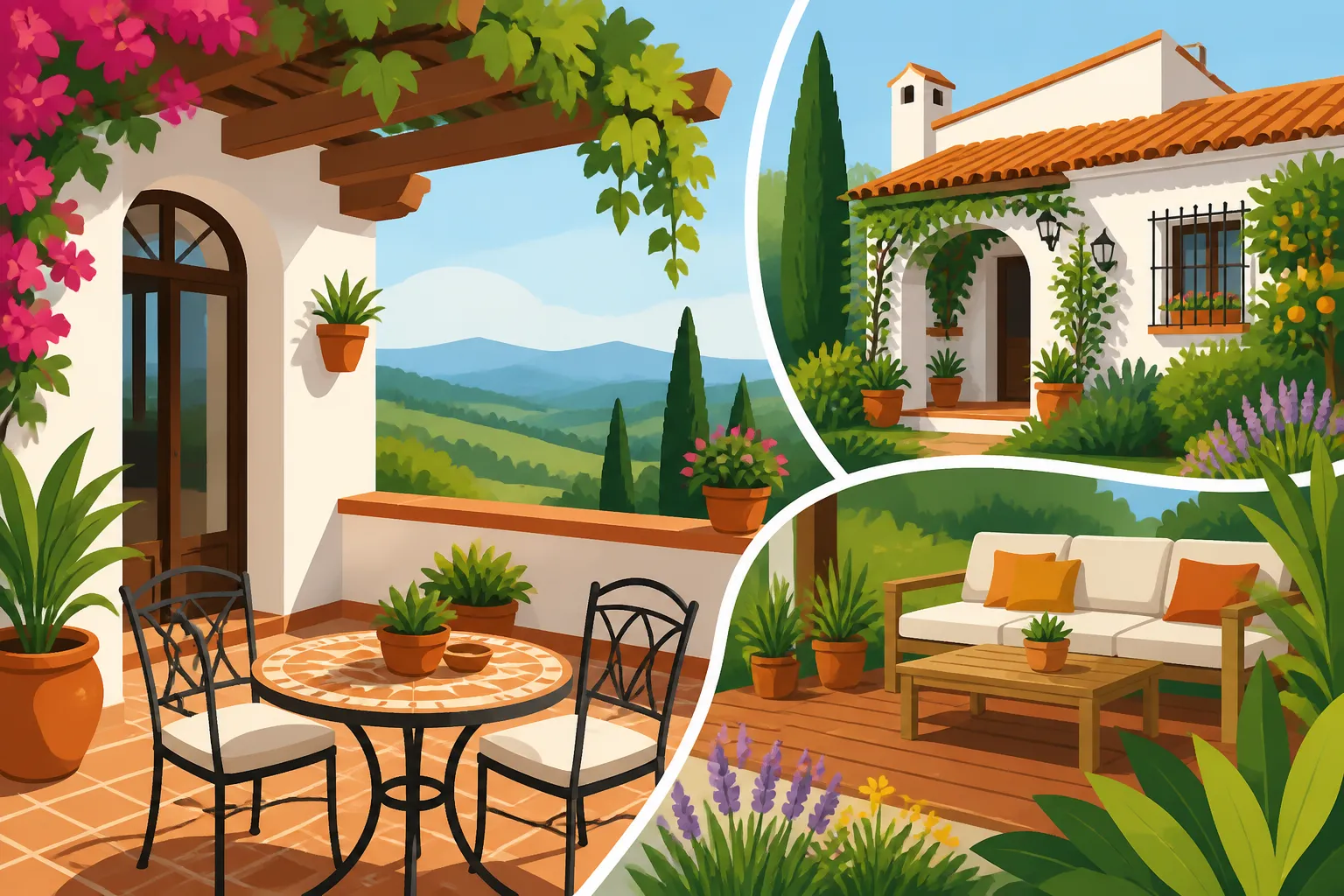
The Spanish patio is a masterclass in architectural cooling. Especially in the south, the patio is a central open-air space within a building designed to circulate air. In Andalusia, these are often decorated with stunning tiles, fountains, and hundreds of potted geraniums. While a patio might not offer a "view" of the city, it offers a serene, shaded sanctuary from the heat. Some ground-floor apartments have private use of a portion of the patio, which can be a lovely quiet spot for a home office.
In some cities, you might encounter the corralón. This is a traditional type of communal housing where all apartments open onto a large central courtyard. Living here is a very social experience; you will be part of a tight-knit community. This is great for those looking to immerse themselves in the language, but it requires a high tolerance for noise and social interaction. If you value total seclusion, a communal patio environment might not be for you.
Managing expectations around communal spaces is vital. You might have access to a communal pool or a shared garden. These are governed by the "Comunidad de Vecinos" (Homeowners' Association). There will be specific hours for usage and rules about what you can bring to these areas. Before you move in, make sure you understand How Spanish Building Communities Work (Comunidad): Fees and Rules to avoid any early friction with your new neighbors.
Practical Realities: Maintenance, Weather, and Neighbors
Owning or renting a home with outdoor space in Spain isn't just about sunbathing and drinking sangria; it comes with a unique set of chores and social rules. The climate, while beautiful, is harsh on building materials and furniture. Furthermore, because people live so close together, your outdoor life is often shared with your neighbors, for better or worse.
The concept of "noise" in Spain is different from Northern Europe or North America. A terrace is a place for conversation, and that conversation often lasts until 1:00 AM. While there are municipal laws regarding quiet hours, the cultural threshold for what is considered "disturbing" is quite high. If your bedroom window faces a neighbor’s terrace, you will hear their dinner parties. Learning How to Deal With Noisy Neighbors in a Spanish Building is a rite of passage for almost every expat.
Maintenance is another factor. In many parts of Spain, particularly the east and south, you will experience the "Calima." This is a weather phenomenon where dust from the Sahara Desert is blown over the Mediterranean, covering every outdoor surface in a fine layer of red or orange silt. If you have a large terrace or garden, you will spend a significant amount of time hosing down your furniture and floors after a Calima event.
The Battle Against the Spanish Sun and Dust
The Spanish sun is a double-edged sword. It provides the light we all crave, but it also destroys plastic, fades fabric, and kills plants in hours if they aren't watered. If you have an outdoor space, you must invest in "exterior-grade" materials. Traditional Spanish furniture often uses wrought iron, heavy wood, or specialized synthetic rattan that is UV-resistant. I’ve made the mistake of buying cheap "outdoor" pillows that literally crumbled into dust after one summer in Madrid.
Dust is a constant companion. Beyond the Calima, the dry climate means that city dust accumulates quickly. If you want to use your terrace daily, a quick "manguerazo" (hosing down) or a sweep is usually part of the morning routine. This is why most Spanish terraces are tiled rather than decked with wood; tiles are much easier to clean and stay cooler. When purchasing cleaning supplies or heavy-duty outdoor storage, checking Amazon Spain can be a lifesaver for finding specific weather-proof bins that keep your cushions dry and dust-free during the occasional heavy rainstorm.
Plants also require a strategy. Many expats try to grow the same flowers they had back home, only to see them shrivel. To have a successful Spanish terrace garden, you need to look at what the locals grow: jasmine, bougainvillea, succulents, and geraniums. These are hardy and can handle the intense UV levels. Automatic drip irrigation systems are highly recommended if you have more than a few pots, as even a weekend away in July can result in a total garden loss.
Understanding Comunidad Rules
In Spain, you don't just own your flat; you are part of a community. The "Comunidad de Propietarios" has a say in what you do with your outdoor space. For example, you usually cannot paint your terrace a different color than the rest of the building, nor can you install a permanent roof or enclosure without a vote from the neighbors and a permit from the town hall. This is to maintain the "estética" (aesthetic) of the building.
There are also rules about what you can hang on your balcony. While drying laundry is a national pastime, some high-end communities or historic districts forbid hanging clothes where they are visible from the street. Similarly, there are often rules about the types of plants you can have, especially if they hang over the edge and drip water onto the people below. If you are planning significant changes, such as installing a large pergola, you must check the community statutes first.
Noise and BBQing are the two biggest sources of community conflict. While many people dream of a BBQ on their Spanish terrace, it is often restricted. The smoke can go directly into the neighbor's open window above you, leading to immediate complaints. Before you buy that expensive charcoal grill, ask if "barbacoas" are allowed. Often, electric grills are the only permitted compromise. Understanding these nuances is a key part of Home and Contents Insurance in Spain: What to Compare, as some policies may have specific clauses regarding fire risks on terraces.
Finding Your Slice of Sunshine: Search and Rental Strategies
Finding the perfect outdoor space requires more than just scrolling through photos. Real estate listings in Spain can be notoriously vague. A "bright" flat might just have one window facing a white wall, and a "garden" might be a concrete slab with two dead bushes. You need to develop a critical eye when browsing platforms.
If you are currently outside of Spain, using a service like Spotahome can be incredibly helpful because they provide professional video walkthroughs and detailed floor plans. This allows you to see the actual scale of the terrace and how it connects to the rest of the apartment. Look specifically for the "orientation" (orientación) of the property. In Spain, "Exterior" is the keyword you want if you desire a balcony or street view.
When you do an in-person viewing, don't just look at the terrace; look around it. Is there a giant construction crane next door? Is there a primary school playground right below? (In Spain, children play outside until late, and the noise is significant). Also, check for "toldos" (awnings). If the terrace doesn't have them, ask if you are allowed to install them. The cost of a good quality retractable awning can be several hundred euros, and you’ll want to know if that’s an expense you need to budget for.
How to Spot Genuine Outdoor Space in Listings
To find the gems, you need to decode the language used by agents. Phrases like "muchas posibilidades" (many possibilities) often mean the terrace is currently a mess and needs work. "Vistas despejadas" (unobstructed views) is the golden phrase; it means you aren't staring directly into your neighbor’s living room. If a listing mentions a "bajo con jardín," it’s a ground-floor apartment with a garden, which is fantastic for families but requires you to check for security features like "rejas" (security bars) on the windows.
Be wary of the "m²" listed. Sometimes agents include the square footage of the terrace in the total living area of the flat to make it seem larger. You want to know the "useful" indoor space versus the outdoor space. A 100m² flat might be 60m² of tiny rooms and a 40m² terrace. Depending on your needs, that might be perfect, or it might be a dealbreaker. Make sure you know How to Read Spanish Real Estate Listings: Key Words Decoded before you start your serious search.
Privacy is the hardest thing to judge from photos. Wide-angle lenses make terraces look like private estates, but in reality, you might be overlooked by twenty other balconies. Look at the height of the surrounding buildings. If you are on the 3rd floor and there’s a 7-floor building across the street, your "private" sunbathing spot will have an audience. This is where "áticos" really earn their higher price tags, as they are usually high enough to escape the direct gaze of neighbors.
Maximizing Your Outdoor Oasis on a Budget
Once you’ve secured your Spanish home, the fun begins: turning that empty terrace or garden into a lifestyle hub. You don't need a massive budget to make a Spanish outdoor space look like a magazine spread. The key is to blend functionality with the local aesthetic. Think about light, shade, and greenery.
Because you will likely spend your evenings outside, lighting is crucial. Solar-powered fairy lights and lanterns are very popular in Spain because the abundance of sun ensures they stay charged. For furniture, if you are on a budget, look for "conjuntos de terraza" (terrace sets) on Amazon Spain, which often offers affordable sets designed for small Spanish balconies. Shipping is usually fast, which is great when you’ve just moved in and have nowhere to sit.
Gardening is the final touch. Even a small balcony can support a herb garden with mint (for your tinto de verano), basil, and rosemary. These scents add to the ambiance of your home. If you have a larger garden, consider planting a lemon or orange tree. They are relatively easy to maintain in the Spanish climate and provide a wonderful fragrance when they bloom in the spring (azahar).
Urban Gardening: What Grows Best in Spain?
If you are new to the Mediterranean climate, your best friends are succulents and cacti. They thrive on neglect and can handle the high heat of a mid-summer afternoon. If you want color, bougainvillea is the king of Spanish gardens. It grows fast, handles the sun, and provides a stunning explosion of pink or purple. However, be careful—it has thorns and can be messy when the flowers drop.
For those with limited space, vertical gardens are a great solution. You can buy hanging pockets or use wooden pallets to create a wall of green. This also acts as a natural "privacy screen" between you and your neighbors. Herbs like lavender and thyme not only smell great but are also naturally drought-resistant. Just remember that pots dry out much faster than the ground; in the height of summer, you might need to water your balcony plants both morning and evening.
Don't forget the importance of "sombra" (shade). A few well-placed large leafy plants, like a Kentia palm or a Monstera, can create a micro-climate on your terrace, lowering the temperature by a few degrees. If your terrace is very sunny, consider using "malla de ocultación" (privacy screening) or bamboo rolls along the railings. This blocks the wind, provides shade for your smaller plants, and gives you that extra bit of privacy from the street.
Connectivity for the Outdoor Office
With the rise of the digital nomad visa, many people are moving to Spain with the intention of working from their terraces. This sounds idyllic, but the practicalities of "terrace-working" can be tricky. Screen glare is a major issue; you will need a high-quality umbrella or a shaded corner to see your laptop. Furthermore, the heat can cause your devices to overheat. I’ve had my laptop shut down multiple times during a July Zoom call because I was sitting in direct sun.
Wi-Fi strength is the other hurdle. Spanish walls are usually made of thick brick or stone, which is great for keeping the heat out but terrible for internet signals. If your router is in the hallway, you might get zero signal on the terrace. A Wi-Fi extender can help, but for critical work, I often rely on my phone's hotspot. Having an Airalo eSIM is a great backup because it allows you to tap into local 5G networks without worrying about your home router's limitations. It’s also useful for those first few weeks before your permanent fiber optic line is installed.
Finally, consider the power supply. Most modern Spanish terraces have at least one outdoor power outlet, but older buildings often do not. If you are planning to work outside for hours, you might need to run a weather-proof extension cord or invest in a high-capacity power bank. Also, keep in mind that the sound of the city is part of the experience—invest in some good noise-canceling headphones if you have a meeting scheduled during the local "basura" (trash collection) or when the neighborhood kids are heading to school.
Disclaimer
This guide is intended for informational purposes only. While we strive to provide accurate and up-to-date information regarding Spanish housing and lifestyles, real estate laws and community regulations can vary significantly by region and individual building. Always consult with a legal professional or a qualified "gestor" before signing any rental or purchase contracts in Spain. We do not accept responsibility for any actions taken based on the content of this article. For specific health and safety advice, particularly regarding Heatwave Safety in Spain: Practical Tips for Expats, please consult local municipal guidelines.