How to Report Noise Complaints in Spain: Municipal Steps
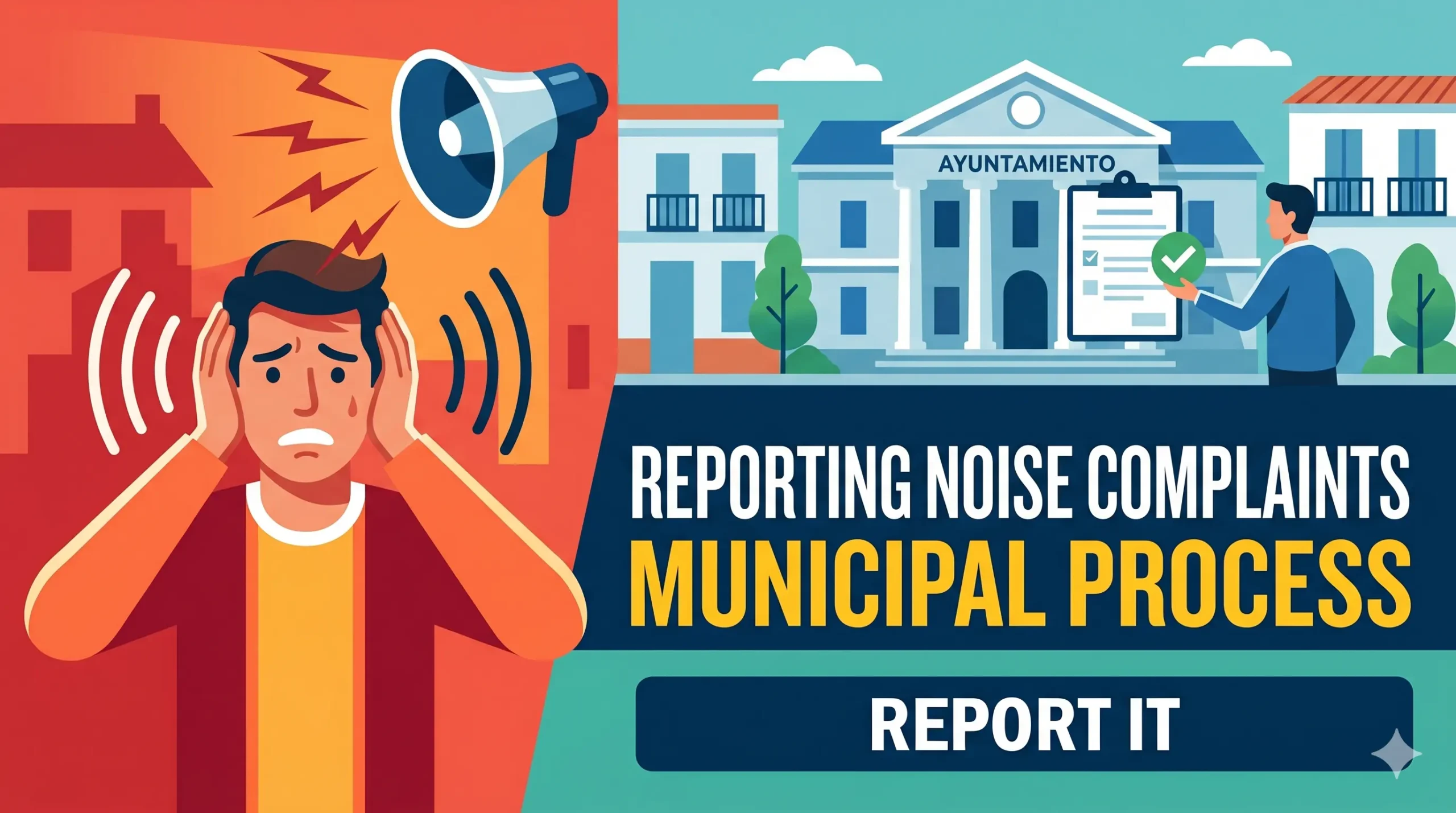
Trying to sleep while your upstairs neighbor seemingly drags heavy furniture across tile floors at two in the morning is an infuriating expat initiation. I spent my first six months in Barcelona severely sleep-deprived because I didn’t understand how to navigate the local bureaucracy to make the bass stop. This guide explains exactly how to legally report noise complaints, measure decibel limits, and reclaim your peace.
Disclosure: This post may contain affiliate links. We may earn a commission at no extra cost to you if you make a purchase through these links. Read full disclosure.
Understanding Spanish Noise Laws and Culture
Spain is an objectively loud country. The vibrant street life, late dining hours, and dense architectural layouts mean you will inevitably hear your neighbors. However, there is a massive legal difference between the ambient noise of a Mediterranean city and a legally actionable residential disturbance.
The Local Ayuntamiento Rule
The most critical thing expats must understand is that there is no single, unified national noise law in Spain regarding residential disturbances. Noise regulations (ordenanzas de ruido) are completely decentralized and governed by your specific local town hall (ayuntamiento).
Because these laws are municipal, the exact decibel limits and quiet hours in the center of Madrid will differ drastically from a quiet coastal village in Andalusia. For example, Madrid’s Ordenanza de Protección contra la Contaminación Acústica y Térmica (OPCAT) strictly caps nighttime residential noise at 45 decibels, and even lower for bedrooms. If you assume the laws from your home country apply here, you will be deeply frustrated when the police refuse to intervene.
To find the exact decibel limits for your street, you must download your town hall’s specific noise ordinance document. These are often massive, unoptimized PDF files hosted on archaic government websites. Having a reliable, high-speed home internet connection from an expat-centric provider like Tiekom ensures you can quickly download and translate these dense municipal legal texts without the local portal timing out.
The Sacred Resting Hours
While local laws vary, almost all Spanish municipalities divide the day into distinct acoustic periods: horario diurno (daytime), horario vespertino (evening), and horario nocturno (nighttime).
The nighttime hours, usually defined from 11:00 PM to 7:00 AM (or 8:00 AM on weekends and holidays), are strictly protected. Running a washing machine, wearing hard-soled shoes on wooden floors, or playing loud music during this window is a direct violation of municipal law.
Furthermore, you must respect the cultural siesta window, typically between 3:00 PM and 5:00 PM. While not always explicitly encoded as a maximum-restriction period in every town hall’s law, running a hammer drill or moving heavy furniture during the post-lunch resting hours is considered a severe social offense that will instantly anger your neighbors. To fully grasp how these localized resting schedules impact the broader rhythm of the country, review Spanish Work Culture: Hours, Holidays, and Workplace Etiquette.
Immediate Steps for Resolving Noise Issues
Before escalating a noise complaint to the municipal police, you must attempt to resolve the issue through diplomacy. The Spanish administrative system is heavily backlogged, and authorities expect neighbors to act like adults before demanding state intervention.
Talking to the Neighbor First
Spaniards are generally direct and highly sociable. Frequently, your neighbor simply does not realize how thin the walls actually are. An acoustic phenomenon colloquially known as “the rolling marbles” (canicas) is incredibly common in Spanish buildings; it is usually just the sound of water pipes expanding or chairs scraping against bare tiles, not intentional malice.
Your first step should always be to knock on their door during daytime hours and politely explain the situation. If your conversational Spanish is weak, it is highly recommended to write a polite, concise note. If you are terrified of confrontation, you can drop the note in their lobby mailbox. Always document exactly when you spoke to them or delivered the note. This creates a paper trail proving you attempted an amicable resolution (reclamación amistosa), which is crucial if you later need to involve a lawyer.
Involving the Community President
If the neighbor ignores you and continues to host parties at 3:00 AM, your next step is to leverage the building’s internal political structure. Every multi-unit building in Spain is governed by a Comunidad de Propietarios (Community of Owners).
You must formally complain to the President of the Community or the hired Administrador de Fincas (Property Manager). Under the Spanish Horizontal Property Law (Ley de Propiedad Horizontal), the community president has the legal authority to send a formal cease-and-desist warning (requerimiento) to the offending neighbor. If the noisy neighbor is a renter, the president can directly pressure the landlord to threaten an eviction.
To understand the immense power the community president holds over the building’s daily life, read Understanding Spain Comunidad Fees: What They Cover. If you are renting the flat yourself, you must also copy your own landlord on every communication, as property owners tend to act faster when their own financial asset is involved. Sending these formal, time-stamped emails requires you to have a dependable home connection; relying on Tiekom guarantees your communications to the property manager are delivered instantly, even if the building’s shared lobby Wi-Fi is failing. For a deeper look at navigating these internal building politics, review How to Deal With Spanish Building Rules: Pets, Noise, and Renovations.
How to File a Formal Municipal Complaint
If diplomacy fails and the building president is unhelpful, you must formally involve the municipal authorities to force compliance.
Calling the Policia Local for a Sonometry Test
The absolute biggest mistake expats make is calling the national 112 emergency line to complain about a barking dog or a loud party. The national police do not handle residential noise complaints. You must call the Policía Local or Policía Municipal for your specific town.
When you call, you must request that the patrol car brings a sonómetro (decibel meter). The police cannot issue a legally binding fine simply because you say the music is loud; they must physically enter your bedroom and measure the acoustic intrusion using calibrated government equipment.
If the police arrive and their sonómetro registers that the noise transmitting through your ceiling exceeds the municipal nighttime limit (e.g., above 30 or 45 decibels depending on the local ordinance), they will cross the hall, knock on the neighbor’s door, and issue an immediate citation (denuncia). The fines for exceeding noise limits are massive, frequently starting at 600 euros for a minor infraction and scaling up to 3,000 euros for repeat offenses or illegal nightlife activities.
Submitting an Official Denuncia
If the police arrive but the neighbor suddenly turns the music off, the officers cannot issue a fine. For chronic, ongoing issues—like an air conditioning unit vibrating through your wall or a dog left alone to bark for 24 hours—you must file a formal written complaint (denuncia por ruidos) at the town hall.
You can submit this formal complaint in person at a Citizen Attention Office, but it is vastly more efficient to submit it digitally through the town hall’s Sede Electrónica using your Spanish Digital Certificate. This digital portal allows you to attach a massive dossier of evidence, including police reports, emails to the building manager, and your own audio recordings.
Because regional government portals are notoriously unstable and frequently crash when uploading heavy video or audio files, attempting to submit this critical legal document on a weak connection is incredibly frustrating. Utilizing an expat-friendly fiber provider like Tiekom ensures you have the robust upload speeds required to submit your multimedia evidence to the municipal courts without the session timing out.
| Action Step | Authority Involved | Requirement / Cost | Typical Result |
| Amicable Request | Neighbor | None | Fast resolution if neighbor is reasonable. |
| Formal Warning | Comunidad President | Written request | President issues a formal cease-and-desist. |
| Emergency Visit | Policía Local | Call local precinct number | Sonometry test and instant municipal fine. |
| Official Denuncia | Town Hall (Ayuntamiento) | Digital Certificate / Evidence | Municipal inspection and potential legal action. |
Coping and Soundproofing While You Wait
The Spanish bureaucratic machinery grinds incredibly slowly. Even if you file a flawless denuncia, it can take months for the town hall to dispatch an environmental inspector. You must proactively protect your own sanity and health in the interim.
Temporary Fixes and Evidence Gathering
While you wait for the government to act, you must adapt your physical environment. Classic Spanish architecture relies heavily on hard surfaces like brick, plaster, and tile, which echo sound brutally.
Your first defensive move is to deaden the acoustics in your own apartment. Ordering heavy, thick area rugs and specialized acoustic foam panels from Amazon Spain can dramatically reduce the sound bouncing off your bare walls. If the noise is coming from the street through old wooden windows, ordering heavy-duty weather stripping and thermal blackout curtains from Amazon Spain creates a dense physical barrier that cuts down on high-frequency noise.
To survive the night, you absolutely must invest in high-quality, silicone sleep earplugs. You can easily order bulk packs of premium, noise-canceling earplugs directly from Amazon Spain with next-day delivery. Many expats also pair these with a white noise machine to drown out the specific frequency of a neighbor’s television.
Furthermore, you should actively gather your own evidence. You can order a consumer-grade digital decibel meter from Amazon Spain to record exactly how loud the intrusion is. While consumer meters are not legally binding in court, keeping a detailed log of the exact decibels, dates, and times provides the Policía Local with actionable data when they finally arrive. If the noise issue is a neighbor’s dog left abandoned on a balcony, you can use your Tiekom mobile data plan to securely upload timestamped video recordings of the barking to a cloud drive, ensuring your evidence is safe and accessible when you meet with a lawyer.
Knowing When to Break the Lease
Sometimes, the noise is simply unsolvable. If you are living directly above a late-night bar (discoteca) or next to a flat rented out to rowdy university students, the municipal fines may never deter the behavior. Living in known “party flats” is a massive risk heavily detailed in Student Housing in Spain: Options and Typical Contracts.
If the situation severely impacts your mental health, you may need to break your lease and move. Breaking a Spanish rental contract early usually carries a financial penalty (typically one month’s rent for every year remaining on the contract), unless you can legally prove the flat is “uninhabitable” due to the noise, which requires expensive lawyers. You must aggressively weigh the financial cost of losing your security deposit against the cost of your physical health. To accurately calculate the financial hit of a sudden relocation and lost deposits, deeply review Cost of Living in Spain: Budgeting for Expats and Renting in Spain: How to Budget for Deposits, Fees, and Utilities.
References
Primary sources (official)
- Ayuntamiento de Madrid – Ordenanza de Protección contra la Contaminación Acústica y Térmica (OPCAT): https://sede.madrid.es/portal/site/tramites/menuitem.5dd4485239c96e10f7a72106a8a409a0/?vgnextoid=0130511f3649e210VgnVCM2000000c205a0aRCRD
- Ayuntamiento de Madrid – Límites de niveles sonoros emitidos al medio ambiente exterior: https://www.madrid.es/portales/munimadrid/es/Inicio/Medio-ambiente/Limites-de-niveles-sonoros-emitidos-al-medio-ambiente-exterior/?vgnextfmt=default&vgnextoid=51284962a6c8b010VgnVCM2000000c205a0aRCRD
Other helpful sources
- Tu Abogado Defensor – Denunciar ruidos vecinos cuando y como: https://www.tuabogadodefensor.com/denunciar-ruidos-vecinos-cuando-y-como/
- LICMAD – OPCAT Madrid: Ordenanza contra contaminación acústica y térmica: https://www.licmad.es/opcat-madrid/
Disclaimer
The information provided in this article is for educational and informational purposes only and does not constitute formal legal, real estate, or municipal advice. Residential noise regulations, specific decibel thresholds (límites de emisión sonoros), and designated nighttime resting hours vary drastically across the thousands of individual ayuntamientos (town halls) in Spain. Always verify the specific municipal bylaws (ordenanzas municipales) for your city and consult with a certified Spanish lawyer (abogado) before withholding rent, breaking a legally binding lease agreement, or initiating civil action against a neighbor or community of owners.