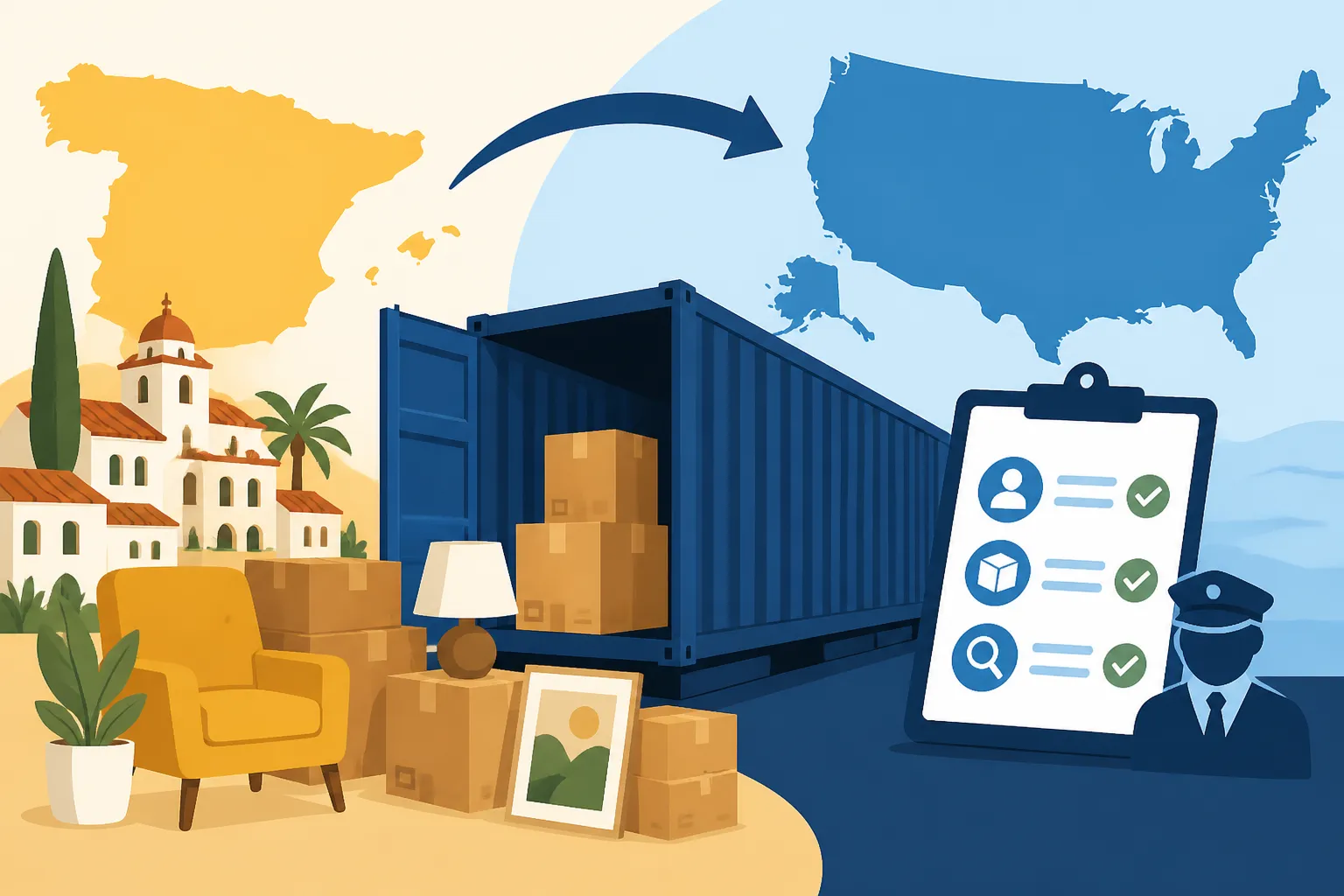
Moving From Spain to the US: Container Costs and Customs Forms
Oh, the thought of packing up your life in Spain and sending it across the ocean to the US. I remember the sheer panic that set in when I realized the mountain of administrative tasks that lay ahead, not to mention the emotional weight of saying adiós to a life you've built here. This isn't just about moving boxes; it's about navigating a labyrinth of paperwork, understanding complex shipping logistics, and preparing for customs on a whole new continent. Don't worry, friend, this guide is here to walk you through the nitty-gritty of container costs and customs forms, helping you demystify the process and make your move as smooth as possible.
Disclosure: This post may contain affiliate links. We may earn a commission at no extra cost to you if you make a purchase through these links. Read full disclosure.
The Emotional and Logistical Rollercoaster of Moving from Spain to the US
Leaving a place you've called home, especially one as captivating and administratively unique as Spain, for an entirely different continent like the United States, is rarely a simple affair. It's a journey filled with bittersweet goodbyes, endless to-do lists, and a fair bit of head-scratching over regulations that seem designed to confuse. You're not just changing your address; you're orchestrating an international ballet of logistics and paperwork, often while dealing with the emotional upheaval of closing one chapter and embarking on another.
Saying Adiós to Spain: More Than Just Packing Boxes
Let's be honest, the Spanish bureaucracy is an experience in itself, one that often feels like a rite of passage for every expat. From getting your initial NIE, TIE & Empadronamiento: Essential IDs and Registrations in Spain sorted, to grappling with the complexities of Spanish Taxes for Foreign Residents: Practical Guide to Staying Compliant, you've likely already faced your share of administrative hurdles. Now, as you prepare to leave, you’re faced with the task of undoing much of that setup, along with the monumental job of deciding what comes with you. It’s not just about what you own, but what holds sentimental value, what you can truly part with, and what is simply too expensive or impractical to replace in the US. The decision-making process alone can be exhausting, weighed down by memories and the sheer scale of the undertaking. It’s completely normal to feel overwhelmed when faced with such a profound transition.
Why Container Shipping is Often the Go-To for US Moves
When you're moving your entire life, or at least a significant portion of it, across the Atlantic, simply fitting everything into a few extra suitcases for air travel quickly becomes unrealistic and incredibly expensive. This is where container shipping steps in as the most practical and cost-effective solution for many expats. While air freight offers speed, its cost per kilogram can skyrocket, making it viable only for truly urgent or high-value, small items. For everything else—furniture, appliances, extensive personal collections, and the accumulated treasures of your time in Spain—a shipping container provides the necessary volume and security. It allows you to transport a large quantity of belongings in one go, offering a comprehensive way to transition your household items without breaking the bank on air cargo or facing the daunting prospect of replacing everything upon arrival.
Deciphering Container Costs: What Really Drives the Price Tag
Understanding the cost of shipping a container from Spain to the US can feel like trying to solve a puzzle with half the pieces missing. It’s not a flat fee; rather, it’s a complex calculation based on numerous variables, each playing a significant role in your final quote. Getting a clear, transparent breakdown is crucial to budgeting accurately and avoiding nasty surprises down the line. This is where having a reliable partner who can simplify the process and offer clear comparisons becomes invaluable.
Factors Influencing Your Container Shipping Quote
The price you'll pay for container shipping is a dynamic figure, influenced by a medley of elements. First and foremost, the volume and weight of your goods are paramount. Are you shipping a few boxes or the entire contents of a three-bedroom house? This directly impacts whether you'll need a full container or can share space. Next is the distance – not just Spain to the US, but from your exact address in Spain to your new doorstep in the US. Door-to-door services are convenient but cost more than port-to-port. The type of service also matters: do you need packing, disassembly, and reassembly services, or are you handling everything yourself? Seasonality can play a surprising role; peak moving seasons (summer, end-of-year) often see higher demand and prices. Finally, insurance is a non-negotiable consideration, offering peace of mind against the unforeseen during transit.
When you're gathering quotes, you'll quickly see how these factors intertwine. For instance, a mover might offer a lower per-cubic-meter rate for a larger volume, making it more economical to ship more items within a certain threshold. It’s a delicate balance, and comparing various options is key. Many expats find great value in using platforms like Sirelo, which connect you with multiple reputable international movers. This way, you can easily compare different quotes based on your specific needs, getting a clear picture of what's included and what's not, without the endless phone calls and emails.
Different Container Options: Full vs. Shared Loads
When it comes to shipping your belongings, you essentially have two main choices for container services: Full Container Load (FCL) or Less than Container Load (LCL). Each has its own set of advantages and disadvantages, primarily depending on the volume of items you’re sending.
Full Container Load (FCL)
An FCL shipment means you get an entire container dedicated solely to your belongings. These typically come in 20-foot (approx. 33 cubic meters) or 40-foot (approx. 67 cubic meters) sizes.
- Pros: This is often the fastest option, as your container moves directly from port to port without waiting for other shipments to fill it. There's also less handling of your goods, reducing the risk of damage. You have exclusive use of the space, which can be reassuring for larger moves or high-value items.
- Cons: FCL is generally more expensive, especially if you don't fill the entire container. If your shipment is smaller, you're paying for unused space.
This option is ideal for those moving a complete household, including furniture, multiple large appliances, and extensive personal effects. If you've been living in a large apartment or house in Spain and plan to furnish a similar-sized home in the US, an FCL might be your most efficient choice.
Less than Container Load (LCL)
LCL, also known as groupage, involves sharing container space with other people's shipments. Your goods are consolidated at a warehouse in Spain with other shipments bound for the same general region in the US.
- Pros: This is a much more cost-effective solution for smaller moves, as you only pay for the space your items occupy. It's perfect if you're only taking a selection of boxes, a few pieces of furniture, or perhaps the contents of a studio apartment.
- Cons: Transit times are typically longer, as the container must be fully loaded and then unloaded and sorted at both ends. Your items will also undergo more handling during the consolidation and deconsolidation process, which can increase the slight risk of damage. Delays can also occur if other shipments in your container face customs issues.
LCL is an excellent choice if you're downsizing, moving into a furnished place, or simply want to bring back cherished items without shipping an entire household. Regardless of your choice, getting accurate volumetric calculations is key. This is another area where using a comparison service like Sirelo can be immensely helpful, as their network of movers will typically provide a pre-move survey to assess your exact needs and recommend the most suitable container option.
Hidden Costs and Unexpected Fees to Watch Out For
Ah, the dreaded "hidden fees." Moving internationally is complex enough without unexpected charges popping up like flamenco dancers at a quiet dinner. While reputable movers strive for transparency, it's vital to know what additional costs might surface. Always push for an all-inclusive quote, and ensure everything is clearly itemized in your contract.
Here are some common culprits:
- Port Fees and Terminal Handling Charges (THC): These are essentially the costs associated with moving your container in and out of the ports in both Spain and the US. They can vary and are often separated from the base shipping rate.
- Customs Duties and Taxes: While personal effects imported into the US are usually duty-free (more on that later!), specific items might be subject to duties. New items, items not clearly declared as personal effects, or certain restricted goods can incur these charges. Alcohol, for example, is notoriously complex and often subject to federal and state taxes.
- Demurrage and Detention Fees: These are essentially fines. Demurrage is charged by the port if your container isn't picked up from the terminal within a specified free period. Detention is charged by the shipping line if you don't return the empty container within its free period. Delays in customs clearance or your personal availability can trigger these.
- Warehousing/Storage Fees: If there's a delay in delivery or you need your items stored temporarily upon arrival, warehousing fees can accumulate.
- Fuel Surcharges (BAF/CAF): Bunker Adjustment Factor (BAF) and Currency Adjustment Factor (CAF) are surcharges that fluctuate based on fuel prices and currency exchange rates. While often included, ensure you understand how they are calculated.
- Re-delivery Fees: If the initial delivery attempt fails (e.g., you're not home, the access is blocked), you might be charged for a second attempt.
A truly comprehensive moving partner, especially one you find through a trusted platform like Sirelo, will walk you through these potential costs and ensure you understand your contract inside out. They'll also help you prepare the necessary customs forms correctly, significantly reducing the likelihood of delays and associated fees. It's worth investing in a service that offers this level of clarity to prevent financial headaches down the line.
Navigating US Customs: Forms, Declarations, and Red Tape
Ah, US Customs. It’s an intimidating phrase for even seasoned travelers, and when you’re importing your entire household, it takes on a whole new level of complexity. The goal is simple: get your belongings into the country as smoothly and duty-free as possible. The path to achieve this, however, is paved with forms, detailed inventories, and strict rules. Understanding these regulations is your best defense against delays, inspections, and unexpected costs.
The Crucial Role of Form CBP Form 3299 (Declaration of Free Entry of Unaccompanied Articles)
This form, officially titled "Declaration of Free Entry of Unaccompanied Articles," is arguably the most important piece of paper for anyone moving personal effects into the United States. Its purpose is to allow you, as a returning US citizen or an arriving resident alien, to import your used household goods and personal effects duty-free, provided certain conditions are met.
Filling out CBP Form 3299 correctly is absolutely critical. Here’s a breakdown of what it demands:
- Personal Information: Your name, date of birth, US address, and details about your arrival in the US.
- Status of Declarant: You'll declare whether you are a returning resident (US citizen), a non-resident entering for the first time, or a returning non-resident. This determines your eligibility for duty-free entry. For most expats moving back or becoming residents, it's about qualifying your used personal items.
- Detailed Inventory: This is where many people get tripped up. The form requires a comprehensive, itemized list of everything you are shipping. It needs to be detailed enough to clearly identify contents (e.g., "Box 1: Kitchen utensils, plates, glasses," not just "kitchen stuff"). Each box should have a corresponding entry. This inventory serves as your declaration to Customs that these are indeed your personal, used items, not commercial goods or new purchases intended for sale.
- Proof of Residency/Intention: You'll need to demonstrate your right to reside in the US. For US citizens, this is straightforward. For foreign nationals, this typically means a valid US visa (such as a green card or a long-term work visa). The form itself doesn't require attaching these, but you'll need them as supporting documents.
- Valuation: You usually need to provide an estimated value for your items. This is often based on the depreciated value of your used goods, not their replacement cost.
This form is a beast, I know! It asks for a lot, and any discrepancies between your declaration and the actual contents of your shipment can lead to significant delays, detailed inspections, and potentially duties or penalties. The best approach is absolute honesty and meticulous detail. Work closely with your chosen moving company, especially if they provide a customs broker, as they have experience with these forms and can guide you through each section.
Supplementary Forms and Documentation You'll Need
While CBP Form 3299 is the star of the show for your unaccompanied articles, it's rarely alone on the stage. You'll need a retinue of supporting documents to ensure a smooth journey through US Customs. Gather these well in advance; a missing paper is often all it takes to halt your shipment.
Here's what you should prepare:
- CBP Form 6059B (Customs Declaration): This is the form you fill out when you physically arrive in the US, declaring any items you're bringing with you in your luggage. While distinct from the unaccompanied articles, it's good to be aware of and maintain consistency in declarations if you're bringing some items with you and shipping others.
- Passport and Visa/Green Card: You'll need copies of your valid passport and, if you're not a US citizen, your proof of right to reside in the US (e.g., Green Card, valid work visa, etc.). These establish your eligibility to import personal effects.
- Detailed Packing List/Inventory: This is not just a summary. It should be an exhaustive, item-by-item (or box-by-box with contents listed) document of everything being shipped. Assign a number to each box and itemize its contents, even if briefly. This list directly supports your CBP Form 3299. It’s also crucial for Home and Contents Insurance in Spain: What to Compare purposes, which you should update to US insurance.
- Bill of Lading (BOL): This is the contract between you and the carrier (shipping line or freight forwarder) for your goods. It serves as a receipt and title for your shipment. Your moving company will provide this.
- Power of Attorney (POA): If you're using a customs broker (which is highly recommended, and often arranged by your international mover), you'll need to grant them a limited power of attorney to act on your behalf with US Customs and Border Protection.
- Proof of Overseas Residency: Documentation showing you lived in Spain, such as a Spanish rental contract, utility bills, or even your old Empadronamiento in Spain: How to Register Your Address, can help confirm that the goods are indeed used personal effects from your time abroad.
The more organized you are with these documents, the less likely you are to encounter headaches. A professional moving company, especially one experienced with US customs, will guide you through compiling this documentation. If you're using a service found through Sirelo, they often have dedicated teams to assist with this crucial aspect, taking a huge burden off your shoulders.
Prohibited and Restricted Items: What NOT to Ship
This is a critical section, because ignorance of US customs law is, unfortunately, no excuse. Certain items are outright prohibited, while others are restricted, meaning they can only be imported under specific conditions or with special permits. Shipping these without proper declaration or authorization can lead to severe penalties, confiscation of goods, and significant delays.
Here’s a general overview of what to be wary of:
- Firearms and Ammunition: Highly restricted and require extensive permits. Do not attempt to ship these without direct consultation with a specialized import broker and the ATF (Bureau of Alcohol, Tobacco, Firearms and Explosives).
- Alcohol: This is notoriously complicated. While you can typically import a limited quantity for personal consumption, it's subject to both federal and state laws and taxes. Many movers prefer not to ship alcohol due to the intricate licensing and declaration requirements. Check the specific laws of your destination state in the US.
- Controlled Substances: Absolutely prohibited. This includes illegal drugs, but also certain prescription medications if not properly declared and carried with a valid prescription. Be mindful of Traveling With Medication in Spain: Practical Carry‑On Tips rules when carrying, but for shipping, it's usually a no-go for anything beyond a short supply.
- Certain Agricultural Products: This is a huge category. Fresh fruits, vegetables, plants, seeds, unroasted coffee beans, certain meats, and even soil are often prohibited or heavily restricted by the USDA (US Department of Agriculture) to prevent the introduction of pests and diseases. If in doubt, don't ship it.
- Hazardous Materials: Flammable liquids (paints, solvents), aerosols, batteries (especially lithium-ion outside of devices), corrosive materials. Your moving company will have a list of these.
- Cuban-Origin Goods: Due to ongoing embargoes, goods of Cuban origin are generally prohibited, even if purchased legally in Spain.
- Pirated/Counterfeit Goods: Any items infringing on copyrights or trademarks are illegal and will be seized.
Always, always be transparent with your moving company about everything you plan to ship. They are your first line of defense against customs issues. A reputable international mover, such as those you can find and compare on Sirelo, will have up-to-date knowledge of these restrictions and can advise you on what can and cannot go into your container, helping you avoid costly mistakes and ensuring your belongings clear customs without a hitch.
The Strategic Art of Packing and Inventory for a Smooth Customs Process
You might think packing is just about putting stuff in boxes, but when you're moving internationally, it becomes an art form, deeply intertwined with the customs process. A well-organized, meticulously documented packing job can make the difference between a seamless clearance and a frustrating, expensive delay. This isn't just about protecting your items; it's about transparency and compliance.
The Golden Rule: Meticulous Inventory is Your Best Friend
Forget rough estimates or vague descriptions. For US Customs, your inventory needs to be as detailed as a Spanish paella recipe. This isn't just a suggestion; it's a mandatory component of CBP Form 3299 and your overall customs submission. The US Customs and Border Protection (CBP) needs to verify that what you declare on your form matches what's in your shipment.
Here are some tips for creating your golden inventory:
- Box Numbers: Assign a unique, sequential number to every single box and item (if shipping large, individual pieces of furniture). This number should be clearly written on at least two sides of each box.
- Room-by-Room Method: Pack and inventory one room at a time. This helps keep things organized and makes unpacking much easier later.
- Brief but Specific Contents: Instead of "Kitchen stuff," write "Box 7: Plates, mugs, cutlery set (used), small blender." For books, "Box 12: Assorted novels, non-fiction books." You don't need to list every single item within a box, but categorize them clearly.
- Approximate Value (Optional but Recommended): While not always strictly required for personal effects, assigning a depreciated value can be useful for insurance purposes and provides context for customs.
- Take Photos/Videos: Before sealing boxes, take photos or videos of the contents. This serves as additional proof for your inventory and is invaluable for any potential insurance claims.
- Keep a Master List: Create a digital master list (spreadsheet is great!) that mirrors your physical inventory. Include box number, room, contents, and any specific notes. This list is what you'll use to reference your CBP Form 3299.
Professional international movers understand this intrinsically. They will either provide detailed inventory sheets for you to fill out or, if you opt for full packing services, their crew will create the inventory themselves, often to a professional standard. Leveraging the expertise of a moving company, such as those that partner with Sirelo, can significantly streamline this daunting task, ensuring your inventory meets all necessary requirements and reduces the risk of customs queries.
Packing for International Transit and Customs Scrutiny
Beyond the inventory, how you actually pack your boxes matters, both for the safety of your belongings and for easing the customs process. Imagine your boxes being inspected – they should be easy to open, easy to understand, and not raise any unnecessary red flags.
- Sturdy Boxes are Non-Negotiable: Don't skimp on cheap, flimsy boxes. Invest in double-walled cardboard boxes specifically designed for moving. They'll withstand the rigors of international transit, stacking, and potential inspections much better.
- Proper Sealing: Use strong packing tape, sealing both the top and bottom seams of each box multiple times to prevent accidental opening.
- Clear Labeling: Beyond the box number, clearly label each box with its destination room (e.g., "Master Bedroom," "Kitchen") and a very brief, high-level description of contents (e.g., "Books," "Dishes"). This helps both you and anyone handling the box.
- Don't Overload, Don't Underload: Overloaded boxes can burst; underloaded boxes can crush. Pack firmly, using packing paper, bubble wrap, or blankets to fill voids and cushion items.
- Separate Items of Concern: If you have anything that might be sensitive (e.g., specific electronics, or items that look new even if they're used), pack them in separate boxes. Don't hide anything. Transparency is key. While duty-free entry applies to used personal effects, if you ship something brand new in its original packaging without declaring it, it might raise questions and incur duties. It's generally best to avoid shipping new, high-value items if you want to avoid duties.
The psychological relief of knowing your belongings are well-packed and properly documented cannot be overstated. After months or years of living in Spain, your possessions hold significant memories, and seeing them safely packed for their journey to the US is a huge step in feeling prepared for your next adventure.
Choosing Your International Mover: A Partner in Your Journey
Selecting an international mover is perhaps the most critical decision you'll make in this entire process. This isn't just about finding someone to physically transport your belongings; it's about choosing a partner who understands the intricate dance between logistics, international regulations, and, crucially, US customs requirements. A good mover can alleviate immense stress; a bad one can turn your move into a nightmare.
Why Not All Movers Are Created Equal (Especially for US Customs)
In the world of international relocations, experience with specific routes and customs procedures is gold. A mover specializing in domestic moves within Spain, for instance, might be completely out of their depth when it comes to the nuances of shipping a container to the US and navigating the complexities of CBP forms.
When evaluating potential movers, consider these factors:
- Experience with US Customs: This is paramount. Do they have a dedicated customs brokerage service or a strong partnership with US-based customs brokers? Can they confidently advise you on CBP Form 3299 and other required documentation?
- Track Record and Reputation: Look for companies with a proven history of successful international moves. Check reviews on independent platforms and ask for references.
- Comprehensive Services: Do they offer door-to-door service, including packing, loading, transport, customs clearance, and delivery to your new home?
- Insurance Options: A reputable mover will offer comprehensive transit insurance. Understand the coverage, deductibles, and claims process.
- Communication: How responsive and clear are they in their communication? You'll need consistent updates throughout the long process.
This is precisely where platforms like Sirelo shine. They act as a vital bridge, connecting you with pre-vetted international moving companies that have a demonstrated track record in global relocations, specifically to destinations like the US. By using such a platform, you significantly reduce the risk of falling into the trap of a mover who promises the world but lacks the specific expertise needed for a complex transatlantic journey and US customs clearance. Many of these professional companies provide a dedicated move manager who will be your single point of contact, guiding you every step of the way, from the initial survey in Spain to the final delivery in the US.
Getting Quotes and Making an Informed Decision
Once you have a shortlist of potential movers, the next step is to get detailed quotes. Don't settle for just one! Comparing multiple offers is essential, not just for price, but for understanding the scope of services included.
Here's how to approach it:
- Get at Least Three Quotes: This allows you to compare pricing, services, and communication styles. Sirelo simplifies this by allowing you to easily request and receive quotes from several reputable movers in their network, saving you valuable time and effort.
- Request an In-Home or Virtual Survey: A good mover will insist on seeing what you plan to ship (either physically or via video call). This allows them to accurately assess the volume, which is critical for an accurate quote and recommending the correct container size (FCL vs. LCL).
- Ask for All-Inclusive Pricing: Push for a quote that covers everything from your doorstep in Spain to your new home in the US, including all port fees, customs brokerage, and taxes (where applicable for non-personal items). Demand a clear breakdown of each cost component.
- Inquire About Transit Times: Get an estimated transit time, and understand that these are estimates. International shipping can be unpredictable, but a reliable mover will give you realistic expectations.
- Clarify Customs Assistance: Specifically ask about their process for assisting with US customs forms. Do they have in-house experts? Which forms will they help you prepare?
- Understand Insurance Options: What types of insurance are offered? Is it based on declared value or total loss? What are the exclusions?
Red flags to watch out for: Be extremely wary of quotes that are significantly lower than others. This often indicates hidden fees, inadequate services, or a less experienced company. Lack of transparency in pricing, pressure tactics, or vague answers to your questions are also warning signs. Remember, this is a significant investment; choosing wisely can save you stress and money in the long run. Thinking about how much it costs to live in Spain might make you wonder about the cost of moving. For more on managing your finances during this transition, consider reading Cost of Living in Spain: Realistic Budgets and Savings Tips.
Beyond the Basics: Services That Make a Difference
A truly excellent international mover goes beyond simply putting your boxes on a boat. They offer a suite of services designed to make your complex move as effortless as possible. These additional offerings can significantly reduce your stress levels and are worth considering when comparing quotes.
Some services that can make a huge difference:
- Professional Packing and Unpacking: While this adds to the cost, professional packers are experts at securely wrapping and boxing items for international transit, often using specialized materials. They also create a detailed inventory as they go. Unpacking services at your destination mean you don't have to face a mountain of boxes alone.
- Temporary Storage Solutions: If there's a gap between your departure from Spain and your arrival or readiness for delivery in the US, reputable movers often offer secure storage options at both ends.
- Vehicle Shipping: If you plan to bring your car from Spain, a comprehensive mover can coordinate its shipment alongside your household goods, ensuring all vehicle import regulations for the US are met. Be aware that vehicle import rules are very strict and often involve duties.
- Pet Relocation Assistance: Moving with pets is an entirely different ball game with its own set of rules and requirements for entering the US. Some movers offer specialized services or can connect you with trusted pet relocation partners.
- Disassembly and Reassembly of Furniture: For large or complex furniture pieces, professional movers can carefully take them apart in Spain and put them back together in your new US home, saving you time and effort.
A top-tier international moving partner, especially one accessible through a platform like Sirelo, will anticipate your needs and offer these kinds of comprehensive solutions. They understand that moving continents isn't just about logistics; it's about providing holistic support to ensure your transition from Spain to the US is as smooth, secure, and stress-free as possible.
Final Preparations and Landing in the US
The process of moving from Spain to the US is a marathon, not a sprint. After all the packing, paperwork, and decisions, the final stretch involves ensuring everything is set before your container sails, and then navigating the receiving process on the US side. It’s a moment of both anticipation and final logistical checks.
What to Do Before Your Container Departs Spain
Before that big truck rumbles away from your Spanish home, taking your life's possessions to the port, there are several crucial last-minute checks to perform. These steps ensure that once your container is en route, you won't be kicking yourself for forgetting something vital.
- Final Document Check: Double-check that all your original documents, especially your passport, visa/green card, and any essential financial or medical records (Money in Spain for Expats: Banking, Taxes, and Everyday Payments, Health Insurance in Spain: Options for Residents, Students, and Families) are not packed in the container. These should always travel with you. Make sure you have digital copies backed up as well.
- Confirm Departure Dates and Tracking Information: Get the confirmed departure date of your vessel from Spain and, crucially, the estimated arrival date at the US port. Obtain all tracking numbers and contact information for your moving company's US agents or customs broker. This information is key to managing your expectations and coordinating the next steps.
- Keep Essentials with You: Pack a separate "essentials" bag or two for your flight and the first few days in the US. This should include clothes, toiletries, important documents, prescription medications, chargers, and anything you absolutely cannot live without while you wait for your container to clear customs and be delivered.
- Update Contact Details: Ensure your moving company has your updated contact information (phone number, email) for both your time in Spain and your new contact details in the US.
- Final Walk-Through: Do a thorough final walk-through of your Spanish home after everything is packed and loaded. Check every cupboard, drawer, and corner. It's easy to miss a small item tucked away.
The beauty of working with a well-organized moving service, particularly one connected via Sirelo, is that they will often provide you with a pre-departure checklist and ensure all these bases are covered. This methodical approach helps ensure that once your belongings are out of sight, they're not out of mind, and you have all the tools to track their journey across the Atlantic.
Receiving Your Shipment in the US and Clearing Customs
The longest part of the journey is often the waiting. Once your container has departed Spain, it's typically a few weeks by sea. You'll likely arrive in the US long before your belongings do, settling into your new reality while your former life is still at sea.
- The Waiting Game: Patience is key. Transit times can vary depending on the shipping line, port congestion, and weather. Your moving company or their US agent should keep you informed of the vessel's progress.
- Communication with Your Broker: Once your shipment nears the US port, your customs broker (often arranged by your mover) will contact you. They will guide you through the final stages of customs clearance, ensuring all forms, including your CBP Form 3299, are submitted correctly and on time. They will also inform you of any duties or fees that might be due for specific items (e.g., alcohol, new purchases).
- Customs Inspection (Potential): While most personal effects shipments clear without a physical inspection, US Customs and Border Protection reserves the right to inspect any shipment. If this happens, it can add time and, in some cases, additional costs (for the inspection itself). A detailed, accurate inventory significantly reduces the likelihood of a lengthy inspection.
- Final Delivery Coordination: Once cleared, your moving company's US agent will coordinate the final delivery to your new home. This involves scheduling a delivery window, confirming access to your property, and ensuring enough manpower for unloading.
Finally, the moment arrives: your container is delivered, and you're reunited with your cherished belongings. It's a surreal moment, seeing familiar items in a brand-new setting. While the journey from Spain to the US is undeniably complex, with careful planning, meticulous documentation, and the right moving partner, it's a hurdle you can clear successfully, allowing you to focus on settling into your new life.
| Document/Form | Purpose | Who Provides/Completes It | Key Details for Customs |
|---|---|---|---|
| CBP Form 3299 | Declares personal effects for duty-free entry into the US | You (with mover/broker guidance) | Detailed inventory, proof of residency, accurate personal info |
| CBP Form 6059B | Customs declaration for items carried with you (when you arrive) | You (at port of entry) | Declare any items brought in luggage, consistent with 3299 if applicable |
| Passport & Visa/GC | Proof of identity and right to reside in the US | You | Valid, unexpired, copies provided to mover/broker |
| Detailed Packing List | Itemized list of all contents in your shipment | You or your professional mover | Box numbers, brief contents, room designation, aligns with 3299 |
| Bill of Lading (BOL) | Contract of carriage & receipt for your goods | Your shipping company/freight forwarder | Confirms shipment details, carrier, destination, and terms |
| Power of Attorney | Authorizes customs broker to act on your behalf | You (for the broker) | Grants legal authority for customs clearance |
| Proof of Residency Abroad | Shows you lived in Spain (e.g., rental contract, utility bills) | You | Confirms goods are "used personal effects" from overseas residency |
Disclaimer
Please remember that I am an expat blogger, not a licensed immigration attorney, customs agent, or financial advisor. The information provided in this guide is for general informational purposes only, based on common expat experiences and publicly available information, and does not constitute legal, financial, or professional advice. Customs regulations, visa requirements, and shipping costs are subject to change and can vary significantly based on your individual circumstances. Always consult with qualified professionals, such as a reputable international moving company, a customs broker, or an immigration lawyer, for advice tailored to your specific situation when moving from Spain to the US.