EU vs Non-EU Moves to Spain: Why Customs Treats Them Completely Differently
Oh, the joy (and utter headache) of moving your life to Spain! If you're anything like I was when I first considered making the leap, you probably think "moving is moving," right? Wrong. So, so wrong, especially when it comes to shipping your cherished belongings across borders. The truth is, whether you're moving from an EU country or a non-EU country completely changes the customs game, turning a simple transport into a bureaucratic odyssey or a relatively smooth sail. This guide is here to untangle that complicated mess, explaining why your country of origin makes all the difference, and how a service like Sirelo can be your guiding light through the labyrinth of Spanish customs.
Disclosure: This post may contain affiliate links. We may earn a commission at no extra cost to you if you make a purchase through these links. Read full disclosure.
The Fundamental Divide: EU vs. Non-EU Status for Your Move
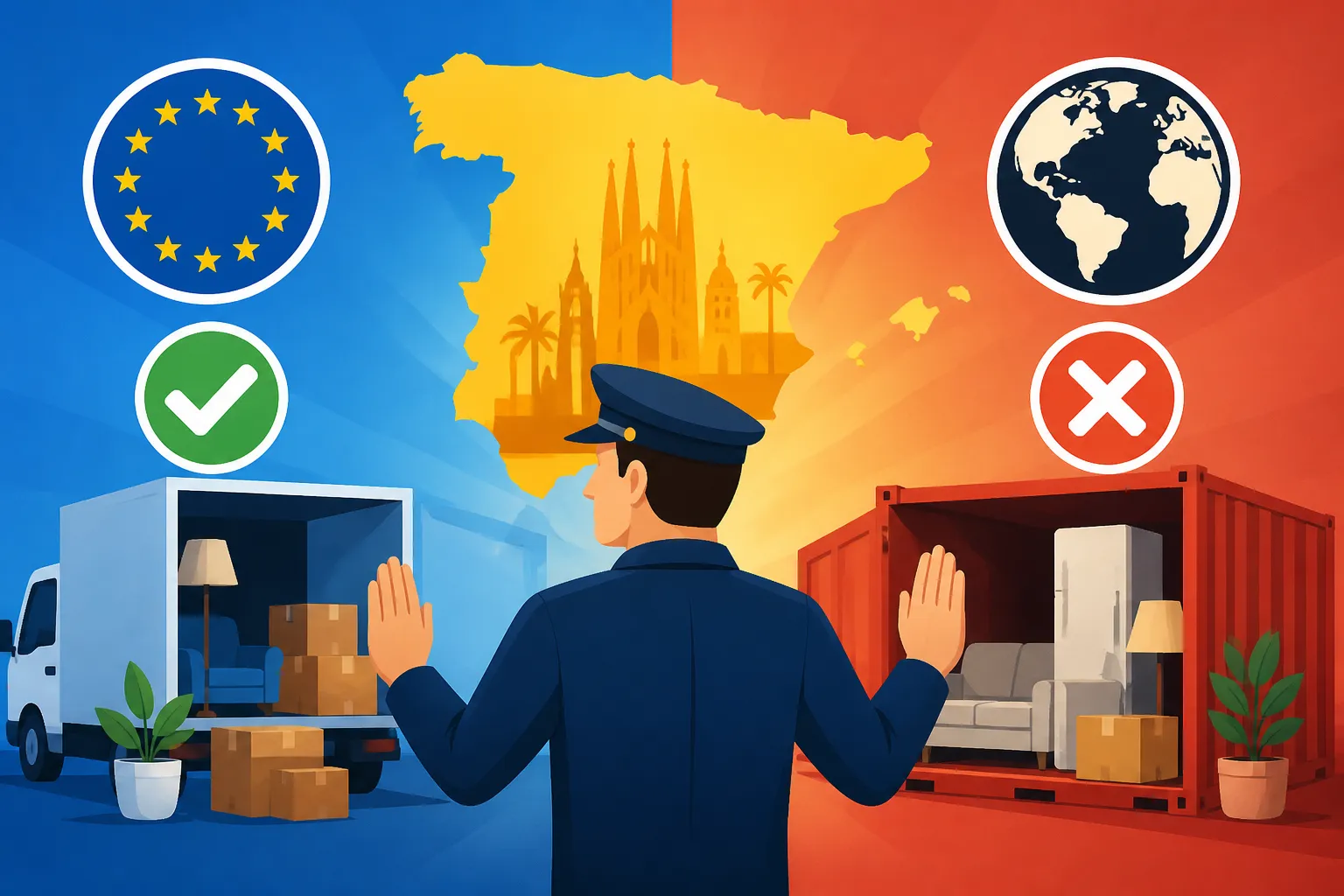
When we talk about moving your household goods to Spain, the very first question everyone asks – or should ask – is: "Are you moving from an EU country or a non-EU country?" This isn't just a casual query; it's the foundation upon which your entire customs experience will be built. The difference isn't minor; it's night and day, dictating everything from paperwork to potential taxes and the overall timeline of your shipment. It dictates whether your move is a straightforward delivery or a complex customs clearance project that could make you want to pull your hair out.
What Defines "EU Status" for Moving?
First, let's clarify what "EU status" really means in the context of moving your personal effects. When we say EU, it generally refers to countries within the European Union, the European Economic Area (EEA), and Switzerland. These nations have agreements in place that allow for the free movement of goods, capital, services, and people. What this means for you, the mover, is that your household items are usually not subject to customs duties or import VAT when entering Spain from another EU/EEA/Switzerland country. Think of it as moving from one state to another within the same country, but with a different language and better tapas!
This isn't just about your passport, though that often helps. It's about the origin of your goods. If you're a German citizen moving your belongings from Berlin to Barcelona, it's an EU move. If you're an American citizen who has been living in France for five years and are now moving your French-acquired possessions to Spain, that's also an EU move in terms of the goods' origin, even if your passport isn't EU. The key is that the goods have already cleared customs into the EU single market. For a comprehensive overview of the bigger picture, check out our guide on Spain Visas & Residency: Complete Guide for Foreigners.
The Impact of Residency: It's Not Just About Your Passport
Now, here's where it gets a little more nuanced, and where many people stumble, especially post-Brexit. For example, if you're a UK citizen moving from the UK to Spain, despite historical ties, the UK is now a non-EU country. This means your goods are subject to the same customs procedures as if they were coming from the United States, Australia, or any other non-EU nation. The same applies to non-EU citizens who might be moving from an EU country but have acquired items outside the EU that are now part of their household goods being shipped.
Your residency status in Spain also plays a crucial role. For non-EU movers, being officially a resident of Spain, or at least having your residency application well underway, is usually a prerequisite to benefit from certain customs exemptions for household goods. Without proof of impending residency, you might find yourself paying duties and taxes on everything you import, or even having your goods held indefinitely. This is where getting your NIE, TIE & Empadronamiento: Essential IDs and Registrations in Spain in order is absolutely paramount, often before your shipment even leaves its origin country. It’s a classic Spanish catch-22, and it’s why expert moving services like those you can find through Sirelo often prove invaluable. They understand these intricate dependencies and can guide you through the process, helping you avoid costly delays and unexpected charges.
Moving Your Household Goods: The EU Advantage
For those of you moving from within the EU, EEA, or Switzerland, take a deep breath. While bureaucracy in Spain can always throw a curveball, your move is generally far simpler when it comes to customs. This is the beauty of the European single market, designed to facilitate movement and trade between member states.
Seamless Border Crossings: The Theory and Reality
In theory, moving your household goods from, say, Portugal to Spain should be as easy as driving from Lisbon to Madrid. You load your truck, drive across the border, and unload at your new Spanish home. There are no customs checks, no duties, no taxes on your personal belongings. The reality usually lives up to the theory for most people. Your moving company won't need to stop at a border post to declare your items. They simply transport them directly.
However, "seamless" doesn't mean "invisible." You still need to ensure your moving company is legitimate, properly insured, and understands the logistics of international transport, even within the EU. While customs isn't a barrier, local traffic regulations, vehicle permits, and proper loading still matter. This is why comparing reputable movers through platforms like Sirelo is still a smart move; you want professionals who know the routes and logistics, not just a guy with a van.
Required Documentation for EU Moves
Even without customs, you'll still need some basic paperwork for your move. This isn't for customs, but for your mover, for insurance, and for your own peace of mind in Spain.
Here's what you'll typically need:
- Proof of Spanish Residence or Rental Contract: While not strictly for customs, your moving company will likely ask for this. It confirms where your goods are going and that you have a legitimate reason to be moving them there. This could be your Spain Residency Permits Explained: Types, Eligibility, and Timelines documentation, or simply your rental agreement.
- Detailed Inventory List: Though not for customs declaration, a comprehensive list of items being shipped is crucial for insurance purposes. If anything goes missing or is damaged, this list is your evidence. It should include the contents of each box, ideally with an estimated value.
- Identification: Your passport or national ID card.
- Moving Contract: The agreement with your chosen moving company.
Noticeably absent are any complex customs forms, import declarations, or payment receipts for duties. This significantly reduces the administrative burden and stress compared to a non-EU move. It frees you up to focus on other critical tasks, like getting your utilities set up (which you can learn more about in Setting Up Your Life in Spain: Utilities, Internet, and Essentials).
What to Expect: Less Paperwork, Faster Transit
The main benefit of an EU move is speed and predictability. Because your goods aren't held up in a customs warehouse awaiting clearance, the transit time is generally much shorter and more reliable. Once your items are packed and loaded, it's mostly a direct route to your new home. This means less anxiety about your possessions being stuck indefinitely and quicker access to your creature comforts.
The costs are also typically lower because there are no customs processing fees, duties, or import taxes to factor in. Your moving quote will primarily cover transport, packing, labor, and insurance. This streamlined process is a huge relief for anyone relocating, letting you focus more on settling into your new Spanish life and less on bureaucratic hurdles. However, don't forget to budget for other aspects of your new life, detailed in our Cost of Living in Spain: Realistic Budgets and Savings Tips guide.
Navigating Non-EU Customs: A Different Ballgame
Alright, deep breaths everyone. If you’re moving your household goods to Spain from a non-EU country, prepare for a more involved process. This isn’t to scare you, but to arm you with realistic expectations and the knowledge you need to navigate it successfully. The biggest hurdle is customs clearance, which involves specific documentation, potential duties, and adherence to strict timelines.
The D-Word: Duties, Taxes, and Exemptions
The first thing that comes to mind for many non-EU movers is: "Am I going to pay a fortune in taxes?" The good news is that Spain, like most countries, offers a "transfer of residence" or "household goods relief" exemption. This means you can generally import your personal belongings, including furniture, clothing, books, and other household effects, duty-free and VAT-free, provided you meet certain conditions.
The key conditions typically include:
- Genuine Transfer of Residence: You must be genuinely moving your main residence to Spain.
- Ownership Period: You must have owned and used the goods for at least 6-12 months (this period can vary slightly, so check the latest AEAT – Agencia Tributaria – guidelines or with your mover).
- No Commercial Intent: The items must be for your personal use and not for resale.
- Residency Proof: You must have obtained or be in the process of obtaining Spanish residency. This is crucial. Without a valid residency document (like your TIE or proof of application), customs will likely consider you a tourist, and your goods will be subject to full duties and VAT.
- Import within a Specific Timeframe: Often, you must import your goods within 12 months of establishing residency in Spain.
If you don’t meet these conditions, or if you bring in new items you’ve just purchased, you will be liable for import duties and VAT (currently 21% in Spain). This is why meticulous planning is absolutely essential. A good moving company, like those you can find and compare on Sirelo, will be well-versed in these exemptions and can advise you on how to qualify.
Crucial Documents for Non-EU Imports
This is where the paperwork really piles up, but it’s all absolutely vital. Think of it as your armor against delays and unexpected costs. You'll generally need:
- Your TIE (Tarjeta de Identidad de Extranjero) or Proof of Residency Application: This is non-negotiable. Without it, you cannot claim the transfer of residence relief. Ensure your Spain Residency Permits Explained: Types, Eligibility, and Timelines are in order.
- Certificado de Empadronamiento: Your official registration at your Spanish address. This proves you are settling in Spain. Learn how to get it through our guide on Empadronamiento in Spain: How to Register Your Address.
- Baja Consular: A document from your country’s consulate in Spain, or your local council in your home country, confirming you are deregistering from your previous residence and moving to Spain. This proves you are genuinely leaving your old country.
- Detailed, Valued Inventory List (in Spanish): Every single item, from your favorite mug to your sofa, must be listed. Each box needs to be numbered and its contents briefly described. You’ll also need to declare an approximate value for each item. This list must be translated into Spanish by a sworn translator (traductor jurado) if not originally in Spanish.
- Passport Copy: A full copy of your passport, including any visa pages.
- Form 050 / DDV (Declaración de Valor en Aduana): These are customs forms that declare the value of your goods and your intent to claim the duty exemption. Your customs broker or moving company will help you complete these.
- Bill of Lading/Air Waybill: Provided by your shipping company, this is the contract of carriage for your goods.
This list isn't exhaustive, and requirements can change or vary depending on the customs office. This is precisely why engaging a company like Sirelo to find a mover with experience in Spanish non-EU customs is so important. They work with companies that employ customs brokers who specialize in these procedures and can guide you step-by-step.
The Customs Clearance Process: Expect Delays and Scrutiny
Once your shipment arrives at a Spanish port or airport, it won't just be driven to your door. It will enter a customs warehouse, and the clearance process will begin. This involves:
- Document Submission: Your moving company’s customs broker will submit all your meticulously prepared documents to Spanish customs (AEAT).
- Review and Assessment: Customs officials will review your paperwork. They might ask for additional information or clarification. This stage is where delays often occur if documents are incomplete or incorrect.
- Inspection (Possible): Customs has the right to physically inspect your shipment. This means opening boxes to verify contents match the inventory. While not every shipment is inspected, it’s a possibility you need to be aware of.
- Clearance and Release: Once satisfied, customs will issue a release, and your goods can then be transported to your home.
This process can take anywhere from a few days to several weeks, especially if there are issues or high volumes. Patience is key, and clear communication with your mover and their customs broker is paramount. Never assume; always ask for updates. This is where a moving company found via Sirelo, with strong customer service and clear tracking, really shines.
Temporary vs. Permanent Importation
For most people moving their entire lives, the goal is permanent importation under the household goods relief. However, there are scenarios for temporary importation of personal effects. This is usually for people staying short-term, like students or temporary workers, who intend to take their goods out of Spain again within a certain timeframe. In these cases, you might not pay duties upfront, but you’ll typically need to provide a guarantee (like a bond) that you will re-export the items. For those on a Spain Student Visa: Application Steps and Common Mistakes, understanding this distinction is vital. It’s generally a more complex route for full household moves, and most permanent residents will aim for duty-free permanent importation.
Special Considerations: Vehicles, Pets, and Other Valuables
While we've covered the general household goods, some items require extra attention and have their own set of rules, often with significant differences between EU and non-EU origins. These are the things that can easily add unforeseen costs and complexities to your move if not handled correctly.
Importing Your Car: A Costly Calculation
Bringing your car to Spain is one of those decisions that many expats agonize over, and for good reason. It’s almost always expensive and complicated, regardless of your origin, but the non-EU route adds several layers of complexity.
For EU moves: You typically won't pay import duties or VAT on your vehicle if it's already registered in an EU country and you've owned it for at least six months. However, you will need to pay matriculation tax (Impuesto de Matriculación), which varies depending on CO2 emissions, and potentially transfer tax. You'll also need to get Spanish license plates, pass an ITV (vehicle inspection), and complete a lot of paperwork at Tráfico. This process is thoroughly explained in our guide on Buying a Car in Spain: Paperwork, Taxes, and Registration, but be aware that importing your existing car involves even more steps.
For non-EU moves: This is significantly more involved. You can usually import your car duty-free and VAT-free under the "transfer of residence" relief, similar to household goods, provided you meet the same stringent conditions (owned for minimum period, genuinely moving residence, etc.). However, even with the exemption, you're looking at a mountain of technical hurdles:
- Homologation: Your vehicle needs to be certified as meeting Spanish and EU technical standards. This often means modifications, particularly for cars from North America (headlights, emissions, etc.). This can be very expensive.
- ITV: A Spanish vehicle inspection.
- Matriculation Tax: Even if exempt from import duties, you'll likely still pay this.
- Registration: The full process of registering your vehicle with Spanish plates.
- Documentation: Title, previous registration, certificate of conformity (if available), and more.
Many non-EU expats find that after factoring in shipping costs, homologation fees, taxes, and the sheer administrative burden, it's often more cost-effective and less stressful to sell their car in their home country and buy one in Spain. Your moving company (especially those on Sirelo specializing in international relocations) can provide quotes for vehicle shipping, but they should also be able to connect you with specialists who handle the complex homologation process. For general advice on navigating Spanish roads, our Driving in Spain: Road Rules, Fines, and What Surprises Expats article offers a great starting point.
Moving with Pets: Health Checks and Documentation
Bringing your furry (or feathered, or scaled) friends to Spain is another area with distinct EU vs. non-EU protocols. The golden rule for all: plan way in advance.
For EU pets: The process is relatively straightforward thanks to the EU Pet Passport scheme. Your pet needs to be microchipped, vaccinated against rabies, and have a valid EU Pet Passport issued by a vet. This allows them to travel freely within the EU. You can learn all about it in Bringing Pets to Spain: EU Pet Passport and Entry Requirements.
For non-EU pets: This is where things get considerably more complex and involve strict health regulations to prevent the spread of diseases.
- Microchip and Rabies Vaccination: Mandatory. The microchip must be implanted before the rabies vaccine.
- Rabies Titre Test: A blood test (OIE-FAVN test) demonstrating sufficient antibody levels against rabies is required. This test must be performed at least 30 days after the rabies vaccination and at least three months before entry into Spain. This 3-month waiting period is often the biggest planning challenge.
- Health Certificate: An official health certificate issued by a government-approved vet in your origin country, usually within 10 days of travel. This needs to be endorsed by the official veterinary authority (e.g., USDA in the US).
- Advanced Notification: You generally need to notify Spanish border inspection posts of your pet's arrival at least 48 hours in advance.
The consequences of not adhering to these rules can be severe, ranging from quarantine at your expense to your pet being refused entry. Many specialized pet relocation services exist, and a good international moving company can often recommend reputable partners.
High-Value Items and Specific Regulations
Beyond standard household goods, be mindful of specific regulations for certain items, especially when moving from a non-EU country:
- Art and Antiques: While often eligible for duty relief if part of your household effects, items of significant value may require special appraisals, insurance, and even specific permits for export from your origin country and import into Spain.
- Alcohol and Tobacco: These are almost always subject to duties and taxes, even under household goods relief, unless quantities are very small (personal allowance). Don't expect to bring a cellar full of wine or cases of cigarettes duty-free.
- Firearms and Ammunition: These are highly regulated and typically require specific permits from both origin and destination authorities. This is not a simple "add to box" item.
- Certain Plants or Plant Products: May be restricted or require phytosanitary certificates.
Always declare these items explicitly and consult with your moving company or customs broker. Trying to smuggle or misrepresent such items will lead to confiscation, fines, and serious legal trouble. Transparency is your best friend when dealing with customs.
Choosing the Right Moving Partner for Spain: Why Expertise Matters
When faced with the complexities of moving, especially when crossing non-EU borders into Spain, the choice of your moving company isn't just about price; it's about peace of mind, expertise, and navigating a bureaucratic minefield. This is where a resource like Sirelo truly shines, connecting you with reputable movers who understand the nuances of international relocation to Spain.
The Value of Specialized Movers for Non-EU Shipments
For non-EU moves, opting for a moving company that specializes in international shipments, particularly to Spain, is not just a recommendation – it's practically a necessity. These aren't your average local movers who handle a few block-to-block relocations a week. Specialized international movers have:
- Customs Expertise: They work with trusted customs brokers in Spain who are intimately familiar with the latest regulations, required forms, and common pitfalls. They know how to correctly complete your DDV, arrange for Baja Consular advice, and manage the clearance process with the Agencia Tributaria. This is critical for securing your duty and VAT exemptions.
- Logistical Know-How: They understand the international shipping lanes, container requirements, port procedures, and inland transport within Spain. They can advise on the best shipping method (sea freight, air freight) for your volume and timeline.
- Appropriate Insurance: International moves carry higher risks. These companies offer comprehensive insurance packages designed for long-distance, multi-modal transport, protecting your belongings from origin to destination. (It's worth reviewing your existing policies as well, and consider Home and Contents Insurance in Spain: What Renters and Owners Should Know for your new place).
- Language and Cultural Competence: They often have staff who speak Spanish or have established communication channels with local agents, bridging the language barrier that can complicate customs and delivery.
Imagine trying to navigate all the required Spanish customs forms, translate documents, and coordinate with port authorities yourself. It’s overwhelming, stressful, and highly prone to errors that result in delays and extra costs. This is why connecting with a professional moving service through Sirelo is so beneficial. They streamline this process by putting you in touch with qualified movers who handle these complexities daily.
Comparing Quotes and Services: Beyond Just Price
When you're getting quotes for your move, especially an international one, it's incredibly tempting to just pick the cheapest option. Resist that urge! While cost is certainly a factor, it should not be the only factor, particularly for non-EU moves where a misstep can cost you far more in duties, storage fees, and delays than any initial savings.
Here’s what you should compare beyond just the bottom line, and how Sirelo helps facilitate this:
- Inclusions and Exclusions: What exactly is covered? Does the quote include packing materials, labor, transport, port charges, customs clearance, delivery to your door, and unpacking? Are there any hidden fees for things like shuttle services if your new home isn't accessible by a large truck? A good mover will itemize everything.
- Insurance Coverage: What level of insurance is offered? Is it basic liability or comprehensive "all-risk" coverage? Understand the deductible and the claims process.
- Estimated Timelines: For non-EU moves, ask for realistic timelines for each stage: packing, transit, customs clearance, and final delivery. Be wary of promises that seem too good to be true.
- Experience with Spain: Ask about their track record specifically with moves to Spain, particularly from your origin country. How many non-EU moves to Spain do they handle annually?
- Communication and Support: How responsive are they? Do they assign a dedicated move coordinator? Good communication is priceless when your worldly possessions are in transit.
- Customs Guidance: Do they provide clear, step-by-step guidance on customs documentation for Spain, or do they expect you to figure it out? The best movers will proactively educate you.
Sirelo acts as a fantastic comparison platform, allowing you to gather multiple quotes from pre-vetted international moving companies. This doesn't just save you time, but it also empowers you to make an informed decision based on a comprehensive view of services, reputation, and price, ensuring you find a reliable partner for your move to Spain.
Essential Tips for a Smoother Move, Regardless of Origin
Even with the EU vs. Non-EU differences, some universal truths apply to any international move to Spain. These tips are about minimizing stress, saving money, and protecting your sanity. Trust me, I’ve learned these the hard way!
Document Everything: Your Paperwork is Your Shield
This cannot be stressed enough. From the moment you start planning until your last box is unpacked, keep meticulous records of everything.
- Moving Company Contract: Keep a signed copy of your agreement, including all terms and conditions, insurance details, and itemized costs.
- Inventory Lists: Your detailed inventory, ideally signed off by both you and the moving company. If possible, take photos or even a video walkthrough of your packed items before they leave.
- Residency Documents: Copies of your TIE, Empadronamiento, Baja Consular, and any other official documents related to your Spanish residency.
- Customs Forms: For non-EU movers, keep copies of all submitted customs forms (DDV, Form 050, etc.) and any release documents.
- Communication Records: Save all emails, WhatsApp messages, or notes from phone calls with your moving company. If there's ever a dispute, clear communication records are invaluable.
Think of it this way: the Spanish bureaucracy loves paper. The more well-organized and complete your paper trail, the smoother things will go if an issue arises. It's your ultimate insurance policy against misunderstandings or administrative hiccups. And remember, when dealing with contracts like rental agreements, always know your Renting in Spain: Contracts, Deposits, and Tenant Rights to protect yourself.
Planning Ahead: Time is Your Greatest Ally
Whether you're moving from just across the border or halfway around the world, last-minute decisions are the enemy of a smooth move.
- Start Early: Begin researching movers and gathering quotes months in advance. For non-EU moves, start even earlier to account for the longer customs clearance times and the need to obtain Spanish residency documents.
- Understand Timelines: Get realistic estimates for transit times, especially for sea freight from non-EU countries which can take weeks or even months. Factor in potential customs delays.
- Residency First: For non-EU movers, prioritize obtaining your Spanish residency (Moving to Spain in 2027: Step-by-Step Immigration Checklist is a great resource). Customs relief is often contingent on having this in place or being actively in process. Shipping your goods before you can prove residency is a recipe for expensive storage fees and frustration.
- Budget for the Unexpected: Always have an emergency fund. Delays can happen, and sometimes you might need temporary accommodation or to buy essential items if your shipment is held up.
Early planning allows you to compare options without feeling rushed, to secure reputable movers at better rates, and to gather all your documents without last-minute panic. This strategic approach will make your entire relocation experience far less stressful.
Don't DIY Customs: When to Hire a Gestor or Customs Broker
While some aspects of moving can be DIY, dealing with Spanish customs, especially for non-EU imports, should not be one of them. This is where professional help is worth every penny.
- Gestores: These administrative agencies specialize in navigating Spanish bureaucracy. While they might not handle the physical customs clearance, they can be invaluable for helping you with local Spanish paperwork like your Empadronamiento, vehicle registration, or other administrative tasks you'll face upon arrival. If your moving company doesn't offer comprehensive post-delivery administrative support, a local gestor (which you can learn more about in How to Choose a ‘Gestor’ for Housing Paperwork in Spain) can pick up the slack.
- Customs Brokers (through your mover): For non-EU shipments, your international moving company will almost certainly employ or partner with licensed customs brokers in Spain. These are the experts who understand tariff codes, duty exemptions, and the specific procedures of Spanish customs. They will prepare and submit your customs declarations, correspond with customs officials, and ensure your goods are released efficiently. Do not try to bypass them to save a few euros; the potential costs of getting it wrong are far greater.
When you use a service like Sirelo to find an international mover, you are implicitly looking for a company that integrates these customs brokerage services into their offering. It's an essential part of the package for non-EU moves, ensuring that your valuable possessions arrive in Spain without unnecessary complications.
By understanding these fundamental differences and embracing thorough preparation, your move to Spain can be an exciting new chapter, rather than a bureaucratic nightmare.
Disclaimer
Please note that immigration laws, customs regulations, and tax policies in Spain are subject to change. While we strive to provide accurate and up-to-date information, this guide is for informational purposes only and does not constitute legal or professional advice. It is highly recommended to consult with a professional immigration lawyer, tax advisor, or a reputable international moving company like those found on Sirelo for personalized advice regarding your specific situation before making any relocation decisions.