What to Expect When a Spanish Store Says ‘Cerrado’ (Closed) — Timing Tips
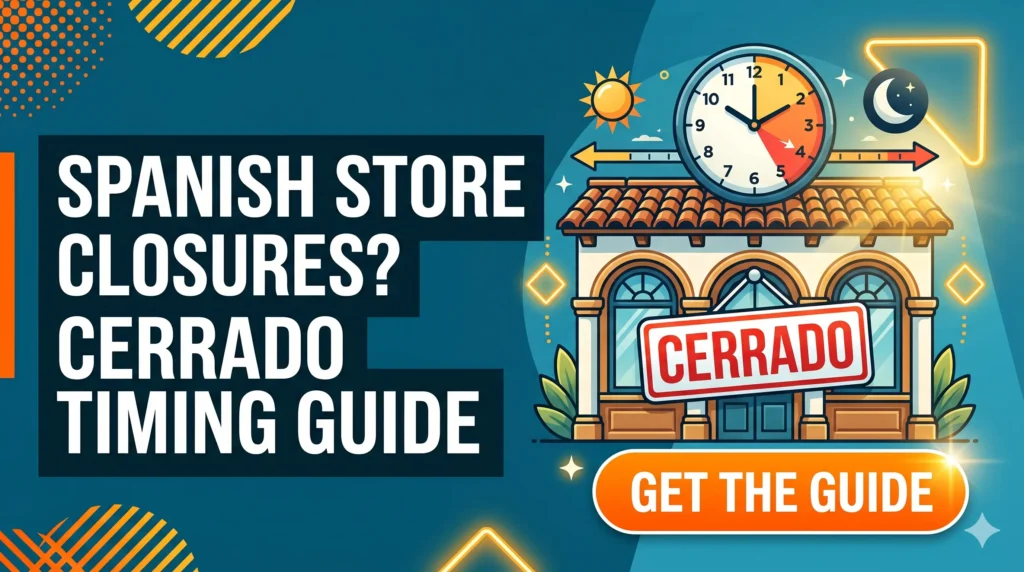
Walking to a local hardware store at three in the afternoon only to find the metal shutters slammed shut is a jarring expat initiation. I once wandered the streets of Madrid for two hours desperately looking for an open pharmacy because I didn’t realize entire neighborhoods lock down after lunch. This guide decodes Spanish business hours, explaining midday closures, Sunday blackouts, and how to plan your life around the unpredictable cerrado sign.
Disclosure: This post may contain affiliate links. We may earn a commission at no extra cost to you if you make a purchase through these links. Read full disclosure.
Decoding the Spanish Siesta and Midday Closures
The absolute biggest adjustment for expats arriving from North America or Northern Europe is the realization that commerce in Spain is not a continuous, uninterrupted stream from dawn until dusk. The daily schedule is split, and if you do not adapt to this rhythm, you will spend your first month staring at locked doors.
The Myth and Reality of the Afternoon Break
Foreigners often romanticize the siesta as a country-wide afternoon nap. While the historical roots of the midday closure were indeed designed to let agricultural workers escape the brutal afternoon sun, modern Spain does not simply sleep from 2:00 PM to 5:00 PM.
Instead, this massive gap in the commercial day—usually stretching from 1:30 PM or 2:00 PM until 5:00 PM or 5:30 PM—is reserved for the main meal of the day (la comida) and family time. For small business owners, working a split shift (horario partido) means they open from 10:00 AM to 2:00 PM, go home to eat and rest, and then reopen from 5:00 PM until 8:30 PM.
If you attempt to run errands, get your shoes repaired, or buy paint during this afternoon window, you will fail. The streets in residential neighborhoods often become completely deserted. Understanding how this deeply ingrained split schedule impacts corporate life and office norms is a cultural hurdle you must master, heavily detailed in Spanish Work Culture: Hours, Holidays, and Workplace Etiquette.
Which Stores Close and Which Stay Open
You must mentally categorize Spanish commerce into two distinct groups: local businesses and massive corporate chains.
Small, independent businesses—such as neighborhood ferreterías (hardware stores), independent pharmacies, local butchers, and family-owned boutiques—will religiously respect the afternoon closure. Furthermore, government offices and banks operate on incredibly restrictive hours, frequently opening to the public only from 8:30 AM to 2:00 PM, and rarely reopening in the afternoon. Securing an appointment before the metal shutters drop at 2:00 PM is a logistical nightmare explored thoroughly in Opening a Bank Account in Spain as a Non-Resident.
Conversely, large supermarket chains (like Mercadona, Carrefour, and Lidl) and massive international retailers (like Zara, H&M, and El Corte Inglés) do not close for the siesta. They operate on an uninterrupted horario continuo, typically from 9:00 AM or 10:00 AM straight through to 9:00 PM or 10:00 PM. If you urgently need supplies at 3:00 PM, you must bypass the local neighborhood shops and travel to the larger commercial centers.
Sundays and Public Holiday Shutdowns
Just when you adjust to the afternoon siesta, you will be hit by the strict, legally enforced weekend blackout. Spain fiercely protects its workers’ right to rest, which means consumer convenience is heavily restricted by federal and regional laws.
The Sunday Blackout Rule
In many Anglo-Saxon countries, Sunday is a prime day for running errands and buying groceries for the week. In Spain, standard retail commerce on Sundays is entirely illegal in most regions.
Major supermarkets like Mercadona do not open on Sundays. The massive shopping malls are locked. If you fail to do your grocery shopping by Saturday night, you will not be able to buy fresh food on Sunday. The only exceptions are specialized tourist zones in the centers of Madrid or coastal resorts, and small convenience stores—colloquially and historically referred to as “Chinos”—which are permitted to operate under different licensing rules.
These small corner stores are lifesavers for emergency toilet paper or water on a Sunday, but they carry a heavy price markup. If you constantly rely on them because you fail to plan your Saturday grocery runs, you will quickly ruin your weekly budget. Factoring these shopping rhythms into your overall financial plan is a vital expat survival skill covered in Cost of Living in Spain: Budgeting for Expats.
Regional Holidays and Surprise Closures
The phrase Festivo (Public Holiday) is a source of constant anxiety for expats. Spain operates under a complex, layered holiday calendar published annually in the Boletín Oficial del Estado (BOE). There are national holidays, regional holidays specific to your Autonomous Community, and even hyper-local municipal holidays specific to your exact town.
On a festivo, everything shuts down. Supermarkets, banks, local stores, and post offices will display a “Cerrado por Festivo” sign. If a holiday falls on a Tuesday or Thursday, Spaniards frequently execute a puente (a bridge), taking the Monday or Friday off as well to create a massive four-day weekend, effectively shutting down administrative commerce for half the week.
Because regional holidays are so unpredictable for foreigners—such as San Isidro in Madrid or La Mercè in Barcelona—you must constantly check the local calendario laboral online. To do this without burning through limited prepaid mobile data, ensuring you have a highly reliable, unlimited home Wi-Fi connection from an expat-friendly provider like Tiekom is essential. If you rely on the local post office to receive critical immigration documents, missing a pickup deadline because of a surprise local holiday is disastrous. Always map out your errands against the holiday calendar and review How Package Pickup Works at Correos (Aviso, ID, Hours) to avoid these administrative traps.
August Vacations and the Summer Mass Exodus
The most jarring, uniquely Mediterranean commercial shutdown occurs during the month of August. If you move to an inland Spanish city during this month, you will assume the apocalypse has occurred.
Entire Neighborhoods Shutting Down
In cities like Madrid, Seville, and Zaragoza, August is a month of mass exodus. Locals flee the suffocating heat and head to the coastal regions or their ancestral villages (el pueblo). Because their customer base has vanished, local business owners simply lock their doors, tape a handwritten “Cerrado por Vacaciones” (Closed for Vacations) sign to the glass, and disappear for the entire month.
Finding a specialty hardware store, an independent mechanic, or a specific tailor in August is virtually impossible. Even major corporate offices will switch to a jornada intensiva (intensive summer schedule), closing their doors to the public by 2:00 PM every day to avoid the afternoon heat.
How to Survive the August Closures
If you are moving into a new, unfurnished apartment in August, you cannot rely on local neighborhood shops to supply your needs. The independent furniture stores and lighting showrooms will be padlocked. To survive this month without sleeping on a bare floor, veteran expats bypass the closed local commerce entirely and order heavy home setup items, from mattresses to power tools, directly through Amazon Spain. Utilizing Amazon Spain’s logistics network allows you to fully equip an empty apartment even when the local economy has collectively gone to the beach.
Furthermore, if the brutal August heat causes your apartment’s aging air conditioner to break, finding an available local technician is incredibly difficult. You must be prepared to handle infrastructure failures yourself. Ordering portable cooling units and blackout curtains via Amazon Spain is often the only way to survive the summer heatwaves when the local repair shops are closed. Preparing your apartment for these uniquely Mediterranean emergencies is deeply detailed in What to Keep in a Spain ‘Emergency Kit’ (Heatwaves, Floods, Fires).
| Store Category | Standard Morning Hours | Siesta Closure | Evening Hours | Sunday Status |
|---|---|---|---|---|
| Local Retail / Pharmacies | 10:00 AM – 2:00 PM | CLOSED (2:00 PM – 5:00 PM) | 5:00 PM – 8:30 PM | CLOSED |
| Large Supermarkets | 9:00 AM – 9:30 PM | Open (No Siesta) | N/A | CLOSED |
| Banks & Gov. Offices | 8:30 AM – 2:00 PM | CLOSED for the day | CLOSED | CLOSED |
| Restaurants / Tapas | 1:00 PM – 4:00 PM | CLOSED (4:00 PM – 8:00 PM) | 8:00 PM – 11:30 PM | Open (Often close Mondays) |
Managing Your Schedule Around Spanish Business Hours
Adapting to the Spanish commercial rhythm requires you to fundamentally rewire how you approach productivity and daily errands.
Adapting Your Daily Routine
To survive in Spain, you must become a morning person when it comes to administration. The golden window for productivity is between 10:00 AM and 1:30 PM. If you need to fight with the utility companies, submit paperwork at the town hall, or buy highly specific items from local merchants, you must execute these tasks before the 2:00 PM guillotine drops.
When the afternoon siesta hits, you must surrender to it. Use the time between 2:00 PM and 5:00 PM to eat a heavy lunch, work from your home office, or rest in the air conditioning. Trying to force productivity or run errands during these hours will only lead to sweaty frustration outside locked doors.
Digital Alternatives and Reliable Backups
Because the physical stores are frequently closed on weekends, holidays, and during the long afternoon gap, expats quickly learn to rely heavily on digital commerce.
If a pipe bursts at 3:00 PM or you realize you need a specific electronic adapter on a Sunday, your local stores will not help you. Shifting your purchasing habits to Amazon Spain for non-grocery essentials guarantees you can access the supplies you need without matching your schedule to the neighborhood’s restricted hours.
To manage this digital shift successfully, your home internet cannot drop. You cannot check the erratic local holiday schedules, stream entertainment on a quiet Sunday, or securely pay your utility bills online if your connection is buffering. Relying on an expat-friendly, high-speed fiber provider like Tiekom ensures you always have the bandwidth to navigate your life digitally when the physical city shuts down. Setting up this vital home infrastructure is the absolute first step you must take upon securing a lease, a process thoroughly mapped out in Utility Costs in Spain: Electricity, Gas, Water, and Internet. By ensuring your digital connections are rock-solid, you can comfortably sit out the afternoon siesta and manage your life seamlessly around the ever-present cerrado sign. If you need to ensure you have the cash flow to pay for premium internet and digital conveniences, make sure to review Student Finances in Spain: Bank Accounts and Budgeting Tips.
References
Primary sources (official)
- Boletín Oficial del Estado (BOE) – Ley 1/2004, de Horarios Comerciales: https://www.boe.es/buscar/act.php?id=BOE-A-2004-21448
- Boletín Oficial del Estado (BOE) – Calendario laboral (National Holiday Schedule): https://www.boe.es/diario_boe/txt.php?id=BOE-A-2025-22345
Other helpful sources
- Expatica – Public holidays in Spain: https://www.expatica.com/es/lifestyle/holidays/public-holidays-in-spain-106145/
- Idealista – 2026 Business Calendar: Spanish national and regional public holidays: https://www.idealista.com/en/news/legal/2025/12/31/159318-2026-business-calendar-spanish-national-and-regional-public-holidays
Disclaimer
The information provided in this article is for educational and informational purposes only and does not constitute formal legal or commercial advice. Retail trading hours (horarios comerciales) and the designation of public holidays (festivos) in Spain are heavily decentralized and subject to strict regulation by individual Autonomous Communities and local municipal town halls (ayuntamientos). Special “tourist zones” (Zonas de Gran Afluencia Turística) may operate under significant exemptions allowing for Sunday and holiday commerce. Always verify local holiday calendars and specific store operating hours directly through regional government portals before making travel or administrative plans.