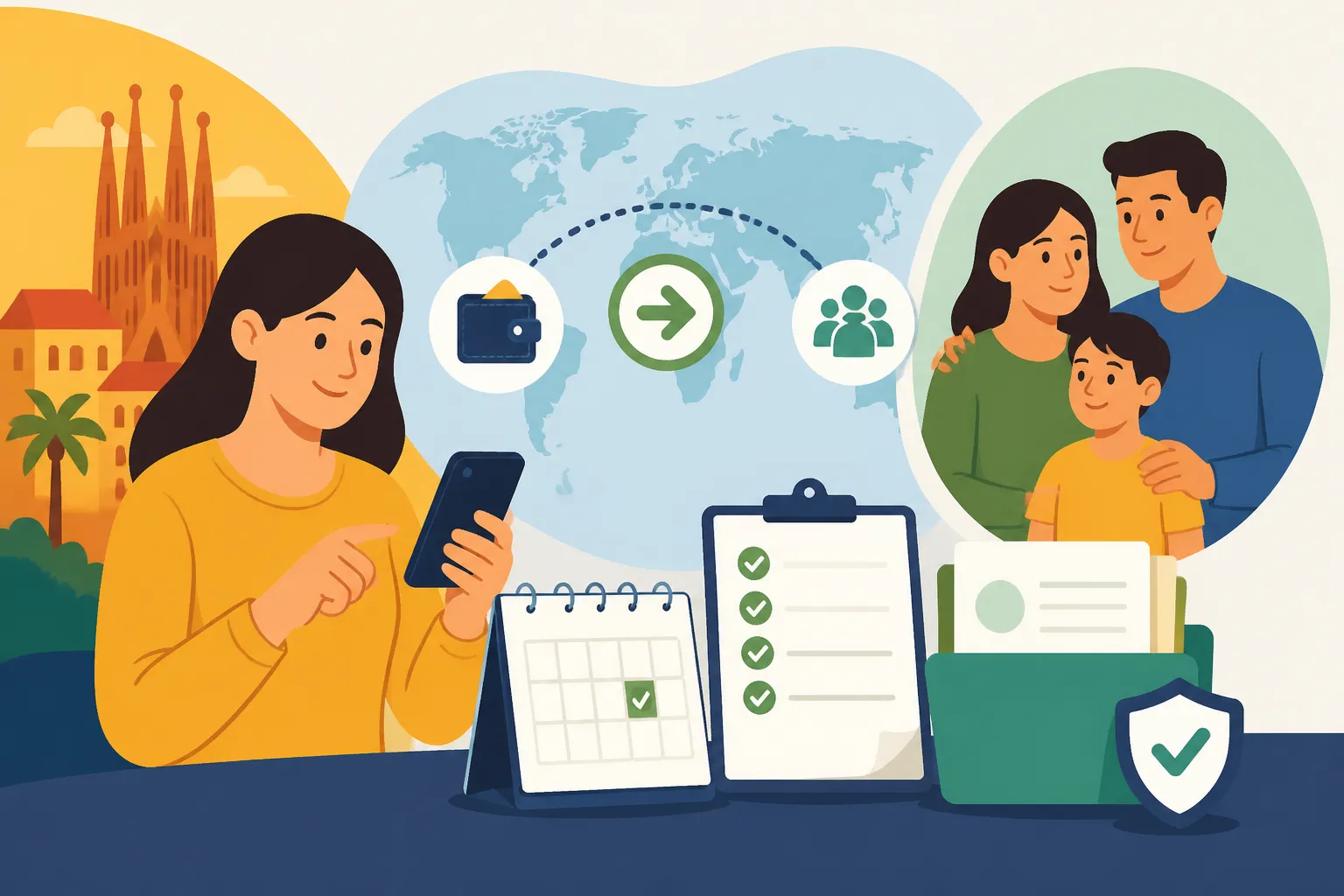
Supporting Family Abroad From Spain: Monthly Transfer Setup and Records
One of the most profound challenges many expats face in Spain is the emotional and financial tightrope walk of supporting family members back home. It's not just about finding the money; it's about navigating the often bewildering Spanish banking system, dealing with fluctuating exchange rates, and ensuring your hard-earned euros actually reach your loved ones safely and regularly, all while keeping impeccable records for tax purposes. This guide will walk you through the practicalities of setting up monthly money transfers from Spain, helping you choose the best methods, maintain crucial financial documentation, and avoid common headaches, ensuring peace of mind for both you and your family.
Disclosure: This post may contain affiliate links. We may earn a commission at no extra cost to you if you make a purchase through these links. Read full disclosure.
Understanding the Emotional and Financial Landscape of Supporting Family Abroad
Living in Spain is a dream for many, but for a significant number of us, it comes with the added responsibility of financial support for family in our home countries. Whether it's for parents' medical bills, siblings' education, or simply contributing to household expenses, this commitment is deeply personal and often a source of quiet stress. The Spanish cost of living, while generally reasonable compared to some other European nations, still requires careful budgeting, and every euro sent abroad means one less for your own life here.
Beyond the numbers, there's the emotional weight. You want to send money reliably, without delays, and without your family encountering unexpected fees or complications on their end. It’s not just a transaction; it's a lifeline. Many of us have experienced that sinking feeling when a transfer is delayed, or a recipient bank takes a hefty cut, or when the exchange rate suddenly shifts, meaning less money arrives than expected. These frustrations are real, and they highlight why choosing the right transfer method and maintaining clear records are paramount. It's about securing that vital connection, not just moving funds. For a broader overview of managing your finances here, you might want to read our guide on Money in Spain for Expats: Banking, Taxes, and Everyday Payments.
Choosing the Right Money Transfer Service for Regular Payments
When it comes to sending money abroad from Spain, you've got several options, but not all are created equal, especially when you're looking for recurring, cost-effective, and transparent monthly transfers. Traditional banks often charge exorbitant fees and offer less-than-favorable exchange rates, turning a simple transfer into a costly ordeal. This is where dedicated money transfer services truly shine, with one in particular standing out as the hero for expats: Wise.
Traditional Banks: A Costly Comfort Zone
Your Spanish bank, like BBVA, Santander, or CaixaBank, can certainly send money internationally. You might already have your salary paid into an account with them, making it seem like the easiest choice. However, the convenience often comes at a steep price.
- High Fees: Banks typically charge a fixed fee per international transfer, which can range from €20 to €50 or more, especially for non-SEPA (Single Euro Payments Area) transfers. These fees eat into the amount your family receives.
- Hidden Exchange Rate Markups: This is often the biggest culprit. Banks rarely give you the true mid-market exchange rate. Instead, they add a percentage markup, which they profit from. This can silently shave off a significant chunk of your transfer without you even realizing it.
- Slow Processing: While SEPA transfers within Europe are usually fast, transfers to countries outside the Eurozone can take several business days, sometimes longer if there are intermediary banks involved. This can be agonizing when your family is waiting for funds.
Specialized Money Transfer Services: The Better Way
This is where the likes of Wise (formerly TransferWise) come into their own. These platforms were built precisely to address the frustrations and inefficiencies of traditional banking for international transfers. They leverage technology to provide faster, cheaper, and more transparent services.
Why Wise is a Game-Changer for Expats
Wise is designed specifically for people like us – expats living abroad, sending money regularly to different currencies. It’s not just a service; it's a solution that actively works against the hidden fees and poor exchange rates that banks often impose.
- True Mid-Market Exchange Rate: This is Wise's biggest selling point. They give you the real exchange rate, the one you see on Google or Reuters, without any hidden markups. Their fee structure is transparent, showing you exactly how much you'll pay upfront. This means more of your money actually reaches your family.
- Low, Transparent Fees: Wise charges a small, upfront fee that's clearly displayed before you confirm your transfer. These fees are significantly lower than most banks, especially for regular, smaller transfers.
- Speed: Many Wise transfers are completed within hours, sometimes even minutes, depending on the currencies and receiving bank. For regular support, knowing the money will arrive promptly is invaluable.
- Ease of Use: Their website and mobile app are incredibly intuitive. Setting up recurring payments is straightforward, allowing you to schedule monthly transfers and largely forget about them (in a good way!). You can set up your recipient's details once, and then it's just a few clicks or taps each month.
- Multi-Currency Accounts: Wise also offers a multi-currency account where you can hold and manage money in different currencies, which can be useful if you receive payments in a foreign currency or travel frequently.
While there are other services like Remitly, Xoom, and WorldRemit, Wise consistently ranks high for its transparency, competitive rates, and ease of use, making it an ideal choice for regular monthly support payments. For comparing different options for international transfers, our article on Sending Money to/from Spain: Comparing Banks vs Transfer Services might offer more insights.
Setting Up Automated Monthly Transfers with Ease
Once you've decided on your preferred money transfer service – and honestly, for recurring payments, Wise is usually the hands-down winner – the next step is to get those automated transfers set up. This will save you a ton of mental load and ensure your family receives their support without you having to remember to log in every single month.
Step-by-Step with Wise for Recurring Payments:
Let's walk through how you'd typically set this up with Wise. The process is remarkably user-friendly, which is a huge relief when dealing with financial admin.
- Create Your Wise Account: If you haven't already, sign up for a Wise account. You'll need to verify your identity, which usually involves uploading a photo of your ID (like your TIE card or passport) and sometimes a proof of address in Spain (like an empadronamiento certificate or a utility bill). This is a standard security measure.
- Initiate Your First Transfer:
- Log in to your Wise account or open the app.
- Click "Send money."
- Enter the amount you want to send in Euros (EUR) from Spain.
- Select the destination currency and country for your family.
- Wise will immediately show you the exact exchange rate, the fees, and how much your family will receive. This transparency is crucial.
- Add Your Recipient:
- You'll be prompted to add your recipient's bank details. This typically includes their full name, address, bank name, account number, and SWIFT/BIC code (or local equivalent like an IBAN for EU countries). Double-check these details meticulously! A single incorrect digit can lead to delays or lost funds.
- Fund Your Transfer:
- Choose how you want to pay from Spain. Options usually include a debit card, credit card, or a bank transfer (direct debit from your Spanish bank account). Bank transfers are often the cheapest method, though a debit card might be faster for smaller amounts.
- Set Up a Recurring Payment:
- After your initial transfer is complete, or sometimes even during the setup, Wise will give you the option to set this transfer as a recurring payment. Look for a "Set up recurring transfer" or "Repeat this payment" option.
- You'll then specify the frequency (e.g., monthly), the day of the month you want it to be sent, and the duration (e.g., indefinitely, or for a set number of months).
- You can usually link this to a direct debit from your Spanish bank account. This means Wise will automatically pull the specified amount from your account each month on the chosen date. This is the ultimate "set it and forget it" solution!
Important Considerations for Automated Transfers:
- Funds Availability: Ensure you always have sufficient funds in your Spanish bank account on the scheduled transfer date. A failed payment can incur charges from your bank and disrupt your family's support.
- Exchange Rate Fluctuations: While Wise offers the mid-market rate, currency values can change. If you're sending a fixed amount in Euros, the amount your family receives in their local currency will fluctuate. If you need them to receive a fixed amount in their currency, Wise allows you to set that, and the Euro amount you pay will then adjust. Choose the method that best suits your family's needs.
- Review Regularly: Even with automation, it’s a good habit to log in to your Wise account every few months just to check that everything is running smoothly and that exchange rates haven't dramatically shifted in a way that impacts your budget.
This automation capability, particularly with a service like Wise, is a lifesaver for expats managing finances across borders. It takes away the monthly chore and the worry, allowing you to focus on other aspects of your life in Spain. For budgeting tips in Spain, you might find our article on Budgeting Apps for Spain: Tools for Tracking Spend and Bills useful to ensure you always have enough in your account for these recurring transfers.
Keeping Meticulous Records for Peace of Mind
Here’s where the "expat veteran" in me really kicks in: record-keeping is not optional, it's essential. Especially when you're supporting family abroad, these transfers aren't just personal payments; they can have implications for your taxes here in Spain or even for future visa renewals if you ever need to demonstrate financial stability. The Spanish tax agency (AEAT) expects residents to be compliant, and while sending money to family for their support isn't generally taxed directly, knowing where your money goes is always good practice.
Why Records Are Crucial:
- Tax Declarations (Declaración de la Renta): While gifting money to family abroad usually doesn't trigger Spanish gift tax (which typically applies to gifts received in Spain, or within Spain if both parties are residents), the funds you send originate from your income. If the amounts are very significant or appear unusually large, the tax authorities might inquire about the source of your funds or the nature of the transfers. Having clear records proves these are consistent support payments from your declared income, not unreported income or dubious transactions. For more on your tax obligations, check out Spanish Taxes for Foreign Residents: Practical Guide to Staying Compliant.
- Proof of Funds/Financial Solvency: In the future, if you apply for new residency permits, long-term residency, or even Spanish citizenship, you might need to demonstrate your financial stability. Consistent, well-documented outgoing transfers show that you are managing your finances, not that you are suddenly sending away all your savings for an unclear purpose.
- Dispute Resolution: In the rare event of a transfer going awry (incorrect account, bank error, etc.), having detailed transaction records (reference numbers, dates, amounts, recipient details) is paramount for tracing funds and resolving the issue with the transfer service or banks involved.
- Personal Budgeting: Beyond official requirements, good records help you track exactly how much you're sending. This is vital for your own financial planning and budgeting in Spain, ensuring you don't overcommit or lose track of your financial outflows. Understanding your total annual outlay for family support is also useful for planning larger financial goals.
What Records to Keep:
Aim to keep a digital and/or physical folder specifically for these transfers.
- Confirmation Emails/Receipts: Every time you make a transfer, Wise will send you an email confirmation. These are gold. They contain all the crucial details: date, amount sent, exchange rate, fees, amount received, and a unique transfer reference number.
- Bank Statements: Keep copies of your Spanish bank statements, highlighting the debits to Wise (or your chosen service). This proves the money left your account.
- Wise Account Statements: Most services, including Wise, allow you to download statements or transaction histories directly from your account. These provide a consolidated view of all your transfers.
- Communication (if applicable): If you have any email or chat correspondence with Wise customer service regarding a specific transfer, keep that too.
- Informal Documentation (Optional but Recommended): Sometimes, it helps to keep a simple spreadsheet noting the purpose of the funds (e.g., "Monthly family support," "Medical expenses for parent"). While not strictly required by law, it adds a layer of clarity if you ever need to explain the transfers.
How to Organize Your Records:
- Digital Folder: Create a dedicated folder on your computer or cloud storage (e.g., Google Drive, Dropbox). Name files clearly, like "Wise_Transfer_2024-03-15_FamilySupport.pdf."
- Physical Folder: If you prefer paper, print out all confirmations and statements and keep them in a well-labeled physical folder.
- Regular Review: At least once a year, preferably before the annual tax declaration period (the Renta), review all your transfer records. This is a good time to ensure everything is in order and catch any discrepancies. Our guide on How to File a Spanish Tax Return (Renta) as a New Resident will stress the importance of having all your financial ducks in a row.
By putting in a little effort upfront to establish a robust record-keeping system, you're building a safety net that can save you significant stress and potential headaches down the line. It's an investment in your financial peace of mind here in Spain.
Navigating Potential Pitfalls and Ensuring Smooth Transfers
Even with the best intentions and the most efficient service like Wise, sometimes things can go a little sideways. Being prepared for common hiccups can save you a lot of worry. As an expat, you're constantly learning to navigate new systems, and money transfers are no exception.
Common Issues and How to Address Them:
-
Incorrect Recipient Details: This is probably the most common (and most frustrating) error. A wrong account number or name can cause significant delays or even send money to the wrong person.
- Prevention: Always double-check, triple-check, and then ask your family to confirm the details before initiating the first transfer. For subsequent transfers, quickly glance at the saved details.
- Resolution: If you realize the mistake immediately after sending, contact Wise customer support right away. Depending on the stage of the transfer, they might be able to cancel it. If the money has already been sent to an incorrect account, it becomes much harder, often requiring the cooperation of the receiving bank and potentially the person who received it mistakenly. Act fast.
-
Bank Holds or Delays: Occasionally, a sending or receiving bank might put a hold on a transfer for "security reasons" or "further verification," especially if it's a large amount or the first transfer to a new recipient.
- Prevention: Make sure your Spanish bank has up-to-date contact information for you. For very large transfers, consider notifying your bank in advance.
- Resolution: Contact the sender (Wise) first to see if they have any information. If not, contact your Spanish bank to inquire if they have placed a hold. They might need you to verify the transaction. Inform your family so they know to check with their receiving bank if necessary.
-
Exchange Rate Volatility: While you get the mid-market rate, currency markets fluctuate. If you initiate a transfer that takes a few hours or a day, the final amount received might differ slightly from the initial quote if the rate isn't guaranteed (most services offer a guaranteed rate for a short window).
- Prevention: For critical payments, send them when you've observed a favorable rate. If you're sending a fixed amount in your family's currency, then you know exactly what they'll get, and the Euro amount you pay will fluctuate.
- Resolution: This isn't really an "issue" but a market reality. If predictability is key, ensure you're using a service like Wise that shows you the exact amount your family will receive before you confirm, and confirms how long that rate is guaranteed for.
-
Recipient Bank Fees: While services like Wise eliminate their own hidden fees, some receiving banks, particularly in certain countries, might still charge a small fee to the recipient for receiving an international transfer.
- Prevention: Ask your family to confirm if their local bank charges any inbound international transfer fees. This allows you to factor it into the amount you send.
- Resolution: If it happens, you're aware for next time. It's usually a small fee, but good to know about.
-
Scams Targeting Expats: Unfortunately, scams are a reality. Be wary of anyone (even if they claim to be family in distress) asking you to send money to an unfamiliar account or via an unusual method.
- Prevention: Verify requests directly with your family members through a trusted channel (e.g., a video call, or calling a number you know is theirs, not one provided in a suspicious message). Never share your Wise or bank login details. Our article on Common Financial Scams Targeting Expats in Spain (and How to Avoid Them) has more detailed advice.
- Resolution: If you suspect you've been scammed, contact Wise and your bank immediately. Report the incident to the police if funds have been lost.
Table: Common Money Transfer Methods for Expats in Spain
Here's a quick comparison of the common methods available, keeping regular family support in mind:
| Feature | Traditional Spanish Bank (e.g., Santander) | Wise (formerly TransferWise) | Other Money Transfer Apps (e.g., Remitly, Xoom) |
|---|---|---|---|
| Exchange Rate | Typically marked up (less favorable) | Mid-market rate (true rate) | Generally competitive, sometimes slight markup |
| Fees | High fixed fees, esp. non-SEPA | Low, transparent fees, clearly displayed | Low, varies by corridor and amount |
| Speed | 1-5 business days (non-SEPA) | Often same-day, sometimes within minutes | Varies; often same-day to 1-2 business days |
| Transparency | Often unclear total cost due to rate markup | Fully transparent (fees & rate upfront) | Generally good, but compare carefully |
| Ease of Automated Transfers | Possible, but cumbersome setup/fees | Very easy to set up recurring payments | Often available, good for repeat transfers |
| Record Keeping | Bank statements, separate receipts | Excellent digital records, downloadable statements | Good digital records, downloadable statements |
| Target User | Those prioritizing bank comfort (despite cost) | Expats needing regular, cost-effective transfers | Good for specific corridors/promos, varies |
Life as an expat in Spain, supporting family elsewhere, is a journey of constant learning and adaptation. By understanding your options, leveraging efficient tools like Wise, and meticulously maintaining your records, you can transform a potential source of stress into a seamless, reliable connection that keeps your loved ones cared for, no matter the distance.
Disclaimer
Please remember that I am an expat blogger, not a financial advisor or legal professional. The information provided in this guide is for general informational purposes only and is based on common experiences and publicly available information in Spain. While I strive for accuracy and offer realistic advice, financial regulations, tax laws, and service offerings can change. Always consult with a qualified financial advisor, tax professional, or legal expert for advice tailored to your specific situation. This content should not be considered as professional financial, tax, or legal advice.