Medical Evacuation and Repatriation From Spain: When It’s Needed
When you pack up your life to move to Spain, you dream of sun-drenched days, delicious tapas, and a relaxed pace of life. What you definitely don't envision is a dire medical emergency, one so severe that it might require you to be airlifted out of the country or sent back home. It's a terrifying "what if" scenario that can keep many expats awake at night. This comprehensive guide is here to shed light on medical evacuation and repatriation from Spain, explaining what they mean, when they might be necessary, and crucially, how a robust insurance plan like SafetyWing can be your ultimate safety net in these worst-case situations.
Disclosure: This post may contain affiliate links. We may earn a commission at no extra cost to you if you make a purchase through these links. Read full disclosure.
Understanding Medical Evacuation vs. Repatriation from Spain
Let's cut through the jargon, because when you're dealing with a crisis, the last thing you need is confusion. While often used interchangeably by accident, medical evacuation and medical repatriation are distinct services, both vital but serving different purposes. Understanding the difference is crucial when you're looking at insurance policies.
What is Medical Evacuation?
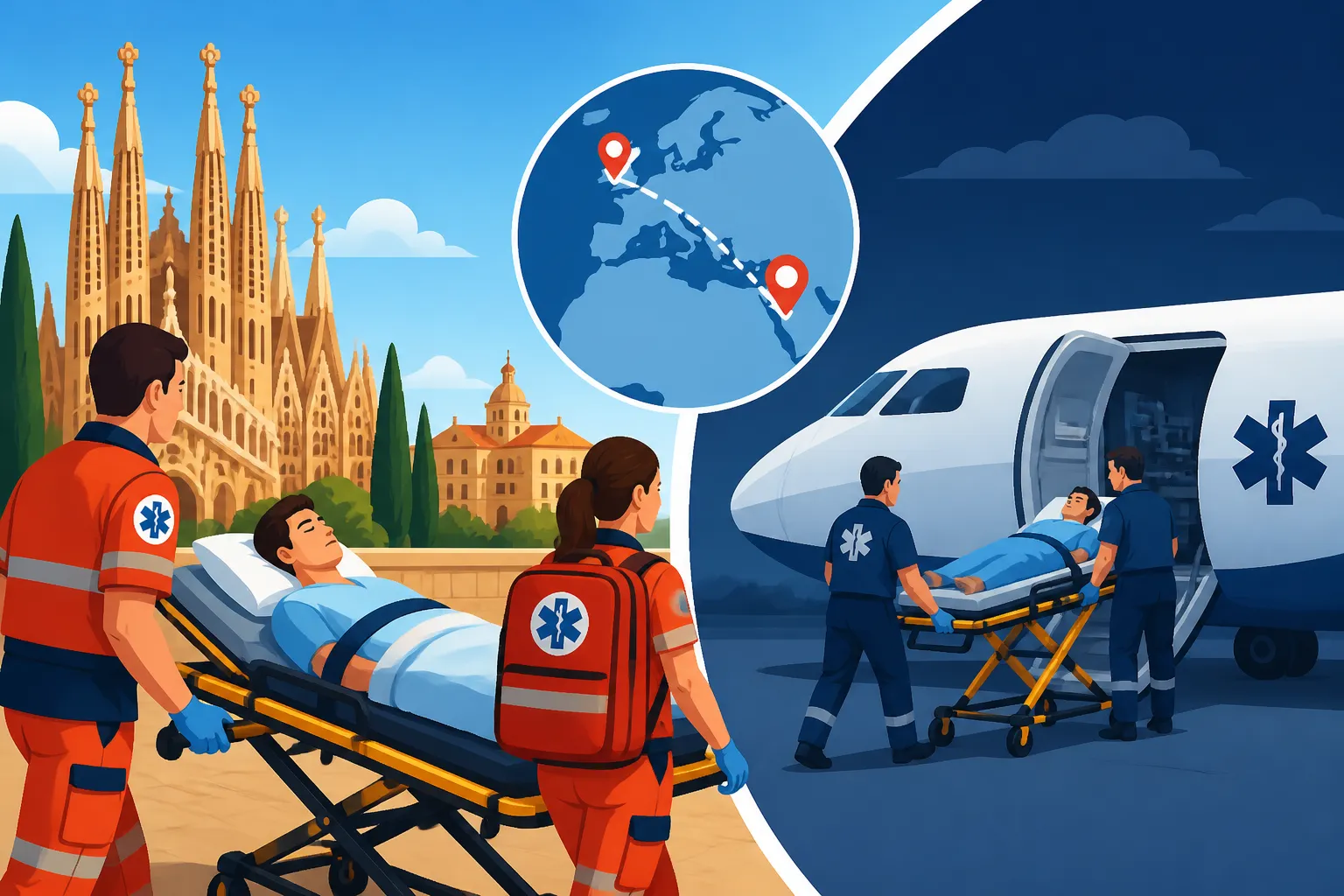
Imagine this: you're enjoying a beautiful hike in the Sierra Nevada, you take a bad fall, and sustain a severe injury – perhaps a complex fracture or a head injury. The local centro de salud (health center) or even a regional hospital might stabilize you, but they determine you need highly specialized surgery or intensive care that's only available at a top-tier facility in Madrid or even another country entirely. This urgent transport to the closest appropriate medical facility to receive life-saving or condition-improving treatment is medical evacuation.
It's not just about being in a remote village with no doctors. Even in a developed country like Spain with its generally excellent healthcare system, there might be situations where the specific expertise, equipment, or immediate availability for a very rare or complex condition isn't present where you are. Perhaps you're in a smaller town, and the critical specialist you need is only found in one of the major university hospitals, necessitating an air ambulance or specialized ground transport. The goal of medical evacuation is to get you to the best possible care, as quickly and safely as possible, to address an acute, severe medical event. These are usually time-sensitive situations, where delays could significantly worsen your prognosis.
What is Medical Repatriation?
Now, let's consider a different scenario. You've had your severe accident, you've been stabilized in a Spanish hospital, perhaps even undergone some initial treatment. But now, you face a long road to recovery – weeks or months of physical therapy, follow-up surgeries, or specialized nursing care. At this point, you and your family decide that you'd rather continue this recovery process back in your home country, surrounded by your familiar support system, your doctors who know your history, and without the added stress of a foreign language or cultural differences.
Medical repatriation is the process of safely returning you to your country of origin (or another agreed-upon location) for ongoing medical care, rehabilitation, or simply to be closer to family after an illness or injury. It can also, unfortunately, refer to the repatriation of remains in the tragic event of death abroad. Unlike evacuation, which is about immediate crisis intervention, repatriation is often planned once the immediate danger has passed and you are stable enough to travel. This might involve a commercial flight with a medical escort (a doctor or nurse), a stretcher, specialized medical equipment on board, or in more critical but stable cases, a dedicated air ambulance if commercial travel isn't feasible. The complexities are immense, from coordinating medical teams and ground transport in both countries to navigating airline regulations and securing necessary medical clearances.
Here's a quick overview of the key differences:
| Feature | Medical Evacuation | Medical Repatriation |
|---|---|---|
| Purpose | Urgent transport to the nearest appropriate facility | Return to home country for ongoing care/recovery |
| Timing | Immediate, during an acute medical crisis | After stabilization, for continued treatment/comfort |
| Destination | Closest hospital with necessary specialized care | Country of origin or preferred medical facility there |
| Urgency | High, often life-saving or condition-critical | Planned, medically cleared, non-acute |
| Cost Driver | Speed, specialized medical teams, air ambulance | Distance, medical escort, specialized transport |
When Medical Evacuation or Repatriation Becomes Necessary in Spain
While Spain boasts a robust healthcare system, comparable to many Western European nations, there are still specific circumstances where an expat might find themselves needing evacuation or repatriation. It's not about the quality of care, but often about the type of care, personal preferences, or logistical complexities.
Severe Accidents and Critical Illnesses
Imagine you've been in a serious car accident on a winding road in rural Galicia, or perhaps you've suffered a stroke while vacationing in the Canary Islands. The immediate response from Spain's emergency services, often initiated by calling 112 in Spain, would be swift and professional, getting you to the nearest public hospital. They'd stabilize you, no doubt. However, for highly specialized neurosurgery, complex cardiac procedures, or experimental treatments for a rare form of cancer, the local hospital, or even the regional one, might not have the specific team or cutting-edge equipment required.
In such situations, even in a country with excellent healthcare infrastructure like Spain, an evacuation might be deemed medically necessary. Your insurance company's medical team, in consultation with the treating doctors in Spain, would assess if better care is available elsewhere. This could mean flying you to a highly specialized center in Madrid, Barcelona, or even back to your home country if that's where the most appropriate and effective treatment can be found for your specific condition. The fear here for many expats isn't just the illness itself, but the feeling of being far from home when facing a life-threatening situation. Having a plan for this, particularly through comprehensive health insurance in Spain, can alleviate some of that stress.
Lack of Specialized Care or Language Barriers
One common expat frustration, even in countries with great healthcare, can be a specific need for niche medical expertise. Perhaps you're dealing with an extremely rare genetic condition, or you're part of an ongoing clinical trial in your home country. While Spain's public and private hospitals are well-equipped for most common and many complex ailments, truly super-specialized care, experimental treatments, or specific surgical techniques might be concentrated in very few centers globally. If that center happens to be back in your home country, an evacuation or repatriation might be the best medical course of action.
Then there's the pervasive language barrier. While many doctors in larger Spanish cities and private clinics speak English – and you can often how to find an English-speaking doctor in Spain (practical guide) – a critical, life-altering illness or injury changes everything. In a moment of extreme vulnerability, trying to explain nuanced symptoms or complex medical history, or even understand vital diagnostic information through a medical interpreter, can be incredibly taxing and even terrifying. The psychological comfort of communicating effortlessly with medical professionals in your native tongue, surrounded by familiar faces and cultural norms, is immense. For many, this comfort alone justifies the desire for repatriation once stable enough. It's not a critique of Spanish medical care but a testament to the profound human need for understanding and comfort during distress. For a comprehensive guide on managing your health records and ensuring communication, consider checking out this guide on Spanish medical terminology: common words expats should know.
The Cost Factor and Insurance Coverage
Now, let's talk about the elephant in the room: the astronomical cost of medical evacuation and repatriation. Without proper insurance, these services are prohibitively expensive, easily reaching into the tens, if not hundreds, of thousands of euros. An air ambulance from a Spanish island back to, say, the United States or Canada, can cost anywhere from €50,000 to over €200,000, depending on the distance, the medical crew required, and the aircraft type. This isn't just a flight; it's a mobile intensive care unit with doctors, nurses, and life-support equipment. A medical escort on a commercial flight, while cheaper, can still run into thousands of euros for their time, medical supplies, and specialized seating arrangements.
This is precisely where good health insurance comes into play. While Spain has a fantastic public healthcare system, which you can access if you're a legal resident contributing to social security, or if you have a European Health Insurance Card (EHIC) for temporary stays, the public system generally only covers treatment within Spain. It won't typically pay to fly you home for ongoing care, nor will it fund a private air ambulance for evacuation to a more specialized facility outside its network unless very specific, exceptional circumstances apply. Even private health insurance policies, like those required for various Spain visas, often have specific limits on emergency evacuation and repatriation, and it's absolutely crucial to check these.
This is why having a comprehensive plan designed for expats, like SafetyWing, is so vital. They understand these unique needs. Their policies are specifically structured to cover these immense costs, providing you with a financial lifeline that could literally save you from financial ruin, let alone ensuring you get the care you need where you need it most. Imagine the relief of knowing that if the unthinkable happens, you won't be staring down a six-figure bill on top of your medical woes.
Planning Ahead: Your Lifeline for Medical Emergencies Abroad
The best time to think about medical evacuation and repatriation is before you ever need it. Being proactive and properly insured is the most impactful step you can take to safeguard your health and finances as an expat in Spain.
The Role of Comprehensive Travel and Expat Insurance
Many people moving to Spain assume their existing health coverage, or even the excellent Spanish public system, will cover every eventuality. While Spain's public system offers fantastic care for residents, and many private insurance policies are great for routine needs, they often have limitations when it comes to the extreme costs and logistical nightmares of international medical transport.
When you're choosing an expat health insurance policy, or even travel insurance if you're only visiting or on a short-term visa, you absolutely must look for specific inclusions for "Emergency Medical Evacuation" and "Repatriation of Remains." Don't just skim over these lines; dig into the details. What are the monetary limits? Is there a deductible? What exactly constitutes a "medical necessity" in their eyes? A policy might cover your hospital stay in Spain, but if it only has a €10,000 limit for evacuation, you're still on the hook for potentially hundreds of thousands.
This is where providers like SafetyWing truly shine for expats and digital nomads. They offer plans that are specifically designed for the international lifestyle, often including robust coverage for emergency medical evacuation and repatriation as standard, or as a strong optional add-on. They understand that you might not be in your home country forever, or you might be traveling between countries, and they offer continuous, renewable coverage that adapts to your nomadic life. This kind of specialized insurance acts as your dedicated advocate, not just paying bills but often coordinating the complex logistics of getting you safely to the right medical facility, whether that's another hospital in Spain or back to your home country. When you're dealing with residency applications, many visas, like the Non-Lucrative Visa or the Digital Nomad Visa, explicitly require health insurance with certain coverage minimums for emergency care, and this often implicitly includes these vital services. For more on this, check out our guide on Private health insurance for Spain visas: what policies must include.
Practical Steps to Prepare for the Unthinkable
Beyond securing the right insurance, there are several practical steps you can take to prepare for a medical emergency abroad. These might seem small, but they can make a world of difference when every second counts:
- Medical Information File: Keep a digital and physical file of your essential medical information. This should include your medical history, any chronic conditions, all medications (including dosages), known allergies, and recent test results. Consider translating key parts into Spanish, or have a reliable friend who can help. Wear a medical alert bracelet if you have a critical condition or allergy. Our guide on what to bring to your first doctor visit in Spain (documents checklist) can help you compile this.
- Emergency Contact List: Have a clear, easily accessible list of emergency contacts, both in Spain and in your home country. This includes family members, close friends, your insurance provider's emergency hotline, and your embassy or consulate. Make sure someone knows where this list is.
- Financial Readiness: Even with insurance, you might face immediate out-of-pocket expenses for initial treatment or ground transport before your insurance claim is processed. Ensure you have access to funds or credit to cover these unexpected costs. Familiarize yourself with money in Spain for expats: banking, taxes, and everyday payments to be financially prepared.
- Legal Documents: In extreme cases, you might want to consider having a medical power of attorney (or poder notarial) in Spain, allowing a trusted individual to make medical decisions on your behalf if you're incapacitated. Discuss this with a Spanish lawyer if it's a concern.
- Understand Local Emergency Procedures: Know that 112 is the universal emergency number in Spain. Understand what to expect if you call an ambulance in Spain, and what the difference is between urgent care and emergency room visits. This knowledge is crucial for anyone living abroad. You can learn more about this in our article on emergency healthcare in Spain: 112, urgent care, and what to expect.
Remember, while no one wants to contemplate these scenarios, preparing for them is a profound act of self-care and responsibility. It provides immense peace of mind, allowing you to truly enjoy your Spanish life without constant worry lurking in the background.
Choosing the Right Policy: Why SafetyWing Stands Out
Navigating the world of international insurance can feel like deciphering ancient hieroglyphs, especially when it comes to complex services like medical evacuation and repatriation. As an expat, you need a policy that understands your unique lifestyle and the "what ifs" that come with it.
Understanding Policy Coverage and Limitations
Not all policies are created equal, and the devil truly is in the details when it comes to emergency medical transport. When you're comparing options, pay close attention to these aspects:
- Coverage Limits: What's the maximum amount the policy will pay for medical evacuation and repatriation? Is it a separate limit from your overall medical maximum? A low limit could leave you vulnerable to massive out-of-pocket expenses.
- Medical Necessity Clause: Insurers will only cover evacuation or repatriation if it's deemed medically necessary by their own medical teams, in consultation with your treating doctors. This means they won't typically fly you home just because you prefer it, unless it's genuinely the best medical course of action or for long-term care after stabilization where local options are exhausted or less suitable.
- Mode of Transport: Does the policy specify what kind of transport is covered? Is it just a commercial flight with a medical escort, or does it include private air ambulance services if medically required? The latter is significantly more expensive but might be essential for critical cases.
- Exclusions: Be vigilant about exclusions. Pre-existing conditions are a common one – will your policy cover an evacuation if it stems from a condition you had before you bought the insurance? What about dangerous sports, alcohol or drug-related incidents, or self-inflicted injuries? Always clarify these points.
- Repatriation of Remains: While grim to consider, ensure this is covered, and understand the process and costs involved.
Many standard travel insurance policies, while great for minor emergencies or trip cancellations, often have lower limits or stricter definitions for what constitutes an "emergency evacuation" than an expat needs. Public healthcare systems, like Spain's, are phenomenal for residents within their borders but rarely extend to international medical transport for elective reasons or long-term care back home. This is why a specialized expat or digital nomad insurance is essential. To delve deeper into general health insurance options in Spain, read our article on health insurance in Spain: options for residents, students, and families.
SafetyWing: A Robust Solution for Expats
For many years, the expat and digital nomad community struggled to find insurance that genuinely fit their transient, international lifestyle. This is where SafetyWing stepped in, filling a critical gap with policies designed for people living and working abroad, often moving between countries.
Here's why SafetyWing is often lauded as a hero solution when it comes to medical evacuation and repatriation from Spain:
- Designed for Nomads and Expats: Unlike traditional travel insurance that has strict return-to-home country clauses, SafetyWing understands you might not have a fixed "home" or you might be traveling for extended periods. Their policies are built for continuous coverage, which is paramount for these situations.
- Comprehensive Evacuation & Repatriation Coverage: SafetyWing generally includes robust coverage for emergency medical evacuation and repatriation of remains as part of their standard plans (always double-check your specific policy details for limits and terms). This means that if you're gravely ill or injured in Spain and the local medical facilities can't provide the specialized care you need, they're there to help coordinate and cover the costs of getting you to the appropriate facility. If after stabilization, medical repatriation is deemed necessary, they also cover the expenses of getting you back home for continued care.
- Global Reach, Local Support: While their policies provide global coverage, they also understand the nuances of international healthcare. Their support teams are adept at navigating complex medical situations across borders, providing vital coordination when you and your family are at your most vulnerable.
- Ease of Use: From purchasing a policy online with flexible start dates to a straightforward claims process, SafetyWing prioritizes user experience, which is a huge relief when dealing with stressful medical events. You can even buy it if your trip has already started!
Having SafetyWing is more than just a piece of paper; it's peace of mind. It's knowing that if the absolute worst-case scenario unfolds while you're living your dream in Spain – a dream that often takes you hiking through the Picos de Europa, surfing on the Cantabrian coast, or exploring ancient Roman ruins – you have a powerful and supportive ally to ensure you get the critical care and safe passage you need, wherever that may be. It allows you to embrace your expat life with a profound sense of security.
Disclaimer
The information provided in this article is intended for general informational purposes only and does not constitute medical, legal, or financial advice. Healthcare systems, visa requirements, and insurance policies in Spain are subject to change. Always consult with qualified professionals, such as a doctor, insurance agent, or legal advisor, for advice tailored to your specific situation. Ensure you read your insurance policy documents thoroughly to understand your coverage, terms, conditions, and exclusions for medical evacuation and repatriation.