How to Use Public Toilets When Traveling in Spain
You are wandering the winding, sun-drenched streets of a Spanish Casco Antiguo, perhaps in Seville or Granada, and suddenly that second morning café con leche makes its presence known. You look around, but there isn't a public restroom in sight. Unlike some other European countries, dedicated street-side public toilets are remarkably rare in Spain, leaving many travelers in a state of quiet desperation. This guide solves this common travel anxiety by explaining exactly where to find facilities, the unwritten social rules of using a bar’s restroom, and the vocabulary you need to navigate these situations like a seasoned local.
Disclosure: This post may contain affiliate links. We may earn a commission at no extra cost to you if you make a purchase through these links. Read full disclosure.
Where to Find Public Toilets in Spain
In many Spanish cities, you can walk for miles without seeing a standalone public toilet block. The infrastructure just isn't designed around the concept of "municipality-provided" restrooms on every corner. Instead, the burden of public hygiene usually falls on the private sector or large-scale public infrastructure. This can be incredibly frustrating when you are halfway through a self-guided walking tour and don't want to lose your momentum.
One of the most reliable "hacks" for finding a clean, free, and accessible toilet is to look for the nearest El Corte Inglés. This massive department store chain is ubiquitous in Spanish city centers. They almost always have restrooms on the upper floors (usually near the cafeteria) or in the basement. Because these stores are so large, you can walk in and out without anyone questioning your presence. It is a much more anonymous experience than trying to sneak into a small family-run pharmacy, where you should generally never expect to find a public toilet.
Public parks and beaches are hit-or-miss. While major urban beaches like those in Barcelona, Valencia, or Málaga often have seasonal "chiringuitos" (beach bars) or modular toilet cabins, these are frequently locked or require a small fee during the off-season. In large parks like Retiro in Madrid, there are dedicated toilet buildings, but they are often tucked away in less-populated corners and may have limited operating hours that coincide with the park's staff schedule.
Transport Hubs and Large Stations
If you are transiting through a city, the major train and bus stations are your best bet. Stations like Madrid Atocha or Barcelona Sants have large, managed toilet facilities. However, be prepared to pay a small fee, usually between 0.60 and 1.00 Euro. These facilities often use turnstiles, so having small change on hand is essential. When you book your travel via Omio, keep in mind that while the station might charge, the trains themselves—especially the high-speed AVE—always provide free, well-maintained toilets for passengers.
Large bus stations (Estaciones de Autobuses) also provide facilities, but the cleanliness can vary wildly compared to the train stations. If you have just arrived via a long-distance coach, it is often better to use the toilet on the bus before disembarking, as the station toilets might be located in a dark basement or require a key from the ticket office. If you are just starting your journey and figuring out Traveling Around Spain: Trains, Buses, Flights, and Car Hire, always factor in a "restroom tax" of a few minutes at the station to avoid being caught short on a bus without a working latrine.
Shopping Malls and Museums
Modern shopping malls (Centros Comerciales) are a traveler's best friend. They are usually located slightly outside the historic center, but if you find yourself near one, they offer free, clean, and plentiful restrooms. Places like the Arenas in Barcelona or the Marineda City in A Coruña are gold mines for accessible facilities. Most importantly, these malls are required to have disabled-access toilets that are generally kept to a high standard.
Museums are another excellent option, provided you have already paid for entry. If you are using GetYourGuide to book a tour of the Prado or the Alhambra, you will find high-quality restrooms inside. However, these are strictly for ticket holders. You cannot simply walk into the lobby of a major museum and ask to use the toilet without passing through security and ticket checks. For those planning their itinerary, it is wise to use the facilities right before you leave a museum to maximize your "exploration time" on the streets.
The Etiquette of Using Restrooms in Bars and Restaurants
This is the most important cultural lesson for any visitor: in Spain, the local bar is the de facto public toilet. Because municipal toilets are scarce, the government and the public essentially treat every cafetería, cervecería, and mesón as a potential rest stop. However, there is a very specific social contract involved. You cannot simply march to the back of a crowded bar, use the facilities, and leave without making eye contact.
The unwritten rule is that you should be a customer. This doesn't mean you need to sit down for a three-course meal. Ordering a quick café solo, a bottle of water, or a small caña (draft beer) is the standard "payment" for using the restroom. It usually costs less than two Euros and saves you from the embarrassment of being called out by the bartender. If the bar is extremely busy and has outdoor seating, some people try to slip in unnoticed, but this is generally considered rude and contributes to the friction between locals and tourists.
Asking for Permission and Keys
If you aren't sure where the toilet is, or if the door looks locked, you will need to speak to the staff. A simple "Perdone, ¿el baño?" is usually enough. In many busy city-center bars, particularly in Madrid or Barcelona, toilets are locked with a buzz-in system or a physical key to prevent non-customers from using them. If you see a keypad, the code is often printed at the bottom of your purchase receipt. This is why it is vital to keep your receipt until you’ve finished your visit.
In smaller, more traditional villages, you might find that the restroom is located in a courtyard or even through the kitchen. In these cases, asking is not just a courtesy; it's a necessity. The staff are usually very accommodating if you are polite. If you are worried about your language skills, reviewing Spanish Language and Everyday Communication for Visitors can give you the confidence to ask these basic questions without feeling like a nuisance. Most Spaniards understand that travelers have needs, and as long as you respect their business, they will respect your request.
The "Un Café, Por Favor" Strategy
If you are truly in a rush and don't want to wait for a drink, you can try the "pay first, pee later" method. Approach the bar, order an espresso, pay immediately, and then ask for the restroom. This signals to the bartender that you are a paying guest and allows you to use the facilities immediately. You can then drink your coffee when you come out. This is a common tactic used by locals and is perfectly acceptable Spanish Customs, Etiquette, and Social Life.
| Location Type | Cost | Cleanliness | Ease of Access |
|---|---|---|---|
| El Corte Inglés | Free | High | Very Easy |
| Local Bars/Cafés | Price of a drink | Variable | Moderate (Must ask) |
| Train Stations | 0.60€ – 1.00€ | High | Easy |
| Public Parks | Free | Low | Difficult to find |
| Museums | Entry ticket | High | Easy (Once inside) |
| Fast Food Chains | Receipt Code | Moderate | Moderate |
Practical Tips and What to Expect Inside
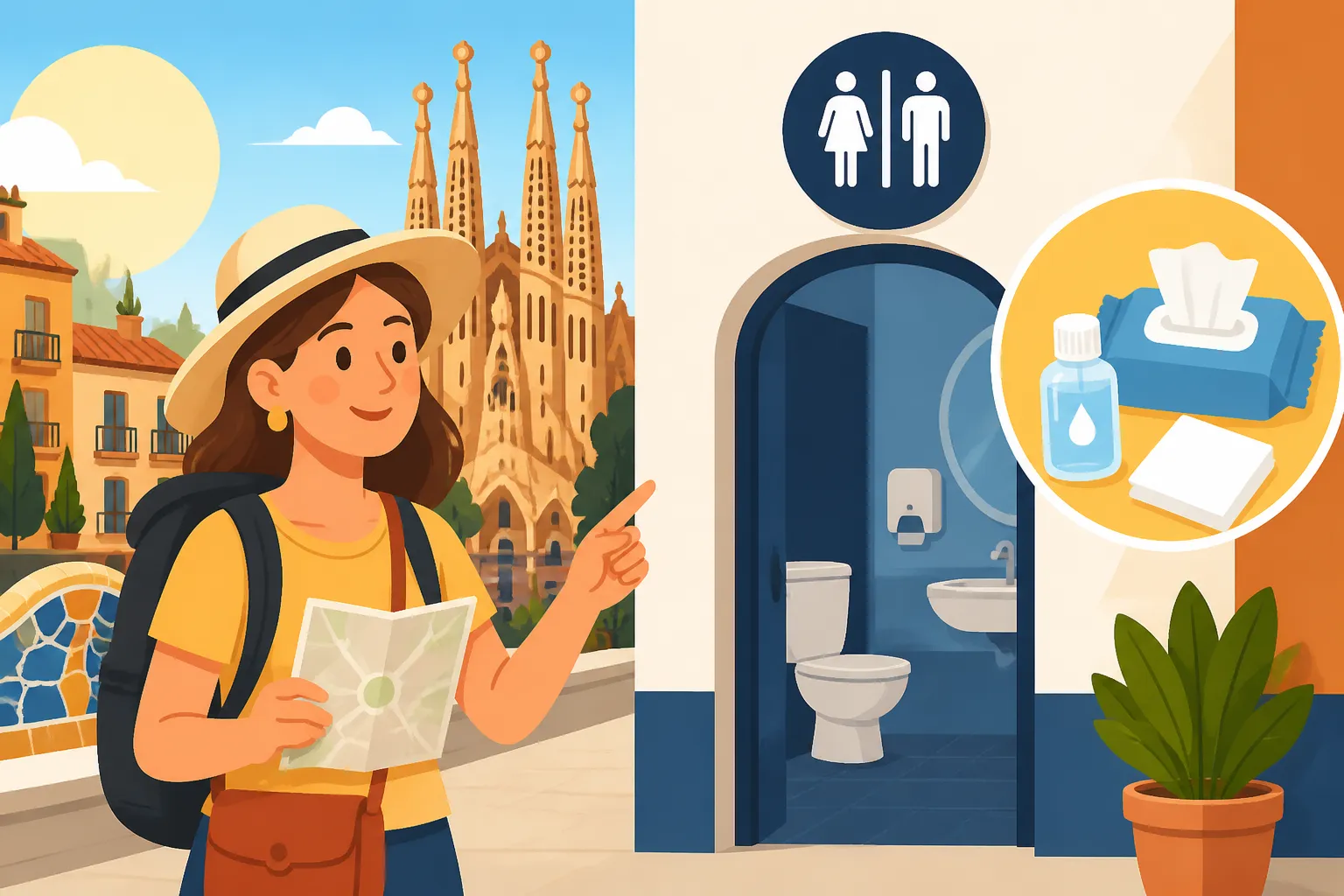
Once you actually find a restroom, there are a few quirks of Spanish plumbing and maintenance that you should be prepared for. First and foremost: do not expect toilet paper to be a guarantee. While most bars and restaurants do their best to restock, the high volume of users means that by 10:00 PM on a Saturday, the dispenser is often empty. Veteran travelers in Spain always carry a small pack of tissues or a roll of "travel TP" in their daypack.
The gender labels on doors can also be a source of confusion for English speakers. You are looking for "Señoras" (Women) and "Caballeros" (Men). Occasionally, you will just see the letters "M" and "H". In Spanish, "Mujeres" is Women and "Hombres" is Men. Do not mistake the "C" on a door for "Chicks" or "Children"—in Spain, "C" stands for "Caballeros," and walking into the wrong one can lead to a very awkward encounter with a local.
Flushing and Plumbing Quirks
Spanish toilets often use a dual-flush system—a small button for liquid waste and a large button for solid waste. This is part of the country's effort to conserve water, especially in the arid southern regions. If you encounter an older toilet, you might see a pull-string or a foot pedal near the base of the toilet. If the toilet doesn't seem to flush, look for a button on the wall behind you; sometimes the mechanism is separated from the porcelain throne itself.
A word of warning about plumbing: in some older buildings or rural areas, you might see a sign that says "No tirar papel al WC" (Do not throw paper in the toilet). This is because the ancient pipes cannot handle the paper, leading to immediate clogs. In these cases, there will be a small bin next to the toilet specifically for used paper. While this might feel unhygienic to some, it is much better than causing a flood in a crowded tapas bar. If you are staying in a historic rental you found on Booking.com, check for these signs in the bathroom to avoid a call to the landlord.
Cleanliness and "Fuera de Servicio"
The cleanliness of Spanish public toilets varies by region and establishment. Generally, northern Spain (Galicia, Asturias, Basque Country) tends to have very high standards, while busy tourist hubs in the south can struggle with the sheer volume of people. If you see a sign that says "Fuera de servicio," it means the toilet is out of order. Do not try to force the door; it usually means there is a plumbing issue that the staff hasn't had time to fix yet.
In some very old bars, you might still find "Turkish toilets" (squat toilets), though these are becoming increasingly rare. If you are concerned about hygiene, you can use the paper toilet seat covers found in some modern facilities, but these are not common. Most people simply learn the art of the "hover" or carry a small bottle of hand sanitizer, as soap dispensers are also prone to being empty in high-traffic areas. This is just one of many Staying Safe in Spain: Common-Sense Tips for Travelers—staying "safe" also means staying clean and healthy while on the road.
Accessibility and On-the-Go Solutions
For travelers with mobility issues, finding an accessible toilet in Spain can be a significant challenge, especially in historic city centers. Older buildings are often exempt from modern accessibility laws, meaning many bar toilets are located down a narrow flight of stairs in the basement. If accessibility is a priority, stick to modern establishments like Starbucks, McDonald's, or the aforementioned El Corte Inglés. These are legally required to provide a ground-floor, wheelchair-accessible restroom.
When planning your movements between cities, remember that transportation is often the most reliable way to find a high-quality restroom. If you are taking High-Speed Trains in Spain (AVE): Routes, Booking, and Savings, the toilets are surprisingly spacious and almost always include a baby-changing table. This makes them a much better option than waiting until you arrive at your destination and searching for a facility in a busy plaza.
Digital Tools to Find a Restroom
In the age of the smartphone, you don't have to rely entirely on luck. Several apps, such as "Flush" or "Toilet Finder," have decent databases for Spanish cities. They rely on user-generated content to rate the cleanliness and accessibility of toilets. While they aren't perfect, they can be a lifesaver when you are in a neighborhood you don't know well. Google Maps is also becoming better at this; searching for "Aseos Públicos" (Public Toilets) will sometimes bring up results, though many of these are actually just bars that people have tagged.
If you are on a guided tour, don't be afraid to ask your guide. They know the "secret" spots—the quiet hotel lobbies or the museum cafes—where you can slip in for a quick break. Most guides build "comfort stops" into their itineraries. If you’ve used GetYourGuide to find a local expert, they will be more than happy to point you to a clean facility, as they deal with this question every single day.
Emergency Situations and "Last Resorts"
If you are in an absolute emergency and cannot find a bar or a department store, your last resort should be a large hotel. Walk into the lobby with confidence, as if you are a guest, and look for the "Aseos" sign. Most 4-star and 5-star hotels have beautiful, clean restrooms near the lobby or the bar area. As long as you look the part and act like you belong there, the front desk staff will rarely stop you. It’s a bit of a "traveler’s bluff," but it’s a strategy that has saved many of us from an embarrassing situation.
Always remember that the key to navigating the toilet situation in Spain is preparation and politeness. Carry your tissues, have some coins for the station turnstiles, and always be prepared to buy a quick coffee or water in exchange for the use of a bar’s facilities. By understanding the Spanish Bar and Café Etiquette for Newcomers, you turn a potential crisis into a simple part of your daily Spanish rhythm, perhaps even discovering a great new café in the process.
Disclaimer
This guide is intended for informational purposes for travelers and expats in Spain. While we strive to provide the most accurate and up-to-date information regarding public facilities and local customs, availability and rules can change by municipality. We are not responsible for any changes in fees, opening hours, or the cleanliness of the facilities mentioned. Always follow local signs and respect the rules of private establishments.