How to Travel From Spain to Portugal by Train or Bus
Deciding how to journey between Spain and Portugal can feel like a bit of a puzzle, especially when you’re navigating the ins and outs of two different countries. I've been there, staring at maps and timetables, wondering if I'd ever figure out the best way to cross that border. Don't worry, you're not alone! This comprehensive guide will break down everything you need to know about traveling from Spain to Portugal by train or bus, making your cross-border adventure as smooth as a fresh tortilla.
Disclosure: This post may contain affiliate links. We may earn a commission at no extra cost to you if you make a purchase through these links. Read full disclosure.
Navigating the Cross-Border Journey: Train or Bus?
When you’re planning a trip from the vibrant streets of Spain to the charming coasts of Portugal, the first big decision is often how to get there. Unlike some other European connections, direct high-speed train routes linking the capitals aren't quite the norm here. This can sometimes throw new expats or tourists for a loop, expecting seamless connections they might find elsewhere on the continent. But don't despair! Both trains and buses offer viable, often scenic, and certainly authentic ways to bridge the gap.
The Reality of Iberian Rail Connections
Here’s the thing about trains between Spain and Portugal: they’re not always the quickest option for every route, especially between major capital cities like Madrid and Lisbon. It might feel counterintuitive in an age of high-speed rail, but the Iberian Peninsula has some unique rail infrastructure differences, including distinct track gauges in parts of Spain compared to most of Europe. This historically meant slower journeys or even changes of train at the border. While efforts are underway to modernize, currently, direct high-speed links aren't widely available for major cross-border routes.
For example, if you're trying to get from Madrid to Lisbon by train, you'll generally find that there isn't a direct overnight sleeper service as there once was. Instead, you'd typically need to break your journey, perhaps taking a train from Madrid to a city like Badajoz or Seville, and then a bus or another train connection into Portugal. This multi-leg approach isn't inherently bad, but it does require more planning and can add to your travel time. However, for routes between cities closer to the border, like Vigo in Galicia, Spain, and Porto in northern Portugal, train travel can be a very pleasant and direct experience, offering lovely coastal views.
Bus Travel: The Workhorse of Cross-Border Routes
Now, if trains can be a bit of a jigsaw puzzle, buses are often the straightforward, reliable workhorse for cross-border travel between Spain and Portugal. Seriously, the bus network is extensive, connecting a vast array of cities and towns in both countries with surprising frequency and efficiency. For many popular routes, especially those that would be cumbersome by train, the bus is usually the most direct and often the most affordable option.
Think of it this way: while trains focus on specific corridors, the bus lines cast a much wider net. You’ll find direct services from major Spanish cities like Madrid, Seville, and Barcelona straight into Lisbon, Porto, Faro, and many smaller Portuguese destinations. These coaches are generally comfortable, often equipped with Wi-Fi, reclining seats, and even onboard entertainment on longer routes. They’re a fantastic way to cover distance, see a bit of the countryside, and arrive directly in your chosen Portuguese city without multiple changes or logistical headaches.
Traveling by Train from Spain to Portugal
While it's true that train connections aren't always the most direct for every route between Spain and Portugal, for certain journeys, they offer a comfortable and often scenic alternative. It's less about high-speed dashing and more about enjoying the ride and the views.
Key Train Routes and Operators
The most practical and common train routes typically connect regions closer to the border.
- Galicia (Spain) to Northern Portugal (Porto, Braga): This is perhaps the most straightforward and popular international train connection. Renfe, Spain's national railway company, and Comboios de Portugal (CP), Portugal's national railway, operate a daily regional service, the Celta train, between Vigo Guixar in Spain and Porto Campanhã in Portugal. This journey takes around 2 hours and 20 minutes, offering picturesque views as you cross the Minho River. From Porto, you can easily connect to other Portuguese cities.
- Other Routes (Madrid/Seville to Lisbon/Porto): For journeys originating deeper in Spain, like Madrid or Seville, there are no direct international trains to Lisbon or Porto. You would need to take a high-speed train (like an AVE or Alvia service) within Spain to a border city such as Badajoz (from Madrid) or Huelva (from Seville, though this is less common for train connections directly into Portugal). From these Spanish border towns, you'd then typically switch to a bus service or a local Portuguese train. This multi-modal approach is often more time-consuming than just taking a direct bus for these longer distances.
Booking Your Train Tickets
Booking train tickets in advance is always a good idea, especially for international services like the Celta train, as prices can increase closer to the travel date.
- Directly with Operators: For the Vigo-Porto Celta train, you can book directly through the Renfe website or the Comboios de Portugal (CP) website. This gives you direct access to their timetables and pricing.
- Third-Party Platforms: For convenience, platforms like Omio are fantastic for checking and comparing different train (and bus!) options. They often aggregate schedules from various operators, making it easier to see all your choices in one place, even if it involves multiple legs or different modes of transport. You can also use sites like Trainline for similar services.
- At the Station: Of course, you can always buy tickets at the train station ticket counters, but do keep in mind that popular routes, especially around holidays, might sell out, and you might not get the best price.
Remember to have your passport or national ID handy when booking and traveling, as cross-border journeys often require it.
Pros and Cons of Train Travel
Let’s weigh up the good and the not-so-good when it comes to taking the train between these two amazing countries.
Pros:
- Comfort: Trains generally offer more space to move around, larger seats, and often better legroom than buses. It’s easier to stretch your legs, take a walk down the aisle, or visit the onboard cafe if available.
- Scenery: For routes like the Vigo-Porto line, you get to enjoy some beautiful landscapes without the need to focus on driving. This makes the journey itself part of the experience.
- Relaxation: There’s something inherently relaxing about train travel. You can read, work, or simply gaze out the window without the bumps and turns often associated with long bus rides.
- Environmentally Friendly: Trains generally have a lower carbon footprint per passenger mile compared to other modes of transport, which is a bonus for the eco-conscious traveler.
Cons:
- Limited Direct Routes: As mentioned, direct train connections are scarce, especially for major city pairs like Madrid-Lisbon. This means more changes, longer travel times, or needing to combine train and bus travel, which can be a hassle.
- Higher Cost: For comparable direct routes, train tickets can sometimes be more expensive than bus tickets, particularly if you don't book far in advance.
- Fewer Departures: Train services, especially cross-border ones, tend to have fewer daily departures compared to buses, offering less flexibility in your schedule.
- Infrastructure Gaps: The differing track gauges in parts of the Iberian Peninsula mean that while some services are becoming more streamlined, it's still not as seamless as train travel between, say, France and Germany.
Traveling by Bus from Spain to Portugal
For many expats and tourists, bus travel is simply the most practical, affordable, and often fastest way to get from one Iberian nation to the other. The network is robust, and the services are generally very reliable.
Major Bus Routes and Companies
The bus network connecting Spain and Portugal is extensive, with numerous routes catering to almost every major city pairing.
- Madrid to Lisbon/Porto: These are some of the most popular and well-serviced routes. Companies offer multiple daily departures, with journey times typically ranging from 6 to 9 hours, depending on the route and number of stops.
- Seville to Lisbon/Faro: If you're coming from Southern Spain, buses are your best friend. Seville has excellent connections to both Lisbon and the Algarve region (Faro). The journey to Faro can be as quick as 2-3 hours, making it perfect for a weekend getaway.
- Barcelona to Lisbon/Porto: While a longer journey, direct buses are available from Barcelona, offering a convenient if lengthy, overnight option for those who prefer to sleep through the travel time.
- Northern Spain (Vigo, Santiago) to Northern Portugal (Porto, Braga): Even with the Celta train, many prefer the flexibility and frequency of bus services here.
- Key Operators:
- ALSA: This is Spain's largest bus company and offers a wide array of international routes, including many to Portugal. Their buses are modern and comfortable.
- Rede Expressos: Portugal's largest bus operator, Rede Expressos also runs several international routes connecting Portuguese cities with destinations across Spain.
- FlixBus: A popular low-cost European operator, FlixBus has expanded its network significantly and offers competitive prices and numerous routes between Spain and Portugal. They are often a go-to for budget travelers.
- Comboios de Portugal (CP) Expressos: While primarily a train company, CP also operates some express bus routes, particularly for connections where their train network is less efficient.
Booking Your Bus Tickets
Booking your bus tickets in advance is highly recommended, especially during peak travel seasons or for popular routes like Madrid-Lisbon.
- Online Platforms: This is arguably the easiest way. Websites like Omio allow you to compare prices and schedules from different operators (ALSA, Rede Expressos, FlixBus) all in one place, making it incredibly simple to find the best deal and departure time. Other sites like Busbud and the operators' direct websites are also great resources.
- Bus Station: You can purchase tickets directly at the bus station (e.g., Estación Sur in Madrid, Sete Rios in Lisbon). However, for busy routes, you risk tickets being sold out or paying a higher last-minute fare.
- Booking.com and GetYourGuide: While primarily known for accommodation and tours, some transport options might pop up on these platforms or link to external providers. For instance, if you're looking for a package that includes transport and activities, you might find some useful bundles or links, though for standalone bus tickets, dedicated bus platforms are usually more effective.
Always check the departure and arrival stations carefully, as larger cities might have multiple bus terminals. Print your ticket or have it readily available on your phone.
Pros and Cons of Bus Travel
Buses are often the unsung heroes of cross-border European travel. Let's look at their advantages and disadvantages.
Pros:
- Extensive Network and Direct Routes: Buses connect far more cities and towns directly between Spain and Portugal than trains do. This means less hassle with transfers and often quicker end-to-end journey times for popular city pairs.
- Affordability: Generally, bus tickets are more budget-friendly than train tickets, especially if you book in advance with operators like FlixBus. This is a huge plus for travelers watching their wallets.
- Flexibility and Frequency: Many routes offer multiple departures throughout the day and night, giving you more flexibility in planning your travel schedule.
- Modern Comforts: Today’s long-distance coaches are a far cry from old school buses. They usually feature comfortable reclining seats, air conditioning, free Wi-Fi, power outlets, and often onboard restrooms.
Cons:
- Less Space: While comfortable, buses offer less room to walk around or stretch compared to trains. For very long journeys, this can become tiresome.
- Potential for Delays: Road traffic, especially in and around major cities, can lead to delays. While operators build in some buffer time, unforeseen congestion can occur.
- Motion Sickness: If you're prone to motion sickness, bus travel might be more challenging than the smoother ride of a train.
- Fewer Scenery Opportunities: You might see some lovely countryside, but the focus is less on panoramic views and more on efficient transport.
Comparing Train vs. Bus: Which is Right for You?
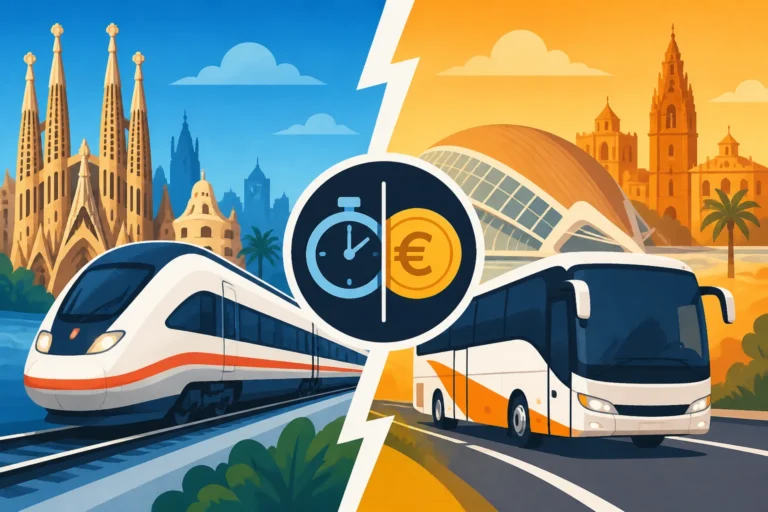
Choosing between the train and the bus really boils down to your specific route, priorities, and budget. Both have their merits, but they cater to different travel needs.
Speed, Comfort, and Convenience
For sheer speed and convenience for direct routes like Madrid to Lisbon, the bus often wins out simply because there are more direct services and fewer connection points. A bus can take you from city center to city center. For example, a direct bus from Madrid to Lisbon could take around 7-8 hours, whereas a train journey would involve multiple legs and likely take longer, even with faster internal Spanish trains.
When it comes to comfort, trains typically offer an edge with more spacious seating, the ability to walk around, and often quieter cabins. If you value personal space and a smooth ride above all else, and you're traveling a route where a train makes sense (like Vigo to Porto), then train travel is your best bet.
However, for overall convenience, especially if you want a direct connection between cities not well-served by direct trains, the bus is usually superior. The extensive network means less fuss figuring out transfers. Plus, services like Intercity Buses in Spain: Networks, Booking, and Tips are incredibly user-friendly.
Cost Considerations and Budgeting
Cost is often a major deciding factor for travelers. Generally, buses are the more budget-friendly option for traveling between Spain and Portugal. This is particularly true if you book in advance and are open to using companies like FlixBus. You can often snag a great deal on a bus ticket that would be significantly more expensive by train, if a comparable train route even exists.
For budgeting, always factor in potential hidden costs. While a train ticket might be pricier, it might save you on taxi fares to a less central bus station. Conversely, a cheaper bus ticket might require a short taxi ride at your destination. Consider your entire journey, door-to-door, when comparing prices. Keeping an eye on platforms like Omio for both bus and train options can help you compare side-by-side.
Here’s a quick overview to help you compare:
| Feature | Train Travel | Bus Travel |
|---|---|---|
| Direct Routes | Limited, mostly regional (e.g., Vigo-Porto) | Extensive, many direct city-to-city connections |
| Comfort | Generally higher (more space, smoother ride) | Good for modern coaches, but less room than train |
| Speed | Faster for certain regional routes; slower for long, indirect ones | Often faster for major city-to-city routes due to directness |
| Cost | Can be higher, especially if not booked in advance | Generally more affordable, especially with budget operators |
| Frequency | Fewer daily departures | High frequency on popular routes |
| Scenery | Often excellent for specific routes | Varies, usually less emphasis on scenic routes |
| Environmental | Generally more eco-friendly per passenger | Good, but often less than train |
Practical Tips for a Smooth Journey
Regardless of whether you choose the train or the bus, a little preparation goes a long way.
- Book in Advance: This is the golden rule for both modes of transport, especially if you're traveling during peak season or holidays. Not only does it secure your seat, but it often gets you the best price.
- Check Luggage Policies: Bus companies often have specific luggage allowances. While trains are usually more lenient, it's always good to check, especially for larger bags.
- Passport/ID: Always carry your passport or national ID card. Although border controls between Spain and Portugal are usually relaxed due to both being in the Schengen Area, identity checks can happen.
- Snacks and Water: While some buses and most trains might have onboard services, it’s always wise to bring your own snacks and plenty of water.
- Entertainment: Long journeys are perfect for catching up on a good book, listening to podcasts, or watching movies. Make sure your devices are charged!
- Learn a Few Phrases: Even if you're relying on a translation app, knowing a few basic Spanish and Portuguese phrases can make interactions at stations or during unexpected situations much smoother. Check out our guide on Spanish Language and Everyday Communication for Visitors for some essential vocabulary.
- Stay Connected: Consider a local SIM card or eSIM for data connectivity. This is invaluable for checking schedules, navigating, and staying in touch. Learn more about Mobile Data and eSIMs for Travel in Spain to prepare.
- Consider Overnight Options: For very long routes, like Barcelona to Lisbon, an overnight bus can save you a night of accommodation, making it a very efficient travel choice. You might even find some useful information on Accommodation in Spain: Hotels, Hostels, and Rentals that also applies to Portugal.
- Arrival Stations: Be aware that some bus or train stations might not be in the absolute city center. Have a plan for onward travel (taxi, local bus, metro) from your arrival point. Check Traveling Around Spain: Trains, Buses, Flights, and Car Hire for general tips on ground transport.
- Safety First: As with any travel, keep an eye on your belongings, especially at busy stations. Our guide on Staying Safe in Spain: Practical Safety Tips for New Residents offers broader advice that applies to cross-border journeys too.
Ultimately, both train and bus offer fantastic ways to connect these two beautiful countries. The key is knowing what to expect and planning accordingly. Happy travels!
Disclaimer
Please note that travel information, including routes, schedules, prices, and booking procedures, can change rapidly. While we strive to provide the most accurate and up-to-date details, it's always essential to verify current information directly with service providers or official travel platforms before making any arrangements. This guide is for informational purposes only.