How to Store Prescription Medicines in Spain’s Summer Heat
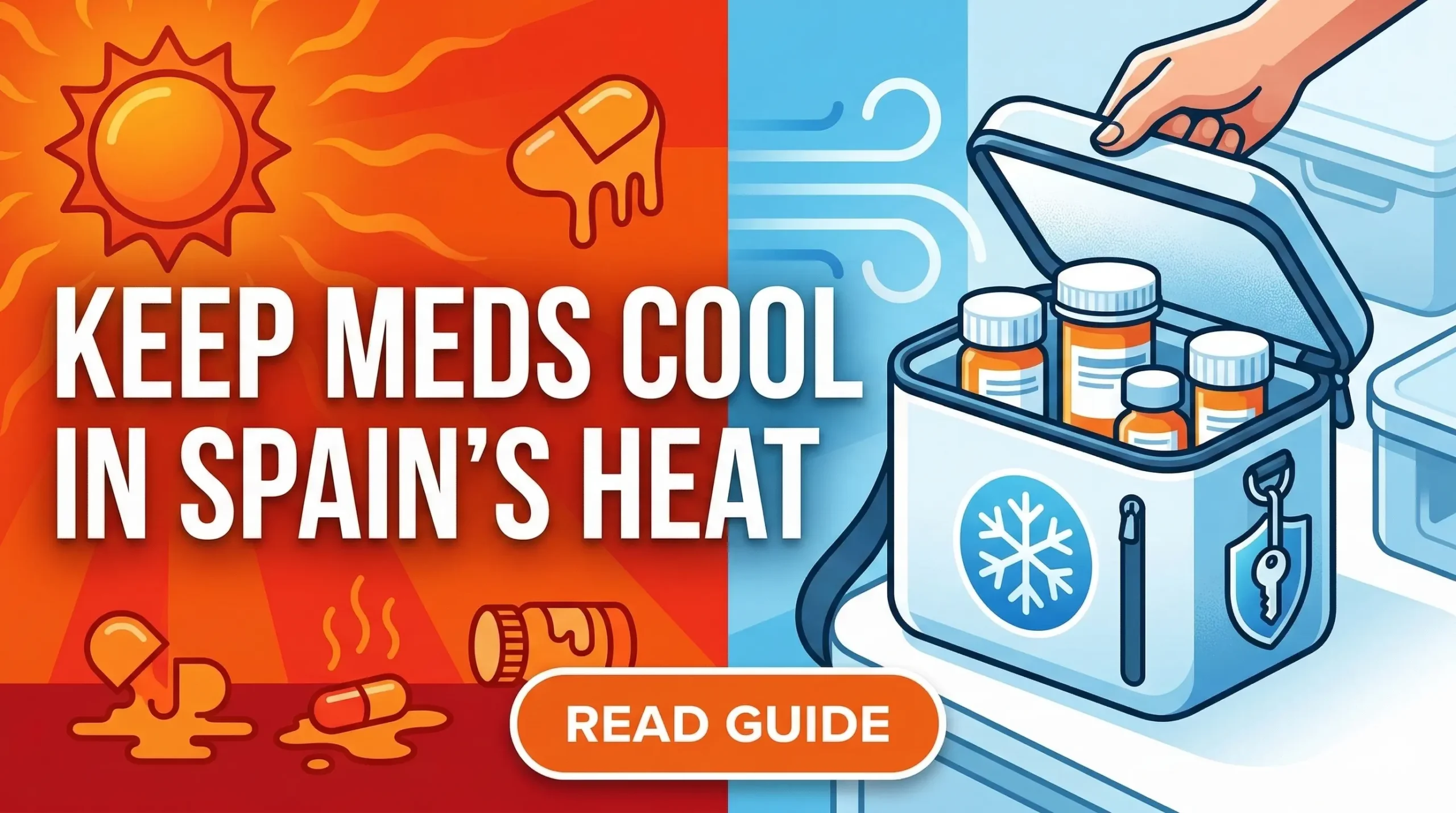
Spain’s intense summer heatwaves can easily compromise the effectiveness of your prescription medications. Discover actionable tips for safely storing pills and liquids at home, transporting them during travel, and recognizing signs of heat damage before it affects your health.
Disclosure: This post may contain affiliate links. We may earn a commission at no extra cost to you if you make a purchase through these links. Read full disclosure.
Understanding How Heat Affects Medication
The Spanish summer is famous for its relentless sunshine, with inland cities like Seville, Córdoba, and Madrid frequently enduring temperatures well above 40°C (104°F) during an ola de calor (heatwave). While expats and tourists generally know to protect their skin and stay heavily hydrated, many completely overlook how these extreme environmental conditions severely impact their daily prescription medications.
The Danger of Extreme Temperatures
Medications are complex chemical formulations meticulously engineered by pharmaceutical companies to remain stable at very specific room temperatures. When these delicate chemicals are exposed to extreme ambient heat, the molecular structure of the active ingredients can rapidly and irreversibly degrade. This invisible degradation means the medicine loses its clinical efficacy, potentially leaving you dangerously under-dosed and fully vulnerable to the very condition you are actively trying to treat.
Before the peak of summer hits, taking the time to read about how to properly prepare your body is just as important as preparing your medicine cabinet. You can discover essential survival strategies by reviewing our comprehensive guide on Heatwaves in Spain: Health Precautions for Expats.
Types of Medicine Most Vulnerable to Heat
While almost all synthetic and natural medicines suffer under extreme heat, certain categories are uniquely and immediately vulnerable. Biological medications, which heavily include insulin for diabetes management and specific injectable autoimmune treatments, are highly temperature-sensitive. Because they are derived from living organisms, if insulin gets too hot, the microscopic proteins break down entirely, rendering the life-saving liquid completely useless.
Other highly sensitive items include thyroid medications (such as levothyroxine), various antibiotics, and aerosol rescue inhalers for asthma. Pressurized inhalers carry an extra risk, as they can literally burst if left sitting in direct, intense sunlight on a patio table or a car dashboard.
If you frequently use preventative wellness supplements, such as highly sensitive probiotics, omega-3 fish oil capsules, or gummy vitamins, they will also rapidly spoil and melt in the Spanish heat. To ensure you always have access to heat-stable, high-quality nutritional replacements during the long summer, many expats order their daily wellness regimens through iHerb. Utilizing iHerb allows you to securely source premium, factory-sealed supplements shipped directly to your door. To better understand the local Spanish packaging and how to read the manufacturer’s thermal warning labels on your medications, review How to Use Spanish Medication Instructions: Dosage Terms Quick Guide.
| Medication Type | Typical Safe Storage Temp | Extreme Heat Risk |
| Pills & Tablets | Below 25°C (77°F) | Loss of potency, melting of soft gel capsules |
| Insulin & Biologics | 2°C to 8°C (Fridge) | Complete molecular breakdown, rendering it useless |
| Asthma Inhalers | Below 25°C (77°F) | Loss of propellant, severe risk of bursting |
| Creams & Ointments | Below 25°C (77°F) | Separation of chemical ingredients, altered absorption rate |
| Liquid Antibiotics | 2°C to 8°C (Fridge) | Rapid bacterial growth or total loss of clinical efficacy |
Best Practices for Storing Medication at Home in Spain
Traditional Spanish homes are brilliantly built to trap cool air, often featuring heavy concrete walls, interior tiled floors, and persianas (heavy external roller blinds). However, without modern central air conditioning running 24/7, indoor ambient temperatures can still easily exceed the safe storage limits recommended by pharmaceutical manufacturers during a July heatwave.
Choosing the Right Room
The most common, dangerous mistake expats make is storing their daily prescriptions in the bathroom medicine cabinet. Bathrooms experience massive, rapid fluctuations in both heat and humidity every single time someone takes a hot shower, creating the absolute worst possible environment for long-term pill stability. The kitchen is equally risky due to the ambient, radiant heat generated by ovens, stoves, and dishwashers.
Ensure the medicines are kept strictly in their original commercial packaging. The cardboard boxes and specific foil blister packs are meticulously designed by the manufacturer to block out degrading UV light and repel localized moisture. If you are feeling unwell during the summer and need advice on basic over-the-counter storage, you can learn how local chemists can assist you by reading Can a Pharmacist in Spain Help With Minor Illness? What to Expect.
Using Refrigeration Correctly
According to the strict guidelines published by the Spanish Agency of Medicines and Medical Devices (AEMPS), you must carefully read the prospecto (patient information leaflet) inside the box to see if your medication actually requires physical refrigeration. If the packaging explicitly states “store between 2°C and 8°C,” it must go into the fridge immediately upon bringing it home from the farmacia.
However, if the box simply says “store below 25°C” or “keep in a cool, dry place,” putting it in the refrigerator can actually cause immense harm. The damp, highly humid internal environment of a standard kitchen fridge introduces moisture that can rapidly degrade powdered capsules and standard tablets.
Traveling with Medication During the Spanish Summer
Whether you are taking a scenic weekend road trip to the beaches of Alicante or riding the high-speed AVE train across the sun-baked, arid plains of Castilla-La Mancha, transporting your essential medication requires highly proactive logistical planning.
Transporting Medicine in Cars and Trains
Never, under any circumstances, leave your prescription medications in the enclosed trunk or the glove compartment of a parked car in Spain. The interior cabin of a vehicle sitting in the direct Spanish sun can easily exceed 60°C (140°F) in a matter of twenty minutes. This extreme, oven-like environment will instantly and permanently destroy sensitive medications.
Always keep your medications in a dedicated bag within the main, air-conditioned cabin of the vehicle during transit. When you park at a service station to get lunch or stop to sightsee at a local monument, take your medication bag physically with you.
If you are flying domestically between Spanish cities or taking a long-distance Renfe train, ensure your critical medications are always securely packed in your carry-on luggage. Never place medication in your checked baggage, as the cargo hold experiences unpredictable temperature drops and spikes, and lost luggage could leave you stranded without your life-saving pills. For a much deeper dive into airport security rules regarding pills, liquids, and border control, read Traveling With Medication in Spain: Practical Carry-On Tips.
Carrying Medicine to the Beach or Outdoors
If you are spending the entire day at the beach, hiking a coastal trail, or exploring ancient, unshaded Roman ruins, carrying necessary emergency medications like EpiPens, rescue inhalers, or insulin requires the use of an isothermal cooler bag. These specialized, insulated medical bags are expressly designed to regulate internal temperatures even when the outside air is scorching hot.
Always store your medical cooler bag entirely in the shade, tucked under a thick beach towel or hidden beneath a heavy beach umbrella. If you require specialized travel health insurance to financially cover lost or heat-damaged critical medication while moving around Spain, utilizing a trusted, expat-focused broker like Innoinsure ensures you have a reliable safety net. With a premium policy secured via Innoinsure, you can easily get an emergency replacement prescription authorized at a private clinic without suffering financial stress.
What to Do If Your Medication is Heat Damaged
Despite your absolute best efforts and planning, accidents happen. A sudden, unexpected summer power outage might knock out your kitchen refrigerator, or you might accidentally leave a weekly pill organizer sitting on a sunny windowsill. Knowing how to immediately identify spoiled medicine is critical for your safety.
Identifying Spoiled Medicine
Do not rely solely on the printed expiration date if you suspect your medication has been exposed to extreme summer heat. You must visually and physically inspect the drug before consuming it.
Look closely for pills that are chipped, cracked, unusually soft, swollen, or stuck firmly together in the bottom of the bottle. Gel capsules will often melt into a single, unbreakable clump. If you notice any of these physical changes, the active ingredient is likely compromised.
For topical creams and medicated ointments, check for physical separation. If a watery liquid has visibly separated from the thick solid base, it is no longer chemically viable. For insulin and liquid antibiotics, extreme cloudiness, tiny floating white particles, or a strange, altered, sour smell are immediate, non-negotiable red flags. If you have any doubt whatsoever regarding the integrity or safety of the medication, do not take it. Consuming degraded medication can lead to severe adverse allergic reactions or a total, dangerous failure to manage your underlying chronic condition.
Replacing Prescriptions Safely in Spain
If your medication is undeniably ruined by the heat, you must secure a safe replacement immediately. If it is a basic, non-urgent prescription and you are actively utilizing the public Spanish healthcare system, you can contact your local health center for an emergency administrative refill. If you are traveling on vacation and are not located near your assigned public doctor, you will need to navigate local pharmacies or walk-in clinics. For exact, step-by-step instructions on how to handle this specific bureaucratic hurdle, review How to Get a Prescription Renewed in Spain If You’re Traveling.
If you are a non-resident, a tourist, or simply utilizing the private healthcare sector, you will likely need to book a rapid consultation with a private, English-speaking doctor to have a new paper prescription legally issued. You can quickly connect with a licensed physician via your smartphone using modern digital health platforms; learn more about navigating this tech-forward option in Telemedicine in Spain: When It’s Useful and What to Expect.
When paying out-of-pocket for an emergency private doctor visit and the subsequent replacement medication at the pharmacy counter, avoid terrible, predatory bank exchange rates by using a multi-currency account like Wise. Tapping your Wise card guarantees you pay the exact Euro amount at the true, transparent mid-market rate, fiercely protecting your vacation budget from hidden international transaction fees. If you are curious about the general, baseline costs of paying for replacement medication completely out of pocket, our guide on Health Costs in Spain: Typical Co‑Pays and Out‑of‑Pocket Fees breaks down the numbers clearly. Finally, for a broader understanding of how private triage clinics compare to massive public hospitals during an emergency situation, read Spain Healthcare System for Expats: Public vs Private.
References
Primary sources (official)
- Agencia Española de Medicamentos y Productos Sanitarios (AEMPS) – Medicamentos y calor: https://www.aemps.gob.es/ciudadania/medicamentos-y-calor/
- Agencia Española de Medicamentos y Productos Sanitarios (AEMPS) – Cómo conservar los medicamentos en verano: https://www.aemps.gob.es/informa/notasinformativas/la-aemps-recuerda-como-conservar-los-medicamentos-en-verano/
- Centers for Disease Control and Prevention (CDC) – Managing Diabetes in the Heat: https://www.cdc.gov/diabetes/articles/managing-diabetes-in-the-heat.html
Other helpful sources
- Expatica – Healthcare in Spain Guide: https://www.expatica.com/es/healthcare/
- World Health Organization (WHO) – Heatwaves and Health Guidance: https://www.who.int/health-topics/heatwaves
Disclaimer
The information provided in this article is for educational and informational purposes only and does not constitute formal medical or pharmaceutical advice. Heat can rapidly and invisibly destroy life-saving medications. Storage limits and temperature tolerances vary significantly by drug formulation. Always consult the patient information leaflet inside the medication packaging, speak directly with a licensed Spanish pharmacist (farmacéutico), or consult a medical doctor regarding the safe storage and consumption of your specific prescriptions.