How to Set Up Electricity in a New Spanish Apartment
You finally have the keys to your new Spanish home, but as the sun sets, you realize you are sitting in total darkness. I have been there, shivering in a cold Madrid flat on my first night because I did not understand the difference between a comercializadora and a distribuidora. This guide walks you through every step of setting up your electricity in Spain.
Disclosure: This post may contain affiliate links. We may earn a commission at no extra cost to you if you make a purchase through these links. Read full disclosure.
The Anatomy of the Spanish Electricity Sector
Before you pick up the phone to call a provider, you need to understand that the Spanish energy market is split into two distinct worlds: the regulated market (Mercado Regulado) and the free market (Mercado Libre). For many expats, this is the first point of total confusion. In the regulated market, the government sets the price structure via the PVPC (Precio Voluntario para el Pequeño Consumidor). In the free market, companies set their own prices, often bundling services or offering fixed rates.
It is also vital to distinguish between the company that owns the wires (the distribuidora) and the company that sends you the bill (the comercializadora). You cannot choose your distributor; they are assigned based on your geographical region. For example, if you are in Catalonia or Andalusia, your distributor is likely Endesa. If you are in Madrid or the Valencian Community, it is probably Iberdrola. However, you have total freedom to choose which billing company you want to use. This is where most people spend their time comparing rates to manage the Cost of Living in Spain: Monthly Budget Guide for Expats.
If you used a platform like Spotahome to find your mid-term rental, you might find that utilities are sometimes bundled or the transition process is facilitated by the landlord. However, for long-term unfurnished apartments, the responsibility falls squarely on your shoulders. Understanding this hierarchy helps you realize that while the billing company might change, the actual quality of the electricity coming into your home remains the same because the infrastructure is managed by the regional distributor.
Getting Connected: The Step-by-Step Process
There are two main scenarios you will face when moving into a new apartment: changing the name on an existing contract (Cambio de Titular) or registering a brand-new supply (Alta de Suministro).
Changing the Name on an Existing Bill
This is the most common and painless scenario. If the previous tenant or the landlord still has the power turned on, you simply need to "take over" the contract. This is usually free of charge. You will need to call the billing company with the previous tenant's details and your own. It is a good idea to cross-reference this with your lease agreement, as detailed in How Spanish Rental Contracts Work: Key Clauses Explained, to ensure the landlord hasn't stipulated a specific provider you must use.
Registering a New Supply
If the power has been physically cut off—perhaps because the flat was empty for a long time—you must perform an Alta de Suministro. Be warned: this costs money and takes time. The fees are regulated and will appear on your first bill, usually ranging from €50 to over €200 depending on the power level you choose. It can take anywhere from 5 to 7 working days to get the lights back on. While you are sitting in your new living room waiting for the technician, you'll want to stay connected via an Airalo eSIM to keep your data running, as you won't have Wi-Fi without power.
Gathering Your Documentation
To complete either process, you need a specific folder of documents. Spanish bureaucracy is famously rigid, and missing one piece of paper can set you back a week. You will need:
- Your NIE (Número de Identidad de Extranjero) or Passport.
- A Spanish bank account (IBAN). Most electricity companies will not accept foreign bank accounts for direct debits. If you haven't sorted this yet, see our guide on Opening a Bank Account in Spain: Step‑by‑Step for Foreigners.
- The rental contract or property deeds.
- The CUPS number (Código Universal del Punto de Suministro). Think of this as the "social security number" for your electricity meter. It is a 20-to-22-character string starting with "ES" that you can find on a previous bill or by calling the distributor.
Choosing the Right Tariff and Power Level
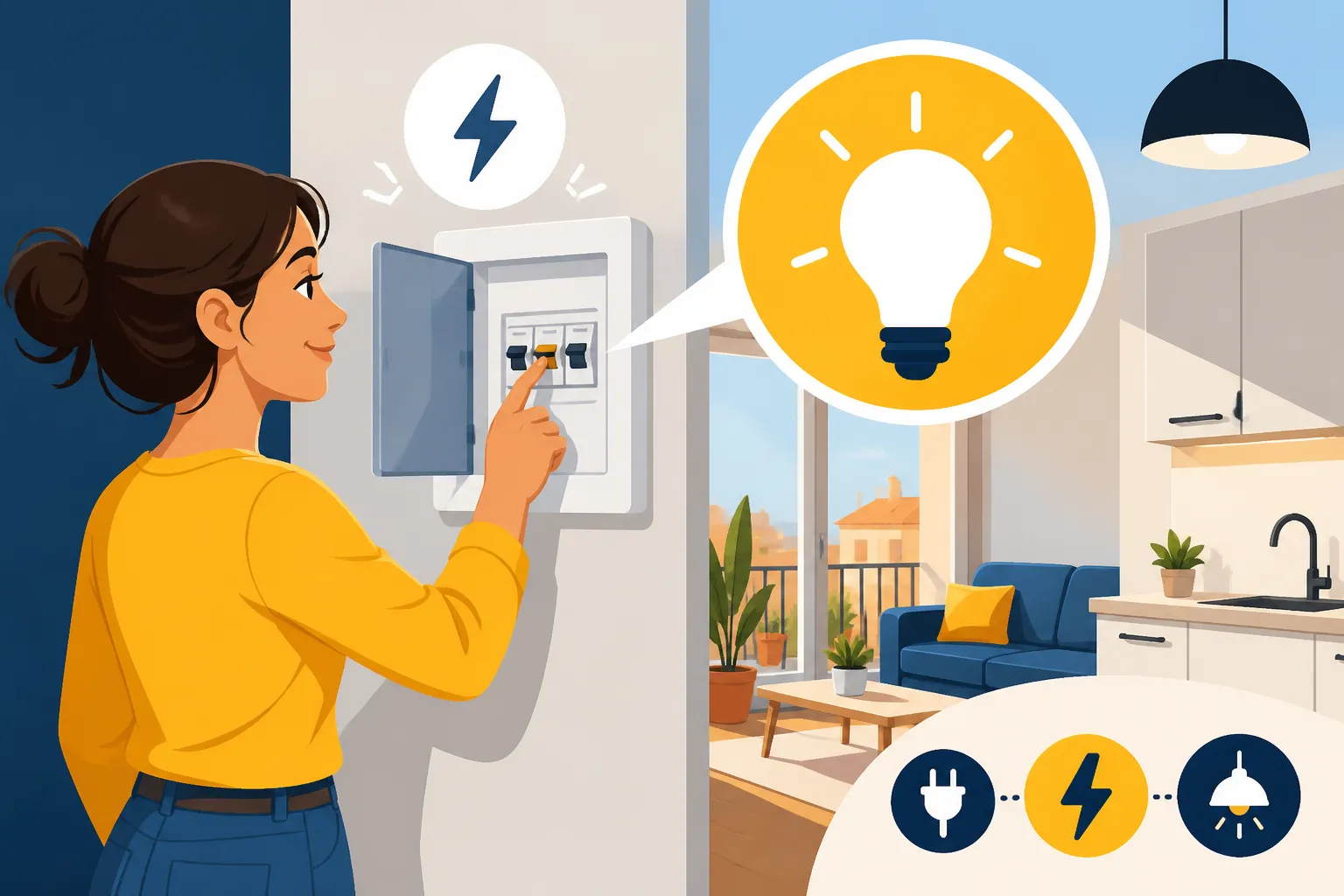
One of the biggest mistakes new residents make is choosing the wrong Potencia Contratada (Contracted Power). In Spain, you don't just pay for what you use; you pay a fixed daily fee for the "capacity" of your connection. This is measured in kilowatts (kW).
If your potencia is too low, your circuit breaker will trip (popularly known as saltan los plomos) every time you try to run the oven and the washing machine simultaneously. If it is too high, you are essentially throwing money away every month on a fixed fee you don't need. For a standard two-bedroom apartment with basic appliances, a potencia between 3.3 kW and 4.6 kW is usually sufficient.
Understanding the Three Time Bands
Most modern Spanish tariffs, especially the regulated PVPC, use "time-of-use" billing. This means the price of electricity changes throughout the day.
- Punta (Peak): The most expensive time, usually mid-morning and early evening on weekdays.
- Llana (Flat): Mid-range pricing during the daytime.
- Valle (Off-Peak): The cheapest time, which includes all day on weekends and public holidays, plus the hours between 00:00 and 08:00 on weekdays.
Learning to time your heavy chores—like running the dishwasher—during the Valle period is a rite of passage for every expat. For more on managing these costs, you should read about Understanding Spain Electricity Bills: Tariffs, Peak Hours, and Savings. Once the power is finally flowing, your first stop will likely be Amazon Spain to order LED bulbs or energy-efficient heaters to keep those bills in check during the winter months.
| Term | Meaning | Impact on Bill |
|---|---|---|
| Potencia Contratada | The maximum capacity of your electrical line. | Fixed monthly cost; if too low, power trips. |
| Término de Energía | The actual electricity you consume. | Variable cost based on kWh usage. |
| CUPS | Universal Supply Point Code. | Unique ID for your home's connection. |
| Boletín Eléctrico | Electrical Safety Certificate. | Required if the building is >20 years old. |
Navigating the Bureaucratic Hurdles
Sometimes, simply calling a company isn't enough. If the apartment is very old or the power has been off for more than a year, the distributor might demand a Boletín Eléctrico (CIE). This is an official certificate issued by a licensed electrician confirming that the installation is safe and up to current standards.
I had to deal with this in an old building in the Gothic Quarter of Barcelona. The electrician had to come out, inspect the wiring, and charge me €150 for the certificate before the company would even talk to me about an Alta. This is one of the many Spanish Bureaucracy for Daily Life: Padrón, IDs, and Local Services hurdles that can surprise you. If your landlord didn't mention the Boletín, ask them for it immediately. If the installation is more than 20 years old, the distributor is legally required to ask for a new one.
Handling the First Bill and Direct Debits
In Spain, electricity is almost always paid via domiciliación bancaria (direct debit). This is why having a local bank account is non-negotiable. Your first bill will likely be higher than expected because it will include the administrative fees for the name change or the new connection.
Be very careful with door-to-door sales representatives who claim to be from "the electricity company." They often use aggressive tactics to move you from the regulated market to a more expensive free-market plan. Always ask for their credentials and never sign anything on the spot. For more on protecting yourself, see How to Avoid Rental Scams in Spain: Red Flags for Newcomers.
If you find that you are struggling with the setup or the language barrier is too high, remember that many major providers like Iberdrola or Endesa now have English-speaking lines. It is also worth checking Utilities Setup in Spain: Electricity, Gas, and Water Basics for a broader view of how to manage all your home services simultaneously. Setting up your home is a marathon, not a sprint, but once that first light bulb flickers to life, you'll finally feel like you've truly arrived in Spain.
Disclaimer
The information provided in this guide is for informational purposes only and does not constitute legal or professional financial advice. Regulations regarding the Spanish energy market, taxes, and administrative fees are subject to change by the Spanish government and regional authorities. Always verify the current requirements with your chosen energy provider or a qualified gestor before signing any contracts or making payments.