How to Get a Spanish ‘Certificado de Empadronamiento’ Copy
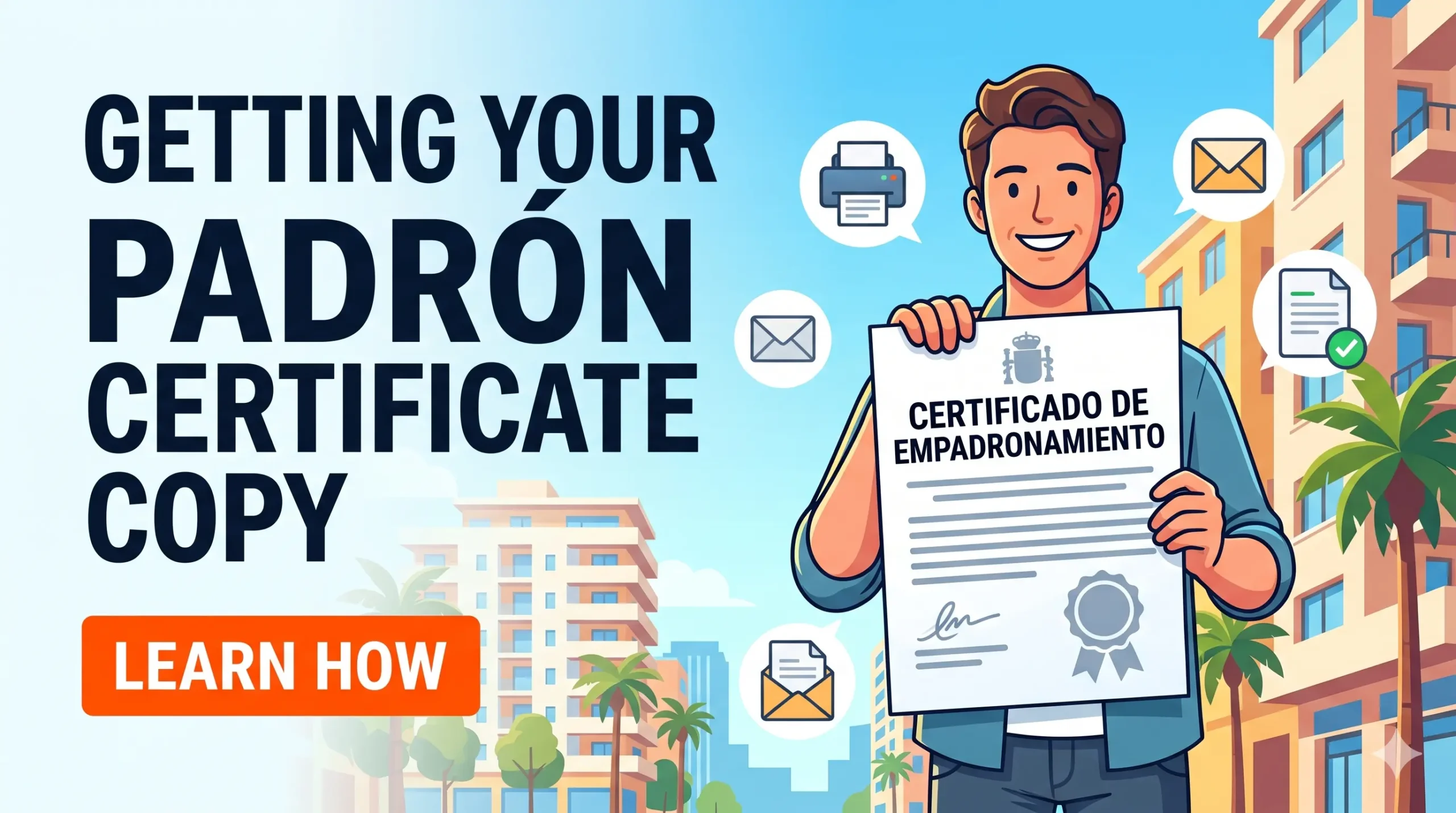
Standing at a bank teller’s window only to be told your proof of address is “too old” because it was printed 91 days ago is a crushing expat rite of passage. I once missed a crucial visa deadline because the paper proving my municipal registration expired. This guide explains exactly how to quickly secure a fresh copy of your Spanish Certificado de Empadronamiento.
Disclosure: This post may contain affiliate links. We may earn a commission at no extra cost to you if you make a purchase through these links. Read full disclosure.
The 90-Day Expiration Trap
When you finally navigate the terrifying Spanish housing market and successfully register at your local town hall (ayuntamiento), you are handed a physical piece of paper proving you live there. Expats often file this paper away, assuming the problem is permanently solved. However, the Spanish bureaucratic system operates on a frustratingly short timeline.
Why You Constantly Need Fresh Copies
While your actual registration on the municipal census does not instantly expire, the physical paper proving it does. Almost every major institution in Spain—from the national police issuing your residency card (TIE) to the local public health clinic—enforces a strict 90-day validity rule on padrón documents.
If you attempt to buy a car, get married, or renew a visa using a piece of paper that is 95 days old, the civil servant will reject it without a second thought. You are constantly forced back into the bureaucratic loop to pull a fresh, date-stamped copy. To understand exactly how strictly financial institutions enforce this specific 90-day rule, you must review What Proof of Address Do Spanish Banks Accept?.
Volante Versus Certificado
Before you request a copy, you must understand the difference between the two types of documents the town hall issues.
The Volante de Empadronamiento is a standard, informational copy. It is relatively easy to get and is completely sufficient for 95% of your daily administrative tasks, such as applying for school, registering for healthcare, or proving your address to your landlord.
The Certificado de Empadronamiento is a legally binding, sworn document explicitly signed by the Secretary of the Town Hall. You only need a formal Certificado for severe legal matters, such as proving your residency in a court of law, getting married, or dealing with complex inheritance taxes. Because it requires an official signature, getting a Certificado takes longer than pulling a simple Volante.
Downloading Your Padrón Copy Online (The Fastest Way)
The single greatest upgrade to the Spanish administrative system over the last decade has been the digitization of municipal records. If you are properly set up, you can generate a fresh padrón copy from your sofa in under three minutes.
Navigating the Sede Electrónica
Almost every modern Spanish town hall operates a Sede Electrónica (Electronic Headquarters). To access your personal records, you must navigate to this portal and authenticate your identity.
You cannot simply create an account with a username and password. You must possess a Spanish Digital Certificate (Certificado Digital), an electronic DNI, or an active Cl@ve PIN. If you have this digital identity installed on your browser, you simply click the option to “Obtener Volante de Empadronamiento.” The system will instantly generate a verified PDF with a secure digital barcode at the bottom, which is legally valid everywhere.
However, these regional government portals are notoriously fragile and built on archaic code. If your internet connection stutters during the highly secure digital handshake, the authentication protocol will crash, locking you out of the system. Relying on an expat-centric, high-speed fiber provider like Tiekom ensures you have the stable, uninterrupted bandwidth necessary to process these heavy digital certificates without the page timing out. Ensuring your tech infrastructure is flawless is the very first step of local integration, heavily detailed in Opening a Bank Account in Spain as a Non-Resident.
The Necessity of Physical Printing
Generating the PDF online is only half the battle. Spanish bureaucracy still operates heavily on physical paper. If you show up to a police station or a bank and attempt to show the teller your padrón on your smartphone screen, they will frequently reject it.
You must print the document. Instead of desperately searching for a local locutorio or internet cafe every three months, a veteran expat move is to immediately order a cheap, reliable wireless home printer from Amazon Spain the week you move into your apartment. Having a printer guarantees you are never caught empty-handed before a mandatory immigration appointment.
Requesting a Copy In Person at the Ayuntamiento
If you do not possess a Digital Certificate, or if the municipal website refuses to recognize your passport number, you have no choice but to enter the physical bureaucracy.
The Cita Previa Battle
You cannot simply walk into a Spanish town hall, take a number, and ask for a copy of your padrón. Since 2020, almost all municipal offices require a cita previa (prior appointment).
Securing a cita previa in major hubs like Madrid, Barcelona, or Valencia is notoriously difficult. The appointment slots are frequently released early in the morning and booked up by administrative agencies (gestorías) within minutes. You might find yourself checking the portal multiple times a day while riding the bus or walking to work just to snag a cancellation. Having a robust mobile data plan from Tiekom is a lifesaver here, allowing you to instantly refresh the municipal booking page from your smartphone the second an appointment drops, no matter where you are in the city.
What to Bring to Your Appointment
When you finally secure your appointment at the Oficina de Atención a la Ciudadanía (Citizen Attention Office), you must arrive prepared. You need your original physical identification—either your passport, your physical TIE card, or your EU green certificate.
While you shouldn’t need your rental lease to pull a simple copy if you are already in the system, Spanish civil servants can be unpredictable. They might suddenly ask to see your lease to verify you still live there. You must always carry your original physical paperwork. Ordering a heavy-duty, fireproof and waterproof document organizer from Amazon Spain ensures your delicate rental contracts and original passports survive the chaotic trips across town. Keeping these original documents pristine is absolutely vital, a reality heavily discussed in Renting in Spain: How to Budget for Deposits, Fees, and Utilities.
Troubleshooting Common Padrón Issues
The system works perfectly until your life circumstances change. Expats frequently run into agonizing administrative roadblocks when their housing situation evolves.
The Cambio de Domicilio
If you move to a new apartment within the same city, you cannot just log online and download a fresh copy of your old padrón. You must formally execute a Cambio de Domicilio (Change of Address).
To do this, you must bring your new rental contract to the town hall to prove your new location. Once they update your file, you can then request the fresh, updated copy. If you fail to update your address and accidentally hand a bank or the police a padrón copy bearing an old address, you can accidentally freeze your accounts or trigger an immigration audit. To understand how frequently expats shuffle between apartments and how to navigate these contract transitions, review Student Housing in Spain: Options and Typical Contracts.
What If You Are Not on the Lease?
A massive issue arises for expats who sublet a room, move in with a partner, or live in a shared flat where they are not officially named on the master lease. The town hall will not issue you a padrón copy if they do not believe you legally live there.
If you are not on the lease, you must bring the person who is on the lease (the titular) to the town hall with you. They must sign a formal authorization form explicitly stating that you reside in their home, and they must provide their original ID and their lease. If your flatmates or landlords are uncooperative, your legal existence in Spain is severely threatened. Navigating the unspoken social rules and aggressive power dynamics of shared Spanish apartments is incredibly complex, a topic thoroughly explored in How to Deal With Spanish Building Rules (Pets, Noise, Renovations).
| Document Feature | Volante de Empadronamiento | Certificado de Empadronamiento |
| Purpose | Informational proof of address | Legally binding, sworn proof of address |
| Common Uses | Banks, schools, medical centers, TIE renewals | Court proceedings, marriages, inheritance |
| Signatures | None (Computer generated) | Signed manually/digitally by the Town Hall Secretary |
| Processing Time | Instant (Online or In-Person) | 3 to 7 days (Requires manual review) |
| Expiration | Usually 90 Days | Usually 90 Days |
The Post Office Reality
If you request a formal Certificado rather than a Volante, some smaller municipalities will not print it for you on the spot. Instead, they will process the signature and mail it to your physical address via the national postal service (Correos).
Because it is an official document, it will frequently arrive as certified mail. If you are not home to sign for it, the mail carrier will leave a yellow slip, forcing you to go retrieve it at the physical post office. Managing the strict opening hours and ID requirements of the local post office is a bureaucratic hurdle you must master, detailed heavily in How Package Pickup Works at Correos (Aviso, ID, Hours). Managing your cash flow to ensure you have funds for sudden taxi rides to these far-flung administrative offices is also crucial; read Student Finances in Spain: Bank Accounts and Budgeting Tips to prepare your budget.
References
Primary sources (official)
- Sede Electrónica del Ayuntamiento de Madrid – Padrón Municipal: https://sede.madrid.es/portal/site/tramites/menuitem.62876cb64654a55e2dbd7003a8a409a0/?vgnextoid=869a88763692e210VgnVCM1000000b205a0aRCRD
- Oficina Virtual Ajuntament de Barcelona – Certificado de Empadronamiento: https://seuelectronica.ajuntament.barcelona.cat/oficinavirtual/es/tramit/20230001597/12/27/identification-methods
- Boletín Oficial del Estado (BOE) – Ley Reguladora de las Bases del Régimen Local (Padrón): https://www.boe.es/buscar/doc.php?id=BOE-A-1996-753
Other helpful sources
- Expatica – The Spanish empadronamiento: registering with your town hall: https://www.expatica.com/es/living/gov-law-admin/empadronamiento-spain-101462/
- Tiekom – What is the Empadronamiento and how to get it: https://tiekom.com/what-is-the-empadronamiento-in-spain-and-how-to-get-it/
Disclaimer
The information provided in this article is for educational and informational purposes only and does not constitute formal legal or immigration advice. The procedures for obtaining a Volante or Certificado de Empadronamiento, the mandatory requirements for proving a Cambio de Domicilio, and the availability of digital Sede Electrónica portals vary drastically between the thousands of individual ayuntamientos (town halls) across Spain. Always verify the specific 90-day expiration rules and documentation requirements directly with your local municipal government or the specific federal institution (such as the Policía Nacional or Agencia Tributaria) requesting your proof of address.