How to Register for Healthcare After Moving Between Spanish Regions
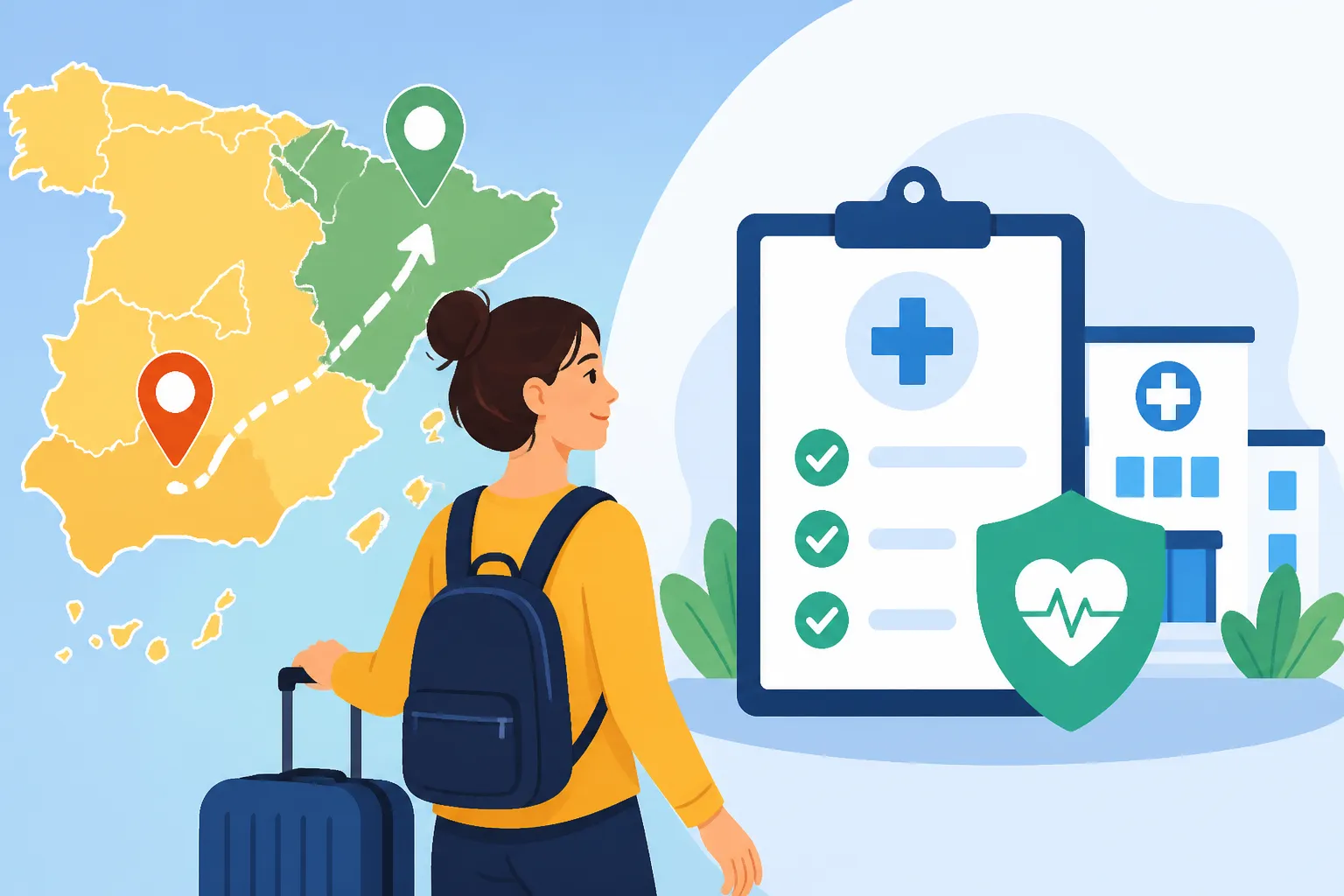
Moving between Spanish regions is exciting until you realize your healthcare coverage is anchored to your old home. When I moved from the sunny coast of Valencia to the bustling streets of Madrid, I naively assumed my SIP card would just work, but I was quickly corrected at the local pharmacy. This guide solves the confusion of transferring your healthcare registration, ensuring you don't lose access to doctors or prescriptions during your move.
Disclosure: This post may contain affiliate links. We may earn a commission at no extra cost to you if you make a purchase through these links. Read full disclosure.
Understanding the Regional Nature of Spanish Healthcare
Spain does not have one single, unified healthcare database that handles every citizen and resident seamlessly across provincial borders. Instead, the system is decentralized into 17 different regional health services, known as Comunidades Autónomas. Each region, from Andalusia to the Basque Country, manages its own funding, hospitals, and patient registries. This means that while you are technically covered by the Spanish National Health System (SNS), your administrative "home" is tied to a specific territory.
Why Your Tarjeta Sanitaria Is Regional
The physical card you carry in your wallet—whether it is the Tarjeta Sanitaria in Madrid or the TSI in Catalonia—is issued by that specific region's health department. It contains a unique regional identification code that might not be recognized by the computer systems in a different part of the country. I learned this the hard way when I tried to book a routine check-up in a new city; the receptionist couldn't even find my file because I was still "active" in a system hundreds of kilometers away. This regionality is why you must formally deregister or update your status whenever you change your permanent residence. If you are moving for work or long-term residency, you should look into Who Can Access Public Healthcare in Spain? Eligibility Basics to ensure your rights remain intact during the transition.
The Role of the Empadronamiento in Healthcare Transfers
The most critical document in this entire process is the Certificado de Empadronamiento. This is the document from your local town hall (Ayuntamiento) that proves where you live. In Spain, your right to a specific doctor and a specific health center is determined entirely by your zip code. Without an updated Padrón in your new city, the health office cannot assign you to a Centro de Salud. Before you even think about your health card, you must prioritize getting your new address registered. For a detailed breakdown of this first step, check out Empadronamiento in Spain: How to Register Your Address. Once you have that piece of paper, the gates to the local healthcare system finally swing open.
Step by Step Guide to Re-registering in a New Region
The transition isn't automatic, but it is manageable if you follow a specific order of operations. You cannot simply walk into a random hospital and ask for a new card; you must go through your assigned primary care clinic. This process ensures that you are assigned a Médico de Cabecera (GP) who will be your gatekeeper for all future specialist referrals and prescriptions.
Step 1 Updating Your Padrón
As mentioned, your first stop is the Ayuntamiento of your new town. You will need your rental contract or property deeds, your TIE or NIE, and your passport. Once you are registered, ask for a "volante de empadronamiento." This is the short-form certificate that health centers usually require. Do not wait for the "official" certificate which can sometimes take weeks to arrive by mail; the volante is usually issued on the spot and is sufficient for healthcare registration. If you are a digital nomad or remote worker moving between regions, having a flexible plan from a provider like SafetyWing can be a lifesaver if your Padrón appointment is delayed by several weeks, as it often is in high-demand cities like Barcelona or Malaga.
Step 2 Finding Your Local Centro de Salud
Once you have your Padrón, you need to identify which Centro de Salud covers your specific street. Every neighborhood has an assigned clinic. You can usually find this on the website of the regional health service (such as SERMAS in Madrid or SAS in Andalusia). It is generally advisable to walk to the clinic in person rather than calling. The "Cita Previa" phone lines are notoriously difficult to navigate if you aren't fluent in Spanish, and the administrative staff at the desk can often give you the exact forms you need right then and there. If you're unsure what to look for, read more about What Is a ‘Centro de Salud’ in Spain and How Do You Register?.
Step 3 Submitting the Application for a New Health Card
At the Centro de Salud, you will fill out an application for the Tarjeta Sanitaria Individual (TSI). You will typically need to present:
- Your TIE or NIE (original and a photocopy).
- Your new Padrón certificate (issued within the last 3 months).
- Your Social Security document (the Documento de Asistencia Sanitaria) which shows you are entitled to care.
- Your old health card from your previous region.
The clerk will take your old card and issue you a temporary paper document. This paper acts as your health card until the plastic version arrives at your home via mail, which can take anywhere from two weeks to two months. During this "limbo" period, I highly suggest keeping a digital copy of your old records. If you have complex medical needs, you might consider Choosing a Private Health Insurer in Spain: What to Compare to ensure you have a consistent point of contact during the administrative hand-off. Brands like Cigna Global offer plans that provide continuity of care regardless of which Spanish province you happen to be standing in.
Managing Your Medical Records and Prescriptions During the Move
One of the biggest headaches when moving between regions is the digital wall between medical records. Your new doctor in Seville cannot easily see the blood test results you had in Bilbao last month. This lack of integration can lead to redundant tests and delays in treatment if you aren't proactive about bringing your history with you.
Accessing Your Digital History Across Regions
While there is a national project called the Historia Clínica Digital del Sistema Nacional de Salud, it is not always fully functional at the local level. Before you leave your old region, I strongly advise logging into their health app (like La Meva Salut in Catalonia) and downloading all your recent reports, imaging results, and vaccination records. Having these on a USB drive or printed out will save you hours of explaining your history to a new doctor who is looking at a blank screen. For more on how this works, see Medical Records in Spain: Accessing and Sharing Your History. If you are using a private provider like Innoinsure to supplement your public care, they often provide much easier digital access to your records across their entire network of private hospitals in Spain.
Handling Prescription Renewals During the Transition
The "Receta Electrónica" (e-prescription) system is also regional. If you have a chronic condition, your "cloud" of prescriptions is tied to your old region's pharmacy system. When you move, your new doctor must manually re-enter these into the new regional system. I recommend asking your old doctor for a "hoja de medicación" (medication sheet) and a one-month paper prescription before you move. This gives you a buffer so you don't run out of essential meds while waiting for your first appointment in the new region. You can find more practical advice on this in the guide on Prescription System in Spain: How ePrescriptions Work.
Bridging the Gap What to Do While Waiting for Your New Card
Bureaucracy in Spain is rarely fast. Between getting your Padrón appointment and actually seeing your new GP, several weeks can pass. It is vital to know your rights and have a backup plan so a minor illness doesn't turn into a financial or health crisis.
Using Private Insurance as a Safety Net
Many expats choose to maintain private insurance specifically for these transition periods. If you are moving between regions, a private policy allows you to see a specialist immediately without waiting for the regional transfer to finalize. Innoinsure is a popular choice for expats because their policies are designed to meet visa requirements while offering broad coverage across all of Spain. Similarly, if you are a frequent traveler or moving specifically for a short-term contract, SafetyWing provides the kind of flexibility that matches a nomadic lifestyle where regional registrations might not even be practical. For more on your options, look at Spain Healthcare System for Expats: Public vs Private.
Emergency Care Rights Without a Local Card
It is a common fear that you won't be treated in an emergency if you don't have the "right" regional card. Rest assured, the law in Spain mandates that emergency departments (Urgencias) must treat anyone in a life-threatening situation, regardless of their administrative status or which region issued their card. You might be asked to sign a document stating you will provide your details later, or they may bill your old region directly. Never hesitate to seek help in an emergency just because your paperwork is in transit.
| Region | Health Service Name | Online Portal / App | Key Document Needed |
|---|---|---|---|
| Madrid | SERMAS | Tarjeta Sanitaria Virtual | Padrón + NAF |
| Catalonia | CatSalut | La Meva Salut | Padrón + NIE |
| Andalusia | SAS | ClicSalud+ | Padrón + NIE |
| Valencia | GVA Salut | GVA +Salut | SIP Card + Padrón |
| Galicia | SERGAS | SergasMobil | Padrón + NAF |
Tips for a Smooth Transition
After several moves across Spain, I’ve found that the "secret sauce" to handling the health authorities is patience and over-preparation. Always bring more photocopies than you think you need. Always ask for the name of the person who helped you. And most importantly, do not wait until you are sick to start this process. The best time to register in your new region is the very first week you arrive.
If you find the public system's regional barriers too frustrating, you are not alone. Many foreigners find that Health Insurance in Spain: Options for Residents, Students, and Families provides a more seamless experience, especially when moving frequently. Brands like Cigna Global are specifically tailored for those who need their healthcare to be as mobile as they are, providing English-speaking support that the regional health desks often lack.
Healthcare for Visitors vs Residents in Spain Key Differences
It is worth noting that if you are just visiting a new region for a few weeks, you do not need to register. You can use your existing regional card for "unforeseen" care. However, if you are staying for more than three months, you are legally required to update your residency and healthcare status. If you are caught in the middle of a move and need immediate assistance, knowing How to Find an English‑Speaking Doctor in Spain (Practical Guide) can save you a lot of stress while the bureaucracy grinds away in the background.
Disclaimer
This guide is intended for informational purposes only and does not constitute legal or medical advice. Healthcare regulations and administrative procedures in Spain can change frequently at both the national and regional levels. Always verify requirements with your local Centro de Salud or the official website of the regional health service where you reside. Enrollment in private insurance should be evaluated based on your individual needs and visa requirements.