How to Get an Interpreter for Medical Visits in Spain (Options)
Sitting in a Spanish doctor’s office, terrified you just agreed to the wrong surgical procedure because you misunderstood a verb, is an expat nightmare. I once nodded along to a specialist in Valencia only to discover later I had approved a complex biopsy instead of a routine swab. This guide explains your options for securing a medical interpreter in Spain.
Disclosure: This post may contain affiliate links. We may earn a commission at no extra cost to you if you make a purchase through these links. Read full disclosure.
Why You Cannot Rely on Spanish Public Hospitals for Translation
When expats first arrive in Spain, they often harbor a dangerous assumption that because Spain is a major international tourist destination, English will be widely spoken in official public settings. In the realm of public healthcare, this assumption is fundamentally incorrect and can lead to severe medical misunderstandings.
The Reality of English in the Public System
The Spanish public healthcare system is a heavily subsidized, massive bureaucratic machine that operates entirely in the official languages of the state. While Spanish doctors are incredibly well-trained—often reading complex international medical journals in English—they are under zero legal or administrative obligation to conduct a clinical consultation in a foreign language. Furthermore, due to the intense liability surrounding medical malpractice, many public doctors will outright refuse to speak conversational English with a patient because they fear making a critical diagnostic error.
You must enter the public system expecting every single interaction to be in Spanish. From the administrative clerk at the Admisión desk to the triage nurse taking your vitals, the operational language is Spanish (or the regional co-official language, such as Catalan or Valencian). If you show up to a public hospital appointment and cannot communicate your symptoms, the doctor may politely ask you to leave and return when you have someone who can translate for you. To understand how the public system structures these strict administrative boundaries, you should review our guide on the Spain Healthcare System for Expats: Public vs Private.
When the Hospital Staff Tries to Help
Occasionally, if you arrive at a public clinic in an absolute panic, a well-meaning receptionist, an orderly, or a younger nurse who studied abroad might step in to help translate between you and the doctor. While this feels like a massive relief in the moment, relying on untrained, ad-hoc bilingual staff for medical translation is incredibly dangerous.
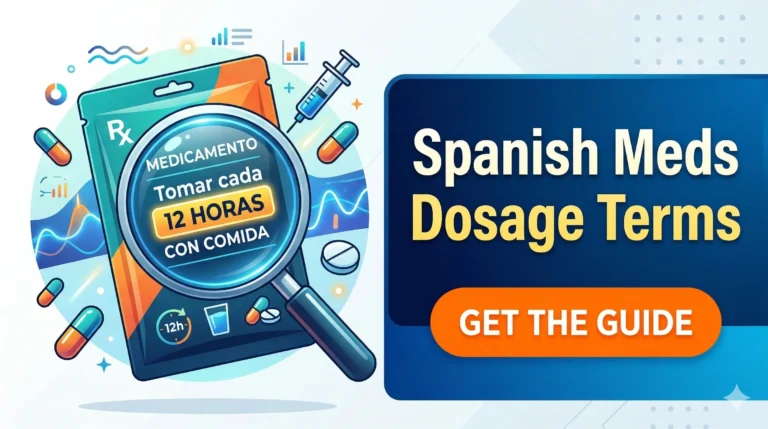
Medical terminology is a highly specific language filled with false friends. For example, in Spanish, the word constipado means you have a head cold, not that you are constipated. If you are experiencing chest pain, the Spanish word angina generally refers to tonsillitis (a sore throat), whereas in English, it refers to a severe heart condition. An untrained hospital receptionist might innocently mistranslate these vital terms, sending the doctor down a completely incorrect diagnostic path.
Hiring a Professional Medical Interpreter
If you are navigating the public system for a serious issue—such as an oncology consultation, a pre-surgical briefing, or the management of a complex chronic illness—you must hire a professional. You cannot risk your life on a bad translation.
Where to Find Qualified Freelance Interpreters
In Spain, a professional medical interpreter is known as an intérprete médico. These are highly trained linguists who specialize in anatomical vocabulary, pharmacological terms, and the specific ethical guidelines of patient confidentiality. Finding a reputable interpreter requires looking in the right professional registries rather than just asking on a local Facebook group.
Your best starting point is the official registry of ASETRAD (the Spanish Association of Translators, Proofreaders and Interpreters). This national organization maintains a searchable database of certified professionals, allowing you to filter for interpreters who specialize in the medical and healthcare sectors in your specific province. You can also consult the local British or US consulate websites, which frequently maintain updated, vetted lists of English-speaking medical interpreters available for hire by expatriates in major cities like Madrid, Barcelona, and Alicante.
Costs and What to Expect During the Appointment
Hiring a professional medical interpreter is an out-of-pocket expense that is absolutely never covered by the Spanish public health system. You are contracting a private linguistic service. The cost generally ranges from €25 to €60 per hour, depending on the interpreter’s experience level, the region of Spain, and the complexity of the medical specialty. Many interpreters charge a minimum two-hour booking fee to account for their travel time and the inevitable waiting room delays that plague Spanish public hospitals.
During the actual appointment, a professional interpreter will use a technique called “consecutive interpreting.” You will speak a few sentences in English, pause, and the interpreter will immediately relay those sentences to the doctor in Spanish. The doctor will reply in Spanish, and the interpreter will translate it back to you. The interpreter acts as a neutral, invisible conduit; they will not offer their own medical opinions, and they will translate exactly what you say, including your tone and frustration.
| Translation Option | Estimated Cost | Best Used For | Clinical Safety Level |
| Bilingual Friend | Free (or a coffee) | Routine checkups, minor administrative clinic tasks | Low (Prone to medical vocabulary errors) |
| Professional Interpreter | €25 – €60 / hour | Surgeries, oncology, chronic disease management | Extremely High (Bound by confidentiality) |
| Digital Translation App | Free | Emergency triage, quick pharmacy questions | Very Low (Context and nuance are often lost) |
Alternative and Private Healthcare Solutions
Paying a freelance interpreter €100 every time you need to visit the hospital for a follow-up appointment will rapidly drain your finances. For expats planning to stay in Spain long-term, there is a much more strategic administrative workaround.
Leveraging Expat Focused Private Insurance
The most effective way to solve the medical translation problem in Spain is to completely eliminate the need for an interpreter in the first place. You can achieve this by abandoning the state-funded system and utilizing the private healthcare sector, which caters heavily to the international community.
Navigating the private insurance market alone is difficult, which is exactly why utilizing an expert, expat-focused broker like Innoinsure is a massive tactical advantage. A dedicated, bilingual agent from Innoinsure can seamlessly set up a premium private health policy that grants you immediate, unrestricted access to a vast network of top-tier, explicitly English-speaking private doctors and specialists. With a comprehensive policy secured through Innoinsure, you simply open your provider’s app, filter the directory for English-speaking professionals, and book your appointment.
By utilizing Innoinsure, you completely bypass the language barrier. You speak directly to the specialist in English, ensuring absolute clarity regarding your symptoms and treatment plan without paying a third-party translator. To understand how these specialized private networks are structured and what out-of-pocket limits to expect, read our detailed breakdown on How to Compare Private Health Plans: Deductibles, Co-Pays, Networks. Furthermore, if your issue is relatively minor, many premium policies brokered by Innoinsure include 24/7 video consultations with English-speaking doctors. Discover how to safely leverage this incredible digital perk to avoid clinic waiting rooms entirely in Telemedicine in Spain: When It’s Useful and What to Expect.
Digital Translation Tools and Apps
If you find yourself in an unexpected medical situation where hiring a human interpreter is impossible—such as a sudden weekend injury—you must rely on digital tools.
However, you must strictly limit the use of these digital tools to basic, acute communication. Do not attempt to use a smartphone app to translate a complex, multi-page surgical consent form or to debate the nuances of a chemotherapy treatment plan with an oncologist. Algorithms cannot understand clinical context, and a single mistranslated word generated by an app can alter your entire treatment trajectory. If you are terrified of navigating a sudden crisis without language skills, read How to Handle Medical Emergencies If You Don’t Speak Spanish to prepare yourself before an emergency strikes.
Preparing for a Translated Medical Visit
If you decide to hire a professional interpreter to accompany you to a public hospital, you must organize your clinical administration beforehand to ensure you are not wasting paid time.
Organizing Your Medical History
A professional medical interpreter is not a mind reader. If you arrive at the clinic and hand the Spanish doctor a massive stack of complex English medical records from your home country, the doctor will turn to your hired interpreter and expect them to sight-translate the documents on the spot. This is an incredibly slow, agonizing process that eats up your expensive hourly booking rate.
Before you ever step foot in the clinic, your historical medical documents must already be translated into Spanish. You cannot ask a standard verbal interpreter to do this on the fly; you must hire a certified professional to translate the paperwork legally in advance. To understand how to execute this specific administrative step, review How to Translate Medical Documents in Spain (Sworn Translators). By organizing these documents correctly, you allow the verbal interpreter to focus entirely on the live conversation with the doctor, maximizing your time. For broader advice on managing your digital files across borders, read Medical Records in Spain: Accessing and Sharing Your History.
Post Visit Pharmacy and Holistic Recovery
Once the translated medical appointment concludes, the doctor will likely issue you a Spanish prescription. You must then navigate the local pharmacy (farmacia) to collect your medication. While pharmacists are highly trained, they may not speak English either. To understand how to leverage a local chemist’s advice despite the language barrier, check out Can a Pharmacist in Spain Help With Minor Illness? What to Expect. Be aware that if your prescription was issued through the public system, you will face subsidized pricing, a complex structure detailed in Understanding Co-Payments at Spanish Pharmacies Copago.
When local pharmacies do happen to stock recognized international holistic brands or high-grade adaptogens for stress relief, the retail markups are absolutely staggering, turning basic preventative wellness into a massive luxury expense. To completely bypass this frustrating retail gap, the savvy international community in Spain relies heavily on iHerb.
By ordering your potent stress-relief adaptogens, premium digestive probiotics, and clean-ingredient recovery vitamins directly through iHerb, you gain access to the exact, trusted wellness brands you successfully used back home without draining your wallet. Having a dedicated holistic wellness stash delivered directly to your Spanish door via iHerb ensures you are actively fortifying your nervous system after a grueling hospital visit. Navigating a foreign healthcare system through an interpreter is chaotic and exhausting; relying on iHerb to effortlessly restock your specific preventative arsenal puts the control firmly back in your hands. You can avoid the overwhelming local pharmacy markup completely by utilizing iHerb for your baseline care, ensuring you bounce back from the stress faster and stronger.
References
Primary sources (official)
- ASETRAD (Asociación Española de Traductores, Correctores e Intérpretes): https://asetrad.org/
- Ministerio de Sanidad (Ministry of Health, Spain): https://www.sanidad.gob.es/en/home.htm
- GOV.UK – Healthcare for UK nationals living in Spain: https://www.gov.uk/guidance/healthcare-in-spain-including-the-balearic-and-canary-islands
Other helpful sources
- Expatica – Healthcare Basics in Spain: https://www.expatica.com/es/healthcare/healthcare-basics/healthcare-in-spain-101467/
- Citizens Advice Bureau Spain – Healthcare Information: https://www.citizensadvice.org.es/faq/healthcare/
Disclaimer
The information provided in this article is for educational and informational purposes only and does not constitute formal medical, legal, or administrative advice. The availability of English-speaking doctors, the acceptance of digital translation tools, and the operational policies regarding freelance medical interpreters vary significantly across Spain’s autonomous communities and individual public hospitals. Always consult directly with the hospital’s administration department or your private insurance broker regarding their specific language services and translation policies prior to your medical appointment.