How to Choose Between Online and In-Person Spanish Classes
Standing in a crowded bakery in Madrid, sweating because you cannot remember the word for "napkin" while the line behind you grows restless, is a rite of passage every expat knows too well. I spent my first three months in Spain nodding and smiling at people, terrified that someone would actually ask me a follow-up question. This guide solves the dilemma of how to bridge that communication gap by helping you choose the right learning format for your specific lifestyle and residency goals.
Disclosure: This post may contain affiliate links. We may earn a commission at no extra cost to you if you make a purchase through these links. Read full disclosure.
Assessing Your Lifestyle and Language Goals
Before you spend a single Euro on a course, you have to look at the reality of your daily life in Spain. We all move here with grand visions of becoming fluent in six months, but the administrative weight of moving can often derail those plans. Are you here on a Spain Student Visa: Application Steps and Common Mistakes? If so, your choice might be dictated by visa requirements rather than personal preference. Most student visas require a certain number of in-person hours at an accredited institution to maintain your legal status.
On the other hand, if you are a remote worker or a digital nomad, your priorities likely lean toward flexibility. When I first transitioned to life as a freelancer here, I found that my schedule was at the mercy of my clients and the unpredictable nature of Spanish bureaucracy. If you are busy managing your business through platforms like Xolo, you might not have the luxury of a two-hour commute to a language school in the city center. You need to decide if you are learning for "survival Spanish" to handle the grocery store and the plumber, or if you are aiming for professional fluency to navigate Spanish Workplace Communication: Meetings, Feedback, and Tone.
The Importance of Consistency Over Intensity
One mistake I see new arrivals make constantly is signing up for a 20-hour-a-week intensive course while simultaneously trying to find an apartment and get their TIE card. It is a recipe for burnout. Whether you choose online or in-person, consistency is what actually moves the needle. If you are an Autónomo Registration in Spain: RETA, Models, and Deadlines veteran, you know that your time is your most valuable asset. Online classes allow you to fit twenty minutes of conversation practice into a gap between meetings, whereas in-person classes require a much larger block of "dead time" for travel and socialization.
Matching Your Level to the Format
Your current level of Spanish should also heavily influence your choice. Total beginners often benefit from the structured environment of a classroom where they can see the teacher's mouth movements and interact with physical props. However, intermediate learners often hit a plateau where they need specific, targeted practice. For this, platforms like iTalki are invaluable because they allow you to find tutors who specialize in the exact dialect or professional vocabulary you need. If you are preparing for a specific goal, such as the Spanish Language Certificates (DELE and SIELE): Which One You Need, you might find that a hybrid approach—in-person for the basics and online for exam-specific tutoring—is the most effective path forward.
The Pros and Cons of In-Person Learning in Spain
There is an undeniable magic to sitting in a classroom in a historic building in Seville or Valencia, hearing the sounds of the street outside. In-person classes offer a level of sensory immersion that a computer screen simply cannot replicate. For many of us, the language school was the first place we felt like we belonged. It is one of the most effective ways of Making Friends in Spain: Clubs, Meetups, and Language Exchanges because you are surrounded by people who are sharing your exact struggles with the subjunctive tense and the local bureaucracy.
The Social and Cultural Deep Dive
In an in-person setting, the learning doesn't stop when the bell rings. Most schools organize "intercambios" or cultural outings. I remember my first school in Barcelona took us to a local market to practice ordering seasonal vegetables. That kind of hands-on experience builds a "muscle memory" for the language that is hard to get online. If you are struggling with Culture Shock Symptoms vs Stress: When to Seek Help (Expat Guide), having a physical place to go every day provides a necessary structure to your life that can keep the "expat blues" at bay.
The Realistic Downside: Time and Location
The biggest hurdle for in-person classes is the logistics. If you live in a suburban neighborhood or a smaller pueblo, finding a high-quality school might involve a significant commute. Furthermore, the How to Find Spanish Language Schools That Offer Intensive Courses process can be daunting, as many of the best schools are tucked away in narrow side streets with minimal online presence. You also have to consider the "siesta" schedule; many traditional schools close in the mid-afternoon, which might conflict with your work hours if you are coordinating with teams in North America or Asia.
Cost and Commitment
In-person courses are generally more expensive than online options. You aren't just paying for the teacher's time; you are paying for the classroom space, the physical materials, and the school's administrative overhead. Most schools require you to sign up for weeks or months at a time. This can be a financial risk if you aren't yet sure about your long-term plans in Spain. If you are still figuring out your Cost of Living in Spain: Realistic Budgets and Savings Tips, you might find that the flexibility of pay-as-you-go online classes is safer for your wallet.
The Flexibility of Online Spanish Classes
For the modern expat, online learning is often the only way to stay consistent. Life in Spain is beautiful, but it can be administratively chaotic. One week you are fine, and the next you are spending four mornings in a row at the Extranjería office. Online classes, particularly through services like iTalki, allow you to reschedule or pivot your learning goals without losing a massive deposit at a physical school.
Tailored Education for the Busy Professional
If you are a high-earning expat or a digital nomad using Taxes for Expats to manage your cross-border obligations, your time is likely measured in billable hours. Online learning allows for a "surgical" approach to the language. Instead of following a generic textbook that spends three weeks on "hobbies," you can ask an online tutor to help you prepare for a specific meeting or a visit to the notary. This is particularly useful if you are moving for work and need to master Learning Spanish for Work and Study: Fast‑Track Strategy techniques to hit the ground running.
Access to a Wider Range of Tutors
One of the hidden benefits of online learning is that you aren't limited to the teachers who happen to live in your city. If you are living in Galicia but want to learn the specific "claro" and "venga" rhythm of Madrid, you can find a Madrileño tutor online. Platforms like iTalki allow you to filter by accent, specialty, and even price. This is vital for those of us who need to learn how to communicate with specific demographics, such as healthcare providers or legal professionals.
Eliminating the "Performance Anxiety"
Let’s be honest: walking into a room full of strangers and trying to speak a language you barely know is terrifying. For many introverted expats, online classes provide a "safe space" to make mistakes. You are in your own home, perhaps with a coffee in hand, and you don't have the added pressure of a group watching you struggle. This lower barrier to entry often leads to more speaking time. In a group class of ten people, you might only speak for five minutes total. In an hour-long iTalki session, you are speaking for at least thirty to forty minutes.
Comparing Your Options: At a Glance
To help you visualize the trade-offs, I’ve put together this comparison table based on my own experience and that of the many expats I've mentored over the years.
| Feature | In-Person Classes | Online Classes (e.g., iTalki) |
|---|---|---|
| Social Interaction | High – Great for meeting other expats locally. | Low – Strictly professional/academic interaction. |
| Flexibility | Low – Fixed schedules and locations. | High – Learn from anywhere at any time. |
| Cost | Mid to High – Includes materials and facilities. | Low to Mid – Wide range of tutor prices. |
| Pace | Fixed – You move at the speed of the class. | Personalized – You set the speed and the topics. |
| Immersion | High – Includes physical and cultural context. | Low – Limited to the audio/visual screen. |
| Visa Compliance | Essential for many Spain Student Visa types. | Usually not sufficient for visa requirements. |
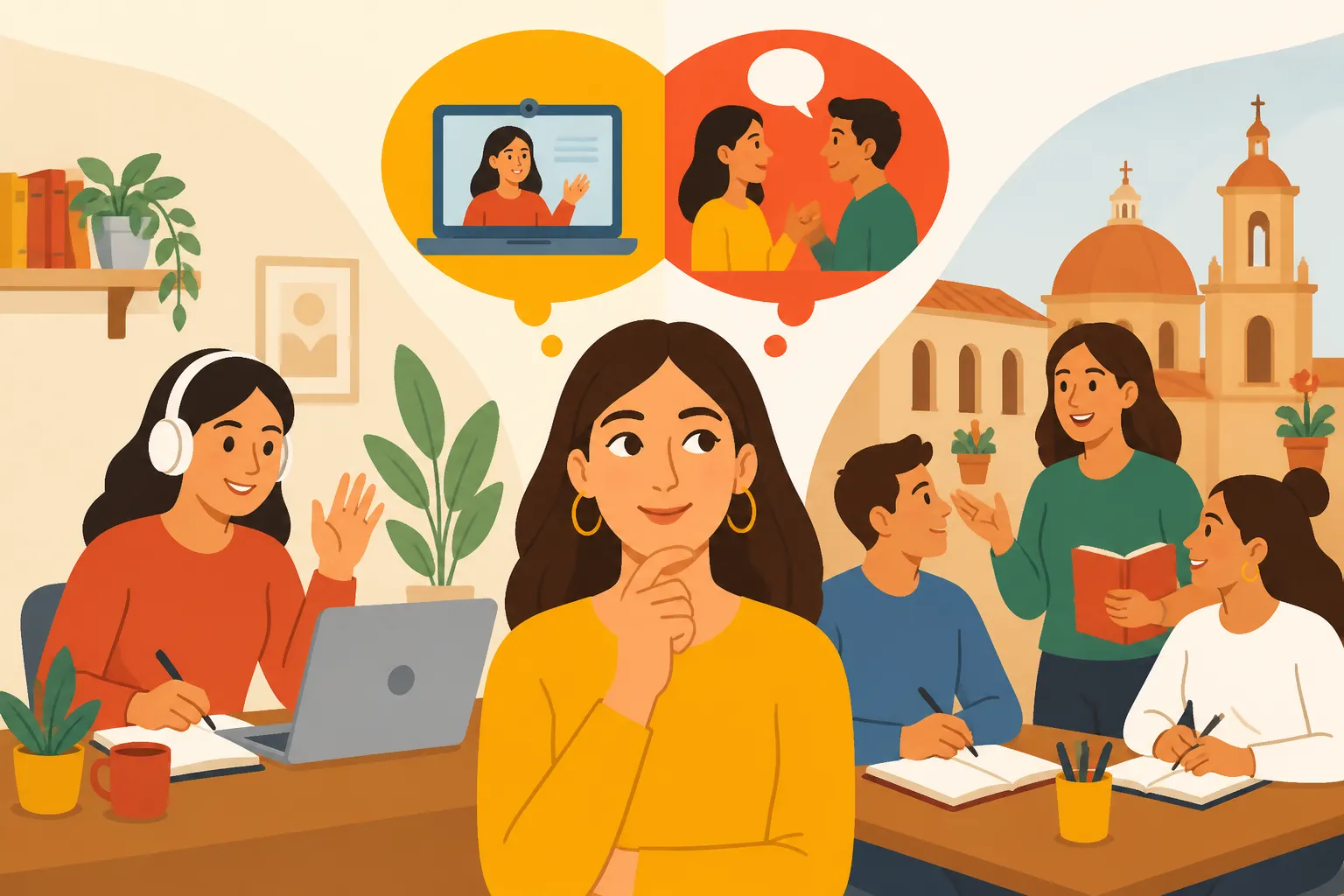
Making the Final Decision: The Hybrid Approach
If you really want to thrive here, you don't actually have to choose just one. Many veterans of the "Spanish struggle" use a hybrid model. They might attend an in-person intensive course for the first month to get their bearings and make a few friends, then switch to a platform like iTalki to maintain their skills while they focus on their Spain Digital Nomad Visa: Requirements, Documents, and Timeline obligations.
Think of in-person classes as your "social foundation" and online classes as your "skill-building tool." If you find yourself hitting a wall with the grammar in your group class, booking a one-on-one session online to have someone explain it to you in plain English can save you weeks of frustration. Similarly, if you feel lonely working from home, joining a physical school for a few hours a week can be the social lifeline you need.
Ultimately, the best choice is the one you will actually show up for. If the thought of a 45-minute bus ride in the August heat makes you want to skip class, then in-person isn't for you right now. If sitting in front of another Zoom call after an eight-hour workday feels like torture, then find a school within walking distance of your house. Spain is a country that values face-to-face interaction above almost everything else, so even if you choose to learn online, make sure you take those skills out into the "plazas" and "terrazas" as soon as possible. Your real education starts the moment you close your laptop or leave the classroom.
Disclaimer
This guide is intended for informational purposes only. Language school requirements, visa regulations, and the availability of specific educational services in Spain are subject to change. Always verify current legal requirements with the appropriate Spanish authorities or a qualified legal professional before making financial commitments related to your residency or education.