Do You Need Health Insurance for the Spain Digital Nomad Visa?
Applying for the Spain Digital Nomad Visa requires strict adherence to specific health coverage rules. This comprehensive guide explains the exact medical insurance requirements, mandatory policy criteria, and how remote workers can secure compliant coverage to ensure a successful application.
Disclosure: This post may contain affiliate links. We may earn a commission at no extra cost to you if you make a purchase through these links. Read full disclosure.
The Short Answer: Yes, and Here is Exactly Why
If you are planning to relocate under the digital nomad framework, the blunt and short answer to whether you need health insurance is an absolute, unequivocal yes. Spain’s immigration authorities are notoriously strict when it comes to healthcare, and for a very simple reason: they want to ensure that foreign remote workers do not become a financial burden on the Spanish public health system.
When you apply for this visa, you are essentially asking the Spanish government to allow you to live within its borders while earning income from a foreign entity. Because your primary employer is not based in Spain, the assumption from the immigration office (the Extranjería) is that you may not immediately be contributing to the Spanish Social Security system in a way that fully funds your public healthcare access. Therefore, until you are fully integrated into the Spanish tax and social security infrastructure, you must prove that you can financially cover any medical emergency, routine check-up, surgery, or specialized treatment you might need during your stay.
This requirement is not a mere suggestion; it is a hardline legal mandate. A significant portion of visa rejections stems directly from applicants submitting the wrong type of health insurance. Many hopeful nomads assume that the travel insurance policy they bought for their backpacking trip across Europe will suffice. It will not. The Spanish consulates and the Large Companies Unit (UGE – Unidad de Grandes Empresas y Colectivos Estratégicos) require a very specific tier of comprehensive private medical coverage that mirrors the benefits of the public system, leaving absolutely no gaps in care.
Understanding the Spain Digital Nomad Visa Health Insurance Requirement
The Legal Mandate for Medical Coverage
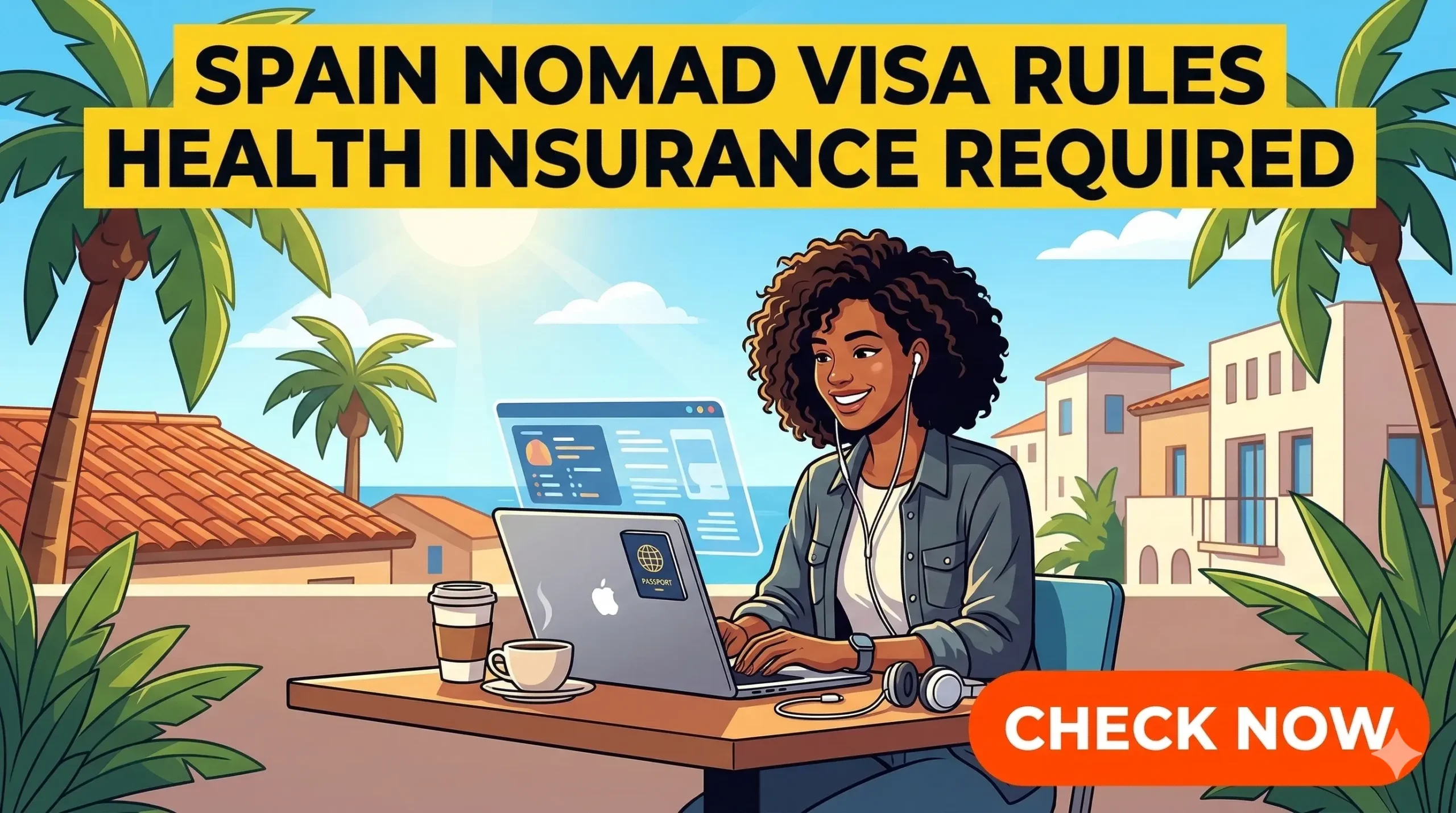
When applying for the Spain Digital Nomad Visa (officially known as the International Telework Visa), one of the most critical documents you must submit to the consulate is proof of comprehensive health insurance. The Spanish government explicitly mandates this to ensure that foreign remote workers do not become an immediate financial burden on the state-funded medical system.
For the vast majority of applicants—especially non-EU citizens—this means purchasing a robust private health insurance policy before stepping foot in a Spanish consulate. Failing to provide the correct type of insurance certificate is one of the most common reasons for immediate visa denial. Understanding the nuances of this requirement is crucial. For a broader overview of how medical care operates in the country, you can review our guide on the Spain Healthcare System for Expats: Public vs Private.
Public Healthcare vs Private Insurance for Nomads
The digital nomad visa allows for two primary employment structures: you are either a remote employee of a foreign company, or you are a self-employed freelancer (an autónomo). If you register as an autónomo in Spain and actively contribute a monthly quota to the Spanish Social Security system (RETA), you are legally entitled to access the public healthcare system.
However, the timing of the application creates a bureaucratic hurdle. Because you cannot fully register for Social Security and receive your public health number until after your visa and residency are formally approved, you must rely on private health insurance to bridge the gap during the initial application process. Once you are living in Spain and actively paying into the social security system, you can learn how to integrate into the public network by reading What Is a ‘Centro de Salud’ in Spain and How Do You Register?. Until that registration is complete, securing a visa-compliant private policy is an absolute necessity.

Specific Health Insurance Criteria for the Visa
Zero Copayments and Full Coverage Rules
The Spanish consulate will not accept just any basic travel insurance policy. Your private health policy must perfectly mirror the comprehensive coverage provided by the Spanish public healthcare system.
The most important criterion is that the policy must be sin copagos (without copayments). This means the insurance company must cover one hundred percent of your medical costs without requiring you to pay a small fee each time you visit a doctor, undergo a diagnostic test, or visit the emergency room. To understand how these fees usually work in standard resident policies when they are applied, see Health Costs in Spain: Typical Co‑Pays and Out‑of‑Pocket Fees.
Additionally, the policy must offer cobertura completa (full coverage). It must include primary care, specialist visits, hospitalizations, surgical interventions, and advanced diagnostic testing without restrictive annual financial limits.
| Feature | Visa-Compliant Policy | Non-Compliant Policy |
| Copayments | Sin copagos (€0 per visit) | Con copagos (e.g., €15 per visit) |
| Hospitalization | Fully covered, unlimited days | Capped at a specific monetary limit |
| Provider | Authorized to operate in Spain | Foreign travel insurance company |
| Repatriation | Included | Excluded |
Repatriation and No Waiting Periods
Another strict requirement is that the policy must not have waiting periods (sin carencias) for essential services. While insurers normally impose waiting periods for complex surgeries or high-tech diagnostics to prevent fraud, policies specifically designed for Spanish residency visas must waive these periods so you are fully protected from day one of your arrival. For a deeper dive into how these specific contractual terms affect your coverage, read How to Compare Private Health Plans: Deductibles, Co‑Pays, Networks.
Finally, the policy must include repatriation coverage. In the tragic event of severe illness or death, the insurance must cover the logistical and medical costs of returning you or your remains to your home country. Finding a policy that ticks all these highly specific boxes can be challenging, which is why many nomads use an expert expat insurance broker like Innoinsure to guarantee their paperwork is flawlessly formatted for the consulate’s demanding standards.
How to Choose and Purchase the Right Policy
Selecting a Provider Authorized in Spain
The Spanish government requires your health insurance to be contracted with an entity legally authorized to operate within Spain. This means popular international travel insurance brands and digital nomad subscription medical plans are almost always rejected for this specific visa, as they operate on an out-of-network reimbursement model and are not fully integrated into the Spanish medical infrastructure.
You must choose a recognized Spanish provider, such as Sanitas, Adeslas, DKV, or Asisa. When you purchase a policy through a specialized broker like Innoinsure, they will provide you with a specific, legally binding certificate of insurance (certificado de seguro) that explicitly states the policy has zero copayments, no waiting periods, and full repatriation, exactly as the consulate demands. Securing your policy through Innoinsure eliminates the stress of translating complex policy documents yourself and prevents administrative visa rejections.
Managing Premium Payments and Financial Tools
For visa applications, Spanish consulates generally require you to pay for the entire first year of your health insurance premium upfront. This proves to the government that your medical coverage will not lapse during your first twelve months of residency.
Paying an annual premium usually requires transferring a lump sum of one to two thousand euros. If you use your traditional home bank to wire this money to a Spanish insurance company, you will be hit with terrible exchange rates and exorbitant international transfer fees. To avoid this financial drain, financially savvy digital nomads use a borderless multi-currency account like Wise. By converting your home currency and paying your premium directly through Wise, you secure the transparent mid-market exchange rate, keeping your relocation budget intact. You can also securely use Wise to pay any local clinic bills efficiently if you visit a private doctor before your physical insurance card arrives in the mail.
Maintaining Your Health as a Nomad in Spain
Navigating Telemedicine and Pharmacies
Once your visa is approved and you arrive in Spain, your private health insurance becomes a powerful tool for maintaining your physical wellbeing. Most premium Spanish insurers offer robust digital health applications. If you experience a minor ailment while settling into your new apartment or traveling across the country, you can instantly consult an English-speaking doctor via video call. To maximize this modern benefit, explore our guide on Telemedicine in Spain: When It’s Useful and What to Expect.
If the virtual doctor prescribes medication, they will send an electronic prescription directly to your phone, which you can fulfill at any local pharmacy (farmacia). Spanish pharmacists are highly trained medical professionals who can also diagnose and treat minor issues directly. Learn how to leverage their frontline expertise in Can a Pharmacist in Spain Help With Minor Illness? What to Expect.
Supporting Your Wellbeing Abroad
Moving abroad as a digital nomad introduces new daily stressors, sudden dietary changes, and environmental shifts. Staying highly proactive about your baseline health is vital. While Spanish pharmacies are clinically excellent, they rarely stock the wide variety of holistic wellness products, specialized vitamins, and vegan supplements that many international expats are accustomed to taking back home.
To bridge this wellness gap, many remote workers actively rely on global health platforms like iHerb. By ordering your trusted daily supplements, specific protein powders, and immune-boosting vitamins through iHerb, you can effortlessly maintain your exact home-country wellness routine without paying the steep retail markups found in physical Spanish shops. For remote workers managing pre-existing health issues who need specialized care upon arrival, our comprehensive guide on Chronic Conditions in Spain: Managing Ongoing Care as an Expat provides essential long-term planning advice to keep you healthy while you work.
References
Primary sources official
- Ministerio de Asuntos Exteriores, Unión Europea y Cooperación – Telework (Digital nomad) Visa: https://www.exteriores.gob.es/Consulados/washington/en/ServiciosConsulares/Paginas/Consular/Telework-visa.aspx
- Ministerio de Inclusión, Seguridad Social y Migraciones – International Teleworkers: https://extranjeros.inclusion.gob.es/es/UnidadGrandesEmpresas/ley14_2013/teletrabajadores/index.htm
Other helpful sources
- Expatica – Healthcare in Spain: https://www.expatica.com/es/healthcare/
- Citizens Advice Bureau Spain – Visas and Residency Guidelines: https://www.citizensadvice.org.es/
Disclaimer
The information provided in this article is for educational and informational purposes only and does not constitute formal legal, financial, or immigration advice. Spain’s Digital Nomad Visa requirements, including specific health insurance mandates and financial thresholds, are subject to frequent legislative updates. Always consult directly with the official Spanish consulate in your jurisdiction or a licensed Spanish immigration lawyer to verify the most current visa requirements tailored to your specific circumstances.