How to Find Local Community Centers in Spain: Centro Civico Guide
Arriving in a new Spanish neighborhood can feel incredibly isolating when you lack a built-in social network or affordable local activities. I spent my first winter in Barcelona paying for overpriced gym memberships before I discovered the magic of the municipal centro civico. This guide explains how to find these local community hubs, enroll in heavily subsidized classes, and integrate.
Disclosure: This post may contain affiliate links. We may earn a commission at no extra cost to you if you make a purchase through these links. Read full disclosure.
What is a Centro Civico and Why You Need One
The Hub of Barrio Life
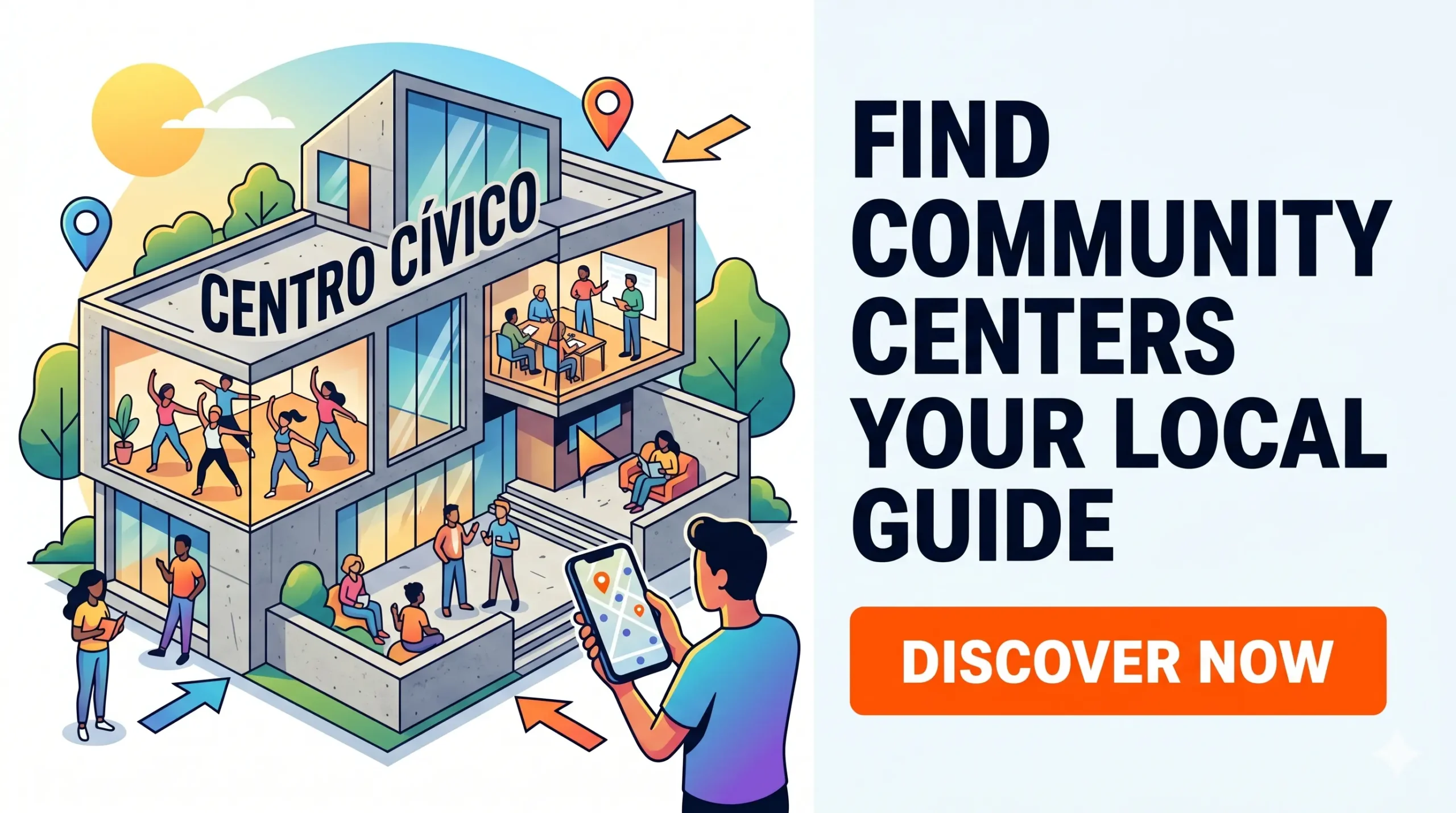
When expats arrive in Spain, they often search for private clubs, specialized expat groups, or expensive commercial gyms to fill their social calendars. However, the true heartbeat of any Spanish neighborhood is the centro civico. These are massive, publicly funded cultural and community centers operated by the local town hall. They are specifically designed to promote social cohesion, culture, and lifelong learning for residents of that specific district.
Physically, a centro civico can be anything from a repurposed, stunning 19th-century palace in the historic center to a hyper-modern glass-and-steel architectural marvel in a newer suburb. Inside, you will generally find large auditoriums, dance studios, fully equipped kitchens for culinary classes, darkrooms for photography, and sprawling outdoor courtyards. Because they are funded by taxpayer euros, the primary goal is community accessibility, not profit. This makes them the absolute best avenue for a foreigner looking to break out of the expat bubble and meet actual locals who live on their street. If you are struggling with the isolation of working from your apartment, joining a center is a survival tactic deeply explored in How to Make Friends in Spain If You Work Remotely.
Subsidized Courses and Workshops
The biggest draw of the centro civico network is the sheer volume of talleres (workshops) offered at rock-bottom prices. The variety of programming is staggering. You can enroll in language exchanges, local history lectures, intense Zumba classes, traditional Spanish cooking, digital photography, or pottery.
The cost difference between a private academy and a centro civico is massive. Instead of paying sixty or eighty euros a month for a private yoga studio, you will typically pay thirty or forty euros for an entire three-month trimester. However, because the classes are so cheap, the town hall rarely provides the specialized physical materials you might need. Instead of renting communal, heavily used gear for your new hobbies, you can cheaply order a high-quality yoga mat, sketchbooks, or specialized ceramics tools directly from Amazon Spain and have them waiting at your door before the trimester officially begins. Factoring these low-cost public classes into your monthly calculations is a brilliant way to manage your overall Cost of Living in Spain: Budgeting for Expats.

How to Locate Your Nearest Community Center
Navigating the Ayuntamiento Websites
Every major city and almost every mid-sized town in Spain operates a robust network of these centers. To find yours, you must navigate the digital portal of your local Ayuntamiento (town hall). You can usually find a directory by searching for the city’s Sede Electronica or culture department.
However, Spanish municipal websites are notoriously archaic. They are frequently overloaded, poorly organized, and rely on massive PDF downloads to display their quarterly schedules. To browse these heavy, unoptimized digital catalogs without timing out, you need a robust home internet connection. Relying on an expat-centric provider like Tiekom ensures your home fiber network is flawlessly stable, allowing you to seamlessly research the hundreds of different class schedules across your city’s various centers without frustration.
Crucially, you must cross-reference the center’s location with your official municipal registration. Most town halls offer heavily discounted rates—and sometimes priority enrollment—if you can legally prove you live in the exact neighborhood where the center is located. To ensure you have the paperwork required to claim this local discount, you must meticulously review How to Get a Spanish ‘Certificado de Empadronamiento’ Copy.
Physical Bulletins and Walk Ins
Despite the push for digital portals, Spanish local administration still runs heavily on physical paper and face-to-face interactions. If you find the town hall’s website impossible to decipher, the absolute best strategy is to simply walk through the front doors of the nearest centro civico.
At the front desk, you will find the conserje (receptionist or caretaker). They are the gatekeepers of the neighborhood. You can walk up, ask for the folleto (the physical printed brochure of upcoming activities), and ask them directly which classes still have open spots. This reliance on in-person, paper-based administration is a massive hurdle for newly arrived foreigners who expect everything to be handled via a sleek mobile app. Adjusting your expectations to embrace this slower, human-centric approach is a cultural necessity covered extensively in Spain Culture Shock: What New Expats Commonly Misunderstand.
The Highly Competitive Enrollment Process
The Trimester System and Sorteos
The public community centers operate on a strict academic calendar. The year is divided into trimesters, with enrollment windows generally opening in early September, late December, and late March. If you miss the narrow enrollment window, you are entirely locked out of the system for three months. To understand how this rigid schedule mirrors the broader educational system in the country, read School Supplies and Back‑to‑School Costs in Spain: Budget Guide.
Because these classes are heavily subsidized, demand drastically outweighs supply. For highly coveted classes like evening pilates or beginner ceramics, the town hall utilizes a sorteo (lottery) system. You will be given a specific 48-hour window to log online and pre-register your interest. You are assigned a number, and a random digital drawing determines who actually gets a spot. Because thousands of locals log onto the municipal portal at the exact same minute to register, the servers frequently crash. Utilizing the high-speed fiber provided by Tiekom gives you the digital edge required to load the registration page and snag your lottery number before the system completely freezes.
Required Documentation and Payment
If you are lucky enough to win a spot in the sorteo, you usually have a very strict three-day window to formalize your enrollment and pay the fee. This is where the bureaucracy bites hard.
You will generally need to provide your physical TIE or NIE, your passport, your certificado de empadronamiento to prove your address, and occasionally a passport-sized photograph for your member ID card. Keeping all these critical, irreplaceable immigration documents pristine while walking back and forth to municipal offices is vital. Ordering heavy-duty, waterproof document organizers from Amazon Spain guarantees your paperwork survives the chaotic administrative sprint.
Furthermore, many centers do not accept cash or credit cards at the front desk. They require you to pay via a direct bank transfer or by taking a generated invoice to a specific partner bank to pay at the ATM. You must have a functional local banking setup to process these payments before the 72-hour deadline expires. To ensure your financial infrastructure is ready, review Opening a Bank Account in Spain as a Non-Resident and Student Finances in Spain: Bank Accounts and Budgeting Tips.
Maximizing the Centers Free Resources
Free Libraries and Remote Study Spaces
Even if you do not want to take a specific class, the centro civico is an invaluable resource for remote workers, freelancers, and students. Almost every center features a biblioteca (library) or a dedicated sala de estudio (study room).
These rooms are completely free to use, heavily air-conditioned during the brutal Spanish summers, and wonderfully quiet. If you are going stir-crazy working from your small rental apartment, relocating to the community center for the afternoon changes your scenery without costing you a daily coffee at a cafe. To survive a loud study room if a children’s theater class is letting out down the hallway, ordering premium noise-canceling headphones directly from Amazon Spain ensures you can maintain your focus. Additionally, public municipal Wi-Fi networks can sometimes be heavily restricted or slow. Having a robust mobile data plan from Tiekom allows you to securely hotspot your laptop from the study room, guaranteeing you never drop an important client video call. Balancing these free public resources against your home utilities is a core strategy mapped out in Utility Costs in Spain: Electricity, Gas, Water, and Internet.
Family Support and Kids Activities
For expats who move to Spain with their families, the local community center is an absolute goldmine. Integration can be incredibly difficult for foreign children, but the centro civico breaks down those barriers effortlessly.
Most centers operate a ludoteca (a free, supervised playroom for toddlers and young children) and host heavily subsidized family theater shows, magic acts, or craft workshops every single Saturday morning. This is the absolute easiest environment for your children to practice their Spanish with local kids in a low-pressure setting. To keep the kids entertained while you wait in line to register at the front desk for these activities, ordering a few Spanish-language activity books from Amazon Spain beforehand is a veteran parent trick. To understand how to manage the broader logistics of moving a family abroad, deeply review Moving to Spain With Kids: Packing and Settling‑In Checklist.
Furthermore, these weekend events are where you will meet local Spanish parents. When your children hit it off, you will need to exchange contact information to coordinate future park playdates. Having the reliable mobile data provided by Tiekom ensures you can effortlessly exchange WhatsApp details and coordinate weekend meetups while standing out in the neighborhood plazas, seamlessly building your new family support network.
| Feature | Private Academy or Gym | Municipal Centro Civico |
| Average Cost | High (€60 – €120 monthly) | Very Low (€30 – €50 per trimester) |
| Availability | Open rolling enrollment | Strict quarterly enrollment and lotteries |
| Bureaucracy | Minimal (Sign up online) | High (Requires NIE, Padrón, exact deadlines) |
| Community Vibe | Transient, transactional | Deeply local, highly social, neighborhood focus |
| Language Spoken | Often caters to English speakers | Strictly Spanish or Regional Local Languages |
References
Primary sources (official)
- Ajuntament de Barcelona – Xarxa de Centres Cívics: https://ajuntament.barcelona.cat/ccivics/ca/
- Ayuntamiento de Madrid – Centros Culturales y Cívicos: https://www.madrid.es/portales/munimadrid/es/Inicio/Cultura-ocio-y-deporte/Centros-culturales/
Other helpful sources
- Meetup Spain (for community groups and language exchanges): https://www.meetup.com/cities/es/
- Expatica – A guide to social groups and clubs in Spain: https://www.expatica.com/es/lifestyle/social-groups-and-clubs-in-spain-106778/
Disclaimer
The information provided in this article is for educational and informational purposes only and does not constitute formal immigration, legal, or municipal administrative advice. The procedures for enrolling in talleres, the dates for sorteos (lotteries), and the exact requirements for proving residency via the Certificado de Empadronamiento vary drastically between the thousands of individual ayuntamientos (town halls) across Spain. Always verify the specific enrollment deadlines, documentation requirements, and fee structures directly with your local municipal government or at the front desk of your neighborhood’s Centro Cívico.