Energy Efficiency Certificates in Spain: What Buyers and Renters Should Know
The Energy Efficiency Certificate is a mandatory document for selling or renting property in Spain. This comprehensive guide explains the A-to-G rating system, how it impacts your utility bills, the legal obligations for owners, and why a good rating can secure you cheaper mortgages and tax deductions.
Disclosure: This post may contain affiliate links. We may earn a commission at no extra cost to you if you make a purchase through these links. Read full disclosure.
What Is the Energy Efficiency Certificate
The Energy Efficiency Certificate is an official document drafted by a certified technician—typically an architect, technical architect, or industrial engineer—that objectively calculates the energy consumption of a specific property.
The assessment results in two primary metrics:
- Carbon Dioxide Emissions: The amount of CO2 the property releases into the atmosphere annually.
- Energy Consumption: The amount of kilowatt-hours (kWh) of non-renewable energy the property requires per year to maintain standard comfort levels (heating, cooling, ventilation, and hot water).
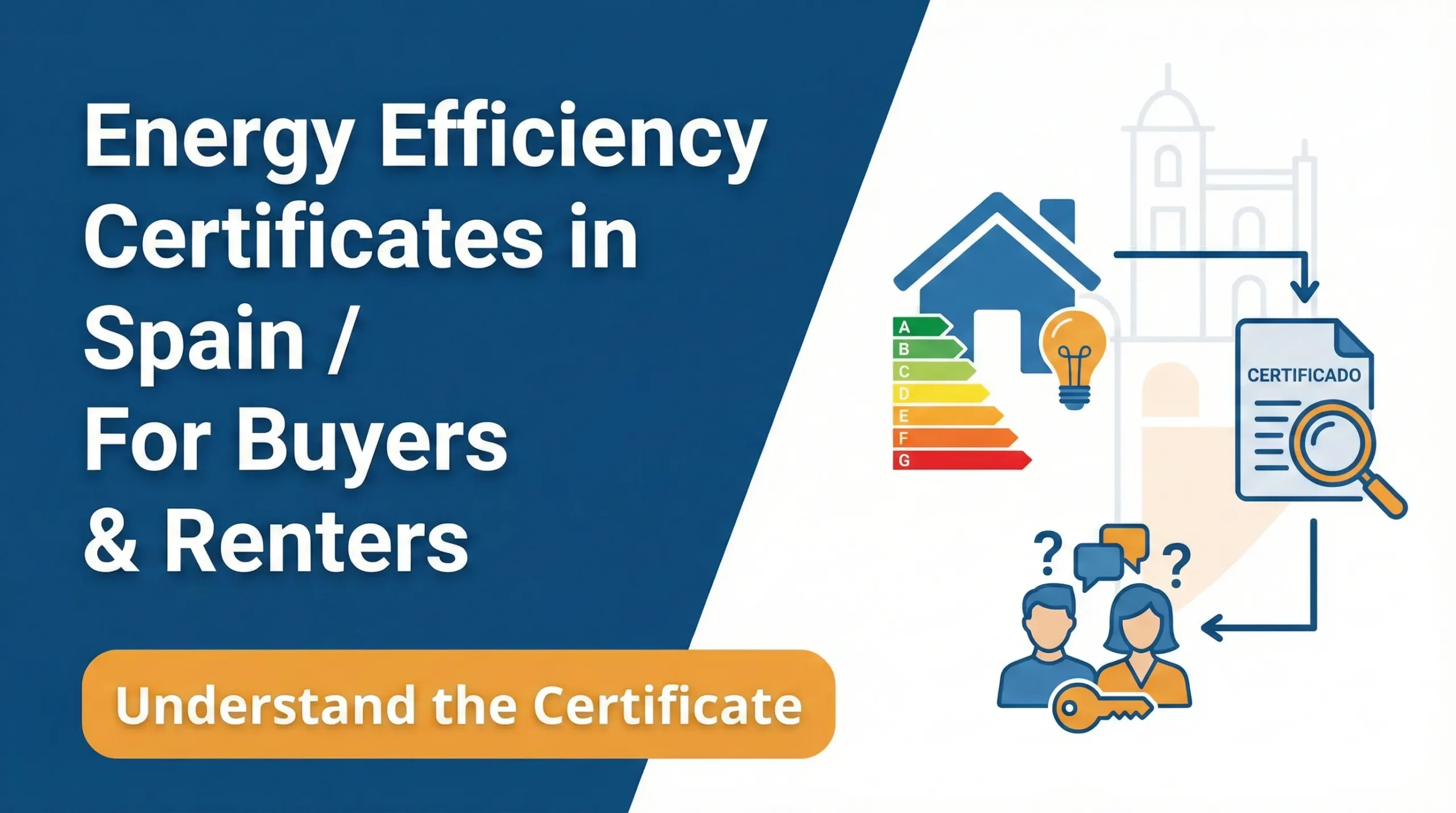
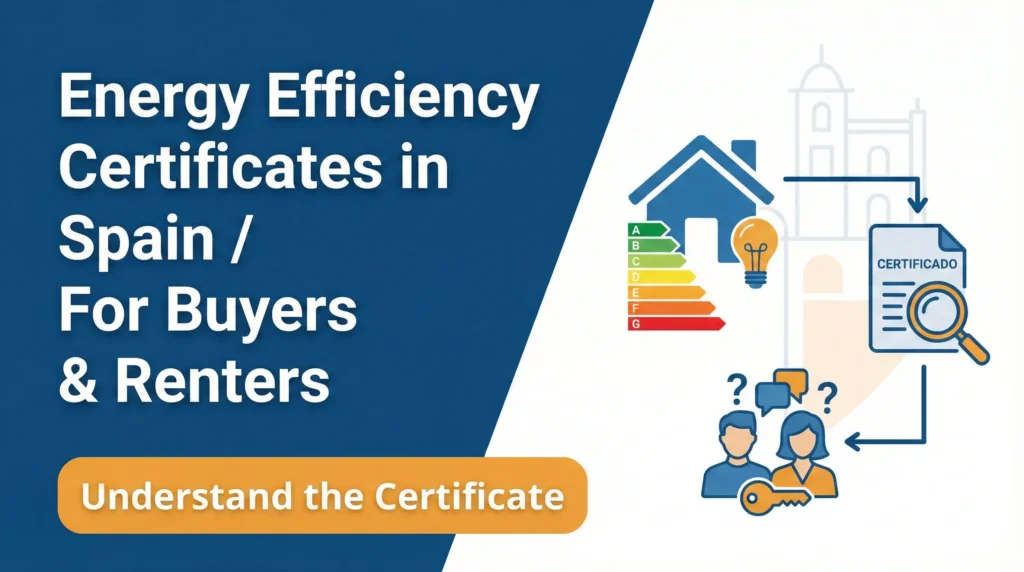
These metrics are consolidated into a single letter grade, known as the Etiqueta Energética (Energy Label). This label must be included in any advertisement for the sale or rental of the property. If you walk into a real estate agency window or scroll through an online portal like Idealista, you are legally entitled to see this letter rating immediately.
The certificate is valid for 10 years from the date of issue. However, if a homeowner undertakes significant renovations that improve the property’s efficiency—such as installing double-glazed windows or a new biomass boiler—they can (and should) commission a new certificate to reflect the improved rating.
Decoding the Rating Scale A to G
The rating scale is intuitive, following the standard color-coded European model. However, understanding the practical gap between the top and bottom tiers is crucial for managing your monthly budget.
- Rating A (Dark Green): The gold standard. These homes are highly efficient, often built within the last few years using cutting-edge materials, solar panels, and superior insulation. They consume up to 90% less energy than the lowest-rated homes.
- Rating B and C (Light Green): Very good to average efficiency. These properties likely have modern double glazing, efficient gas boilers, and decent thermal insulation.
- Rating D and E (Yellow/Orange): The Spanish standard. The vast majority of housing stock in Spain falls into these categories. These homes were likely built between the 1960s and early 2000s before strict building codes were enforced. They have average insulation and standard consumption.
- Rating F and G (Red): The energy vampires. A “G” rating indicates zero insulation, single-pane windows, and outdated heating systems. These homes are freezing in winter and ovens in summer.
Energy Consumption and Cost Comparison
To illustrate the financial impact of these ratings, consider the estimated annual energy costs for a standard 90-square-meter apartment in a climate zone like Madrid.
| Energy Rating | Efficiency Level | Estimated Annual Energy Cost | Potential Savings vs. G Rating |
| A | Maximum Efficiency | €200 – €350 | ~ 85-90% |
| B | High Efficiency | €350 – €550 | ~ 70-75% |
| C | Good Efficiency | €550 – €800 | ~ 55-60% |
| D | Standard | €800 – €1,100 | ~ 40-45% |
| E | Below Average | €1,100 – €1,500 | ~ 25-30% |
| F | Poor | €1,500 – €2,000 | ~ 10-15% |
| G | Very Poor | €2,200+ | 0% |
Note: Costs are estimates based on average kWh prices and standard usage patterns. Actual bills will vary based on personal habits and fluctuating energy tariffs.
When Is the Certificate Mandatory
Spanish law (Royal Decree 390/2021) is strict regarding when a certificate must be present. It is not optional for most transactions.
Mandatory Scenarios
- Selling a Property: The seller must possess the valid certificate before listing the property. The original document must be handed over to the buyer at the notary signing.
- Renting a Property: Landlords must provide a copy of the label to the tenant before the lease is signed. This applies to both long-term rentals and seasonal holiday lets.
- New Buildings: All new construction projects must have a certificate upon completion.
- Public Buildings: Buildings occupied by public authorities with a total useful area of over 250 m² must display the certificate.
Exemptions
There are very few exceptions, but they do exist. You generally do not need a CEE if:
- The building is a protected historical monument where alterations to improve efficiency are legally prohibited.
- The building is used as a place of worship.
- The structure is a temporary construction used for less than two years.
- The property is an agricultural or industrial building used for workshops (non-residential).
- The property is smaller than 50 square meters and located in an isolated area (not part of a larger building).
Why It Matters for Buyers
If you are in the market to purchase a home, the Energy Efficiency Certificate is a powerful tool for negotiation and financial planning.
Identifying Renovation Costs
A low rating (F or G) acts as a warning sign. It suggests you will need to invest significant capital into upgrades to make the home comfortable. You might need to replace windows, inject foam insulation into the walls, or replace an electric water heater. When making an offer, you can leverage a poor energy rating to justify a lower price, citing the immediate need for modernization. To understand the costs associated with these upgrades, it is helpful to consult professionals using our guide on Home Maintenance in Spain: Finding Reliable Tradespeople.
Access to Green Mortgages
Many Spanish banks now offer “Green Mortgages” (Hipoteca Verde) to incentivize sustainable living. If you buy a property with an A or B rating, or if you buy a lower-rated property and commit to renovating it to improve the efficiency by at least 30%, lenders may offer you a lower interest rate (often 0.1% to 0.2% lower than standard rates). Given that mortgage terms span decades, this slight reduction can save you thousands of euros. For more on financing options, review Mortgage in Spain for Foreigners: Eligibility and Documents.
Tax Deductions
The Spanish government occasionally introduces fiscal incentives for energy improvements. Currently, you may be eligible for deductions on your Personal Income Tax (IRPF) if you undertake works that reduce heating/cooling demand by at least 7% or non-renewable energy consumption by 30%. Additionally, some local town halls offer a reduction in the annual IBI property tax for homes with high energy ratings. Check the local rules in your specific municipality, or learn more about these annual taxes in Property Taxes in Spain: IBI, Community Fees, and Annual Costs.
Why It Matters for Renters
For tenants, the CEE is primarily a predictor of comfort and utility bills.
Spain has a wide variety of climates. In the interior (Madrid, Castilla-La Mancha), winters are freezing and summers are scorching. In coastal areas, high humidity can make a cold house feel damp and bone-chilling. An apartment with a G rating likely has single-glazed aluminum windows that act as “thermal bridges,” transferring the outside temperature directly into your living room.
Before signing a lease, ask to see the certificate. If the landlord hesitates or claims they don’t have one, proceed with caution. Not only is this a legal breach, but it also suggests the landlord may be neglecting other maintenance duties. High utility bills can drastically alter your monthly budget, so verifying this rating is a key step in Finding Long-Term Rentals in Spain: Best Websites and Strategies. Once you move in, you will need to register the electricity in your name; ensure you understand this process by reading Setting Up Utilities in Spain: Electricity, Gas, and Water Basics.
How to Obtain the Certificate
If you are a homeowner planning to sell or rent your property, obtaining the certificate is your responsibility. You cannot pass this cost on to the buyer or tenant.
The Technician Visit
You must hire a certified technician. This is not a government official, but a private professional (architect or engineer). The process involves:
- Site Visit: The technician visits your property to measure rooms, inspect windows, check the heating/cooling systems, and analyze the orientation of the building.
- Software Calculation: They input this data into government-approved software (such as CE3X) to generate the rating.
- Recommendations: The report will include specific recommendations on how to improve the rating (e.g., “Replacing current windows with PVC double glazing would raise the rating from E to D”).
Registration is Crucial
Receiving the PDF report from the architect is not enough. The certificate must be registered with the industry department of your specific Autonomous Community (e.g., Generalitat de Catalunya or Junta de Andalucía). Only once it is registered does it become a legal document. Most technicians include the registration service in their fee, but you should always confirm this.
If you are overwhelmed by the paperwork, this is exactly the type of administrative task that can be outsourced. You can learn how to find the right help in How to Choose a ‘Gestor’ for Housing Paperwork in Spain.
Cost of the Certificate
The price is not fixed by the government; it is determined by the free market. Prices vary based on the size of the property and the location.
- Small Apartment: €60 – €100
- Large Villa: €150 – €300+
Be wary of extremely low quotes (e.g., €40). Some technicians offer “low cost” certificates without visiting the property, which is illegal and can lead to the certificate being invalidated later.
Consequences of Non-Compliance
The Spanish administration takes energy efficiency seriously. Failing to have a valid certificate when mandatory constitutes an infraction under the Law on Urban Rehabilitation, Regeneration, and Renewal.
Fines for Owners
- Minor Infraction (€300 – €600): Advertising a property for sale or rent without mentioning the energy rating.
- Serious Infraction (€601 – €1,000): Selling or renting the property without handing over the valid certificate to the buyer or tenant.
- Very Serious Infraction (€1,001 – €6,000): Falsifying information or advertising a rating that is not supported by a registered certificate.
Furthermore, without the certificate, the notary may refuse to sign the deeds for a property sale, delaying the entire transaction. See more about the notary’s role in Buying Property in Spain: Offer, Deposit, Notary, and Registry Steps.
Improving Your Rating
If you are an owner stuck with a “G” rating, moving up the scale is often easier than expected. You do not always need a full structural renovation.
- Windows: This is the most effective single change. Switching from single glazing to thermal-break double glazing significantly retains heat.
- Shading: Installing awnings (toldos) on south-facing windows reduces cooling needs in summer.
- Boiler Upgrade: Replacing an old electric water heater with a modern heat pump (aerotermia) or a condensing gas boiler drastically reduces consumption.
- Lighting: While less impactful on the overall letter grade, switching all lighting to LED is a quick win.
Conclusion
The Energy Efficiency Certificate is far more than a colorful sticker on a property listing. For sellers, it is a mandatory legal requirement that validates the quality of their asset. For buyers and renters, it is a crucial magnifying glass that reveals the hidden costs of living in a home.
In a country blessed with sunshine but burdened by aging housing stock, paying attention to that single letter—A, B, or G—can make the difference between a comfortable, affordable home and a costly, drafty one. Before you sign any contract, ensure the CEE is present, registered, and thoroughly reviewed.
References
Primary sources (official)
- Ministry for the Ecological Transition (Government of Spain): https://www.miteco.gob.es/
- IDAE (Institute for Diversification and Saving of Energy): https://www.idae.es/
- Boletín Oficial del Estado (Royal Decree 390/2021): https://www.boe.es/
Other helpful sources
- Idealista (Energy Certificate Guide): https://www.idealista.com/en/news/property-for-sale-in-spain/2021/06/03/8666-energy-efficiency-certificate-in-spain-mandatory-changes-2021
- Certicalia (Technician Directory & Pricing): https://www.certicalia.com/
Disclaimer
The information provided in this article is for educational and informational purposes only and does not constitute formal legal or technical advice. Energy regulations, fine amounts, and tax incentives are subject to frequent legislative updates at both the national and regional levels. We strongly recommend consulting a certified technician or a registered gestor to ensure full compliance with current energy efficiency laws.