How to Ask for an English‑Speaking Doctor Appointment in Spanish (Phrase Guide)
Disclosure: This article contains affiliate links. If you buy through them, we may earn a commission at no extra cost to you. Read our full disclosure.
Booking a medical appointment in a foreign language can be intimidating. This practical phrase guide provides the essential Spanish vocabulary you need to confidently request an English-speaking doctor, navigate clinic receptions, and secure the care you deserve in Spain.
Navigating the Spanish Medical Reception
Before you begin practicing your Spanish phrases, it is highly beneficial to understand the environment you are walking into. The administrative culture in a Spanish medical clinic might feel quite different from what you are accustomed to in your home country, and understanding these nuances will make your interaction much smoother.
The Public vs Private Experience
Your experience at the reception desk will vary wildly depending on whether you are utilizing the state-funded public system or a private healthcare facility. In the public system, you are assigned to a specific local clinic, known as a Centro de Salud. While the doctors here are phenomenally trained, English fluency is not a prerequisite for their employment. Furthermore, the receptionists (celadores or administrativos) in public clinics are managing hundreds of patients daily and rarely speak English. For context on how to initially set up your access to these local clinics, review our guide on What Is a ‘Centro de Salud’ in Spain and How Do You Register?.
Conversely, the private healthcare sector in Spain is a highly competitive, commercial market that frequently caters to the massive expat and tourist populations. Private clinics, especially those located in coastal expat hubs like the Costa del Sol or Alicante, often pride themselves on offering bilingual services. If you hold a comprehensive private policy through a specialized broker like Innoinsure, you can often filter their medical directory specifically for English-speaking professionals before you even pick up the phone. Understanding these systemic differences is key; if you are still weighing your options, our overview of the Spain Healthcare System for Expats: Public vs Private provides vital clarity.
Making the Initial Request
When you approach the desk or make a phone call, brevity is your best tool. Spanish administrative culture is very direct. While English speakers tend to pad their requests with extreme politeness (“I was just wondering if it might be possible to please see a doctor…”), in Spain, a direct statement (“Quiero una cita con un médico,” meaning “I want a doctor’s appointment”) is not considered rude; it is considered efficient.
If you successfully book an appointment but later realize the doctor does not speak enough English to safely manage your complex medical history, you are not trapped. In Spain, patients have the legal right to request a transfer to a different professional within the same clinic. We detail the exact bureaucratic steps for making this switch in our article on How to Change Your Family Doctor in Spain (Simple Steps).
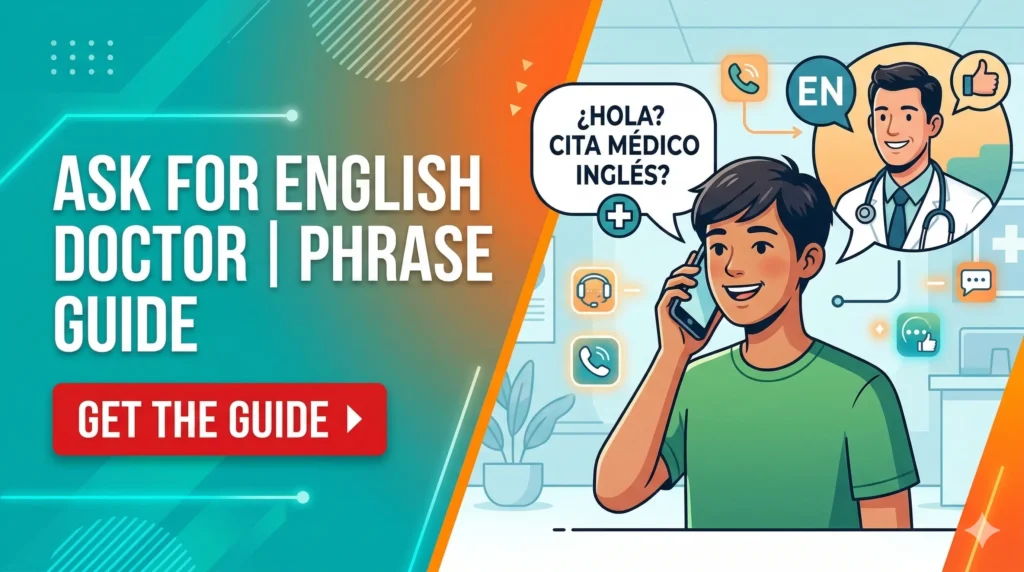
Essential Spanish Phrases for Booking Appointments
Mastering a few key phrases will dramatically reduce your anxiety when interacting with the clinic staff. Below are the most common scenarios you will face, whether you are calling from your apartment or walking up to the physical reception desk.
Telephone Booking Vocabulary
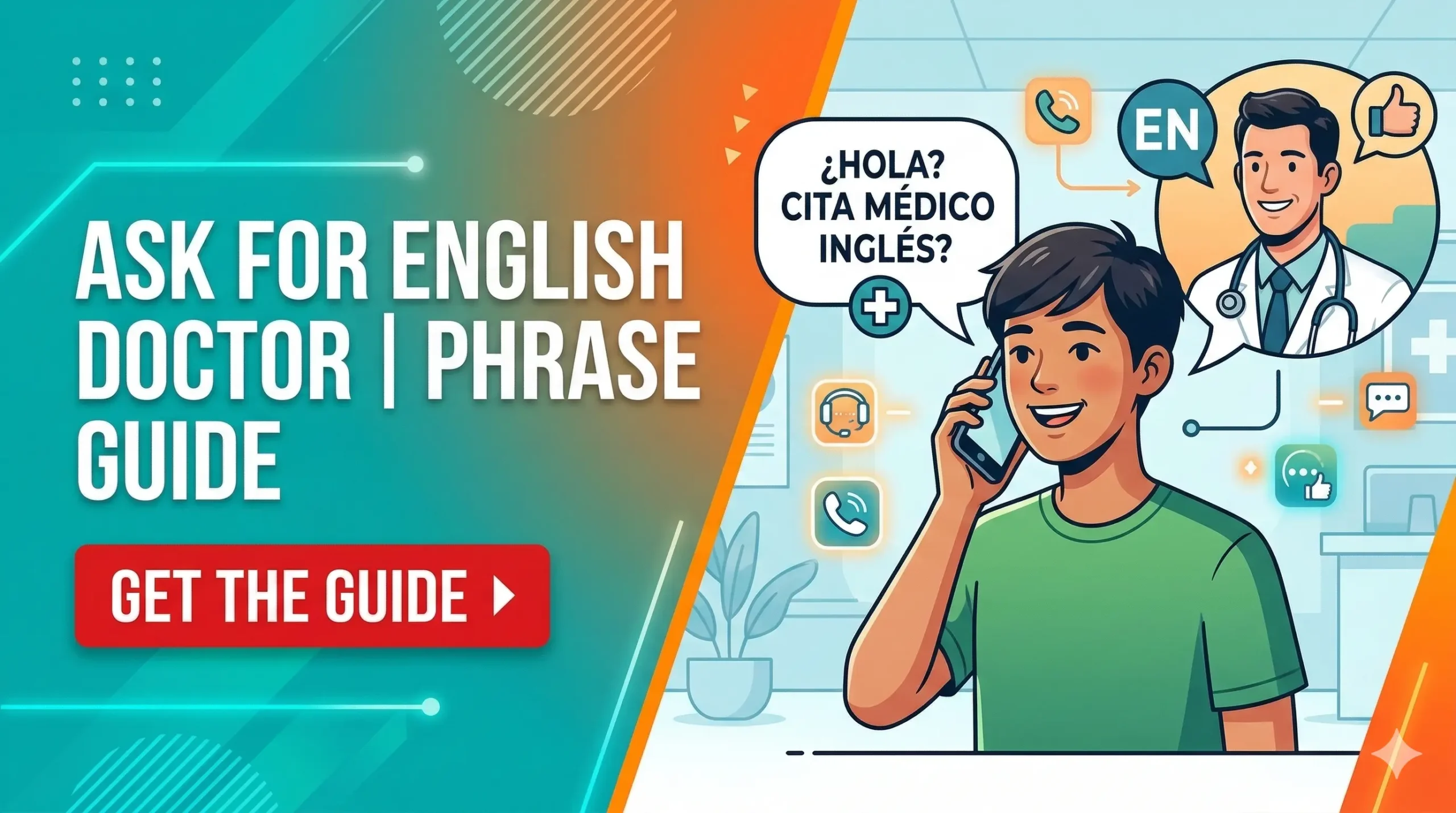
When calling a clinic, the receptionist will answer quickly, often just saying the name of the clinic or “Dígame” (Tell me). You should immediately state your goal and ask about language availability.
- “Hola, quiero pedir una cita médica, por favor.” (Hello, I want to request a medical appointment, please.)
- “¿Hay algún médico que hable inglés?”(Is there a doctor who speaks English?)
If the receptionist starts speaking rapidly in Spanish, you can politely slow the conversation down by stating your language limitations:
- “Lo siento, hablo muy poco español. ¿Puede hablar más despacio?”(I’m sorry, I speak very little Spanish. Can you speak more slowly?)
- “¿Hay alguien en la recepción que hable inglés?”(Is there anyone at the reception who speaks English?)
If they confirm an English-speaking doctor is available, they will ask for your availability. It is helpful to know the days of the week and times of day (e.g., por la mañana for morning, por la tarde for afternoon).
In-Person Desk Conversations
When you arrive at the clinic, the physical context makes communication slightly easier. You can hand the receptionist your health card or your private insurance card immediately, which answers half of their administrative questions. If you are paying for a private consultation out-of-pocket, it is entirely acceptable to ask for the price upfront. When managing these out-of-pocket medical expenses, using a borderless account like Wise allows you to pay the exact Euro amount via card without your home bank charging you exorbitant foreign transaction fees. To understand what a fair price looks like, consult our breakdown on Health Costs in Spain: Typical Co‑Pays and Out‑of‑Pocket Fees.
Here is a quick-reference table for common in-person desk interactions:
| English Intent | Spanish Phrase | Pronunciation Guide |
| I have an appointment at 10:00. | Tengo una cita a las diez. | TEN-go oo-nah THEE-tah ah las dee-ETH. |
| I need a doctor who speaks English. | Necesito un médico que hable inglés. | Ne-the-SEE-to oon ME-dee-ko ke AH-ble een-GLES. |
| It is an emergency. | Es una urgencia. | Es oo-nah oor-HEN-thee-ah. |
| I need to renew my prescription. | Necesito renovar mi receta. | Ne-the-SEE-to re-no-VAR mee re-THE-tah. |
| How much does the consultation cost? | ¿Cuánto cuesta la consulta? | KWAN-to KWES-tah lah con-SOOL-tah? |
What to Do if an English-Speaking Doctor is Unavailable
Despite your best efforts and perfect pronunciation, you may find that the clinic simply does not have an English-speaking doctor on staff. Do not panic; you still have several highly effective avenues for securing medical care.
Using Translators and Digital Alternatives
If you are locked into the public system and your assigned GP only speaks Spanish, you have the absolute right to bring a translator into the consultation room with you. This can be a bilingual friend, a family member, or a professional medical translator you hire privately. If you are paying a local freelancer to translate for you, utilizing Wise is the safest and cheapest way to transfer their service fee directly into their Spanish bank account.
However, if your issue is urgent and you cannot source a translator in time, digital healthcare is your ultimate safety net. The private sector in Spain has heavily embraced telemedicine. By using the mobile applications provided by premium insurers like Innoinsure, you can bypass the physical clinic entirely. With a few taps on your smartphone, you can launch a video consultation with a certified, English-speaking doctor within minutes. They can assess your symptoms, provide advice, and issue digital prescriptions. For a deeper understanding of this incredible technology, read our guide on Telemedicine in Spain: When It’s Useful and What to Expect.
Alternative Health and Pharmacy Options
It is also worth considering whether you actually need a doctor’s appointment at all. In Spain, pharmacists (farmacéuticos) are highly trained medical professionals who serve as the first line of primary care for minor ailments. If you have a mild cold, a minor skin rash, or a basic stomach ache, you can walk into any pharmacy and describe your symptoms. They can often recommend highly effective over-the-counter treatments, saving you the stress of booking a clinic appointment. If you are suddenly struck by illness late at night, you can locate an after-hours pharmacy using our guide: How to Find a ‘Farmacia de Guardia’ Near You in Spain.
For ongoing wellness, many expats prefer to manage minor issues holistically to avoid the clinic altogether. Because specialized organic supplements and high-dose vitamins can be incredibly expensive in Spanish retail pharmacies, the expat community heavily relies on global platforms like iHerb. By ordering your preferred preventative wellness products through iHerb, you can support your immune system and maintain your health routine, having your trusted international brands delivered directly to your Spanish residence.
Finally, if you require ongoing care for a chronic condition, the language barrier becomes a more serious logistical hurdle regarding your long-term medication. To understand how the Spanish system handles ongoing prescriptions, and how a digital system can automate your pharmacy pickups, read Medication Refills in Spain: How Renewals Work.
And remember: if you are experiencing a severe, life-threatening emergency, forget the phrasebook entirely. Emergency rooms in Spain will triage and treat you regardless of the language barrier. If a crisis strikes outside of normal business hours, our guide on What to Do If You Need Care on a Weekend in Spain outlines exactly which hospital doors will be open to you. By combining the right vocabulary with comprehensive digital tools from providers like Innoinsure, and proactively managing your wellness through iHerb, you can navigate the Spanish healthcare system with absolute confidence.
References
Primary sources (official)
- Ministerio de Sanidad (Ministry of Health Spain) – Asistencia Sanitaria: https://www.sanidad.gob.es/en/home.htm
- Consejo General de Colegios Oficiales de Médicos (CGCOM): https://www.cgcom.es/
Other helpful sources
- Citizens Advice Bureau Spain – Healthcare Entitlement and Access: https://www.citizensadvice.org.es/understanding-healthcare-entitlement-in-spain-and-the-five-year-descriptions/
- Expatica – Healthcare in Spain Guide: https://www.expatica.com/es/healthcare/
Disclaimer
The information provided in this article is for educational and informational purposes only and does not constitute formal medical or legal advice. Administrative procedures and language availability vary significantly across Spain’s autonomous communities and individual health centers. In the event of a severe, life-threatening medical emergency in Spain, do not delay care due to language barriers; immediately dial 112 or proceed to the nearest hospital emergency department (Urgencias).