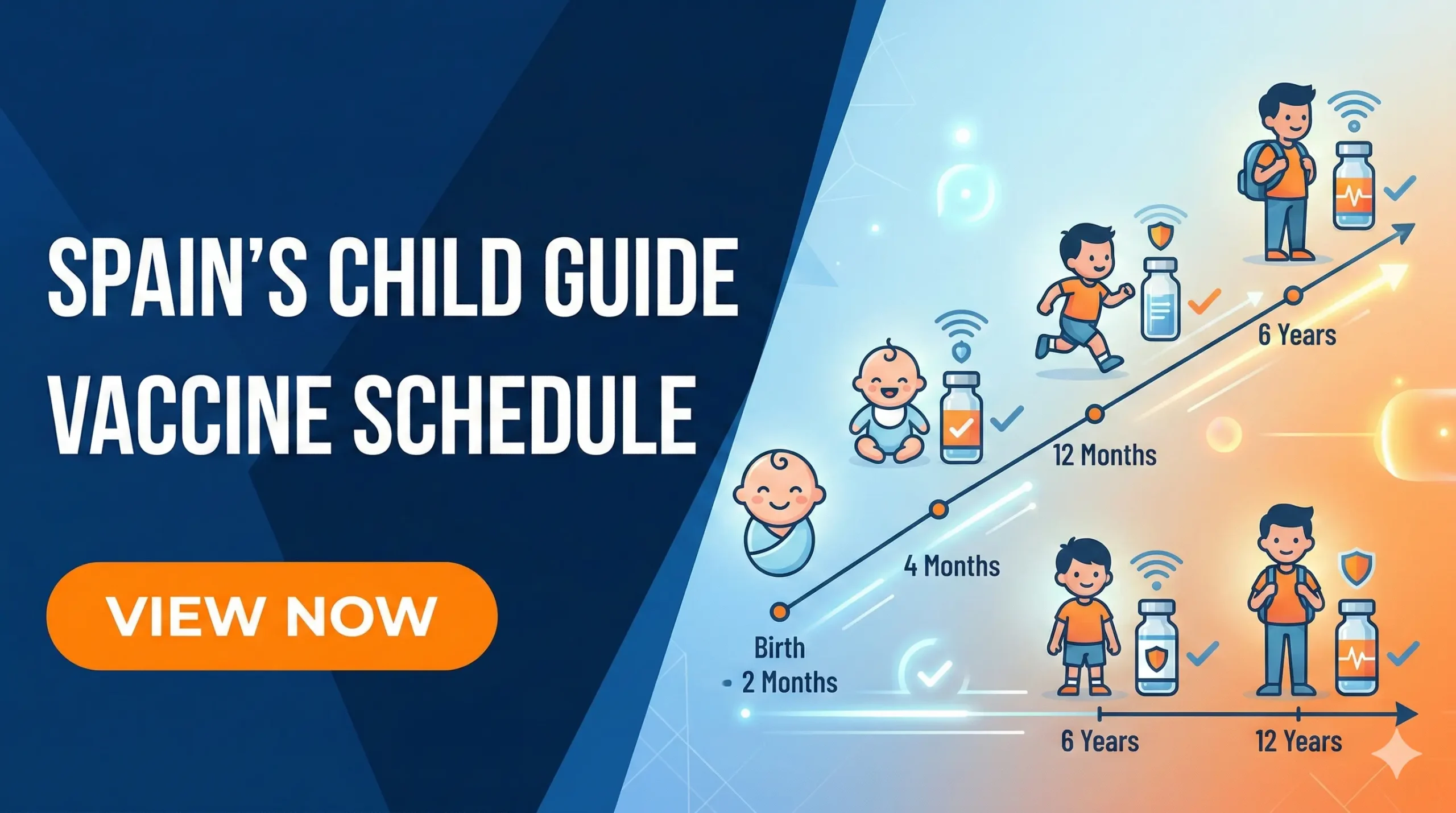
Child Vaccination Schedule in Spain: A High‑Level Overview
Navigating Spain’s child vaccination schedule can feel overwhelming for expat parents. This comprehensive guide provides a clear overview of mandatory and recommended childhood immunizations, detailing the timeline, public versus private access, and how to seamlessly manage your child’s healthcare abroad.
Disclosure: This post may contain affiliate links. We may earn a commission at no extra cost to you if you make a purchase through these links. Read full disclosure.
Understanding the Spanish Vaccination System
The Role of the Ministry of Health and AEP
The framework for childhood immunizations in Spain is primarily dictated by two major entities, and understanding the difference between them is crucial for expat parents. First, the Spanish Ministry of Health (Ministerio de Sanidad), through the Interterritorial Council of the National Health System (CISNS), establishes the “Common Vaccination Schedule Throughout Life” (Calendario común de vacunación e inmunización a lo largo de toda la vida). This official schedule dictates which vaccines are fully funded by the state and universally provided for free at public health centers across the country’s 17 autonomous communities.
Running parallel to this official government schedule are the recommendations of the Spanish Association of Pediatrics (AEP). The AEP publishes its own annual immunization schedule, which is often considered the “gold standard” by medical professionals. The AEP schedule includes all the government-funded vaccines, but it frequently recommends additional immunizations or accelerated timelines that the government has not yet agreed to fully finance.
Public vs Private Vaccination Routes
In Spain, you have two primary avenues for getting your child vaccinated: the public Sistema Nacional de Salud (SNS) and the private healthcare sector. The public route is highly organized and entirely free for all legally registered residents. When you take your child to the local community clinic (Centro de Salud) for their routine well-baby checks, the dedicated pediatric nurse administers the state-funded vaccines. The public system is incredibly efficient, heavily monitored, and seamlessly integrated into a centralized digital database, meaning your child’s records are always accessible to public hospital staff in an emergency.
Many expat families opt for a hybrid approach to maximize the benefits of both systems. They register their children in the public system to receive the core, expensive vaccines for free, while maintaining comprehensive expat health policies with providers like Innoinsure to access private pediatricians for routine illnesses, specialist referrals, and consultations in their native language. To understand how to best leverage both sectors, our overarching guide on the Spain Healthcare System for Expats: Public vs Private provides essential foundational knowledge.
Mandatory vs Recommended Vaccines
A common question among expats moving from countries with strict school entry laws (like the United States or France) is whether vaccines are legally mandatory in Spain. Strictly speaking from a legal standpoint, no vaccinations are forced or compulsory in Spain. The government relies heavily on education, accessibility, and a strong cultural trust in the medical system to maintain high immunization rates. Parents theoretically have the right to refuse vaccinations for their children without facing direct legal penalties or state intervention.
However, while not legally mandatory, vaccines are exceptionally highly recommended and culturally expected. The concept of herd immunity is deeply respected in Spanish society. Furthermore, while the state does not mandate vaccines, individual institutions have their own rules. Most public and private daycares (guarderías), preschools, and international summer camps will demand an official, up-to-date vaccination record (Cartilla de Vacunación) before accepting your child’s enrollment. If your child is missing core vaccines, they may be denied entry to protect the broader student body.
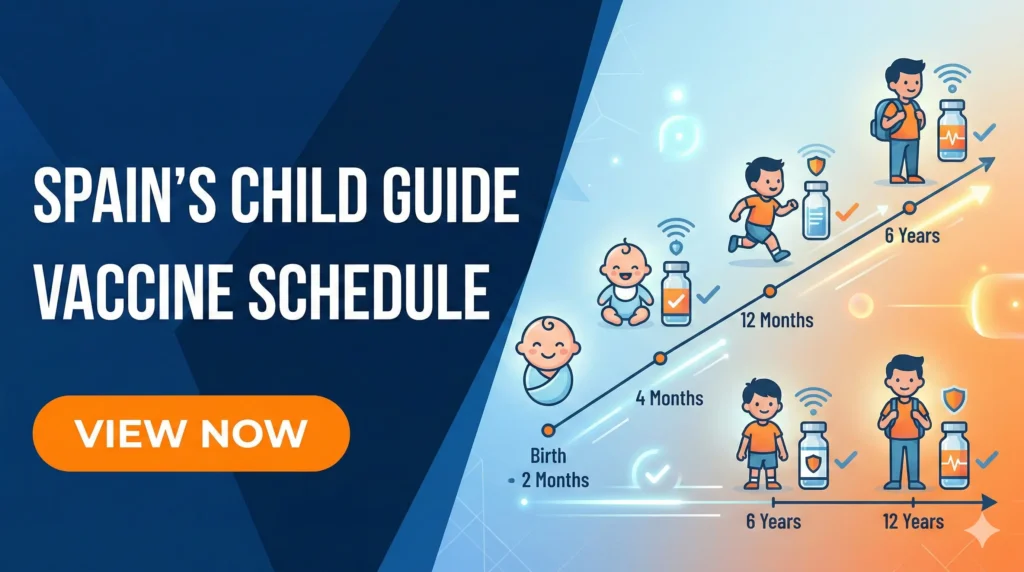
The Core Vaccination Timeline: Birth to 14 Years
Infant Immunizations (2 to 11 Months)
The first year of a baby’s life in Spain involves a rigorous and highly structured immunization schedule designed to provide rapid protection against severe diseases. The core vaccination journey truly begins at the two-month mark. During this visit, your baby will receive the Hexavalent vaccine (which protects against six diseases simultaneously) and the Pneumococcal conjugate vaccine. In recent years, the public system has also integrated the Meningococcus B vaccine and the oral Rotavirus vaccine into this initial two-month visit, drastically reducing the financial burden on parents.
At four months of age, the baby returns for the second dose of the Hexavalent, Pneumococcal, and Meningococcus B vaccines, along with the next dose of the oral Rotavirus vaccine. Depending on your region, a dose of the Meningococcus C or the combined MenACWY vaccine may also be administered at this time. This is a heavy appointment with multiple injections, and it is entirely normal for babies to experience mild fevers or crankiness for 24 to 48 hours afterward. Your pediatric nurse will typically advise you on the appropriate dosage of infant paracetamol to help manage these common, mild side effects.
The final major milestone of the infant period occurs at 11 months of age. This visit serves as the booster round for the primary series. The baby will receive their third and final dose of the Hexavalent vaccine and their booster dose of the Pneumococcal vaccine. Completing this 11-month milestone is a significant relief for many parents, as it concludes the most intensive phase of the infant vaccination schedule. For a deeper look at what else happens during these critical early clinic visits, reading our guide on Postnatal Care in Spain: Follow‑Ups, Pediatric Visits, and Support is highly recommended.
Toddler and Preschool Boosters (12 Months to 6 Years)
As your child transitions from infancy into toddlerhood, the focus shifts to different types of viral and bacterial protections. The 12-month appointment is a major milestone, as it introduces the MMR vaccine (Triple vírica), which provides crucial protection against Measles, Mumps, and Rubella. During this same visit, the child will also receive the Meningococcus ACWY vaccine, which has largely replaced the standalone MenC vaccine in most regions to offer broader protection against multiple strains of meningitis.
At 15 months of age, the toddler receives the Varicella (chickenpox) vaccine. In the past, chickenpox was considered a standard childhood rite of passage, but the Spanish medical system now actively vaccinates against it to prevent severe complications and future shingles outbreaks. The 15-month visit also typically includes the booster dose for the Meningococcus B vaccine, solidifying the child’s immunity against this aggressive bacterial infection before they head off to crowded preschool environments.
The preschool years involve fewer visits but crucial booster shots. At around 3 to 4 years of age (depending on the specific regional schedule and the latest AEP updates), the child receives their second doses of both the MMR and Varicella vaccines. Finally, right before they enter primary school at 6 years old, they receive the DTPa-VPI booster, which reinforces their immunity against Diphtheria, Tetanus, Pertussis (whooping cough), and Polio.
Pre-teen and Adolescent Vaccines (10 to 14 Years)
The pre-teen and early adolescent years mark the final phase of the standard Spanish pediatric vaccination schedule. One of the most significant public health advancements in recent years is the universal administration of the HPV (Human Papillomavirus) vaccine. Originally, this vaccine was only offered to girls at age 12 to prevent cervical cancer. However, following the strong recommendations of the AEP, the Spanish public health system now systematically vaccinates both boys and girls at age 12, recognizing that the virus also causes various cancers in males and that vaccinating both genders dramatically improves herd immunity.
Around the age of 12 to 14, adolescents also receive a booster dose of the Meningococcus ACWY vaccine. This is a critical age for meningitis protection, as teenagers are statistically more likely to carry and transmit the bacteria due to their social habits and close contact in high schools and universities. Additionally, they will receive a booster shot for Tetanus, Diphtheria, and Pertussis (Tdpa or Td), ensuring their protection carries well into early adulthood.
At the age of 14 (or 15 in a few specific regions), children officially age out of the Spanish pediatric system and are transferred to the care of a general family doctor (médico de cabecera). This transition marks the end of the standard childhood vaccination booklet. For parents wondering how to manage their child’s health leading up to this transition, our detailed article on Pediatric Care in Spain: Choosing a Pediatrician offers valuable insights into finding the right long-term medical partner for your growing child.
Key Vaccines Detailed: What Expats Need to Know
The Hexavalent and Pneumococcal Vaccines
The Hexavalent vaccine is the heavy lifter of the Spanish infant immunization schedule. As the name suggests, it is a 6-in-1 combination vaccine that protects against Diphtheria, Tetanus, Pertussis (whooping cough), Polio (VPI), Haemophilus influenzae type b (Hib), and Hepatitis B. Using a combination vaccine is a deliberate strategy by the Spanish health system to minimize the number of physical injections a tiny infant has to endure, thereby reducing pain for the baby and anxiety for the parents, while simultaneously achieving rapid immunity against six life-threatening diseases.
Running alongside the Hexavalent is the Pneumococcal conjugate vaccine (typically VNC15 or VNC20, referring to the number of bacterial strains it covers). Streptococcus pneumoniae is a dangerous bacterium that can cause severe pneumonia, blood infections (sepsis), and bacterial meningitis in young children. The widespread use of the advanced, multi-strain Pneumococcal vaccine in Spain has resulted in a dramatic, nation-wide drop in these severe invasive diseases, making it a non-negotiable cornerstone of early infant care.
Meningococcal Protections (MenB, MenC, MenACWY)
Spain takes an exceptionally aggressive and proactive stance against meningococcal disease, a rapid-onset bacterial infection that causes meningitis and sepsis. Historically, the public schedule only covered Meningococcus C. However, as medical science advanced, Spain expanded its arsenal. Today, the MenACWY conjugate vaccine is the standard, replacing the standalone MenC shot to provide protection against four different serogroups of the bacteria (A, C, W, and Y) that have become increasingly prevalent globally.
Perhaps the most celebrated recent update to the public schedule is the inclusion of the Meningococcus B vaccine (commonly known by the brand name Bexsero). For years, this vaccine was highly recommended by the AEP but was not state-funded. Parents had to buy it at the pharmacy for over €100 per dose, creating a significant healthcare inequality. Thankfully, the Ministry of Health has now universally incorporated MenB into the free infant schedule, a massive financial relief for all families and a major step forward for national pediatric health.
RSV and Seasonal Flu Innovations
While not a traditional vaccine, the introduction of the Nirsevimab monoclonal antibody has revolutionized infant winter care in Spain. Nirsevimab provides immediate, passive immunity against the Respiratory Syncytial Virus (RSV), the primary cause of bronchiolitis in babies. RSV previously filled Spanish pediatric intensive care units every winter. Now, the public system administers this immunization to newborns during the autumn and winter months, either in the maternity ward shortly after birth or at the local clinic, successfully preventing thousands of infant hospitalizations.
Additionally, Spain has broadened its approach to the seasonal flu (gripe). It is now standard protocol to offer the annual flu vaccine to all healthy children between the ages of 6 months and 59 months (almost 5 years old). This is a shift from previous decades when the flu shot was reserved only for children with chronic health conditions. For toddlers over the age of two, the public system often utilizes an intranasal flu vaccine, which is a simple spray up the nose rather than an injection, much to the relief of needle-weary children and parents alike.
Administrative Steps for Expat Parents
Registering for the Public Health Card
Before your child can receive a single free vaccine in the Spanish public system, you must navigate the local bureaucracy. The first step is obtaining the physical public health card, known as the Tarjeta Sanitaria Individual (TSI) or SIP card depending on your region. To get this, your child must be registered as a beneficiary under your Spanish Social Security number. You must also have your Padrón certificate, which proves your residency address at the local town hall.
Once you have your Social Security documentation, your child’s passport, and your Padrón, you must physically go to your assigned local Centro de Salud. The administrative staff will process your paperwork and officially register your child in the regional health database. They will assign your child a specific pediatrician and a pediatric nurse. You will be given a temporary paper document while the actual plastic health card is mailed to your home. This card must be presented at every single vaccination appointment.
Translating Foreign Vaccination Records
For expat families moving to Spain with older babies or school-aged children, transferring your medical history is a critical administrative step. Vaccination schedules vary wildly across the globe. For example, the UK does not routinely vaccinate against Varicella, while the US schedule staggers doses differently than the Spanish timeline. When you arrive in Spain, your new pediatric nurse must meticulously map your child’s foreign vaccination record onto the Spanish national schedule.
To facilitate this, you must bring your child’s official vaccination booklet from your home country. If the booklet is in a language other than English or Spanish, it is highly advisable to get it officially translated. The Spanish nurse will review the documented dates of each dose, identify any gaps or missing booster shots, and create a “catch-up” (calendario de rescate) schedule. This ensures your child is fully compliant with local health standards, which is necessary before attempting to enroll them in the Spanish educational system.
Managing Out-of-Pocket Vaccine Costs
While the vast majority of core vaccines are free, expat parents might occasionally encounter situations where they need to pay out-of-pocket. This usually happens if they choose to administer a vaccine that the AEP highly recommends but their specific autonomous community has not yet fully funded, or if they are exclusively using a private pediatrician and their basic private insurance policy excludes the cost of the physical vaccine serums.
When you buy a vaccine privately, the doctor writes a prescription, and you purchase the vial at a licensed Spanish farmacia. You must maintain the “cold chain”—keeping the vaccine refrigerated—while transporting it from the pharmacy to the clinic. Because specialized vaccines can be costly, managing your finances efficiently is key. Using digital platforms like Wise to transfer your healthcare budget from your home currency to Euros allows you to avoid poor bank exchange rates. Furthermore, if you are a digital nomad constantly crossing borders, having robust international health coverage through providers like SafetyWing ensures your family is protected against medical emergencies while you figure out the local vaccination logistics.
Pros and Cons of the Spanish Vaccination Approach
Pro: High Adherence and Herd Immunity
One of the most comforting aspects of raising a child in Spain is the country’s overwhelming, culturally ingrained trust in medical science. Anti-vaccination sentiment is remarkably low compared to many other Western nations. Spanish parents view childhood immunizations not just as a personal health choice, but as a fundamental civic duty to protect the community.
Because of this deep cultural trust, Spain boasts some of the highest childhood vaccination rates in the world, frequently surpassing 95% coverage for core vaccines. This exceptionally high adherence creates a robust “herd immunity.” For expat parents with newborns who are too young to be fully vaccinated, or children with compromised immune systems, knowing that the vast majority of the surrounding population is fully immunized provides immense peace of mind.
Con: Regional Variations and Bureaucracy
A significant drawback of the Spanish system is its decentralized nature. Spain is divided into 17 autonomous communities (such as Andalusia, Catalonia, and Madrid), and each regional government manages its own healthcare budget. While the Ministry of Health sets the national baseline schedule, the regions have the power to implement it slightly differently or fund additional vaccines ahead of the national mandate.
This means the vaccination schedule can vary slightly depending on where you live. A vaccine that is completely free and administered at 2 months in Madrid might cost €100 out-of-pocket or be administered at 3 months in Valencia. For expat families who move between different Spanish cities due to work assignments, this regional fragmentation can cause bureaucratic headaches, requiring them to constantly re-register and re-evaluate their child’s immunization status.
Con: Language Barriers in Public Clinics
While the clinical excellence of the public Centro de Salud is undisputed, the language barrier is a major hurdle for newly arrived expats. Public pediatric nurses and doctors are under no obligation to speak English, and the vast majority conduct consultations exclusively in Spanish. Medical terminology can be complex, and trying to understand detailed instructions about potential post-vaccination side effects, fever management, or developmental milestones in a second language can be incredibly stressful.
If your Spanish is not yet fluent, it is highly advisable to bring a bilingual friend or hire a translator for your first few clinic visits. Alternatively, this language barrier is the primary reason many expats choose to invest in private health insurance through brokers like Innoinsure, guaranteeing them access to an English-speaking private pediatrician who can explain the vaccination process clearly and compassionately in their native tongue.
Support and Resources for Expat Families
Navigating Appointments and Reminders
Managing a busy vaccination schedule requires organization. In the Spanish public system, you will be given a physical booklet at birth, often called the Cartilla de Salud Infantil or Documento de Salud Infantil, which serves as the official record. You must bring this physical book to every appointment. To understand how this document is issued right from the maternity ward, reading our guide on Giving Birth in Spain: What Foreign Parents Should Expect provides excellent context.
Beyond the physical book, Spain has heavily digitized its healthcare access. Every autonomous community has its own dedicated health app (such as La Meva Salut in Catalonia, Cita Sanitaria in Madrid, or Salud Andalucía). Once you download the app and link it to your child’s SIP card, you can view their complete digital vaccination record, receive push notifications for upcoming booster shots, and easily book or modify appointments with the pediatric nurse without having to navigate phone calls in Spanish.
Immune Support and Wellness
Following a vaccination, it is common for children to experience a mild fever or localized pain at the injection site. Spanish pediatricians universally recommend liquid paracetamol (sold under the brand name Apiretal) or ibuprofen (Dalsy) to manage these symptoms. These are available over the counter at any local pharmacy.
Many international parents prefer to source specialized infant probiotics, high-quality Vitamin D drops, and organic wellness supplements from online retailers. Platforms like iHerb are incredibly popular within the expat community, offering a vast, affordable selection of pediatric health products delivered directly to your Spanish residence, ensuring your child stays resilient and healthy year-round.
Comparison of Spanish Vaccination Pathways
| Feature | Public Healthcare Route (SNS) | Private Healthcare Route |
| Cost of Core Vaccines | 100% Free | Free (if covered by insurance) or Retail Price |
| Administered By | Public Pediatric Nurse | Private Pediatrician or Clinic Nurse |
| Location | Assigned local Centro de Salud | Private clinic of your choice |
| Language Spoken | Primarily Spanish | High availability of English |
| Vaccine Sourcing | Stocked directly at the clinic | Often requires purchase at a farmacia |
| Schedule Followed | Ministry of Health (CISNS) | Often aligns with the broader AEP recommendations |
References
Primary sources (official)
- Ministerio de Sanidad – Calendario común de vacunación e inmunización a lo largo de toda la vida: https://www.sanidad.gob.es/areas/promocionPrevencion/vacunaciones/calendario/home.htm
- Asociación Española de Pediatría (AEP) – Calendario de Vacunaciones e Inmunizaciones: https://vacunasaep.org/profesionales/calendario-de-vacunaciones-e-inmunizaciones-aep-2026
Other helpful sources
- European Observatory on Health Systems and Policies – Spain Health Profile: https://eurohealthobservatory.who.int/publications/m/spain-country-health-profile-2023
- World Health Organization (WHO) – Immunization Data Country Profile for Spain: https://cdn.who.int/media/docs/default-source/country-profiles/immunization/2024-country-profiles/immunization-2024-esp.pdf
Disclaimer
The information provided in this article is for educational and informational purposes only and does not constitute medical, legal, or financial advice. The Spanish national vaccination schedule, regional funding, and clinical procedures are subject to frequent updates. Always consult directly with a qualified pediatric healthcare professional regarding your child’s specific medical needs, and verify insurance coverage details directly with your chosen provider.