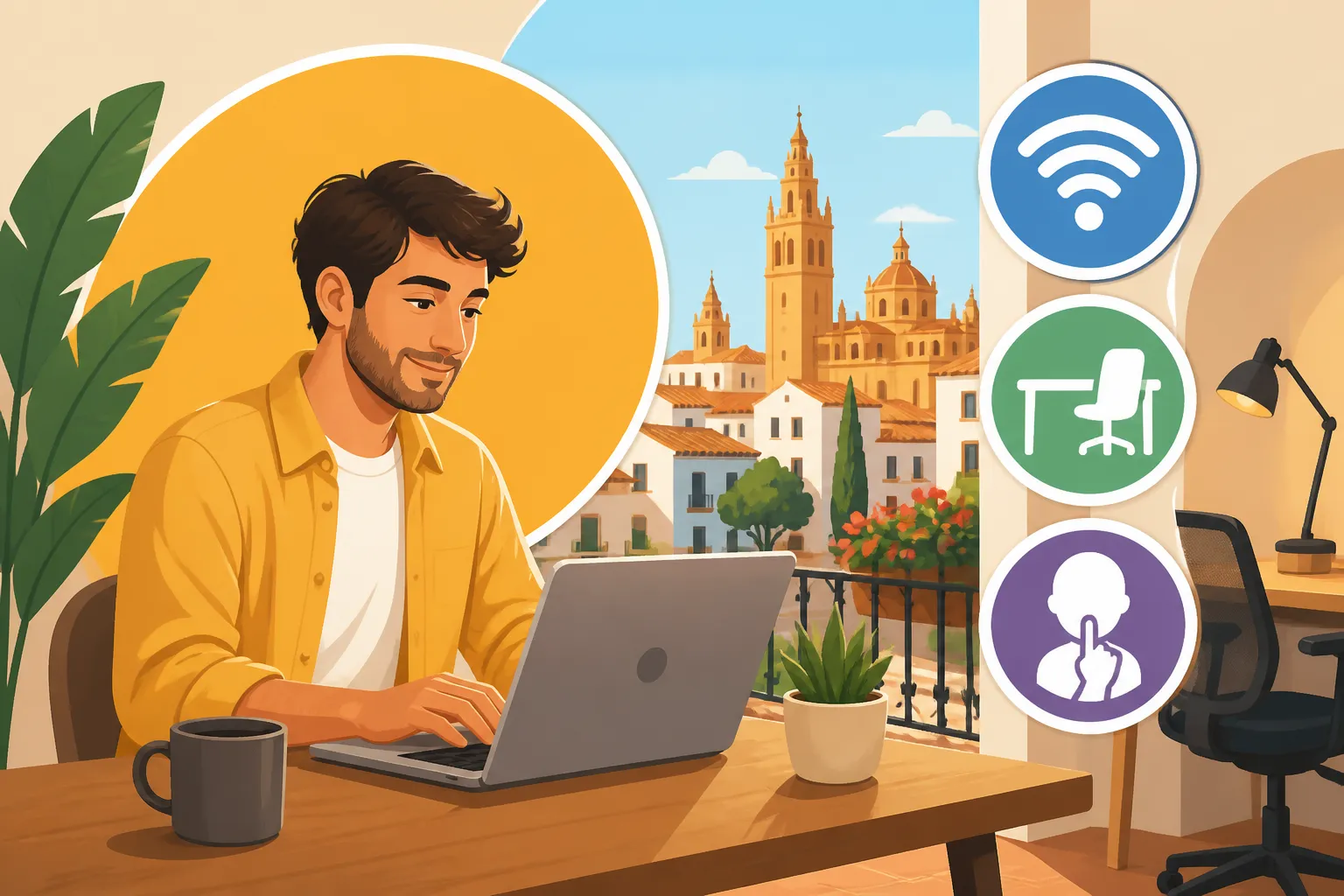
Digital Nomad Stays in Spain: Booking for Wi-Fi, Desks, and Quiet
Disclosure: This article contains affiliate links. If you buy through them, we may earn a commission at no extra cost to you. Read our full disclosure.
Ah, the life of a digital nomad in Spain! It sounds like a dream, doesn't it? Siestas, tapas, beautiful beaches, and a vibrant culture, all while getting your work done remotely. But let's be real, finding a place that actually works for a remote professional, not just a tourist, can be a monumental headache. You need more than just a pretty balcony; you need reliable internet, a proper workspace, and crucially, some blessed peace and quiet. This guide is going to walk you through exactly how to leverage platforms like Booking.com to find those hidden gems that cater to your specific, often frustratingly particular, digital nomad needs in Spain.
Understanding the Digital Nomad Lifestyle in Spain
Being a digital nomad in Spain is a truly unique experience, offering an incredible blend of professional freedom and cultural immersion. However, it's not always just sun-drenched cafe work and leisurely strolls. The reality often involves a meticulous search for the right living and working environment, a quest that can sometimes feel more like an administrative odyssey than a carefree adventure. Understanding the nuances of this lifestyle here is key to managing your expectations and, more importantly, finding accommodations that genuinely support your remote work setup.
The Allure and Reality of Remote Work in Spain
Let’s be honest, the romantic image of working from a laptop on a beach in Andalusia or a quaint plaza in Barcelona is what draws many of us to Spain. And for good reason! The country offers an enviable work-life balance, delicious food, stunning landscapes, and a generally lower cost of living compared to many other Western European nations. The promise of sunshine, late dinners, and a vibrant social scene is a powerful pull. It’s a dream we chase, and often, a dream we find.
However, the reality can sometimes present a stark contrast. Those charming, old-world apartments in the historic centers might have unreliable Wi-Fi that struggles with video calls, or their stone walls could mean spotty mobile data. That lively plaza outside your window, so appealing during a quick visit, transforms into a noisy obstacle when you’re trying to concentrate on a deadline. The laid-back Spanish pace, while lovely for leisure, can be frustrating when you're trying to get a speedy internet repair or clarify an amenity. Many of us have been there, juggling a laptop on our knees, desperately searching for a stable signal, feeling that gap between the dream and the reality of productive remote work in Spain. It's not impossible, but it demands a specific approach to accommodation.
Key Accommodation Needs for Digital Nomads
So, what exactly does a digital nomad truly need from their accommodation in Spain, beyond a roof over their head? It goes far beyond simply "having Wi-Fi." First and foremost, a reliable, high-speed internet connection is non-negotiable. This means sufficient bandwidth for video conferencing, large file transfers, and consistent connectivity, not just basic browsing. Many places will advertise "Wi-Fi," but the actual speed and stability can vary wildly, turning a workday into a frustrating series of dropped calls and buffering screens.
Secondly, a dedicated and ergonomic workspace is crucial. This isn't just about having a table; it's about a proper desk that allows for a comfortable posture, an office chair that won't give you back pain after an hour, and adequate lighting. Trying to work from a coffee table with a tiny stool or a wobbly dining table for weeks on end is a recipe for physical discomfort and reduced productivity. Finally, peace and quiet are paramount. While a bustling city view is inspiring, constant street noise, thin walls, or loud neighbors can severely impact concentration. Identifying whether a property is located on a quiet street, has good sound insulation, or is simply in a less touristy, more residential area can make all the difference to your mental well-being and ability to focus on complex tasks.
Why Booking.com is a Digital Nomad's Best Friend in Spain
When you're embarking on your digital nomad adventure in Spain, finding the right temporary home is half the battle. This is where a robust platform like Booking.com really shines as your go-to resource. It's not just for quick tourist trips; it's a powerful tool for remote workers if you know how to wield its advanced features and interpret its wealth of information. Think of it less as just a booking site and more as a detailed database of potential workspaces and living environments, specifically when you're looking for Digital Nomad Stays in Spain: Booking for Wi-Fi, Desks, and Quiet.
Advanced Search Filters for Remote Workers
One of the biggest advantages of Booking.com is its extensive filtering system. Most people just punch in dates and location, but as a digital nomad, you need to dig deeper. After entering your destination (e.g., Valencia, Málaga, or even a smaller town like Sitges), head straight for the filters on the sidebar. Look for options like "Free WiFi" – a basic start, but don't stop there. Crucially, many properties now list "Workspace" or "Desk" as an amenity. This is a game-changer! Selecting this filter immediately narrows down your options to places that explicitly offer a dedicated area for work, increasing your chances of finding an ergonomic setup.
Beyond the obvious, consider using other filters strategically. "Kitchen/Kitchenette" is often vital for long-term stays, allowing you to save money and eat healthier. "Air conditioning" is non-negotiable for summer months in most of Spain, and "Heating" for winter, ensuring comfort for focused work. Even "Washing machine" can be a huge convenience for extended periods. When you're searching on Booking.com, remember that the more specific you are with your filters, the closer you'll get to finding a place that truly meets your unique requirements as a remote professional. Don't be shy about playing with combinations to see what pops up; sometimes the best options aren't immediately obvious.
Unpacking Reviews and Ratings for Nomad-Specific Insights
Once you've applied your filters on Booking.com and have a list of potential properties, the next critical step is diving into the reviews. This is where the real goldmine of digital nomad-specific information lies, but you need to know how to read between the lines. Don't just look at the overall rating; meticulously scan for keywords related to your priorities: "Wi-Fi," "internet," "desk," "workspace," "quiet," "noise," "fast," "slow," "reliable," "spotty," "comfortable," "chair," and "disruptive."
Pay close attention to recent reviews, as internet speeds and property conditions can change. If multiple recent reviews mention "excellent Wi-Fi, perfect for remote work," you're likely onto a winner. Conversely, if you see phrases like "Wi-Fi was a bit slow" or "noisy street outside," even if the overall rating is high, it's a red flag for a digital nomad. Consider reading reviews in different languages, too, using a translation tool if necessary, as guests from different countries might have different expectations or notice distinct details. For instance, a European traveler might find a "noisy" street perfectly normal, while someone from a quieter region might find it unbearable for work. Also, check for responses from the property owner – how they address feedback can tell you a lot about their responsiveness and commitment to guest satisfaction. If you're really struggling to find suitable internet, remember there are always options for Mobile Phone Plans in Spain: Prepaid vs Contract for Foreigners that can serve as a backup hotspot.
Essential Amenities to Prioritize for Your Stay
When you’re setting up your temporary home office in Spain, the amenities offered by your accommodation aren’t just nice-to-haves; they’re absolute necessities for maintaining productivity and sanity. Remote workers across the country often find that overlooking these details can turn your dream remote work experience into a daily battle against technical glitches and physical discomfort. Prioritizing these three elements – internet, workspace, and quiet – will dramatically improve your quality of life as a digital nomad.
Reliable Internet Connection
This is, without a doubt, the most critical amenity for any digital nomad. Advertising "free WiFi" is standard across Spain, but that term can mean anything from blazing fast fiber optics to a dial-up-esque connection shared among too many users. When you're browsing Booking.com, don't just check the "WiFi" box. Look for mentions of "high-speed internet" or "fiber optic" in the property description. If it's not explicitly stated, make it a point to contact the property directly before booking. Ask specific questions: "What is the average download/upload speed?" "Is the connection stable enough for video conferencing?" "Is it a dedicated line or shared?"
Also, consider the physical location of the router and the size of the property. A large apartment might have a single router in the living room, leaving the bedroom with a weak signal. Pay attention to reviews that specifically mention internet quality, especially from other remote workers. A quick scan for terms like "fast Wi-Fi," "reliable connection," or "great for remote work" will be far more valuable than a generic "Wi-Fi available" checkmark. If you plan to rely on public Wi-Fi or cafes, be aware that many cities have limited free access, and security can be a concern. Having your own stable connection at home is paramount. For critical work, it’s always wise to have a backup plan, whether that’s a local SIM card with a generous data plan or a portable hotspot.
Dedicated Workspace and Ergonomics
Working from your bed or the kitchen counter might be fine for a day or two, but for extended stays, a proper workspace is essential for both productivity and your physical health. A "desk" can range from a tiny decorative table to a full-sized office setup. When looking on Booking.com, scrutinize the photos. Does the "desk" look like a comfortable height? Is there a proper chair, or just a dining chair that will leave you with a sore back? Are there enough power outlets nearby?
Ideal accommodation for a digital nomad will feature a dedicated room or a clearly defined corner with a sturdy desk, an ergonomic chair, and good lighting – natural light is a huge bonus! If the photos aren't clear, again, don't hesitate to message the property owner. Ask about the type of chair provided and the dimensions of the desk. While you might not get a perfect office setup, knowing what to expect allows you to plan. Perhaps you'll need to invest in a portable laptop stand or an ergonomic cushion if the provided chair is subpar. Remember, you'll be spending hours here, so don't compromise on comfort and functionality. Your back (and your productivity) will thank you.
The Quest for Peace and Quiet
Noise is often an underestimated factor, but for focused work, it can be a massive disruptor. Spain is a country that thrives on social interaction, and noise is often just a part of daily life, whether it’s vibrant street chatter, late-night revelry, or the sounds of daily life from neighbors. That charming apartment overlooking a bustling plaza might be wonderful for people-watching, but not for a video conference.
When searching for quiet digital nomad stays on Booking.com, first, check the location. Is it in a lively city center, or a more residential neighborhood? Look at a map and consider how close it is to bars, restaurants, or busy roads. Read those reviews very carefully for mentions of "noise," "street sounds," "thin walls," or "noisy neighbors." Conversely, look for phrases like "peaceful," "quiet street," or "good for sleeping." Properties on higher floors or those not directly facing a main street often tend to be quieter.
Consider the type of building as well. Modern buildings sometimes offer better sound insulation than older, charming apartments. Rural properties or those slightly outside the main city hubs can be excellent choices for tranquility, though you'll need to weigh this against accessibility to amenities. If absolute silence is a must for your work, prioritizing properties in quieter residential zones or even considering a rural retreat might be a better option. For more on the rhythm of life, you might want to read about Understanding Spain's Daily Rhythm: Siesta and Late Nights.
Types of Stays Perfect for Digital Nomads in Spain
Spain offers a wonderfully diverse range of accommodation options, and as a digital nomad, you'll find that certain types of stays are far more conducive to productive remote work than others. It's not just about finding a place to sleep; it's about finding a home base that supports your professional life while allowing you to fully enjoy your expat experience. Each option comes with its own set of advantages and potential drawbacks, so let’s break them down.
Apartments and Aparthotels: Your Home Away From Home
For most digital nomads, a private apartment or an aparthotel often hits that sweet spot between comfort, functionality, and immersion into local life. Booking.com offers a vast selection of these, from cozy studios to multi-bedroom flats. The biggest draw is having your own space – a separate kitchen for cooking, a living area for unwinding, and, crucially, often a dedicated room or corner for a proper workspace. This gives you a sense of being truly settled, rather than just passing through.
Apartments typically provide more space and a full kitchen, which is excellent for longer stays as it allows for grocery shopping and cooking, saving money on eating out. You'll often find more authentic decor and a genuine neighborhood feel. However, be aware that amenities can vary. Some might have older, less reliable Wi-Fi, and the "desk" might simply be a small table. You'll also need to manage your own cleaning and potentially deal with landlords directly if issues arise.
Aparthotels, on the other hand, offer the best of both worlds. You get apartment-style living with a kitchenette and often a living area, but with the added convenience of hotel services like reception, regular cleaning, and sometimes even co-working spaces or business centers. They tend to be more professionally managed, meaning better Wi-Fi infrastructure and a higher likelihood of purpose-built workspaces. They can be slightly more expensive than a private apartment, but the services often justify the cost, especially if you value convenience and consistent quality. When searching on Booking.com, use filters for "Apartments" or "Aparthotels" and then layer on your "Workspace" and "Wi-Fi" requirements.
Hotels with Co-working Facilities
While traditional hotels might not seem like the first choice for a digital nomad, a growing number of establishments in Spain are recognizing the rise of remote work and adapting their offerings. Many modern and business-oriented hotels, particularly in larger cities like Madrid, Barcelona, or Valencia, now boast excellent co-working facilities or dedicated business lounges. These spaces are often designed with productivity in mind, offering fast Wi-Fi, ample power outlets, comfortable seating, and a professional atmosphere.
The benefits of these types of hotels are clear: immediate access to reliable internet, usually a proper desk in your room, and sometimes even complimentary printing or coffee in the co-working area. Plus, the convenience of daily cleaning, room service, and a reception desk can't be understated, especially if you're only planning a shorter digital nomad stint or are in a new city and want less logistical hassle. However, the downside can be the cost, which is typically higher than an apartment, and the lack of a full kitchen, meaning more reliance on eating out. For a truly deep dive into how Spanish hotels cater to remote workers, search for properties on Booking.com with "co-working space," "business facilities," or "lounge" in their descriptions.
Rural Retreats for Focused Work
Sometimes, the hustle and bustle of city life, even in a quieter neighborhood, can be too much for deep work. If your work demands intense focus, creativity, or simply a break from urban distractions, a rural retreat in Spain could be your perfect sanctuary. Spain's diverse landscape offers countless opportunities for this, from charming casas rurales in the rolling hills of Andalusia to stone cottages in the Pyrenees or Galicia.
These properties, often found on Booking.com under "country houses," "villas," or "farm stays," promise tranquility, fresh air, and stunning natural beauty. Imagine starting your day with a hike before settling down to work, or taking a refreshing dip in a private pool during your break. The pace of life is slower, the noise minimal, and the connection to nature profound. The challenge here often lies with internet connectivity; rural areas can sometimes have less robust infrastructure, so verifying Wi-Fi speed and stability is even more critical. You might also be further from amenities like large supermarkets or public transport, making a car almost essential. However, for a digital detox coupled with productive work, a rural retreat can be an incredibly rewarding experience, offering an unparalleled blend of work and well-being.
Regional Spotlight: Best Cities in Spain for Digital Nomads
Spain is a kaleidoscope of cultures, landscapes, and lifestyles, making it a fantastic playground for digital nomads. But not all cities are created equal when it comes to supporting a remote work lifestyle. Some offer bustling co-working scenes and lightning-fast internet, while others charm with a slower pace and stunning views, albeit with different logistical considerations. Knowing what each region generally offers can help you refine your Booking.com search and match your work style with the perfect Spanish backdrop.
Vibrant Hubs: Madrid and Barcelona
If you thrive on energy, networking opportunities, and a constant buzz, then Spain's two largest cities, Madrid and Barcelona, are likely calling your name. These metropolises are absolute magnets for international talent and have the infrastructure to prove it.
Madrid, as the capital, is a hub of business and culture. You'll find an abundance of modern apartments and hotels with excellent connectivity. There's a huge co-working scene, fantastic public transport, and a truly global feel. The internet speeds are generally top-notch, and finding properties with dedicated workspaces is easier here than in smaller towns. The main challenge, however, can be the cost of living and finding truly quiet accommodation in the very heart of the city, especially given Madrid's famously lively nightlife. When searching on Booking.com, look for neighborhoods slightly outside the most tourist-dense areas like Sol or Gran Vía, perhaps areas like Chamberí, Salamanca, or Retiro, which blend residential calm with urban convenience.
Barcelona offers a similar vibrant energy but with the added bonus of beaches and a distinctly Catalan character. It’s incredibly popular with digital nomads, leading to a robust market of nomad-friendly rentals and co-working spaces. Like Madrid, internet infrastructure is excellent, and you'll find plenty of stylish apartments. The city's districts (or barrios) each have their own vibe, from the Gothic Quarter's historic charm to Gràcia's bohemian feel or Eixample's elegant boulevards. For digital nomads, districts like Poblenou, with its tech hub reputation, or Sant Antoni, known for its community feel, often offer a good balance. Again, cost and noise can be factors, particularly in highly desirable areas. For both cities, use Booking.com's map view to gauge proximity to quiet parks or residential streets and always check recent reviews for noise complaints.
Coastal Charms: Valencia, Málaga, and the Islands
If your digital nomad dream includes regular doses of sunshine and sea breeze, then Spain’s coastal cities and islands present irresistible options. They offer a more relaxed pace than the major hubs but still provide ample amenities for remote work.
Valencia has rapidly emerged as a digital nomad hotspot, and for good reason. It’s a beautiful city with a fantastic quality of life, a burgeoning tech scene, lovely beaches, and a more affordable cost of living compared to Madrid or Barcelona. The internet infrastructure is robust, and many apartments are modern. The city center and areas like Ruzafa or Cabanyal (near the beach) offer great options. Valencia generally offers a quieter atmosphere than Madrid or Barcelona while still being vibrant. When booking on Booking.com, you might find more spacious apartments with dedicated work areas within your budget here.
Málaga, on the Costa del Sol, is another strong contender, especially if you love year-round sunshine. It boasts a beautiful historic center, an impressive art scene, and a relaxed Andalusian vibe. It’s well-connected, has a growing digital nomad community, and offers good internet. The downside can be the sheer number of tourists during peak season, which might impact noise levels and availability. Look for properties slightly away from the main tourist beaches if quiet is a priority.
Then there are the Balearic Islands (Mallorca, Ibiza, Menorca) and the Canary Islands (Tenerife, Gran Canaria, Fuerteventura, Lanzarote), which are world-renowned for their stunning natural beauty. The Canaries, in particular, benefit from mild temperatures year-round, making them ideal for winter escapees. Many properties, especially in more residential areas, are well-equipped for longer stays with reliable internet. However, outside of the main towns, options might be limited, and transport can be an issue without a car. Availability and pricing can fluctuate wildly with tourist seasons. It’s a great idea to check out specific regional guides like The Balearic Islands: Choosing Between Mallorca, Menorca, and Ibiza or The Canary Islands: A Traveler's Overview for deeper insights into each island's unique offerings before you commit to a long stay.
Lesser-Known Gems: Sevilla, Granada, and Beyond
Beyond the major cities and popular coastlines, Spain is dotted with countless smaller cities and towns that offer a completely different digital nomad experience. These "gems" can provide a more authentic cultural immersion, lower costs, and often a slower, more peaceful pace of life, perfect for focused work.
Sevilla is the passionate heart of Andalusia, famous for its stunning architecture, flamenco, and vibrant festivals. It offers incredible beauty and a rich cultural experience. While it can get very hot in summer, the spring and autumn are magical. Internet is generally good in the city center. The challenge here is finding modern amenities in older, charming buildings and managing the intense heat if you stay through July and August. However, for a deep dive into Andalusian culture, Sevilla is unbeatable.
Granada, nestled beneath the Sierra Nevada mountains and home to the iconic Alhambra, offers a captivating mix of Moorish history and bohemian charm. It's a university city, so there's a youthful energy, and costs are generally lower than in Madrid or Barcelona. The internet is reliable, and the pace is definitely more relaxed. It's an excellent choice for those who love mountains and history.
Venturing even further, consider places like Santiago de Compostela in Galicia, a historic pilgrimage city with a lush, green landscape, or Bilbao in the Basque Country, known for its incredible food and modern architecture. These cities offer fantastic quality of life, often with a more local feel and fewer international crowds. The main considerations become finding properties on Booking.com that explicitly cater to remote workers (dedicated desks might be rarer), and being prepared for potentially slower internet speeds in very rural or historic areas. Language can also be more of a barrier outside of the major tourist centers, but it's also a fantastic opportunity to really immerse yourself and improve your Spanish! If you are considering these locations, remember that understanding regional public transport like Intercity Buses in Spain: Networks, Booking, and Tips can be crucial.
Practical Tips for a Smooth Digital Nomad Stay
Making your digital nomad experience in Spain as seamless and productive as possible requires a bit of foresight and proactive planning. It's not just about booking a place; it's about setting yourself up for success, anticipating potential hiccups, and ensuring you have solutions in place. Having lived and worked remotely here for years, I’ve learned a few tricks that can save you a lot of stress.
Communicating Your Needs Before Booking
Never assume anything when it comes to accommodations and your specific digital nomad needs. The single best piece of advice I can give you is to communicate directly with the host or hotel staff before you finalize your Booking.com reservation. Use the messaging feature on Booking.com to send a polite, clear inquiry outlining your key requirements.
Here's what to ask:
- Internet Speed: "Could you please provide the average download and upload speeds of the Wi-Fi? I rely on a stable connection for video conferencing." (Asking for a screenshot of a speed test is even better if they're willing!)
- Workspace: "Does the property have a dedicated desk and an ergonomic chair? Is it comfortable for extended periods of work?"
- Noise Levels: "Could you describe the typical noise levels in and around the property, particularly during working hours? Is it on a quiet street or a busy area?"
- Backup Solutions: "In case of a power outage or internet issue, do you have any backup recommendations or solutions nearby?"
Their promptness, clarity, and willingness to answer these questions will give you a good indication of how supportive they are of remote workers. If they're vague or dismissive, it might be a sign that the property isn't truly suited for your needs. Getting these confirmations in writing through Booking.com's message system also provides a record in case any discrepancies arise later.
Backup Plans for Internet and Power
Even with the most thorough pre-booking inquiries, technology can be temperamental, especially in a new country. Having backup plans for your internet and power is not just smart; it's essential for preventing major work disruptions.
Internet Backup: Your primary backup should be a local SIM card with a generous data plan that allows for tethering (using your phone as a hotspot). Major Spanish providers like Vodafone, Orange, Movistar, and MásMóvil offer various prepaid and contract options. Research which provider has the best coverage in your chosen area of Spain. This way, if the Wi-Fi at your accommodation goes down, you can instantly switch to your phone's data. For more info, you can check out Best Way to Get a SIM Card in Spain as a New Arrival. Additionally, identify nearby cafes or co-working spaces with reliable Wi-Fi that you can retreat to in an emergency. This can also be a good opportunity to network and meet other digital nomads.
Power Backup: While full-scale power outages are rare in most Spanish cities, they can happen, particularly during storms or in older buildings. Always keep your devices charged when possible. Consider carrying a portable power bank for your phone and smaller devices. If your work setup requires constant power, researching local co-working spaces or libraries that have backup generators can be a lifesaver. It’s also wise to check if your accommodation has surge protectors, especially if you're plugging in expensive electronics.
Leveraging Long-Term Stay Discounts
If you're planning to stay in one place for several weeks or even months, you can often secure significant savings. Many properties on Booking.com offer reduced rates for longer stays. When inputting your dates, try experimenting with durations of one week, two weeks, a month, or even longer. You might be surprised at how much the per-night rate drops.
Some properties, especially apartments and aparthotels, might also be willing to negotiate directly for extended bookings, particularly during off-peak seasons. After identifying a few promising options on Booking.com, send a message to the host: "I'm interested in booking for [X weeks/months]. Is there a special long-term rate you could offer, perhaps outside of Booking.com for a direct agreement?" Be prepared for a polite 'no,' but often, they are open to it, as it guarantees them consistent occupancy. This can save you a substantial amount, freeing up your budget for enjoying more tapas and exploring more of Spain! Always ensure any direct agreement is in writing and clearly outlines all terms, including payment schedules, cancellation policies, and what's included.
| Accommodation Type | Wi-Fi Reliability (Typical) | Dedicated Workspace (Typical) | Quiet Environment (Typical) | Community Interaction (Typical) | Price Point (General) |
|---|---|---|---|---|---|
| Private Apartment | Varies widely, check reviews | Often available, check photos | Can vary, depends on location | Low, self-driven | Medium |
| Aparthotel | Good, professional standard | High likelihood, often ergonomic | Moderate to good | Moderate, shared spaces | Medium-High |
| Hotel (w/ co-work) | Excellent, business-grade | High, in-room & co-work space | Good, but can be central | High, with other professionals | High |
| Rural Retreat/Casa Rural | Can be spotty, verify speeds | Often simple, but peaceful | Excellent, very quiet | Low, nature-focused | Medium |
Disclaimer
This article is for general informational purposes only and does not constitute professional advice. Laws, prices and regulations vary by location and change over time. Consult a qualified professional for guidance on your specific situation.