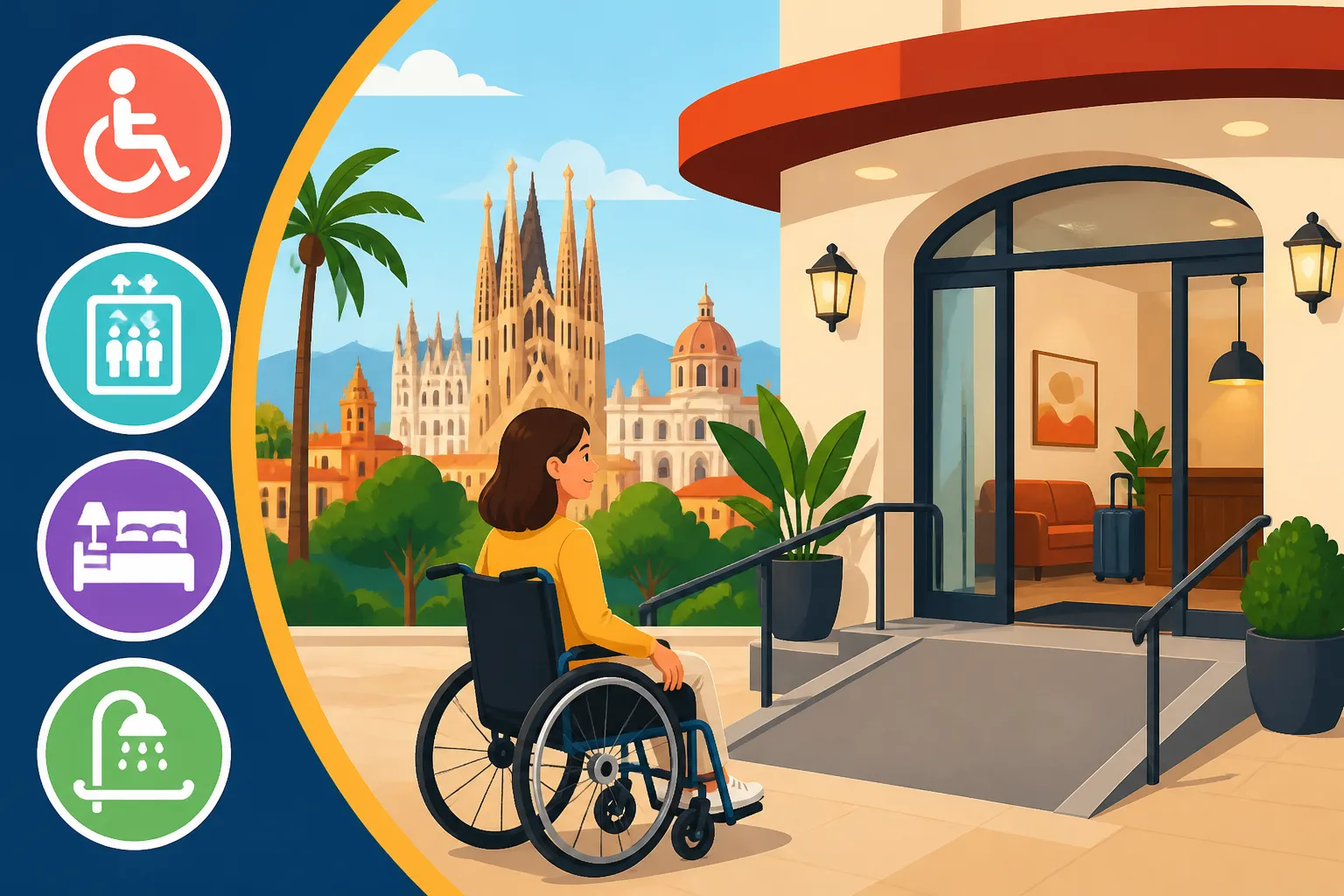
Wheelchair-Accessible Hotels in Spain: The Filters That Matter
Disclosure: This article contains affiliate links. If you buy through them, we may earn a commission at no extra cost to you. Read our full disclosure.
Navigating Spain with specific accessibility needs can feel like an Olympic sport, even with the best intentions from accommodations. Many places say they're accessible, but the reality on the ground can be a frustrating labyrinth of steep ramps, narrow doorways, and bathrooms that simply don't quite cut it. This guide is here to cut through the jargon and empower you to find truly wheelchair-accessible hotels across Spain, with a focus on using platforms like Booking.com effectively to make your trip smoother.
The Reality of "Accessible" in Spain: More Than Just a Ramp
The term "accessible" can be a bit of a moving target, especially when you're relying on online descriptions. In Spain, like many places, legal requirements for accessibility have evolved over time, meaning older buildings might have retrofitted solutions that are technically compliant but practically challenging. This can lead to a huge disparity in what one property considers "accessible" versus what you actually need for comfortable and independent travel. Trust me, I've heard countless stories from fellow expats and travelers who arrived to find that their "accessible room" required acrobatics just to get into the shower.
Understanding the Disconnect in Terminology
Sometimes, the issue isn't malicious, it's just a lack of understanding from property owners. They might have added a ramp to the entrance and thought, "Great, now we're accessible!" without considering the nuanced needs of someone using a wheelchair. This means you might find a fantastic entrance, but then face internal doors that are too narrow, or a bathroom with grab bars but a shower curb that makes it impossible for a roll-in chair. It's a common frustration, and it's why you can't just take the word "accessible" at face value.
Another common scenario is an accessible room that has a tiny bathroom, meaning a standard shower chair won't fit, or the toilet is awkwardly placed against a wall without enough transfer space. These are the details that can make or break a trip, transforming what should be a relaxing stay into a series of constant obstacles. Knowing this going in will help you approach your hotel search with a critical eye, and equip you with the right questions to ask, ensuring your needs are truly met.
Local Standards vs. Your Personal Needs
Spain's accessibility laws, like the "Ley de Propiedad Horizontal," do address aspects of common areas in buildings, and hotels are subject to specific regulations. However, these regulations might not always align with international best practices or the specific dimensions and features that individuals require. For instance, a minimum doorway width might be legally compliant but still too tight for a larger power wheelchair.
This discrepancy highlights the importance of not just looking for a general "accessible" label, but drilling down into the specific features offered. Every wheelchair user has different requirements – some need a fully roll-in shower, others just need grab bars. Some need extra space around the bed, while for others, a standard room size is fine as long as the bathroom works. Your personal needs are paramount, and you shouldn't assume that local minimum standards will automatically meet them. This is where tools like Booking.com become invaluable, allowing you to filter by specific criteria and then follow up to confirm those crucial details.
The Filters That Matter on Booking.com
Booking.com is a fantastic resource for finding accommodation in Spain, primarily because it offers some of the most detailed accessibility filters among major booking platforms. However, simply ticking the "wheelchair accessible" box isn't enough. You need to dive deeper into the specific amenities listed for the room and the property itself. This platform allows you to narrow down your search significantly, saving you a lot of time and hassle compared to sifting through hundreds of listings that are merely "accessible-ish."
Leveraging Specific Accessibility Filters
When you're searching on Booking.com, once you enter your destination and dates, look for the "Facilities" section in the filters sidebar. Under "Accessibility," you'll find a range of crucial options that go far beyond a general accessible room. These are the gold standard for your search, and selecting them will dramatically improve the relevance of your results.
Here’s a breakdown of the most critical filters to look for and what they ideally signify:
- Wheelchair accessible: This is your baseline. It usually means the property has an entrance and common areas (lobby, restaurant) that can be accessed by wheelchair. However, as we discussed, it doesn't guarantee a truly functional room or bathroom.
- Adapted bath: This is a much stronger indicator. It suggests the bathroom has been specifically designed for accessibility. This should include things like grab bars, a raised toilet, and potentially a roll-in shower, but it's still worth verifying the shower type.
- Toilet with grab rails: Self-explanatory, and absolutely essential for many. This filter indicates that at least the toilet area has supportive bars.
- Lower sink: This is a fantastic detail that indicates thoughtfulness in design. A lower sink allows for comfortable use from a seated position, and often means the space underneath is clear for knee clearance.
- Roll-in shower: This is often the most crucial filter for many wheelchair users. It means there is no lip or step to enter the shower, allowing a shower chair or a wheelchair to roll directly in. If this isn't explicitly listed, it's one of the first things you'll want to ask about.
- Shower chair: Another excellent indicator of a truly adapted bathroom. If the hotel provides a shower chair, it suggests a higher level of awareness and preparation for accessible guests.
By selecting a combination of these specific filters on Booking.com, you are telling the platform exactly what you need, rather than relying on a vague "accessible" tag. This will show you properties that have actively considered and invested in these features, significantly increasing your chances of a comfortable stay. Don't be shy about ticking every box that applies to your needs – it's there for a reason!
Reading Between the Lines of Property Descriptions
Even with the best filters on Booking.com, the devil is often in the details. Once you have a shortlist of properties that appear to meet your needs, it's time to dig deeper into their individual descriptions and, crucially, the photos. Many properties will have specific photos of their accessible rooms and bathrooms, and these are worth scrutinizing. Look for clear images that show the shower, toilet area, and bed access. Does the bathroom door look wide enough? Is there ample turning space? Can you see a roll-in shower or a tub with a transfer bench?
Furthermore, pay close attention to any written details in the room descriptions. Sometimes, they'll specify dimensions, like "bathroom door width 80cm" or "free space around toilet 150x150cm." These are incredibly valuable insights. If the descriptions are vague, or the photos are lacking, that’s your cue to reach out directly to the property. Booking.com often provides a direct messaging feature to the hotel, which is perfect for these follow-up questions. Always remember that a picture truly is worth a thousand words when it comes to accessibility, so prioritize listings with comprehensive visual documentation.
Beyond the Filters: Asking the Right Questions
Even with Booking.com's robust filtering system, sometimes you just need to talk to a human or get more specific visual proof. Don't underestimate the power of direct communication. It’s not about being difficult; it’s about ensuring your safety, comfort, and independence while traveling. Many properties genuinely want to help but may not fully grasp the practical implications of certain features or lack thereof.
Essential Questions to Ask the Hotel Directly
Before you finalize your booking on Booking.com, consider sending a message to the property with a few targeted questions. This not only clarifies things for you but also signals to the hotel that you have specific needs, which can prompt them to pay extra attention to your room.
Here are some crucial questions to ask:
- Bathroom Specifics:
- "Is the shower truly roll-in, or is there a small lip/step? If so, how high is it?"
- "Is there a shower chair available, and if so, is it freestanding or wall-mounted? Can you send a photo?"
- "What are the dimensions of the bathroom door and the main entrance door to the room?" (Crucial for larger wheelchairs)
- "Is there ample space for maneuvering a wheelchair around the toilet and sink?" (Ask for measurements if possible, like side and front transfer space)
- "Are the grab bars securely installed, and are they positioned appropriately for a transfer to the toilet/shower?"
- "Is the sink clear underneath for knee clearance, or is there a cabinet?"
- Room Layout and Dimensions:
- "What is the clear turning radius in the bedroom area?"
- "Is there enough space on both sides of the bed for transfers, or only one?"
- "What is the height of the bed from the floor to the top of the mattress?" (Important for transfers from a wheelchair)
- "Are electrical outlets easily reachable from the bed for charging equipment?"
- "Are light switches and climate controls at an accessible height?"
- Property-wide Accessibility:
- "Are all common areas (restaurant, pool, reception) accessible via ramps or elevators?"
- "Are the ramps at the entrance or within the hotel a gentle slope or steep?" (A picture here would be invaluable)
- "Is there an accessible parking spot directly at the hotel or very close by?"
- "Are staff generally available to assist if needed, for example, with luggage or navigating common areas?"
These questions might seem extensive, but they cover the most common issues that arise. Getting clear, specific answers (and ideally photos!) can prevent huge headaches upon arrival. Remember, it's your right to feel comfortable and independent in your accommodation.
Requesting Photos or Videos
Sometimes words just aren't enough. If the photos on Booking.com are not comprehensive or clear enough, don't hesitate to politely ask the hotel if they can send you additional pictures or even a short video of the accessible room and bathroom. Be specific about what you need to see: "Could you please send a photo of the shower entry, showing the floor level, and another showing the space around the toilet?"
A video walk-through, even a short one taken with a phone, can be incredibly helpful for visualizing the space and identifying potential obstacles that static photos might miss. Most hotels are keen to accommodate guests and will be happy to provide this if they can. This extra step in your research process, facilitated by the direct messaging feature on Booking.com, can provide immense peace of mind and significantly reduce the risk of disappointment when you arrive.
Making the Most of Your Booking (and What to Do If It's Not Right)
Once you've done your due diligence and made a booking, a little extra preparation can go a long way in ensuring a smooth trip. But even with the best planning, sometimes things don't quite go as expected. Knowing how to handle these situations can make all the difference.
Confirming Your Needs and Special Requests
After you've booked your accessible room through Booking.com, always send a follow-up message to the hotel (again, using Booking.com's messaging system, as it creates a paper trail). Reiterate your specific accessibility needs and any special requests you might have. For example: "Dear [Hotel Name], I have booked an accessible room for [dates] under [your name]. I use a [type of wheelchair, e.g., manual/power] and specifically require a truly roll-in shower and ample space around the toilet for transfers. I would also appreciate if the shower chair could be placed in the room upon arrival."
This message serves several purposes: it confirms your reservation, reminds the hotel of your needs, and ensures that your requests are documented. Many hotels are very good at noting these details, but a gentle reminder never hurts. You can also ask for a confirmation of these details from the hotel. This proactive approach ensures that when you check in, the staff are already aware of your specific requirements and can prepare your room accordingly.
| Feature to Confirm (via Booking.com message) | Why It Matters | Specific Question to Ask |
|---|---|---|
| Roll-in Shower | A common misinterpretation of "adapted bath" often includes a small lip. Essential for independent showering. | "Is the shower entrance absolutely flush with the floor, allowing a wheelchair to roll straight in without any lip or step?" |
| Bathroom Door Width | Standard doors can be too narrow for many wheelchairs. | "What is the clear opening width of the bathroom door?" (Specify your chair width if known). |
| Space Around Toilet | Sufficient space on the side (for lateral transfer) and front is critical. | "How much clear space is there to the side of the toilet (for transfer) and in front of it?" |
| Bed Height | Transfers from wheelchair to bed are easier if heights are compatible. | "What is the height of the bed from the floor to the top of the mattress?" |
| Elevator Dimensions | Older buildings might have small elevators. Crucial for reaching upper floors. | "If the room is not on the ground floor, what are the internal dimensions of the elevator (width x depth)?" |
| Ramp Steepness | Technically compliant ramps can still be too steep for manual chairs or unassisted access. | "Are any ramps (entrance, internal) gently sloped, or do they feel steep?" (Consider asking for a photo). |
| Accessible Parking | Proximity and availability of suitable parking. | "Do you have designated accessible parking spots, and how close are they to the main entrance?" |
What to Do If Your Accessible Room Isn't Accessible
Despite all your careful planning, sometimes you arrive, and the "accessible" room simply isn't what you need. It's a frustrating situation, but there are steps you can take.
- Document Immediately: Take photos and videos of everything that doesn't meet your confirmed needs or the property's description. This visual evidence is crucial.
- Speak to Reception: Calmly explain the issue to the front desk staff. Show them the photos and refer back to your specific questions and their responses (if any) via the Booking.com message system.
- Request a Solution: Ask for another truly accessible room if available. If not, inquire about other solutions, such as assistance with transfers, portable ramps, or a change of property if the issues are insurmountable.
- Contact Booking.com Support: If the hotel cannot or will not resolve the issue to your satisfaction, contact Booking.com's customer service immediately. Because you used their platform for booking and messaging, they will have a record of your communication and can mediate with the hotel. They often have protocols for such situations and can help find alternative accommodation or provide refunds.
- Leave a Detailed Review: Regardless of the outcome, once your trip is over, leave a detailed review on Booking.com. Be specific about what worked and what didn't, including measurements, photos, and descriptions of the actual accessibility. This helps future travelers avoid similar issues and holds properties accountable. Your honest feedback is invaluable for the broader accessible travel community.
Remember, you have rights as a consumer, and platforms like Booking.com are designed to facilitate your travel. Don't be afraid to advocate for yourself and ensure your travel experience in Spain is as comfortable and independent as possible. For more general advice on Accommodation in Spain: Hotels, Hostels, and Rentals or even Staying Safe in Spain: Common-Sense Tips for Travelers, check out our other guides.
Planning Accessible Travel Beyond the Hotel
Finding the right accessible hotel in Spain is a huge step, but truly accessible travel goes beyond your room. Thinking about how you’ll get around the city, visit attractions, and dine out will complete your experience. Spain has made significant strides in accessibility in recent years, especially in major cities like Madrid and Barcelona, but it's still a mixed bag.
Accessible Public Transport in Spain
Many major Spanish cities, particularly Madrid and Barcelona, have invested heavily in making their public transport systems more accessible. The metro systems often feature elevators and ramps at many stations, and a good portion of the bus fleets are low-floor with ramps. Renfe, the national train operator, offers assistance services (often called "Atendo") for travelers with reduced mobility on high-speed (AVE) and long-distance trains. This service needs to be booked in advance, but it can be incredibly helpful. Always check the specific transport options for your chosen city. Our guide on Traveling Around Spain: Trains, Buses, Flights, and Car Hire offers a broader look at transport options.
However, smaller towns and older metro lines might still pose challenges. Cobblestone streets, narrow sidewalks, and a lack of curb cuts can make navigating a city in a wheelchair surprisingly difficult. Before you go, research the specific areas you plan to visit. Websites and apps dedicated to accessible travel can be invaluable here.
Accessible Attractions and Dining
When it comes to attractions, many of Spain's iconic sites, especially those that are UNESCO World Heritage Sites or major museums, have implemented accessibility measures. The Prado Museum in Madrid, the Sagrada Família in Barcelona, and even parts of the Alhambra in Granada offer accessible routes. However, some historical sites, particularly older churches or castles, might still have limited access due to their age and structure. Always check the official website of any attraction you plan to visit for their specific accessibility information, and again, don't hesitate to call ahead.
Dining in Spain can also present varying levels of accessibility. While many modern restaurants will have accessible entrances and restrooms, older establishments might have steps or cramped interiors. The best approach is to check reviews on platforms that specifically mention accessibility or, if possible, do a quick visual check before committing to a table. You might also find it helpful to look into our guides on Madrid for First-Time Visitors: Neighborhoods and Highlights or Barcelona for First-Time Visitors: What to See and Skip for general tips, and then layer your accessibility research on top.
Planning an accessible trip to Spain requires a bit more effort, but with the right tools and a proactive approach, it's absolutely doable. From filtering effectively on Booking.com to asking precise questions and understanding your rights, you can create an incredible and comfortable Spanish adventure. For a deeper dive into making your trips inclusive, explore our content on Family, Accessible, and Slow Travel in Spain.
Disclaimer
This article is for general informational purposes only and does not constitute professional advice. Laws, prices and regulations vary by location and change over time. Consult a qualified professional for guidance on your specific situation.