What Are the Best Cities in Spain for Traveling With Kids?
Traveling with children often feels like a military operation, especially when you are trying to navigate a foreign country with different schedules, bustling crowds, and the constant search for a clean bathroom. This guide identifies the absolute best cities in Spain for families, solving the headache of planning by highlighting destinations that balance adult interests with genuine kid-focused fun.
Disclosure: This post may contain affiliate links. We may earn a commission at no extra cost to you if you make a purchase through these links. Read full disclosure.
Why Spain is a Paradise for Families
If you have spent any time in Northern Europe or the United States, you might be used to the "children should be seen and not heard" vibe in many urban spaces. Spain is the polar opposite. As a veteran expat, one of the first things I noticed was that children are not just tolerated; they are celebrated. You will see toddlers at outdoor cafe tables at 10:00 PM and babies being cooed over by complete strangers in the supermarket. This cultural warmth makes Family Travel in Spain: Kid-Friendly Cities and Activities a much less stressful experience than in many other Western nations.
The infrastructure in major Spanish cities has evolved significantly over the last decade. Most metropolitan areas now feature expansive pedestrianized zones, which is a lifesaver when you have a toddler who refuses to hold your hand. Furthermore, the public transport systems are generally stroller-friendly, with elevators at most metro stations, though some older parts of Madrid or Barcelona still present the occasional "staircase surprise." When planning your route between these family-friendly hubs, using a platform like Omio can help you compare train and bus times to find the fastest, least disruptive paths for a tired family.
Beyond the logistics, Spain offers a variety of landscapes that keep children engaged. You aren't just limited to dusty museums; you have interactive science centers, urban parks built in dry riverbeds, and beaches that are just a subway ride away from the city center. This guide focuses on cities where the "fun" feels organic rather than forced, allowing you to enjoy the culture while the kids burn off their endless energy.
Valencia: The Ultimate Family Favorite
If I had to recommend just one city for families, it would be Valencia. It is essentially the "Goldilocks" of Spanish cities—not too big, not too small, and incredibly flat, which is a dream for anyone pushing a buggy. The crowning jewel of the city is the Turia Gardens. This is a 9-kilometer-long park situated in a former riverbed that snakes through the entire city. It is entirely car-free, filled with playgrounds, and features the famous Gulliver Park, where children can climb over a massive, reclining figure of Lemuel Gulliver, using his clothes and hair as slides and ramps.
At one end of the Turia Gardens, you will find the City of Arts and Sciences. While the architecture is stunning for adults, the Oceanogràfic (the largest aquarium in Europe) and the Science Museum are hits with children of all ages. To avoid long waits in the sun, which can lead to an inevitable meltdown, it is wise to book tickets through GetYourGuide ahead of time. This ensures you can walk straight in and start exploring the shark tunnels and interactive exhibits without the friction of a ticket line.
Valencia also boasts the Bioparc, which is widely considered one of the best "immersion" zoos in the world. Instead of cages, it uses natural barriers like rocks and rivers to separate visitors from the animals. For parents, the city is manageable and affordable. Finding suitable accommodation is also straightforward; checking for apartments on Booking.com often reveals great options in neighborhoods like Ruzafa or near the beach in El Cabanyal, where you can have a kitchen to manage those picky-eater emergencies. Don't forget that Valencia is the home of paella, but you should check out Spanish Meal Times and Dining Etiquette Explained to ensure you aren't showing up for dinner two hours before the kitchen opens.
Madrid: Parks, Museums, and Royal Adventures
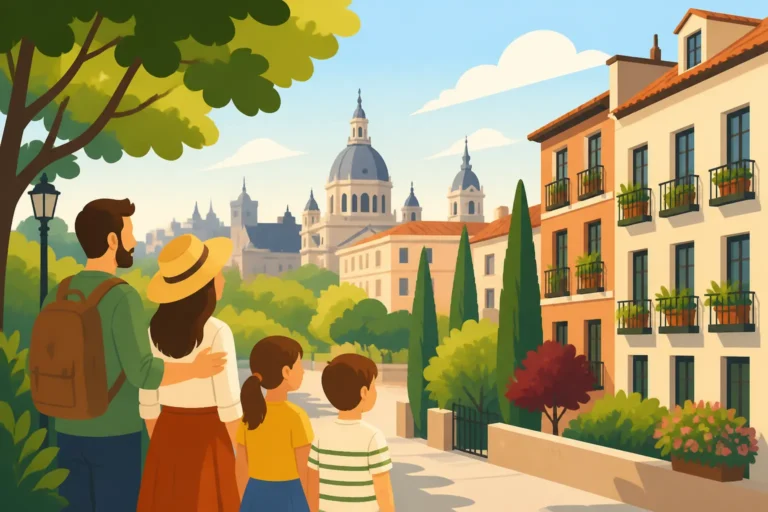
Madrid might seem like a daunting, bustling capital, but it is surprisingly easy to navigate with a family. The heartbeat of family life in Madrid is the Retiro Park. On any given Sunday, you will find puppet shows (Teatro de Títeres), rowboats on the lake, and plenty of space for a picnic. It is the perfect place to decompress after a flight. If you are arriving from Barajas, you should read up on How to Get From Madrid Airport to the City Center to make your initial arrival as smooth as possible.
For a bit of education that doesn't feel like school, the Museo Nacional de Ciencias Naturales is a great pick. However, many families find that the Royal Palace actually captures the imagination of kids, especially those in the "knight and princess" phase, thanks to the impressive Royal Armory filled with shining suits of armor. When the city heat gets too much, you can head to Madrid Río, another massive park project along the Manzanares River that features dozens of creative play areas and "urban beaches" (fountains) for kids to splash in.
One of the logistical hurdles in Madrid is the sheer size of the city. To save your legs, utilize the extensive metro and bus network. Most children qualify for significant discounts, and you can learn more about this in our guide on Public Transport in Spain: Cards, Discounts, and Etiquette. If you want to see the city from a different perspective, the Teleférico (cable car) takes you from the city center over to the Casa de Campo, a massive park that houses the Madrid Zoo and the Parque de Atracciones amusement park.
Barcelona: Fairy-tales and Sea Breezes
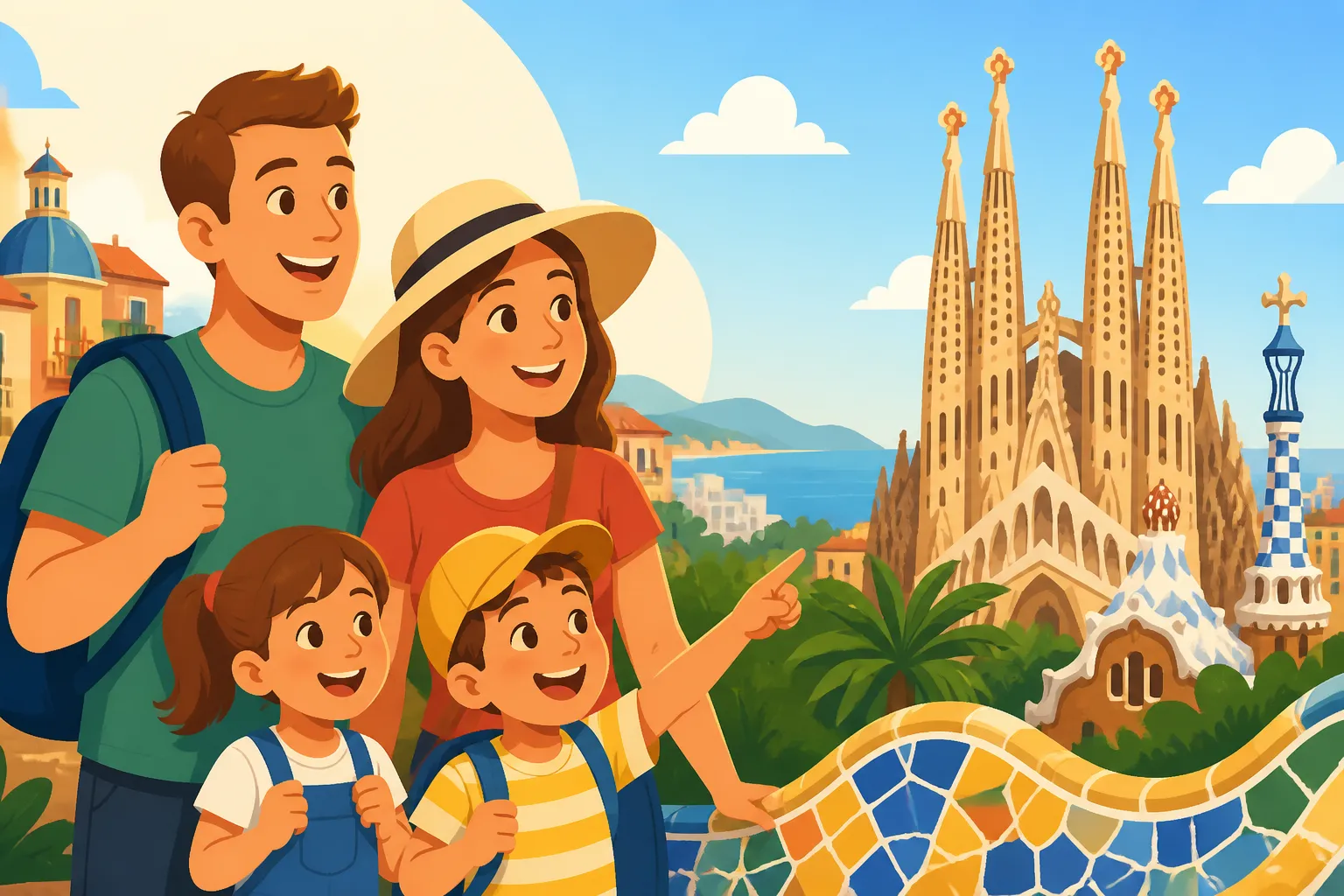
Barcelona is a visual feast that often feels like a giant playground designed by Antoni Gaudí. His "fairy-tale" architecture, including the gingerbread-style houses at Park Güell and the towering spires of the Sagrada Família, usually fascinates children who find traditional cathedrals a bit boring. Because these sites are extremely popular, using GetYourGuide to secure timed entry is essential. Trying to "wing it" with kids in Barcelona often results in standing in 90-minute lines, which is a recipe for disaster.
What makes Barcelona unique is the combination of city culture and the beach. After a morning of looking at art, you can take the yellow metro line straight to Barceloneta. While it’s the most crowded beach, it’s great for a quick dip. For a more relaxed experience, head a bit further north to Poblenou, which has wider beaches and more family-oriented chiringuitos (beach bars). If you are specifically looking for a coastal holiday, you might want to compare your options in What Are the Best Family Beaches in Spain?.
Logistically, Barcelona can be a bit more expensive than Valencia or Seville. When looking for a place to stay, I recommend searching Booking.com for the Eixample district. The streets are wide, the sidewalks are spacious, and the grid-like pattern makes it hard to get lost. It is much easier to push a stroller here than in the narrow, winding alleys of the Gothic Quarter. If you are traveling with very young children, our guide on How to Travel Spain With a Baby or Toddler offers specific advice on finding baby supplies and navigating the city's unique layout.
Seville: Tradition and Theme Park Fun
Seville offers a more "traditional" Spanish experience that is surprisingly kid-friendly. The city center is largely pedestrianized, and the sight of horse-drawn carriages clattering past the Cathedral is always a hit with the little ones. The Alcázar of Seville, with its lush gardens and hidden water features, is a great place for kids to explore while parents soak in the Mudéjar architecture. It’s a great way to introduce them to history without the stuffiness of a traditional gallery.
One of the big draws for families in Seville is Isla Mágica, a theme park located on the site of the former Expo '92. It is divided into different historical themes related to Spanish exploration and includes a water park called Agua Mágica. This is a lifesaver during the spring and summer months when Seville can become quite hot. To get there, you can easily use the local bus system or a quick taxi. For inter-city travel to Seville from Madrid or Málaga, Omio is a great tool for booking the high-speed AVE train, which is an adventure in itself for kids who love "bullet trains."
Accommodations in Seville tend to be smaller, so it is important to be specific in your search. Check out How to Find Family Rooms and Apartments in Spain to understand the difference between a "triple room" and a proper family suite. Staying in the Triana neighborhood across the river can often provide a more local feel and slightly better prices than staying right next to the Cathedral.
Comparing Spain's Top Kid-Friendly Cities
| City | Primary Highlight for Kids | Best Neighborhood for Families | Stroller Friendliness |
|---|---|---|---|
| Valencia | Turia Gardens & Oceanogràfic | Ruzafa / El Saler | Excellent (Flat) |
| Madrid | Retiro Park & Zoo Aquarium | Retiro / Chamberí | Good (Mostly Flat) |
| Barcelona | Park Güell & Urban Beaches | Eixample / Poblenou | Moderate (Some Hills) |
| Seville | Isla Mágica & Horse Carriages | Triana / Los Remedios | Good (Pedestrianized) |
Practical Advice for Your Family Trip
Regardless of which city you choose, your success will depend on how well you adapt to the Spanish lifestyle. The biggest shock for many families is the timing. Spaniards eat lunch around 2:00 PM and dinner after 8:30 PM. While tourist-heavy areas will serve food earlier, the best local spots will be closed between 4:00 PM and 8:00 PM. It is wise to keep a "merienda" (afternoon snack) in your bag to bridge the gap.
Also, be aware that many cities offer significant discounts for families, but you often need to show proof of age for children. Having a digital copy of their passports on your phone is usually sufficient. If you are worried about the costs adding up, I recommend looking through Traveling Spain on a Budget: Practical Money-Savers for tips on free museum days and affordable dining options like the "Menú del Día."
Finally, don't overschedule. The beauty of Spain lies in the "sobremesa"—the art of lingering at the table after a meal. Most Spanish plazas have a playground within sight of the cafe tables. This allows you to enjoy a coffee or a glass of wine while the kids play safely with the local children. It is this relaxed, inclusive atmosphere that truly makes Spain one of the best places in the world for a family vacation.
Disclaimer
This guide is for informational purposes only. While every effort has been made to ensure the accuracy of the information provided, opening hours, prices, and travel regulations in Spain are subject to change. Always check official municipal websites or local service providers before making firm travel plans. Family travel requirements and accessibility can vary significantly based on specific locations and individual needs.