Where to See Wildlife in Spain (Beginner-Friendly Spots)
Most newcomers to Spain spend their first months navigating the labyrinth of city bureaucracy, from the "padrón" to the elusive "cita previa," often forgetting that just beyond the concrete and the tapas bars lies one of the most biodiverse countries in Europe. This guide solves the common frustration of feeling trapped in urban "expat bubbles" by revealing accessible, beginner-friendly locations to witness Spain's incredible wildlife, from lynx to whales.
Disclosure: This post may contain affiliate links. We may earn a commission at no extra cost to you if you make a purchase through these links. Read full disclosure.
Understanding the Wild Side of the Peninsula
When I first moved here, I assumed "Spanish nature" meant a few dusty olive groves and a crowded beach on the Costa del Sol. I couldn't have been more wrong. Spain is a geographical bridge between Europe and Africa, a stopover for millions of migrating birds, and one of the last strongholds for some of the world’s rarest mammals. If you are just starting to explore Spain's Regions and Where to Go: A Traveler's Overview, you’ll quickly realize that the landscape shifts dramatically every hundred kilometers, creating micro-climates that support everything from brown bears in the humid north to desert-dwelling reptiles in the south.
For a beginner, the idea of "wildlife watching" can feel intimidating. You might think you need expensive camouflage gear or the patience of a saint. However, Spain offers several "low-effort, high-reward" spots where the infrastructure is excellent and the animals are relatively easy to spot. This is particularly true in our National Parks in Spain Worth Visiting, where many trails are well-marked and visitor centers provide up-to-date information on recent sightings.
The trick to a successful first outing is managing your expectations. Unlike an African safari where animals are often concentrated around waterholes, Spanish wildlife is often elusive. But the thrill of seeing a Golden Eagle soaring over an Extremaduran dehesa or a family of dolphins jumping in the Atlantic is worth the effort. Before you set off, it's wise to look into Traveling Around Spain: Trains, Buses, Flights, and Car Hire because while cities are connected by high-speed rail, the best wildlife spots almost always require some independent transport.
The Heavy Hitters: Where to See Large Mammals
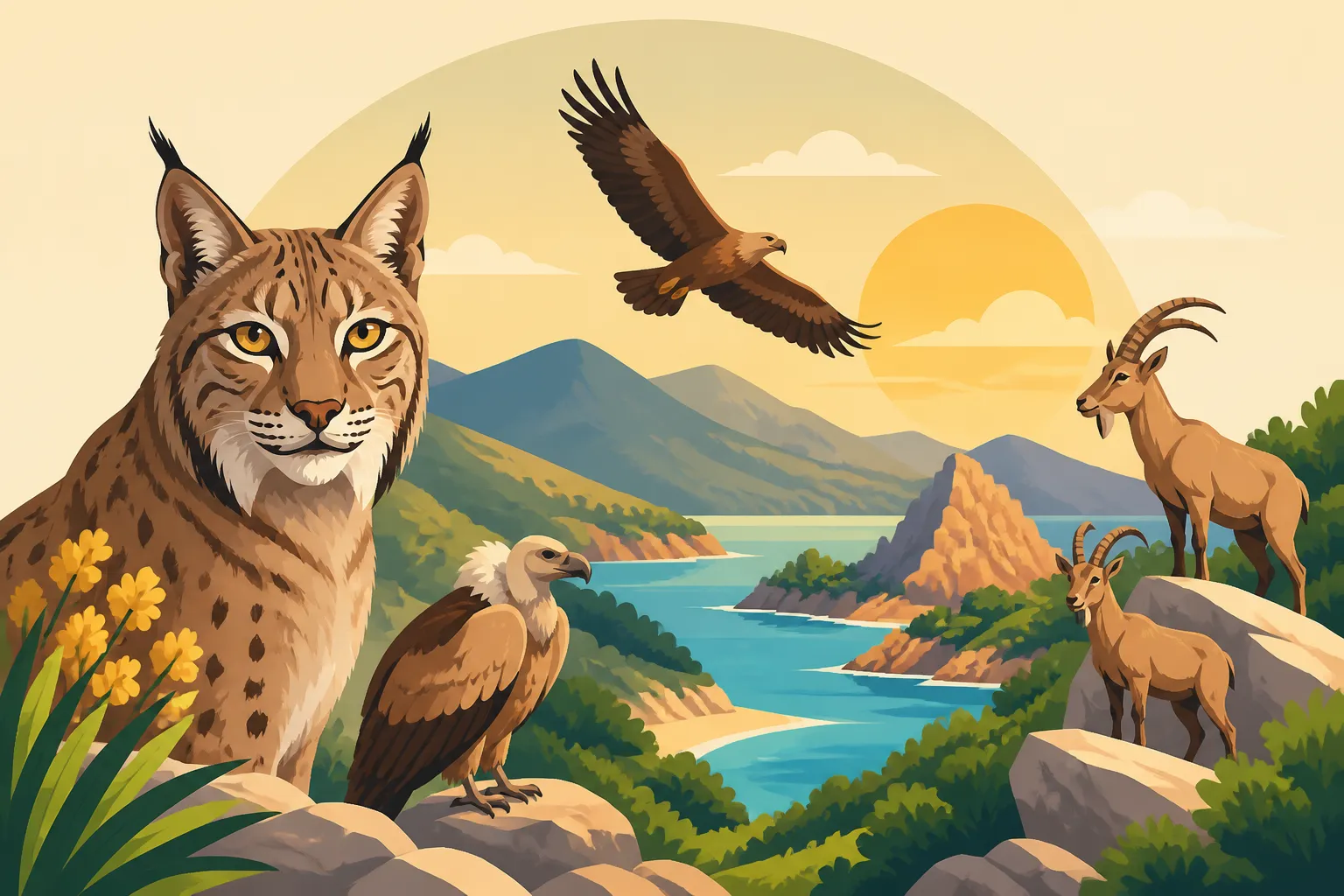
If you’re looking for the "Big Three" of Spanish wildlife—the Iberian Lynx, the Cantabrian Brown Bear, and the Iberian Wolf—you’ll need to head to specific regions. For the absolute beginner, it is wise to start with the Sierra de Andújar in Jaén or Doñana National Park in Huelva. These are the strongholds of the Iberian Lynx, the world’s most endangered feline. While they are secretive, local guides have an uncanny ability to find them. You can easily find and book specialized day tours through platforms like GetYourGuide, which often include transport from nearby cities like Seville.
Further north, the mountains of Asturias and León offer a completely different experience. In the Somiedo Natural Park, the Cantabrian Brown Bear reigns supreme. Seeing these bears doesn't require trekking into the deep wilderness; in late summer, they frequently come down to the hillsides near the villages to feast on berries and acorns. There are several designated "miradores" (viewpoints) where you can sit with your binoculars and wait for them to appear on the opposite slope. It’s a social experience, often shared with locals and other nature enthusiasts who are happy to point out a moving brown speck in the distance.
Staying in these rural areas is a highlight of the expat experience. I’ve found that using Booking.com to find "casas rurales" (country houses) is the best way to immerse yourself in the local culture while staying close to the action. These hosts often have the best "insider info" on where the wolves were last heard or which valley the bears are currently frequenting. If you're planning a more extensive journey, you might even consider How to Plan a Road Trip Through Northern Spain to hit several of these mammal hotspots in one go.
| Species | Best Region | Optimal Season | Difficulty Level |
|---|---|---|---|
| Iberian Lynx | Andalusia (Andújar/Doñana) | Dec – Feb (Mating season) | Moderate |
| Cantabrian Brown Bear | Asturias (Somiedo) | April – May & Aug – Sept | Easy (from viewpoints) |
| Griffon Vulture | Extremadura (Monfragüe) | Year-round | Very Easy |
| Long-finned Pilot Whale | Strait of Gibraltar | April – October | Very Easy |
| Greater Flamingo | Catalonia (Ebro Delta) | Spring and Autumn | Easy |
Birdwatching for the Uninitiated
You don't need to be a "twitcher" to appreciate the avian spectacle in Spain. In fact, birdwatching is one of the easiest Outdoor Adventures and Nature in Spain to get into. The undisputed king of birding spots is Monfragüe National Park in Extremadura. Here, the "Salto del Gitano" provides a literal birds-eye view of massive Griffon Vultures, Cinereous Vultures, and the rare Spanish Imperial Eagle nesting on the cliffs just across the river. You can park your car, walk two minutes to the viewpoint, and be surrounded by dozens of soaring giants within seconds.
For a completely different vibe, head to the wetlands. The Ebro Delta in Catalonia or the Laguna de Fuente de Piedra in Málaga are famous for their flamingo colonies. Watching thousands of pink birds against a Mediterranean sunset is a surreal experience that feels more like the Caribbean than Southern Europe. These spots are highly beginner-friendly because the birds are large, bright, and tend to stay in one place, making them easy to photograph even with a smartphone.
To get to these more remote birding paradises, I often use Omio to compare the best ways to reach the nearest major hub—like Cáceres or Tarragona—before picking up a rental car. Remember that Renting a Car in Spain: Requirements, Insurance, and Driving Tips is essential knowledge, as many rural roads leading to bird hides can be narrow and winding. Always pack a good pair of binoculars; even a basic pair will transform a "grey dot" into a majestic Black Stork or a colorful Bee-eater.
Marine Life: Beyond the Beach
Spain isn't just about what happens on land; its waters are teeming with life. The Canary Islands, particularly Tenerife and La Gomera, are world-class destinations for whale and dolphin watching. Because of the deep underwater trenches between the islands, many species like Pilot Whales and Bottlenose Dolphins are residents, meaning you have a nearly 100% chance of seeing them year-round. It’s a perfect beginner activity because the boats are stable, professional, and often have marine biologists on board to explain what you're seeing.
Back on the mainland, the Strait of Gibraltar is a vital migratory corridor. In the waters off Tarifa, you can see Orcas (Killer Whales) during the summer months as they follow the tuna migration. The sight of an Orca dorsal fin with the coast of Africa in the background is something you’ll never forget. Many of these boat trips can be booked via GetYourGuide, which is handy because they vet the operators for eco-friendly practices—something very important when dealing with sensitive marine mammals.
If you are heading south for these aquatic adventures, make sure you've read up on What to Pack for a Beach Trip in Southern Spain and Heatwaves in Spain: Health Precautions for Expats. The sun on a boat deck is incredibly deceptive because of the cool sea breeze, and many tourists return to shore looking like a boiled shrimp. A high-SPF sunscreen and a polarized pair of sunglasses (which help you see through the water’s surface glare) are non-negotiable items for your kit.
Logistics and Safety for the Nature-Loving Expat
One of the biggest hurdles for foreigners in Spain is the lack of "official" English information in smaller rural parks. While the big ones like Doñana have bilingual staff, many smaller "parques naturales" might only have brochures in Spanish. I highly recommend downloading a translation app that works offline. Also, be aware that many visitor centers (Centros de Visitantes) follow the traditional Spanish schedule, often closing for a long lunch or being completely shut on Mondays or Tuesdays.
Safety is another factor that sometimes catches people off guard. While Spain is generally very safe, the terrain can be rugged. If you’re heading into the mountains of the Picos de Europa or the Pyrenees, always check the weather forecast. More importantly, know How to Call 112 in Spain: What to Say and What Happens Next in case of an emergency. Even on a "beginner-friendly" trail, a twisted ankle can become a serious problem if you don't have a plan.
Finally, respect the local regulations. Spain has very strict laws regarding wildlife disturbance, especially during nesting seasons. Drones are almost universally banned in National Parks without a mountain of paperwork. Stick to the marked paths and use designated hides. For the best experience, it is best to use Booking.com to find a place to stay for at least two nights. Nature doesn't always perform on a schedule, and having that extra day increases your chances of that "once-in-a-lifetime" sighting tenfold. If you’re ever unsure about the local environment, consulting Staying Safe in Spain: Practical Safety Tips for New Residents can provide broader context on navigating the Spanish outdoors responsibly.
Disclaimer
The information provided in this guide is for informational purposes only. Wildlife sightings are never guaranteed as they depend on seasonal migrations, weather conditions, and natural behaviors. Always follow the instructions of local park rangers and guides, and ensure you have the correct insurance and permits for any remote hiking or specialized activities. Always check current regional regulations regarding protected areas before your visit.