What’s the Best Region in Spain for a First-Time Visitor?
Planning a first trip to Spain often leads to overwhelming decision paralysis because every region, from the sun-baked plazas of the south to the lush green coastlines of the north, feels like an entirely separate country. Choosing where to focus your limited vacation days can easily make or break your travel experience. This practical guide breaks down Spain’s top regions to help you match your personal travel style, preferred pace, and expectations to the perfect debut destination.
Disclosure: This post may contain affiliate links. We may earn a commission at no extra cost to you if you make a purchase through these links. Read full disclosure.
Evaluating Spain Top Regions for Your First Trip
When I first arrived in Spain years ago, I fell into the classic trap of assuming the country was culturally uniform. I expected to find fiery flamenco performances, whitewashed village streets, and tapas bars on every corner, regardless of where I dropped my luggage. It did not take long to realize that Spain is actually a collection of distinct former kingdoms, each holding tight to its own dialect, culinary heritage, daily rhythms, and landscape. Deciding where to anchor your initial visit requires understanding these personality differences so you do not end up looking for Andalusian traditions on the rugged, rain-swept Atlantic coast or expecting quiet medieval villages in the heart of a high-energy metropolis.
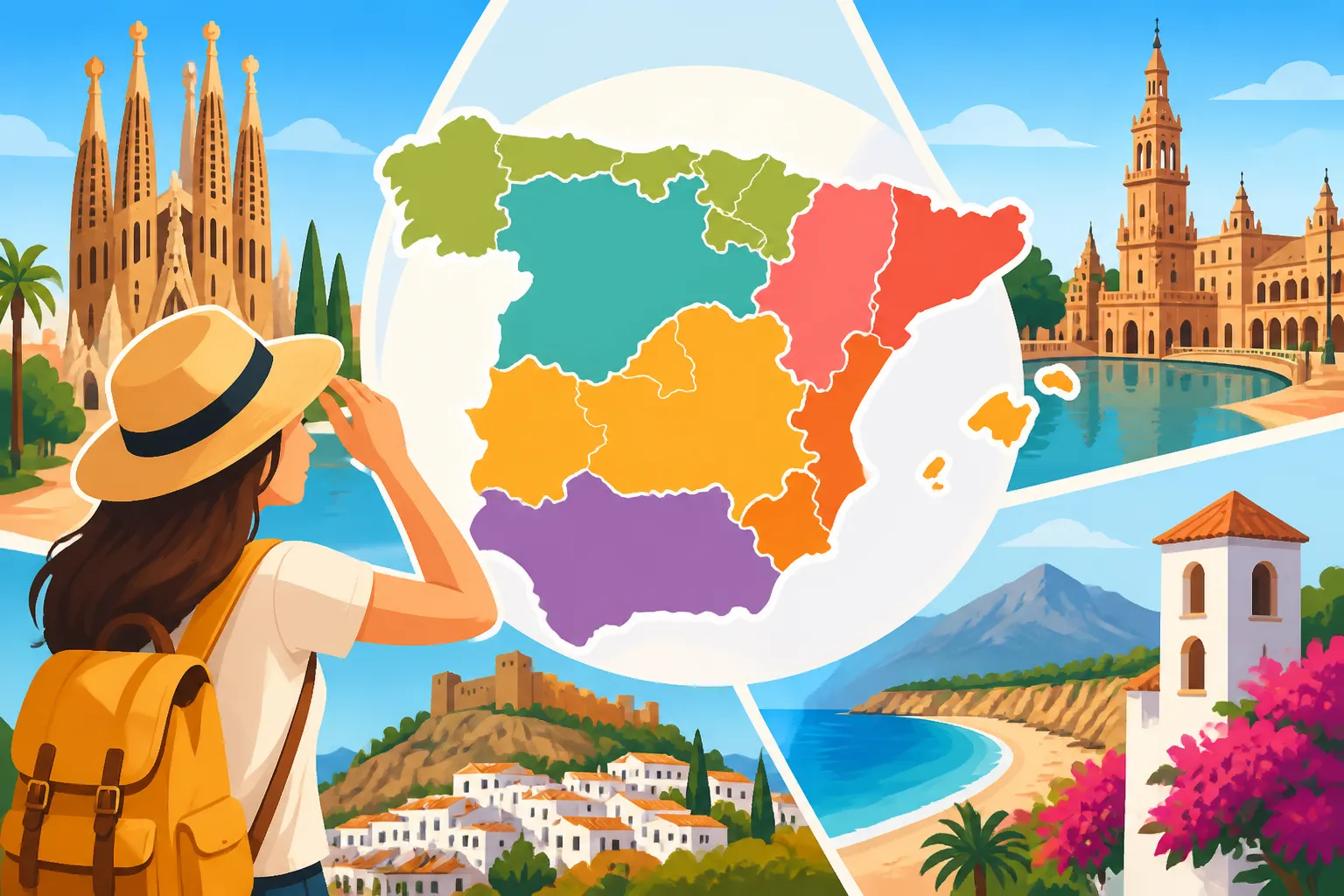
Selecting the best entry point for your inaugural journey comes down to balancing iconic sights with day-to-day travel logistics. For a broad high-level framework of how the autonomous communities fit together, exploring Spain’s Regions and Where to Go: A Traveler’s Overview will give you a solid foundation. However, most first-time visitors naturally gravitate toward three heavyweights: Andalusia, Catalonia, or the central capital hub of Madrid. Each offers a completely different doorway into Spanish life, and choosing the right one depends heavily on what you imagine when you picture your ideal getaway.
Andalusia The Quintessential Spanish Magic
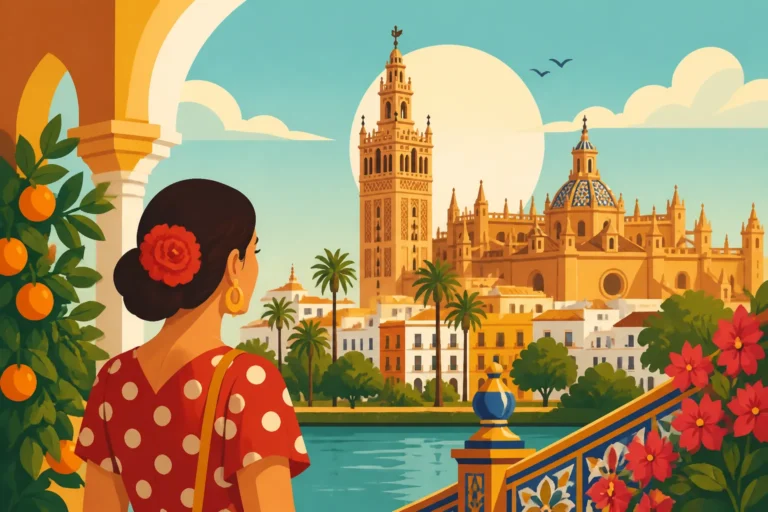
If your dream of Spain involves orange-blossom-scented plazas, dramatic Moorish palaces, passionately strummed guitars, and long afternoons sipping chilled fino sherry, Andalusia is almost certainly where you belong. Spanning the entire southern foot of the country, this vast territory represents the romantic image of Spain that most international travelers carry in their heads. Cities like Seville, Granada, and Córdoba pack an incredible punch of world-class history, housing spectacular monuments like the Real Alcázar, the Alhambra, and the Great Mosque-Cathedral.
Living in and traveling around the south reveals a deeply social, outdoors-focused lifestyle centered on neighborhood plazas and communal dining. The culture here is slow-paced in the best possible way, encouraging visitors to leave behind rigid schedules and adapt to late evening strolls. To get a deeper sense of what this region offers across its cities and coastal stretches, take a look at Andalusia for Travelers: Cities, Coast, and Culture. Keep in mind that high demand for major landmarks means you should secure entry passes early; setting up guided day tours or reserving entry slots through GetYourGuide can protect you from getting turned away at the gates of top attractions like the Alhambra.
Catalonia Coastal Flair and Architectural Wonder
Situated in the northeast corner bordering France, Catalonia presents a striking contrast to the south. With its own distinct language, proud maritime traditions, and a history deeply intertwined with Mediterranean trade, this region feels cosmopolitan, creative, and brisk. Barcelona serves as the undisputed anchor here, drawing first-timers with Antoni Gaudí’s fantastical architectural masterpieces, vibrant urban beach culture, and world-renowned dining scenes that range from traditional seafood taverns to cutting-edge gastronomy.
Beyond the bustle of Barcelona lies a diverse region waiting to be explored. You can easily venture up the wild, rocky shoreline of the Costa Brava or head inland to medieval towns like Girona and Besalú. For a detailed breakdown of options outside the capital city, check out Catalonia Beyond Barcelona: What to See. Accommodation fills up quickly throughout Catalonia year-round, so checking availability on Booking.com well ahead of time helps ensure you secure a neighborhood base that fits your budget and walking preferences.
Madrid and Castile The Cultural Engine and Transit Hub
Positioned in the geographic center of the Iberian Peninsula, Madrid and its surrounding Castilian heartland offer an unbeatable mix of majestic royal heritage and non-stop urban energy. Madrid is a city of neighborhood life, sweeping green parks, and an unparalleled concentration of fine art within the famous Golden Triangle of museums. What makes the central region particularly brilliant for a debut trip is its unrivaled connectivity: from Madrid, you can take quick day trips to historic UNESCO sites like Toledo, Segovia, and Ávila without ever having to pack up and move your suitcases.
Choosing Madrid as your primary base gives you a front-row seat to authentic Spanish daily routines without the heavy tourism focus found in purely coastal resorts. The region provides a wonderful slice of modern Spanish life alongside imposing royal history. To see how Madrid stacks up against other urban destinations across the peninsula, dive into Madrid, Barcelona, and Spain’s Great Cities: Explorer’s Guide.
Matching Your Travel Style to the Right Spanish Region
Once you understand the basic personality of each area, the next step is aligning your personal travel preferences with the practical reality on the ground. A common mistake first-timers make is choosing a destination purely based on beautiful photographs without considering regional weather patterns, dining habits, or how easy it is to move between towns. Spending a little time upfront matching your expectations with regional characteristics prevents unnecessary travel stress later.
Climate and Seasonal Realities
Spain’s geography is shockingly varied, ranging from semi-arid southern plains to snowy northern mountain ranges and temperate coastal belts. If you are traveling during the height of summer, southern regions like Andalusia can experience intense heatwaves that make afternoon sightseeing nearly impossible. Conversely, northern regions offer cool, green, and refreshing retreats during hot months, though they bring higher chances of rainfall throughout the rest of the year.
Spring and autumn represent the golden window for almost every corner of the country, bringing pleasant temperatures ideal for walking through historic city centers. Understanding local weather patterns ensures you pack correctly and plan your daily itineraries around local climate reality. For a thorough seasonal breakdown across all territories, consult When to Visit Each Spanish Region for the Best Weather.
Culinary Styles and Regional Gastronomy
Food in Spain is deeply regional, tied directly to local agriculture, fishing industries, and historical influences. In Andalusia, food culture revolves around fresh seafood, cold soups like gazpacho and salmorejo, and small shared bites eaten while standing at lively wooden counters. Moving north toward the Basque Country or Catalonia, you will find sophisticated culinary scenes focused on seasonal charcoal-grilled meats, complex sauces, and elaborate single-portion bites known locally as pintxos.
If tasting your way through a destination is a priority, understanding local dining etiquette will radically improve your trip. Meal hours are famously late across the entire country, but regional customs dictate how food is ordered and served. To master the art of grazing like a local without causing restaurant confusion, read through Spanish Tapas Culture: How to Order and Where to Go.
Transit Infrastructure and Ease of Navigation
For first-time visitors, the ease of getting from point A to point B often dictates how enjoyable a trip feels. Spain boasts one of the finest rail networks in the world, making high-speed train travel the absolute best way to jump between major cities. If you prefer a holiday where you step onto a sleek train and arrive in a new city center an hour or two later, linking Madrid, Seville, and Barcelona is almost effortless.
If you plan to hop between high-speed trains, regional routes, and long-distance buses across multiple provinces, relying on multi-modal booking platforms like Omio helps you quickly compare schedules, journey durations, and operator costs in one convenient view. For deep practical insights into navigating the rail network, check out High-Speed Trains in Spain (AVE): Routes, Booking, and Savings.
Regional Comparison Matrix for First-Time Visitors
To help you decide which area aligns best with your inaugural trip goals, the following comparison matrix outlines key characteristics across Spain’s primary tourism regions.
| Region | Primary Highlights | Travel Pace | Transport Convenience | Best Suited For |
|---|---|---|---|---|
| Andalusia | Alhambra, Real Alcázar, Flamenco, White Villages | Relaxed, afternoon-focused | Excellent between major cities; car recommended for rural areas | Romance seekers, history lovers, classic culture enthusiasts |
| Catalonia | Gaudí Architecture, Costa Brava, Modernist Art | Vibrant, energetic | Outstanding public transit, regional trains, and international connections | Art lovers, coastal explorers, modern foodies |
| Madrid & Castile | Prado Museum, Royal Palace, Day trips to Toledo/Segovia | Fast-paced city life, late nights | Superior central hub; hub-and-spoke train connections | Culture buffs, museum fans, short-stay urban travelers |
| Basque Country & North | San Sebastián beaches, Guggenheim, Pintxos, Green coast | Laid-back, nature-focused | Good regional buses; car best for coastal roads | Foodies, nature enthusiasts, cooler-climate seekers |
Surrounding this comparison, it is worth noting that no single choice is objectively superior. A traveler seeking a packed itinerary full of world-renowned museums and vibrant nightlife will thrive in Madrid, while someone wanting picturesque cobblestone alleys, traditional plazas, and warm evening breezes will feel far more at home in southern towns.
Practical Planning Advice for Your Debut Spanish Itinerary
The single biggest piece of advice I give to newcomers looking to design their first trip is simple: do not attempt to see everything in a single week. Spain looks deceptively compact on a map, but rushing between four different provinces in eight days leads to travel burnout and leaves you with a blurred memory of train stations rather than genuine cultural immersion. Pick one anchor region for shorter trips, or pair two well-connected areas if you have ten days to two weeks.
Avoiding Common First-Time Mistakes
A frequent pitfall for debut travelers is underestimating local schedules. Shops in smaller towns often close during the mid-afternoon pause, and dinner service rarely starts before 8:30 or 9:00 PM. Trying to force an early dinner schedule often leaves you eating in uninspired tourist traps that cater exclusively to confused visitors.
Additionally, overbooking your days with back-to-back museum visits can strip away the true magic of Spanish travel, which happens organically while lingering over a long lunch or sitting in a shade-dappled plaza. Managing your daily expectations and keeping extra room in your budget for spontaneous local transport or unexpected café stops will make your entire experience run smoother. To stretch your travel funds effectively without sacrificing quality, review Traveling Spain on a Budget: Practical Money-Savers.
Crafting a Balanced First-Time Itinerary
If you have roughly ten days for your first journey, two proven itinerary frameworks consistently yield fantastic results:
- The Classic Imperial Route: Spend four days soaking in the urban culture and art museums of Madrid, using one day for a quick high-speed train trip to historic Toledo. From there, head south on the train to Andalusia for three days in Seville and two days exploring Granada’s Moorish heritage.
- The Two-Metropolis Coast-to-Capital Route: Allocate four days to Barcelona to marvel at Modernist architecture and coastal neighborhoods, then take the high-speed rail inland to spend four days enjoying Madrid’s parks and day-trip options, finishing with two days exploring the medieval streets of nearby Segovia.
By focusing your initial trip on one core region or connecting two major hubs via high-speed transit, you avoid spending your vacation living out of a suitcase. Whichever path you pick, embrace the local pace, take time to sit outside, and let the unique flavor of your chosen region unfold naturally.
Disclaimer
This article is for general informational purposes only and does not constitute professional advice. Laws, prices and regulations vary by location and change over time. Consult a qualified professional for guidance on your specific situation.